Buyer Fit Snapshot
| Best fit | logo printed paper bags cost for packaging buyers comparing material specs, print proof, MOQ, unit cost, freight, and repeat-order risk where brand print, material, artwork control, and repeat-order consistency matter. |
|---|---|
| Quote inputs | Share finished size, material target, print colors, finish, packing count, annual reorder estimate, and delivery region. |
| Proofing check | Approve dieline scale, logo placement, barcode or warning zones, color tolerance, and any recyclable or compostable wording before bulk production. |
| Main risk | Vague material claims, crowded artwork, or missing packing details can create delays even when the unit price looks attractive. |
Fast answer: Logo Printed Paper Bags Cost: Pricing, MOQ & Value should be specified like a repeatable production item. The safest quote includes material, print method, finish, artwork proof, carton packing, and reorder notes in one written spec.
What to confirm before approving the packaging proof
Check the product dimensions against the actual filled item, not only the sales mockup. Ask for tolerance on folds, seals, hang holes, label areas, and retail display edges. If the package carries a logo, QR code, warning copy, or legal claim, reserve that space before decorative graphics fill the panel.
How to compare quotes without losing quality
Compare board or film grade, print process, finish, sampling route, tooling charges, carton quantity, and freight assumptions side by side. A lower quote is only useful if the supplier can repeat the same color, closure quality, and packing count on the next order.
Logo Printed Paper Bags cost can look simple on a quote sheet, right up until the handle changes, the paper gets heavier, the print area grows, and freight lands on the same invoice. Then the "cheap" bag is not cheap anymore. For a packaging buyer, logo Printed Paper Bags cost is not just paper plus ink. It is a durability decision, a brand presentation decision, and, if the spec is off, a future headache dressed up as savings.
I have seen plenty of orders where the lowest price won the spreadsheet and lost in the real world. A bag that sags under a boxed order, scuffs too easily, or tears near the handle tends to make the brand look careless, even if the artwork is beautiful. Customers do not usually separate the bag from the business. They remember the whole handoff. That is why logo printed paper bags cost should be measured as total value, not only as a unit number.
For a boutique, coffee chain, takeaway counter, or gift retailer, the right paper bag does two jobs at once. It carries the product and it carries the impression of the business. Once that is clear, logo printed paper bags cost starts to make a lot more sense. You are paying for structure, print quality, handle strength, and the kind of finish that makes the logo look deliberate instead of slapped on at the last minute.
There is also a practical side that buyers learn the hard way. If one carton arrives with soft handles or uneven folding, the cost of replacing those bags can eat into the savings from the original quote. That is why a slightly higher price is sometimes the better buy. Not glamorous, maybe, but true.
Logo Printed Paper Bags Cost: Why the Cheapest Bag Often Isn't
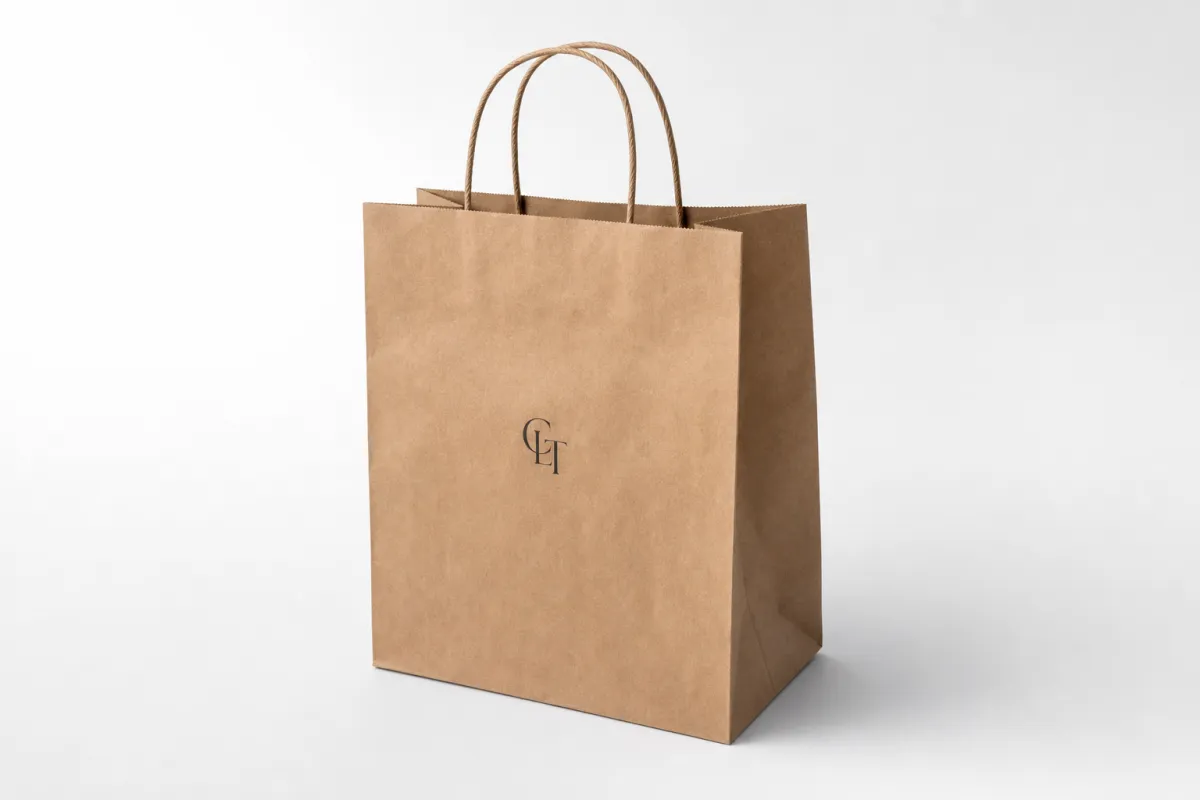
The cheapest quote usually looks fine at first glance and then falls apart in use. Logo printed paper bags cost can be pushed down by thinner stock, simpler handles, or less print coverage, but those cuts show up fast once the bags are in daily service. A torn handle at the register is not a small inconvenience. It means replacement stock, staff frustration, and a brand image that feels a little careless. That is not savings. That is deferred expense.
Retail bags shape the shopping experience. Food-service bags shape the handoff. In both settings, logo printed paper bags cost should be judged against the damage a weak bag can do. A bag that holds its shape, stays presentable in transit, and prints cleanly usually gives better value than the lowest unit price suggests. Fewer complaints. Fewer remakes. Fewer awkward moments at the counter.
The cheapest quote only stays cheap if the bag survives real use. If it tears, curls, or makes the brand look second-rate, the order did not save money. It bought trouble.
A small price increase can still be the smarter move. If one boutique pays $0.18 per bag instead of $0.13, but the higher-priced option uses a stronger handle and better stock, the total packaging cost may still come out lower. Staff spend less time replacing failed bags. Customers walk out with a better impression. Reorders are easier because the spec is clearer. Logo printed paper bags cost should follow outcomes, not just paper grams and ink coverage.
That matters most where the bag stays visible for a while: fashion retail, premium takeaway, gift packaging, wine shops, and event merchandising. A flimsy-looking bag makes the purchase feel smaller. A solid bag makes the same purchase feel intentional. Buyers who chase the lowest logo printed paper bags cost often pay for it in presentation, and presentation is part of the sale, not decoration on the side.
There is a hidden operational angle too. Bargain bags can vary more from batch to batch if the spec is loose. One delivery feels fine. The next arrives with softer corners, weaker handles, or a finish that looks different under store lighting. That kind of inconsistency is hard on teams that reorder often. If logo printed paper bags cost looks unusually low, ask what was removed from the build. Paper gsm? Handle reinforcement? Freight? Carton quality? Something was cut somewhere, and it is worth finding out before the cartons reach your storeroom.
In my experience, the order that causes the most noise is usually the one that saved a few cents and created three weeks of cleanup. That is a bad trade, and everybody in the chain feels it.
Paper Bag Types, Sizes, and Print Options
Paper bags are not interchangeable, and treating them that way is how buyers end up with specs that cost too much or perform too little. Logo printed paper bags cost shifts with the bag format because every style is built for a different job. A simple SOS takeaway bag is meant for speed and stacking. A luxury rope-handle bag is built for presentation. A twisted-handle retail bag tends to sit in the middle and often gives the best balance of strength and price. Pick the wrong format first, and every quote after that starts from a shaky baseline.
The main bag families are easy to separate once you know what you want to carry. Kraft Shopping Bags are the practical workhorse. Luxury paper bags are thicker, often with board inserts and more careful finishing. SOS takeaway bags are common in food service and bakery settings. Flat-handle bags keep costs low for lighter loads. Twisted-handle bags work well across retail categories. Rope-handle bags cost more, but they bring a premium look that fits gifts, cosmetics, apparel, and event packaging.
Size matters more than many first-time buyers expect. A bag that is too shallow lets the product poke out. A bag that is too narrow crushes boxes and corners. A bag that is too large wastes paper and pushes logo printed paper bags cost higher without adding real value. The three dimensions that matter are width, gusset depth, and height. That last number gets ignored too often. It should not be. If the product sits near the top edge, the bag feels awkward and the handle load increases.
Print method changes the quote as well. One-color logo runs are usually the cleanest low-cost option. Two-color branding adds setup and press time. Full-coverage artwork or photographic work moves logo printed paper bags cost up because ink coverage, registration, and finishing all become more demanding. Foil stamping, embossing, and spot UV can look excellent on premium lines, but they are not decorative freebies. They are production steps with a real price attached.
For many buyers, the best balance comes from a standard bag size, a reinforced handle, and one- or two-color print. That mix keeps the unit cost reasonable and the presentation respectable. Food brands often care more about speed, stackability, and grease resistance than fancy finishing. Boutique brands may care more about the surface feel and the carry experience. Either way, logo printed paper bags cost should fit the use case, not the excitement level of the first mockup.
Finish matters too. Uncoated kraft gives a natural, grounded look, though it can soften the impact of color. Coated paper keeps artwork sharper. Matte lamination quiets the finish and adds a softer touch. Gloss lamination increases brightness and adds some protection. Each choice shifts logo printed paper bags cost and changes the visual result. The better question is rarely "What is the cheapest bag?" It is "What bag makes the product look right without wasting money?"
Buyers who care about sourcing often ask for FSC-certified material, and that is a sensible request. The FSC system is widely recognized for documented fiber sourcing. For transit and distribution, especially when bags are packed into cartons and moved through warehouses, the ISTA test family is a useful reference for packaging durability. Not every order needs formal testing, yet serious programs often borrow from those standards because guesswork tends to get expensive pretty quickly.
| Bag Type | Typical Use | Common Specs | Relative Logo Printed Paper Bags Cost |
|---|---|---|---|
| Kraft shopping bag | Retail, general carryout | 120-150gsm paper, twisted handle, one-color print | Lowest to moderate |
| SOS takeaway bag | Food service, bakery, deli | 70-100gsm kraft, open-top or flat-fold, simple branding | Lowest |
| Twisted-handle retail bag | Apparel, gift, pharmacy | 120-180gsm paper, reinforced top edge, one- to two-color print | Moderate |
| Luxury rope-handle bag | Premium retail, events, gifting | 150-250gsm board, lamination, rope handles, special finish | Higher |
| Flat-handle bag | Quick-service, lighter loads | 60-90gsm kraft, cost-focused production | Lowest |
Logo Printed Paper Bags Cost, Pricing, MOQ, and Unit Cost
Here is the part most buyers need first: the numbers. Logo printed paper bags cost usually depends more on the volume tier than on the bag alone. Small runs carry more setup charges. Larger runs spread those charges across more units and lower the cost per bag. That is why 500 bags can feel expensive while 5,000 pieces may look much more reasonable per unit. Same basic format. Different math.
A practical pricing frame helps more than a polished brochure quote. For simple Custom Kraft Bags with one-color logo printing, small runs around 500 to 1,000 pieces can land roughly in the $0.40-$1.10 range per bag depending on size, stock, and handle style. Mid-volume orders around 3,000 to 5,000 pieces often move closer to $0.18-$0.45 per bag. Larger runs can go lower still, especially when the print is simple and the bag spec stays stable. Logo printed paper bags cost drops fastest when the design is clean and repeatable.
Special finishes change the picture quickly. Add foil, embossing, lamination, or heavy full-coverage artwork, and logo printed paper bags cost can move into a different range entirely. The bag stops being a plain carrier and becomes a premium presentation item with more production steps, more inspection points, and more packing care. That is why a strong kraft bag with a simple one-color mark often delivers better value than a flashy design that blows the budget and drags out the schedule.
Quotes usually break into the same pieces, even when suppliers use different wording: paper stock, handle material, print method, tooling fees, setup charges, packing, and freight. If the quote feels vague, ask for a line-by-line breakdown. A low unit price with high setup fees can end up costing more than a slightly higher unit price with fewer extras. That is a basic fact of logo printed paper bags cost, and it still catches people out.
True cost should be read as landed cost = factory unit price + setup charges + freight + duties + local delivery + acceptable defect allowance. Looking only at the factory price gives a false sense of control. The same bag can be inexpensive ex-factory and expensive on your dock. A buyer who understands logo printed paper bags cost this way is harder to misquote and easier to budget around.
The cleanest way to compare suppliers is to match four variables exactly: bag size, paper gsm, handle type, and print count. If any of those changes, the comparison is not useful. A supplier quoting 120gsm kraft with flat handles is not competing with another supplier quoting 150gsm paper with rope handles. Those are different products. That sounds obvious, yet it gets mixed up in real sourcing work all the time.
Below is a simple comparison that shows how logo printed paper bags cost tends to behave across order sizes.
| Order Size | Typical Spec | Approx. Unit Cost | What Usually Drives the Price |
|---|---|---|---|
| 500-1,000 pcs | Simple kraft bag, one-color logo | $0.40-$1.10 | Setup charges, small-run handling, proofing |
| 1,000-3,000 pcs | Twisted-handle retail bag | $0.22-$0.60 | Paper gsm, handle reinforcement, print area |
| 3,000-5,000 pcs | Standard retail or takeaway bag | $0.18-$0.45 | Better spread of setup charges, bulk pricing |
| 5,000+ pcs | Locked spec, repeatable order | $0.12-$0.35 | Tooling fees diluted, stable production flow |
That table is a market frame, not a promise. Even so, the pattern is clear: logo printed paper bags cost improves as quantity rises and the spec becomes more repeatable. If your brand needs several bag sizes, there may be savings in simplifying the SKU list. One standard bag with clear branding often costs less than three nearly identical sizes that each need separate tooling and separate inventory planning.
Another trap is freight hidden inside an unrealistically low bag price. The factory unit looks fine until the carton count, cubic volume, and shipping method show up. Then the real number changes. A careful buyer asks for EXW, FOB, or DDP terms to be written clearly so the price comparison stays honest. That is one of the simplest ways to keep logo printed paper bags cost from getting distorted.
There is also a practical planning point. If the design team wants to tweak the logo every quarter, the cost of reproofing and the risk of mismatched inventory can creep up fast. A stable print spec keeps the bag price calmer and the reorders less annoying. Nobody gets excited about that on a mood board, but procurement feels the difference.
Specifications That Change the Final Quote
Artwork is usually the first thing buyers think about, but the structure of the bag shapes the price more than most people expect. Logo printed paper bags cost responds strongly to paper gsm, board thickness, gusset width, base reinforcement, and handle construction. A bag with a stronger bottom insert and a reinforced mouth costs more, yet it also carries weight better and finishes with a more complete look. For heavier or sharper products, that extra build is not a luxury. It is the difference between a normal handoff and a failure at the point of use.
Paper gsm is one of the first details to lock down. Lightweight kraft in the 60-100gsm range works well for takeaway food and smaller items. Retail shopping bags often sit in the 120-150gsm range. Premium board-style bags can go beyond that. Higher gsm raises logo printed paper bags cost, but it also changes stiffness, print appearance, and how the bag feels in hand. Thin stock can buckle under pressure. Overbuilt stock can waste money if the product is light. Match the stock to the load and keep the rest simple.
Finishing options can move the price quickly. Lamination adds durability and gives either a matte or gloss effect. Foil stamping adds a premium highlight, but it also adds tooling costs and tight registration demands. Embossing brings texture and depth, though it needs a proper die and careful press control. Full-bleed print uses more ink and usually more waste control. Inside printing, if you want it, adds another production layer. Each change nudges logo printed paper bags cost upward for a clear reason.
Color count matters more than many buyers realize. One Pantone spot color is easier to run than four-color process art with gradients and tiny details. A clean logo printed paper bags cost estimate depends on whether the artwork is a bold mark or a full illustration. If the logo is simple, keep it simple. Do not turn a clear bag spec into a proofing loop just because a design team wants more visual noise. Packaging needs legibility and balance, not extra movement for its own sake.
If you want to avoid revisions and delays, lock these details before requesting a quote:
- Bag dimensions: width, gusset, and height in millimeters or inches.
- Paper type: kraft, coated paper, board, or recycled stock.
- Paper weight: gsm or equivalent thickness.
- Handle style: flat, twisted, rope, die-cut, or no handle.
- Print colors: one-color, two-color, CMYK, or Pantone match.
- Finish: uncoated, matte, gloss, lamination, foil, or emboss.
- Quantity: exact MOQ target and reorder forecast if you have one.
- Delivery location: so freight is not an afterthought.
That list reads basic because it is basic. Even so, many buyers send only a logo and an approximate size, then wonder why logo printed paper bags cost changes after the first revision. The supplier is not being difficult. The supplier is working from incomplete information. Better specs up front mean cleaner quotes, fewer surprises, and a faster path to approval.
Process, Lead Time, and Production Steps
Good buying starts with understanding the work behind the number. Logo printed paper bags cost is only one part of the timeline. Proofing, sampling, production scheduling, quality control, and shipping all shape the final result. A supplier with a low number and no process discipline is a risk. A supplier with a clear schedule is showing you how the job actually moves.
The usual order flow is simple enough. First comes the quote request. Then artwork review and a dieline check. After that, the supplier sends a digital proof or a sample. Once approval is in place, production begins. During production, there should be checks for print alignment, handle strength, dimensions, and carton packing. Then the finished bags are packed, labeled, and shipped. If any of those steps are fuzzy, logo printed paper bags cost can turn into a delay problem fast.
For straightforward orders, a practical lead time is often 12-18 business days after proof approval, depending on quantity and factory load. More complex Bags with Foil, embossing, or special lamination can move into the 18-25 business day range. Rush work is possible in some cases, though it usually adds cost and leaves less room for error. If the bags need to arrive for a launch or a seasonal push, count backward from the delivery date, not from the approval date. That is where many teams get caught.
Delay points are usually predictable. Missing dielines. Low-resolution artwork. Late color changes. An unclear shipping address. A spec change after the proof is already signed off. None of this is mysterious. It is sequencing, and poor sequencing makes logo printed paper bags cost climb because every revision creates waste in time or materials. Tighten the brief early and the rest becomes easier.
A practical timeline for a standard order looks like this:
- Day 1-2: Submit dimensions, artwork, quantity, and delivery details.
- Day 2-4: Receive quote and proof review.
- Day 4-6: Approve artwork and confirm payment terms.
- Day 7-18: Production and QC, depending on print complexity.
- Day 18-25: Packing, freight booking, and transit.
That frame is realistic for many custom orders, not a universal promise. Sea freight adds more time. Air freight adds more cost. Compliance review adds more time again. The buyer who reads logo printed paper bags cost as a full process, rather than a single print event, is usually the buyer who gets the order on time.
Transit protection deserves attention too. Paper bags are light, yet they can still get crushed if the carton spec is weak or the pallet pattern is careless. Carton strength, inner packing, and stack height all affect usable condition on arrival. If your order is going into a busy warehouse or a retail distribution system, ask how the cartons will be packed and whether the shipment has been tested against methods similar to ISTA guidance. That question can save a lot of trouble later.
For brands with a hard launch date, the smartest sequence is simple: freeze the bag spec, approve the artwork, then book the ship date. Reversing those steps is how teams end up paying more for logo printed paper bags cost and still missing the shelf date. Nobody wants to explain that to sales, and nobody enjoys the conversation when the bags are late.
One more thing from the production floor side: if a supplier cannot explain the difference between a sample, a pre-production proof, and a final mass run, you should slow down. Those are not interchangeable steps, and the gaps between them are where mistakes usually hide.
Why Choose Us for Repeat Logo Printed Paper Bags Orders
Repeat orders are where packaging suppliers either make life easier or create friction. Logo printed paper bags cost should stay stable from batch to batch, and that only happens when the spec is locked, the prepress notes are clear, and the supplier respects the original benchmark. If every reorder turns into a fresh quoting exercise, cost control gets weak very quickly. That problem is avoidable.
We pay attention to the parts that keep packaging predictable: clean artwork checks, consistent color control, locked dimensions, and realistic MOQ guidance. None of that is flashy. It is also where the real savings live. You want the same bag to look the same in every run, not a new interpretation of your logo each time the order repeats. In repeat programs, logo printed paper bags cost only stays sane when the process does not drift.
Planning gets easier when the spec stays steady. If a brand reorders every quarter, it can choose a bag that balances inventory and unit cost. That may mean buying a slightly larger MOQ to unlock better pricing. It may mean choosing a standard handle and stock so the reorder does not require new tooling. Those choices reduce total packaging spend over time, not just the number on one invoice.
Here is the part many teams miss: stable packaging specs protect brand consistency. If your retail chain, food brand, or event program uses the same logo printed paper bags cost baseline every cycle, finance can forecast more accurately and operations can reorder with less stress. The exact bag matters less than the repeatability of the bag. A buyer who wants control should care about that.
We also think honest quoting matters. If a job needs a higher MOQ to stay efficient, that should be stated plainly. If a better finish raises unit cost in a meaningful way, that should be clear too. The goal is not to sell the fanciest version of the bag. The goal is to land the right one. For many brands, that means a clean, durable paper bag with a simple print and a cost structure that does not wander every time the order comes back.
In practice, we treat logo printed paper bags cost like a long-term packaging number, not a one-time sales hook. That is better for planning, better for brand consistency, and usually better for the end customer too.
What to Send for an Accurate Quote and Fast Start
The fastest way to get a useful quote is to send the full brief in one message. Logo printed paper bags cost is much easier to quote when the supplier does not have to chase down missing dimensions or guess at handle type. The more complete the brief, the cleaner the quote. That saves time on both sides.
Send these details up front:
- Bag dimensions: width x gusset x height.
- Quantity: exact order size and expected reorder volume.
- Paper type and gsm: kraft, coated, board, recycled, or FSC-certified stock.
- Handle style: flat, twisted, rope, or die-cut.
- Print details: one-color logo, multi-color artwork, or full coverage.
- Finish: matte, gloss, lamination, foil, embossing, or plain.
- Delivery address: so shipping is included correctly.
- Target date: launch, event, or retail reset timing.
Ask for at least two or three price tiers: one standard spec, one upgraded spec, and one volume-adjusted option. That gives you a real view of where logo printed paper bags cost changes the most. In most cases, the biggest jumps come from handle upgrades, heavier paper, special finishes, and very small orders. If the supplier cannot show those shifts clearly, the quote is not ready to use.
There is a simple approval shortcut too. Confirm dimensions first. Then approve the proof. Then lock freight. Do not keep revisiting logo color or changing bag depth after the sample stage unless you want extra time and extra cost. The cleanest path is the one with the fewest open questions. That is how you keep logo printed paper bags cost under control and avoid needless delays.
If you are choosing between a standard bag and an upgraded one, compare them on three points only: appearance, durability, and landed cost. A better-looking bag is not automatically the better buy. A tougher bag is not automatically the right buy either. The right option is the one that fits the product, the brand, and the reorder pattern without inflating the budget. That is the practical way to think about logo printed paper bags cost.
Most buyers get the best result by starting with one standard spec and one premium spec, then asking for a written breakdown that separates unit cost, MOQ impact, tooling fees, and freight. That is the fastest route to a sensible decision. If you want a quote that is actually usable, send the full brief, ask direct questions, and compare real landed numbers. Logo printed paper bags cost should make sense before you place the order, not after the cartons show up. That is the whole point.
What drives logo printed paper bags cost the most?
Bag size, paper gsm, and handle style usually move pricing the fastest. Print coverage and color count add cost quickly, especially on full-bleed designs. Quantity matters too, because higher MOQ lowers unit cost by spreading setup charges across more bags.
What is a typical MOQ for custom logo printed paper bags?
Small digital or simple print runs may start around 500 to 1,000 bags. Offset or special-finish jobs often need 3,000 units or more to stay efficient. The right MOQ is the one that fits your reorder rhythm, not the one with the flashiest headline price.
How can I lower the unit cost without making the bags look cheap?
Use a standard size and keep the print to one or two colors. Choose kraft or a lighter paper stock if the product does not need a premium finish. Consolidate SKUs so one bag works for more than one order type.
How long does production usually take after approval?
Simple custom bags typically move faster than embossed or foil-stamped bags. Artwork approval and sampling are the main checkpoints before production starts. Plan for extra time if you need color matching, rush freight, or holiday-season delivery.
Can you match Pantone colors on logo printed paper bags?
Yes, but the paper stock and print method affect how closely the color lands. Coated stocks usually hold color more consistently than rough kraft surfaces. If color accuracy matters, ask for a proof and confirm the tolerance before production.
The cleanest takeaway is simple: treat logo printed paper bags cost as a packaging system, not a sticker price. Lock the size, paper, handle, print, finish, and delivery terms before you compare quotes, and you will get a number that actually means something. Skip that step and the lowest price can turn into the most expensive mistake.

