Order brand campaign Recycled Poly Mailers: MOQ and Lead Time
A buyer searching for a brand campaign recycled Poly Mailers MOQ lead time guide is usually juggling three pressures at once: presentation, budget, and ship date. That combination is less forgiving than it looks. A mailer can carry the logo and still fail the job if it arrives late, tears in transit, or forces a campaign team to reorder at a worse price.
Recycled Poly Mailers sit in an odd middle ground. They are simple enough to seem commodity-like, yet they affect brand perception, warehouse efficiency, and freight costs in ways that are easy to miss from a quote sheet alone. A good spec can reduce packaging waste, cut storage space, and keep the campaign moving. A sloppy one can do the opposite while still looking fine in a proof.
The practical question is not whether recycled film sounds sustainable. It is whether the film grade, print method, seal style, and production schedule all line up with the product being shipped. That is where the real work happens.
Why recycled mailers earn their place in campaign packaging
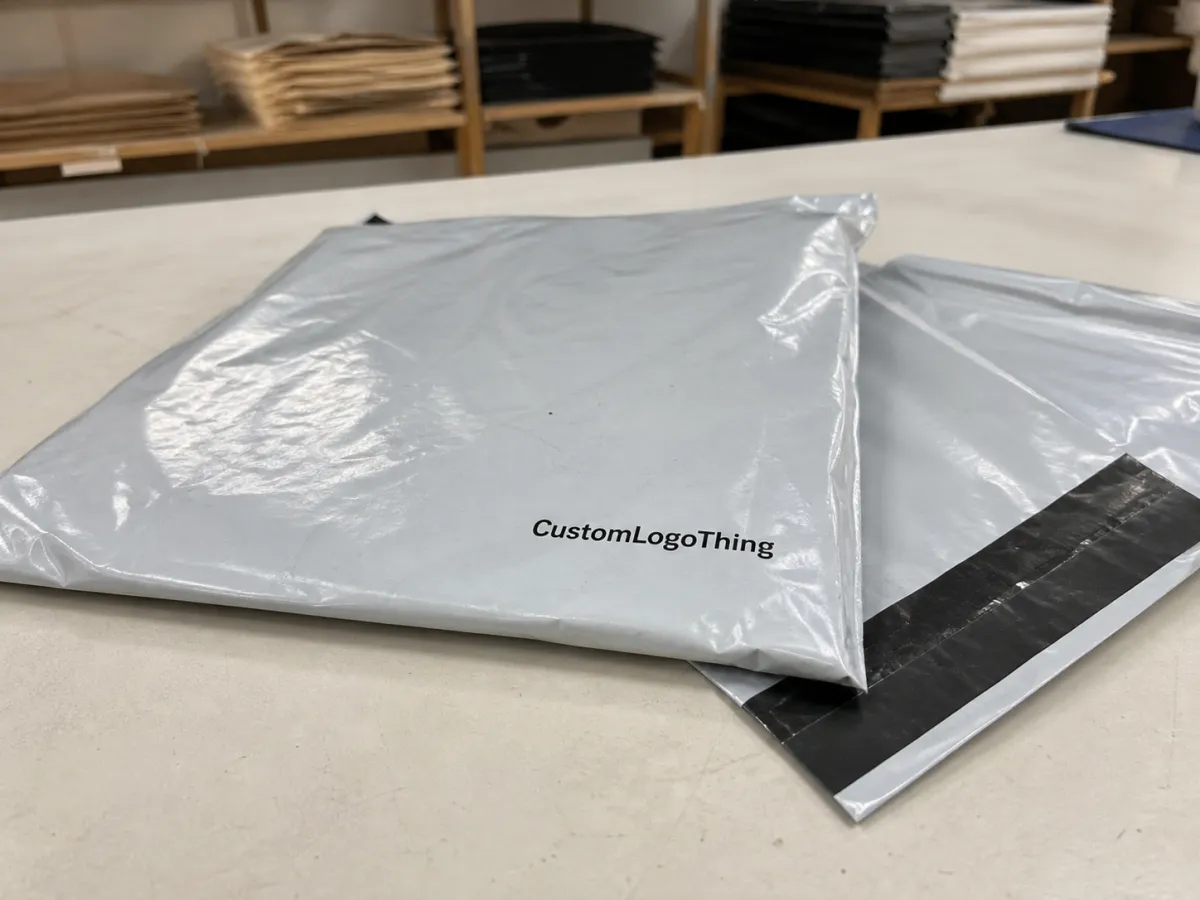
Recycled Poly Mailers can replace a surprising amount of packaging weight for apparel, promo kits, soft goods, and subscription inserts. Compared with a corrugated carton, a mailer often needs less material, less storage room, and fewer packing steps. That means less time at the bench and fewer cases stacked in the warehouse before launch.
The savings are not only environmental. They are operational. Flat mailers store tightly on a pallet, travel efficiently through fulfillment, and reduce the need for void fill. For a campaign that ships hundreds or thousands of pieces, those small efficiencies stack up quickly. A team that ships weekly can feel the difference in labor almost immediately.
Branding is the other half of the equation. A recycled mailer with the right ink density and a controlled color match can look surprisingly polished. That matters because the outside of the parcel is the first physical contact a customer has with the campaign. If the pack feels intentional, the product inside tends to be read the same way.
There is a catch. Recycled content can bring more variation in surface finish, opacity, and handfeel than virgin film. A supplier can still make that work, but the buyer should inspect samples with actual product weight inside them, not just an empty mailer on a desk. A clean-looking sample does not prove the film will hold up once the seam is under load.
For most buyers, the best result comes from matching the mailer to the campaign’s real job. A light promotional drop has different needs than a clothing launch, and a returnable format has different demands than a one-way shipper. The structure should follow the use case, not the other way around.
Film, seal, and print choices that change performance
Recycled content is not a single material class. One mailer might use 30% recycled resin, another 50% post-consumer content, and another a blended film with a different color base. Those choices affect opacity, stiffness, and consistency from batch to batch. A higher recycled-content claim is not automatically better or worse. It simply means the buyer should care more about sample matching and reorder consistency.
Seal style has a bigger effect on day-to-day use than many teams expect. A self-seal flap is fine for standard outbound shipping. A permanent adhesive is better for one-way fulfillment where closure strength matters more than returns. Return-strip mailers add convenience for apparel or campaigns that expect exchanges, but they also add cost and can extend production time.
Print method matters just as much. Flexography usually fits larger runs and simple spot-color artwork. Digital print handles shorter runs and faster changes, but the economics shift as quantity rises. Gravure is less common for small campaign orders, yet it can deliver strong repeatability at scale. Each method has a different tradeoff between color control, setup cost, and speed.
Artwork should be judged with the substrate in mind. Dark recycled film can mute a logo if the ink is too thin. Very light film can show the adhesive track or the internal fill pattern if opacity is weak. Fine type, barcode windows, and small compliance copy need more care than a bold logo block. The supplier should explain how registration is controlled and what the acceptable variation window looks like before approval.
A sample proves the layout. A production run proves the process.
For buyers who want to check transit durability, ISTA testing protocols are a useful reference point. They help frame the real question: will the finished parcel survive parcel handling without cosmetic damage, seam failure, or adhesive lift?
Sizes, gauge, and color specs for campaign mailers
Mailer size should start with the packed product, not with a standard catalog dimension. A folded sweatshirt, a stack of flat inserts, and a boxed sample kit all need different allowances. Depth matters as much as width. If the pouch is too tight, loading slows down and the seam takes more stress. If it is too loose, the parcel moves around and arrives looking less considered.
Gauge, or film thickness, influences puncture resistance, seal strength, and the way the mailer feels in hand. Common campaign mailers often fall somewhere around 2.5 to 4.0 mil. Lightweight apparel may be fine at the lower end. Heavier soft goods or items with corners usually need more film and a stronger closure. The per-piece weight difference is small, but it becomes meaningful across a large run.
Color choice deserves more attention than it usually gets. A branded black or deep gray can look elegant, yet it can also reduce print contrast if the film is too dark or slightly translucent. A custom color may sharpen the brand presence, but only if the print holds cleanly and the substrate stays consistent. Interior print can raise the perceived quality, though it adds ink coverage, setup work, and often some lead time.
The spec sheet should be blunt and complete. Include finished dimensions, gauge, seal style, print count, color targets, and any reserved space for copy or barcode placement. If the campaign also uses paper inserts or secondary printed materials, FSC-certified options can support the broader packaging claim structure; see FSC guidance for reference.
A practical buyer also thinks about how the mailer will be packed before shipment. If product weight shifts from order to order, ask for a tolerance range rather than a single ideal size. That single detail can prevent the next reorder from drifting into a different fit class.
Pricing, MOQ, and unit cost tiers for branded orders
Pricing makes more sense when it is broken into pieces. A quote for recycled poly mailers usually includes setup or plate costs, film grade, print labor, finishing, packing, and freight. Some suppliers bundle these. Others separate them. If the buyer only compares the unit price, the landed cost can look better or worse than reality.
MOQ rises as the order becomes more specific. Custom dimensions, more print colors, tighter shade matching, and special film blends all add production complexity. That is not a penalty. It is a manufacturing limit. A standard size with one-color print can often start at a lower volume because the supplier needs fewer changeovers. A custom size with full-bleed artwork and a return strip usually asks for a larger commitment.
| Option | Typical MOQ | Indicative unit cost | Typical lead time after proof approval | Best fit |
|---|---|---|---|---|
| Standard size, one-color print | 1,000-2,500 | $0.18-$0.30 | 10-15 business days | Quick drops and repeat campaigns |
| Standard size, two-color print | 2,500-5,000 | $0.22-$0.38 | 15-18 business days | Stronger branding with moderate setup complexity |
| Custom size, special film, return strip | 5,000-10,000 | $0.30-$0.55 | 18-28 business days | Higher-touch launches and recurring programs |
Those ranges are directional, not universal. Freight distance, print coverage, resin availability, and seasonality can move them fast. Still, they are useful for spotting outliers. If one quote lands far below the others, something is probably missing: film thickness, adhesive quality, color control, or packaging method.
There are clear ways to lower cost without weakening the campaign. Use a standard size if the product allows it. Keep the artwork to one or two colors. Avoid special finishes unless they do visible work. Consolidate quantity into one run instead of splitting it across multiple small orders. Above all, compare landed cost rather than the bag price by itself. A slightly higher unit price can still be the better deal if it cuts rework, freight surprises, or late shipment risk.
Buyers often discover that the cheapest quote is not the least expensive outcome. A low number can hide weak adhesive, loose tolerances, or poor color repeatability. Those problems show up later, usually at the worst possible time.
Lead time, proofing, and production steps that protect launch dates
Lead time usually moves through a familiar chain: quote, artwork review, proof, approval, production, packing, and shipment. The clock can be short or long depending on how complete the buyer is at the start. If the dimensions are fixed and the art file is press-ready, the order stays tight. If the size keeps changing or the artwork needs cleanup, each revision adds days.
Many delays happen before production starts. A supplier may need vector artwork, clear bleed, a safe zone, color definitions, and instructions for seal placement. If those details arrive late, the proof cycle restarts. One revision can cost a day. A poor file can cost several. That is why any useful brand campaign recycled poly mailers moq lead time guide has to treat artwork readiness as part of the schedule, not a side issue.
Capacity changes by season. Shipping lanes do too. A straightforward domestic run may move quickly once approved. A custom order with special film, split delivery, or long-distance freight can stretch farther than the buyer expects. If the launch date is tied to a campaign announcement, ask exactly when the factory clock starts. Is it on deposit, on artwork receipt, or on proof approval? Those dates are not interchangeable.
Good suppliers are direct about the parts they control and the parts they do not. That honesty is useful. It lets the marketing team build a realistic buffer without padding the calendar so much that the order becomes wasteful. In packaging, a few honest days matter more than a vague promise.
- Fastest path: stock size, one-color print, press-ready art, single destination.
- Slower path: custom size, special recycled film, return-strip closure, multiple approvals.
- Risk drivers: peak season, split shipments, long freight lanes, late artwork edits.
For teams comparing packaging schedules across campaign types, the Case Studies page helps show how real orders balance presentation, production, and ship dates.
Supplier proof points: color control, QC, and defect policy
A credible supplier should be able to describe tolerances without hesitation. For recycled poly mailers, the most useful proof points are dimensional accuracy, print registration, seam integrity, adhesive performance, and final carton count. Exact tolerances vary by factory, but the acceptance range should be clear enough that the buyer can tell what will pass and what will not.
Repeatability matters more than a perfect sample. A pre-production proof may look excellent and still fail to represent the second run. The better question is whether the supplier can match the same shade, gauge range, and closure spec across batches. That is what protects brand consistency when a campaign becomes a recurring program.
Defect policy should be part of the conversation before the order is placed. If a carton arrives with damaged mailers, who covers the freight on replacements? Is there an allowance for minor print variation? Is the remedy a reprint, a credit, or a partial resend? These terms affect the real landed cost more than many buyers realize.
It also helps to ask how inspection is performed. Is the team checking only random cartons, or is there a defined in-process QC step for seam strength and color consistency? If the supplier cannot answer clearly, the buyer is probably carrying more risk than the quote admits.
A low price loses its appeal fast when the reorder policy is vague.
That same caution applies to color. A mailer that looks acceptable in a proof can drift slightly darker or cloudier in production, especially with recycled content. If the brand cares about precise appearance, ask for a matched sample from the same film lot or at least a clear statement on acceptable variation.
Ordering mistakes that inflate cost or delay delivery
Most delays are self-inflicted. The usual causes are not mysterious: undersized artwork files, vague dimensions, the wrong closure style, or a launch date that never matched the production reality. A campaign can also over-customize itself into a corner. A fifth print color rarely lifts customer perception enough to justify the added setup and registration risk.
Another common error is choosing a mailer based on width alone. A product can fit across the mouth and still fail in depth. Once the seam starts straining, the packing line slows down and the finished parcel looks rushed. That kind of mistake often forces a rework of the spec, which can trigger a new MOQ or a new lead time altogether.
Shipping windows deserve the same attention as artwork. If the in-hand date is fixed, build a buffer for proofing, approval, production, and freight. That buffer is not wasted. It is what keeps the launch intact when one step slips. Buyers often learn this the hard way after one season of missed dates.
Use a short preflight check before sign-off:
- Confirm finished size, gauge, and seal style.
- Send vector artwork with print colors, bleed, and safe zone.
- State quantity, destination, and required in-hand date.
- Ask for the proof approval deadline and the factory start date.
- Request defect policy and replacement terms in writing.
If the campaign is meant to signal sustainability, keep the claim honest. Recycled content helps, but the message should match the actual build. Buyers who stay precise with material claims tend to protect trust better than buyers who wrap the package in vague green language.
Next steps to request a quote and lock the shipment window
The cleanest quote request includes quantity, size, film color, print colors, artwork files, destination, and the date the goods must be in hand. The fuller the brief, the fewer revisions later. That matters because revisions are where lead time slips and apples-to-apples price comparisons start to blur.
It helps to request two versions of the quote. One should use a standard spec so you can benchmark unit cost. The second should use a value-engineered version that tests where the spend can come down without harming the brand. That comparison usually reveals whether the real cost driver is size, print coverage, closure style, or freight structure.
Once the spec is set, keep it still. A master spec sheet prevents the next campaign from reopening the same questions about gauge, color, or seal type. It also makes reorders easier, which is one of the few reliable ways to reduce lead time without cutting quality.
For buyers comparing options now, the keyword phrase brand campaign recycled poly mailers moq lead time guide should function as a checklist, not a slogan. Compare material detail, proof discipline, MOQ structure, and freight terms. That is what makes the order path predictable and keeps the finished mailer aligned with the campaign rather than complicating it.
Frequently asked questions
What MOQ is typical for branded recycled poly mailers?
MOQ depends on size, print colors, and whether the film is stock or custom. Standard sizes with one-color print usually start lower than custom dimensions or multi-color artwork. Mixed SKUs can sometimes share a production run, which keeps volume together and avoids extra setups. That can matter more than buyers expect.
How long is lead time after proof approval for campaign mailers?
Simple runs move faster than custom colors, special film blends, or complex artwork. Proof revisions, peak season, and shipping distance can add days to the schedule. Ask for the factory start date in writing so you know whether timing begins at deposit, artwork receipt, or proof approval. That one detail often changes the plan.
Can recycled poly mailers still protect products in transit?
Yes, if the gauge, seal strength, and size are matched to the product weight and shape. For sharp or heavy items, check puncture resistance and test the closure before launch. Request samples with real product weight inside them. If the fit is borderline, step up the film thickness rather than hoping the seam will make up the difference.
What files should I send for an accurate quote on branded mailers?
Send vector logo files, print colors, dimensions, quantity, and ship-to location. Include any compliance text, barcode needs, or campaign copy that must appear on the mailer. A clear spec sheet reduces quote revisions and helps the supplier spot problems before production starts. That saves time on both sides.
How can I lower unit cost without hurting the brand?
Use a standard size, fewer print colors, and a stable reorder quantity. Compare landed cost rather than unit price alone, because freight and rework can change the total. Keep one master spec so future campaign drops do not restart the same approval cycle. That is usually the cleanest way to protect margin and brand consistency.


