Unstructured Dad Hats Reorder Plan for Faster Restocks
If the last run of dad hats sold through, the next order should feel less like product development and more like controlled repetition. That is the point of an Unstructured Dad Hats reorder plan: keep the hat that already worked, avoid unnecessary sampling, and stop small spec changes from turning into a new approval cycle. The hard part is not placing another order. The hard part is making sure the second run still looks and feels like the first one.
That matters because unstructured caps are deceptively sensitive. A minor shift in fabric wash, brim curve, crown depth, or embroidery placement can make the hat wear differently even if the SKU looks identical on paper. On a spreadsheet, those changes are tiny. On a shelf, they are enough to affect sell-through, returns, and whether the next customer thinks the replacement is the same product or a cheaper version of it.
Repeat orders also expose the hidden cost of sloppy file management. The original sample may have been approved months earlier, while the people handling the reorder only have an old PO and a vague memory of what was changed. If the spec is not clearly archived, the factory will fill in the gaps with default assumptions. That is where a clean restock gets messy.
One approved sample can save more time than three revision calls.
Why an unstructured dad hats reorder plan saves more than time
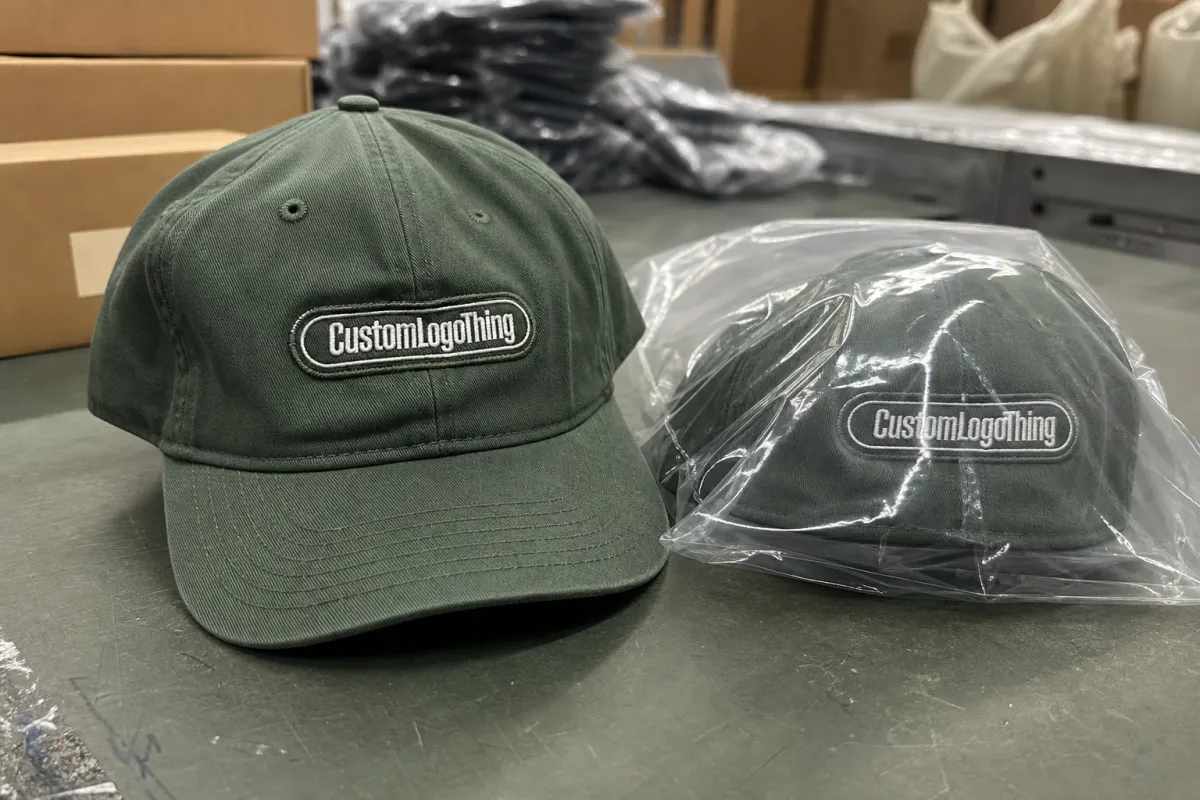
A reorder is not just a refill. It is a test of whether the original production details were actually captured well enough to repeat. The first order usually absorbs the expensive learning curve: artwork setup, fit approval, material questions, and proof corrections. Once those decisions are recorded clearly, the next run can move faster and cost less to coordinate.
Speed is only part of the value. The real gain is consistency. A buyer who has already approved a low-profile cap with a soft front panel, a relaxed crown, and a specific wash should not have to renegotiate those traits on every restock. If the supplier treats the reorder as a fresh build, the chance of drift increases. If they treat it as a duplicate of the approved spec, the chance of a mismatch drops.
This is especially visible in retail and event merch. A store may have sold the original hat because the crown sat lower than competitors’ versions, or because the fabric felt broken-in rather than stiff. A reorder that arrives with a tighter front panel or a sharper brim curve can undercut the reason the product was chosen in the first place. The price may be similar; the customer experience will not be.
There is also a practical finance angle. New development often includes costs that a repeat run should not need to absorb again: digitizing, new proof rounds, and extra internal time spent clarifying the same details. A disciplined Unstructured Dad Hats reorder plan keeps those costs visible. It lets the buyer pay for actual production work instead of paying again for information that should already live in the spec file.
Product details that keep an unstructured fit consistent
An unstructured dad hat is defined by softness. There is no stiff front buckram forcing the crown into a formal shape, which is why these caps sit lower and feel more relaxed than structured styles. That softness, however, makes consistency harder. The same pattern can look noticeably different after a different wash cycle or a small fabric substitution.
Fabric choice is the first variable to lock down. Cotton twill, garment-washed cotton, brushed cotton, and pigment-dyed finishes each produce a different handfeel. Garment washing tends to soften the crown and mute the color slightly, which is often what buyers want for a vintage look. A crisper twill may hold a cleaner silhouette, but it can also push the cap toward a more structured appearance if the finishing step changes. If the original hat was sold on a washed, broken-in feel, that detail should be written in the reorder file, not left for someone to infer.
The closure matters too. Metal buckle, brass slider, fabric strap, or hook-and-loop all affect fit perception and price. A closure that is technically similar can still wear differently depending on the width of the strap, the thickness of the back opening, and whether the branding is sewn into the strap or left plain. If the previous run used a specific back adjustment, call it out by construction, not by casual description.
Decoration is another place where repeat orders drift. Embroidery size may expand because the digitizer rounds up. Thread colors may shift if the supplier swaps to a close match instead of the approved shade. Patches can move a few millimeters higher or lower on the front panel and still pass a casual glance, but that movement changes the balance of the cap. For a soft-crown hat, balance matters more than buyers expect.
Physical comparison is still the fastest quality check. Keep one approved sample with the old PO and compare the new run side by side. Look at panel collapse, crown height, brim memory, and how the cap sits after it is packed and unpacked. Photos help, but they do not tell you how much structure a hat lost in transit or whether the front panel became too flat after a new wash recipe.
Specs to lock before you approve the next run
The safest reorder file reads like a production checklist. Start with panel count, crown depth, brim length, eyelet count, sweatband material, closure type, and decoration method. Then add the finish notes that made the original sample acceptable. If the hat was low profile, lightly curved, and intentionally relaxed in the front, that should appear in plain language. A factory may know what an unstructured cap is, but that does not mean the team will interpret your brand’s version of "same as before" the same way you do.
Tiny spec gaps create expensive exceptions. If the previous run used a brushed cotton with a soft wash, and the reorder switches to a tighter weave or a different rinse, the cap can change character immediately. The same is true for interlining, which may be added by default unless the file explicitly says it should not be there. These are the sorts of details that do not show up in a sales description but do show up in the finished product.
Artwork needs the same level of control. Send vector files, note stitch limits, and confirm minimum line widths for embroidery. If the logo is a patch, define the patch shape, edge finish, backing type, and the exact location on the panel. A patch that sits five millimeters off-center may not look wrong in a packed carton, yet it will read as sloppy once the cap is on a head. Placement tolerances are not cosmetic trivia. They are part of the quality standard.
Color control deserves its own line item. A supplier should not rely on "close enough" if the previous order used a specific thread shade, fabric dye lot, or patch border color. If the reorder is tied to a broader brand system, ask for Pantone references where possible and keep the approved sample on file. Dye lots vary, especially on washed cotton, so even a well-run order can show small shifts. The point is not to eliminate variation entirely; it is to prevent the variation from becoming visible enough to break continuity.
One useful control is a pre-production proof review that checks color, dimensions, and placement against the previous sample before bulk cutting begins. It sounds simple, but this is where many reorders get saved. A proof can match the artwork and still miss the actual cap profile. The paper file may look perfect while the hat itself is headed in the wrong direction.
Packaging should not be treated as an afterthought either. Carton size, polybag use, insert cards, barcode placement, and fold method all affect how the hat arrives. If your product is being shipped through multiple handling points, transit testing can help reduce crushed crowns or damaged brims. Standards from ISTA are often relevant for cartons that need to survive more than one transfer. If paperboard inserts or hangtags are part of the program, FSC sourcing is worth asking for because it gives cleaner documentation for fiber claims.
Cost, pricing, MOQ, and unit cost on repeat orders
Repeat pricing usually breaks into the same buckets each time: blank cap cost, decoration cost, setup or digitizing, patch tooling if needed, packaging, freight, and any rush fee tied to the timeline. The useful quote is the one that shows those pieces separately. Once everything is bundled into a single number, the buyer loses the ability to see whether a lower price came from real efficiencies or from a material downgrade.
MOQ has more influence than many brands expect. A small fill-in order often carries a higher unit price because the factory still has to load thread, reset the line, inspect the first output, and handle carton prep. Larger runs usually lower unit cost, but only if the inventory is actually needed. A bargain that sits in storage for six months is not a bargain; it is working capital trapped in a shelf of hats.
A good Unstructured Dad Hats reorder plan lowers cost by reusing what has already been approved. Previous artwork, archived construction notes, and the original fit sample reduce the amount of setup work the supplier has to repeat. That is not the same thing as a discount. It is simply less waste, and less waste usually means fewer hidden charges.
The pricing spread can be wide depending on the complexity of the update. A straightforward repeat with the same logo and same construction may land in a lower bracket than a reorder with a new patch, a different closure, or a revised wash. A rough working range for repeat decorated dad hats might look like this:
| Reorder Type | Typical MOQ | Typical Unit Cost | What Changes | Best For |
|---|---|---|---|---|
| Exact repeat, same logo and construction | 100-300 pcs | $4.90-$7.80 | Only quantity and freight | Fast refill, store restock, event resale |
| Repeat with minor logo update | 300-500 pcs | $5.40-$8.90 | Thread color, patch art, or placement | Seasonal refresh without restarting development |
| Repeat with new fabric or closure | 500+ pcs | $6.20-$10.50 | Material, wash, or back strap spec | Program reset with a controlled change |
Those ranges are not a promise and they will move with fabric market conditions, order size, and decoration method. What matters is the structure of the quote. Buyers should compare landed cost, not just the headline unit price. Freight, carton count, and packaging can swing the total enough to make the cheapest-looking option the most expensive outcome.
Process and timeline for a clean reorder
The cleanest repeat order follows a tight sequence. Retrieve the last PO and style number first. Then confirm the decoration files, match the approved sample, and verify whether the new run should duplicate the earlier construction exactly or include a controlled update. Once those points are clear, the supplier can quote against the archived spec instead of rebuilding the whole project.
Timing is usually faster than a first-time order, but only if the file is complete. A quote and proof review can often happen in 2-4 business days when the prior spec is easy to access. Production for a simple embroidered cap often falls in the 7-12 business day range after proof approval. Patches, woven labels, special washes, or custom packaging can push that longer. Freight adds its own clock, and international shipping can be routine without being predictable.
The biggest delays are rarely dramatic. More often, they are small preventable mistakes: the artwork file is missing, the thread color is described too loosely, the buyer says "match the previous one" without sending the previous one, or someone notices too late that the brim curve needs to be a little sharper. Each issue sounds minor until the line stops waiting for clarification.
A conservative calendar helps. Build one extra approval window into the schedule before a retail reset, event deadline, or online drop. If the restock carries a launch date, add more slack. Production teams work better with clear sign-off points than with emergency messages sent after the line has already started.
There is also value in deciding early what can change and what cannot. If the fabric, logo, and closure all stay the same, the project should move faster. If one of those elements changes, the factory needs that information before cutting begins. Surprises late in the process are where repeat orders lose time and margin.
What a reliable supplier does to prevent reorder drift
The best suppliers do not treat every reorder like a guess. They keep archived specs, repeatable sourcing notes, clear proof histories, and production records tied to the approved sample. If the contact can pull the previous style information in minutes, that is a good sign. If the file has to be reconstructed from memory or scattered emails, the reorder is already at risk.
Drift usually happens in small steps. A close-but-not-exact fabric substitution. A patch placed slightly differently because the template was not updated. A brim curve changed because the sewing team worked from a different reference. None of these issues are catastrophic on their own, but they add up. A buyer notices when the second run no longer feels like the same product.
Communication discipline matters as much as sewing quality. One point of contact keeps version control cleaner. Proof revisions should be numbered and saved. Any substitute material, altered closure, or shifted placement should be approved in writing before bulk production starts. If the buyer cannot tell which proof is final, the process is too loose for repeat work.
Reliable suppliers also speak in measurable terms. They can discuss cap depth, panel count, embroidery placement, carton counts, and inspection standards instead of relying on general reassurances. That language matters because it reduces ambiguity. "Looks good" is not a production spec.
Inspection should be documented too. An AQL-based quality check, often referenced at 2.5 for major defects in soft goods, gives the buyer a more concrete sense of how the lot will be reviewed. The number itself is not magic, but it signals that defects are being measured rather than guessed at. For repeat orders, that structure is more useful than a promise that the hats will be checked carefully.
Next steps to place the reorder without slowing production
Before requesting the quote, gather the last approved sample, the old PO, the artwork files, quantity history, and any notes about fit, wash, or color adjustments. That small amount of preparation prevents the usual back-and-forth that starts with "Can you resend the logo?" and ends with a delayed proof. A strong unstructured dad Hats Reorder Plan depends on evidence, not memory.
Then confirm the destination, the target delivery date, and whether the restock must match the previous run exactly or include a controlled change. Those are not interchangeable requests. A simple repeat should not be priced or scheduled like a redesign, and a redesign should not be hidden inside a repeat order.
A short comparison list helps. Spell out what must stay the same, what can change, and which detail is non-negotiable. That one page can save hours. Buyers often assume the important points are obvious; suppliers often assume they are flexible. The gap between those assumptions is where reorder problems begin.
Use the prior run as the template, not your recollection of it. Review the proof, lock the spec, compare landed cost, and confirm the inspection standard before bulk production starts. That is how a repeat cap order stays a repeat order.
How do I reorder unstructured dad hats if I only have the old order number?
An old order number is usually enough to pull the prior spec, artwork, and production notes. If the supplier cannot locate the file right away, send photos of the finished hat and any packaging labels so the style can be identified faster.
What matters most in an unstructured dad hats reorder plan?
The most important items are the exact cap style, decoration method, fabric finish, and approved color references. Without those four pieces, the reorder can drift even if the SKU looks the same on paper.
Can I change the logo on a repeat dad hat order without restarting the whole job?
Usually yes, but artwork changes can affect setup fees, proof time, and the production schedule. Minor thread color edits are often simpler than switching from embroidery to a patch or changing logo size.
How long does a reorder of unstructured dad hats usually take?
Timing depends on proof approval, decoration complexity, and whether any material substitutions are needed. A clean reorder is faster when the supplier already has the spec, approved sample, and final artwork on file.
What should I compare on the quote besides unit price?
Compare setup fees, decoration charges, freight, packaging, and minimum order quantity alongside the unit price. The lowest sticker price is not always the lowest landed cost once shipping and approvals are added.


