If you're approving custom mailers for a toy line, the Toy Retailer Poly Mailers print proof checklist is the cheapest place to catch a mistake before 10,000 bags are printed, packed, and shipped. A logo shifted 4 mm can be harmless on a screen and ugly on film. A barcode that scans badly can jam receiving. A warning line too close to a seal can disappear in production. Those are small proof-stage errors with warehouse-level consequences.
Toy retail adds pressure that other categories do not always face. You may be balancing age-grade copy, SKU identifiers, return details, seasonal timing, and a brand team that wants color to match across every touchpoint. A mailer can look clean in a PDF and still fail once the film is slit, folded, sealed, and handled at speed. That is why a Toy Retailer Poly Mailers print proof checklist needs to behave like a control document, not a formality.
What follows is the practical review sequence packaging buyers use to avoid reprints, delays, and the awkward discovery that the artwork sits too close to a flap. For broader format comparisons, Custom Poly Mailers cover the common retail use cases, while Custom Packaging Products can help buyers compare structures before the order is locked.
What a Proof Checklist Should Catch
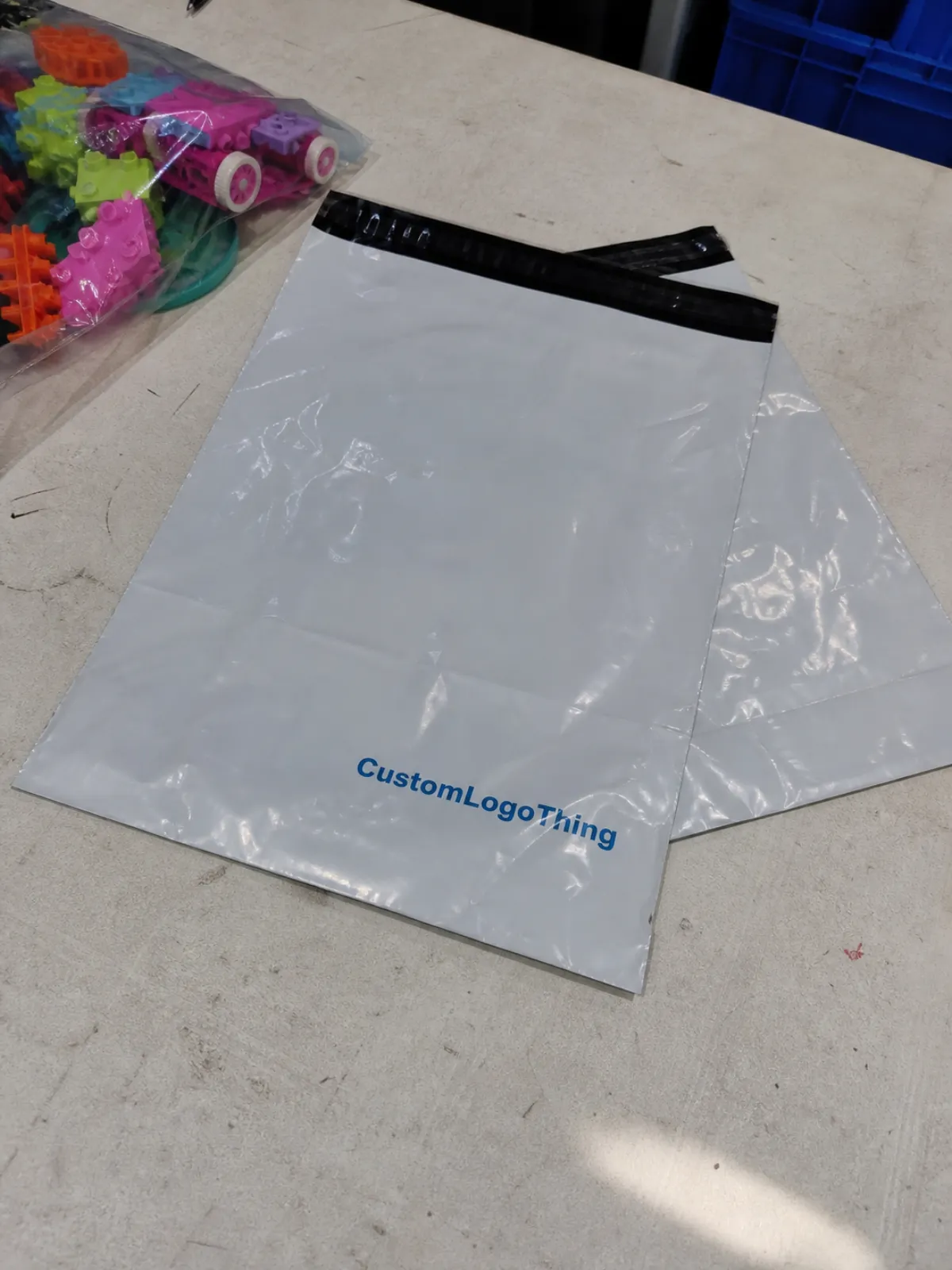
A useful checklist starts with placement, but it cannot stop there. It should confirm artwork position, barcode clarity, SKU text, warning copy, return instructions, bleed, and seal-zone spacing. If any of those elements land too close to a fold, flap, or heat-seal edge, the finished mailer can look off even when the digital layout looked perfect. That is the trap: the proof reads correctly on a monitor, then shifts once the bag is converted.
From a buyer's point of view, the proof is the last cheap correction point. A prepress change may take an hour. A fix after printing can mean film scrap, re-run setup, and a missed ship date. For toy brands, that matters more than appearance. Scannable barcodes keep fulfillment moving, while clean legal text reduces the risk of internal holds and avoidable returns.
One detail teams miss is how a centered logo on a flat PDF can drift visually once the mailer is formed. The flap, seal, and side edges change the eye line. A mark that looked balanced on screen may feel weighted to one side on the bag. That is exactly the kind of issue the Toy Retailer Poly Mailers print proof checklist should catch before approval.
A proof is not a courtesy. It is the least expensive quality-control step in the job.
The checklist should also confirm the business logic of the package. Is the mailer going to hold a plush toy, a boxed collectible, or a small kit with accessories? Does the return address match the campaign? Is an age statement required? Does the recyclable-material language change by market? If the answer shifts by collection or region, the proof has to reflect the exact version that will ship.
Artwork, Barcode, and Color Accuracy Checks
Start with file quality. Logos should be vector whenever possible, fonts should be outlined, and linked images should be high resolution. For raster artwork, 300 dpi at final size is still a sensible floor. Thin type deserves extra scrutiny; what reads fine in a PDF can soften after print, lamination, and sealing. That risk rises on glossy poly film, where glare works against small copy.
Barcode review needs more attention than many teams give it. A barcode is not decorative. It needs correct contrast, a clean quiet zone, and number placement that stays readable even if the bag shifts in transit. Flexible film is less forgiving than carton board because the surface may curve slightly and ink laydown can vary near seams. If the mailer touches retail intake and warehouse scanning, treat the barcode as production-critical.
Color is another place where assumptions break. CMYK on translucent film often looks lighter and less saturated than it did on a monitor. White ink underlay can rescue a logo, but it also changes the appearance of nearby colors. Spot color may be better for a brand mark that must stay consistent across repeat runs, while CMYK can work well for broader graphics or less critical artwork. Paper-carton proofs are not a reliable visual reference for poly mailers; the substrate changes the result.
The most useful habit is to assign one internal owner to mark up the proof. Too many reviewers create contradictory edits, especially when marketing, operations, and compliance all want to weigh in. One owner can gather comments, resolve conflicts, and send a single response. That keeps revisions tight and helps the supplier move from digital proof to production faster.
If the artwork depends on a specific red, blue, or metallic-looking accent, ask whether the run uses flexographic printing or digital printing. Flexographic printing is common for larger quantities and can hold up well on film, but it handles gradients and fine tonal shifts differently than a digital press. If the supplier offers a spot-color match or a white underlay, ask for the expected result in plain language, not just printer jargon. That conversation usually exposes the real risk before the order is released.
Proof Process and Turnaround Timing
The sequence is simple on paper. File submission comes first. Then prepress checks artwork, dielines, and layout safety. After that, the buyer reviews the proof, sends revisions if needed, and approves the final version. Only then should production begin. A clean process may take one revision round. A messy one can drag through several.
What slows it down most? Missing dielines, unoutlined fonts, low-resolution logos, barcode changes at the last minute, and unclear signoff ownership. If one department tweaks the copy after another department already approved the layout, the proof thread gets longer and less reliable. Strong packaging teams reduce friction by deciding in advance who signs off and what cannot change after approval.
Timing also depends on how much visual certainty you need. A PDF proof is usually enough for layout, copy, and barcode placement. A sample or production mockup makes more sense if the order is tied to a launch window, a color-sensitive brand, or a packaging change that buyers will see in person. Seasonal drops are unforgiving. A week lost here can become a missed shelf date later.
Typical proof path
- Submit artwork, dieline, and order details.
- Prepress checks size, bleed, fonts, and barcode settings.
- Supplier sends a digital proof for review.
- Buyer marks revisions and confirms the final version.
- Production starts only after written approval.
For most Custom Poly Mailer runs, production often lands around 12-15 business days after approval, but that is not a promise. Factory load, shipping lane, revision count, and order complexity all affect the clock. The real goal is not speed for its own sake. It is to approve the right file once and keep the order moving.
Pricing, MOQ, and Unit Cost Drivers
Pricing for custom toy mailers usually comes down to five variables: size, film thickness, number of print colors, coverage area, and whether the design needs a white underlay. Bigger bags use more material. Thicker film costs more. Heavy coverage increases ink usage and setup complexity. Add special inks, metallic effects, or extra finishing steps, and the quote rises again.
MOQ changes the math. A smaller run usually carries a higher unit cost because setup charges are spread across fewer bags. A 5,000-piece order can sit in a very different price band from a 20,000-piece order, even when the artwork looks nearly identical. Buyers comparing quotes should ask for the same dieline, the same gauge, the same quantity, the same print method, and the same pack-out assumptions. “Same spec” gets used loosely. That is where comparisons go wrong.
| Option | Typical Use | Cost Driver | Buyer Impact |
|---|---|---|---|
| Short-run digital printing | Lower quantities, frequent artwork changes | Lower setup, higher unit price | Good for testing designs or smaller launches |
| Flexographic printing | Medium to large repeat orders | Plate/setup cost, better spread at scale | Usually better value on recurring programs |
| CMYK + white underlay | Color artwork on film | More ink layers and registration care | Stronger brand color, more proof scrutiny |
| Spot color build | Logo-driven, color-critical branding | Ink matching and setup precision | Better consistency, fewer color surprises |
Hidden variables matter too. Plate fees, rush charges, revision after approval, and freight can push the final cost above the first quote. Ask whether barcode verification or extra proof rounds are included. Those items are small beside a reprint, but they are not free.
A slightly higher unit price can still be cheaper if the proof process is cleaner. In packaging, the lowest line item is not always the lowest total cost.
Material and Size Specs That Affect Fulfillment
Poly mailers are more sensitive to product shape than many buyers expect. A plush toy behaves differently from a boxed collectible, and both behave differently from a small kit with sharp accessories. Bag width, length, gusset behavior, seal width, and film gauge all need to match the actual packed item. If the bag is too tight, the seal can fail or the artwork can distort near the edge. If it is too large, the product shifts around and looks sloppy in transit.
Sharp corners are the classic troublemaker. A box with rigid edges can stress the film from the inside, especially if the gauge is too light. Uneven weight distribution creates another issue: the package may sag to one side, which affects how the printed logo reads once it reaches the customer. That is why final packed dimensions matter just as much as flat bag dimensions.
Closure style changes the experience too. A strong self-seal is convenient, but it still has to close cleanly with the product inside. Tear resistance matters if the warehouse is moving high volume and packages are handled quickly. Print placement should avoid the flap and sealing zone so no graphics disappear under closure. Good finishing is not just about appearance. It affects how the mailer behaves in the warehouse and after delivery.
For transit confidence, many teams still compare mailer selection against standard parcel testing principles. The ISTA packaging tests are a useful reference if the bag needs to survive repeated handling, compression, or vibration. If the secondary packaging or insert materials need recycling language, the EPA recycling guidance can help a team avoid sloppy environmental claims.
Before approval, compare the final packed dimensions against carrier limits and carton-packing plans. A mailer that fits the toy may still create a poor carton count or an awkward warehouse cube. That mismatch will not appear in the artwork file. It is another reason the toy retailer Poly Mailers Print proof checklist needs both visual checks and operational checks.
Step-by-Step Proof Review for a Toy Retailer
Start with the business details. Confirm the correct SKU, quantity, ship-to address, and any campaign deadline tied to a launch or holiday window. It sounds basic, but proof delays often start with a mismatch between the order record and the artwork file. One wrong destination can stall the entire run while everyone waits for a new approval trail.
Next, inspect the dieline against the design. Look for front and back orientation, bleed coverage, seam placement, and anything that sits too close to a flap or edge. Then read the copy line by line: age statements, return instructions, recycling icons, legal language, and any product claim the retailer would not want to defend later. Toy packaging is not the place for fuzzy wording. Even if the bag is not primary product packaging, buyers still expect the printed surface to be accurate.
Review order
- Confirm the right art version, not just the right product name.
- Check barcode contrast and quiet zones at 100% view.
- Verify logo spacing near seams, folds, and the seal area.
- Read every consumer-facing line for spelling, dates, and legal accuracy.
- Approve only after version number, date, and approver name are recorded.
Version control gets overlooked more often than design teams admit. If the proof is marked revision B but the approval email refers to revision A, someone will eventually ask which file was actually authorized. Keep the proof file name, the email trail, and the final markup together. That habit saves a lot of detective work later.
For brands that need to move fast, simplification helps. Fewer decision makers, fewer late edits, and fewer exceptions usually mean faster release to production. A clean toy retailer poly mailers print proof checklist does not only improve quality. It keeps the order from sinking into avoidable back-and-forth.
Common Approval Mistakes and How to Avoid Reprints
The most common mistake is approving color from a monitor alone. Bright screens can exaggerate contrast, hide weak type, and make saturated colors look more controlled than they really are. Once the job is printed on film, the same artwork may look flatter or warmer. If color matters to the brand, ask for a material-aware preview or a sample instead of treating the PDF as a color promise.
Seam distortion is another repeat offender. Artwork that crosses a fold line or lands too close to a seal can look broken after conversion. Barcode placement causes trouble for the same reason: if the code hugs a seam or the quiet zone is too tight, scanning becomes unreliable. That is a warehouse problem, not just a design problem.
Late legal changes create avoidable pain. If an address, return note, recycling claim, or product statement changes after approval, the order can stall while everyone rechecks the revised file. That delay costs more once the print run is already scheduled. The safer route is to freeze the copy before final signoff and treat any later change as a new approval.
Common reasons reprints happen
- Artwork approved too close to the seal or flap.
- Barcode contrast not strong enough for scanning.
- Font sizes too small on glossy film.
- Version confusion between email and proof file names.
- Color approved from a screen with no material check.
Save the annotated proof, the approval email, and the final file together. If a dispute shows up later, that paper trail becomes the cleanest record of what was authorized. It also gives the next buyer a better starting point the next time the design is repeated or refreshed.
Expert Next Steps Before You Release the Order
The strongest final move is a one-page approval sheet. Include the SKU, dimensions, artwork version, print method, total quantity, and final signoff owner. That document should travel with the proof so anyone on the team can see what was approved without digging through old email threads. A little structure here pays off later when someone needs to reorder in a rush.
If the artwork is color-sensitive, barcode-heavy, or tied to a launch date, ask the supplier for one more visual check. That extra pass is usually worth the time because it catches issues that are invisible to someone focused only on copy. If the supplier can show a sample or a more controlled proof, better. Buyers pay for certainty for a reason.
Before you release the PO, confirm production timing, carton counts, and receiving windows with the warehouse. A perfectly approved proof still fails if freight arrives after the receiving slot closes or the cartons are packed in a way the warehouse cannot store efficiently. Packaging is a chain; the bag is only one link.
For repeat orders, archive the toy retailer poly mailers print proof checklist with the final approved proof so the next review goes faster. That archive becomes a benchmark. It shows what passed, what changed, and what the team learned the hard way. In packaging, that memory is worth real money.
What should a toy retailer check first on a poly mailer proof?
Start with size, orientation, and logo placement because those are the hardest problems to fix after production starts. Then confirm barcode contrast, safe margins, and any copy that must stay readable on flexible film. Finish with a quick scan of the seal area and flap so no artwork gets hidden where the bag closes.
How many proof rounds are normal before printing begins?
One revision round is common when files are clean and the dieline is correct. Two rounds are typical when color, barcode placement, or compliance text needs extra review. More than that usually means the artwork or approval process needs to be tightened before the run is released.
What affects the price of custom toy retailer poly mailers?
Size, film thickness, print coverage, number of colors, and special inks all move the unit cost. MOQ matters too, because setup costs are spread across fewer bags on smaller runs. Rush timing, shipping, and post-approval changes can raise the final quote faster than many buyers expect.
How long does the proof approval process usually take?
Clean files can move through review quickly, sometimes in a single business day. Missing artwork, unresolved barcodes, or internal approval delays usually add days to the timeline. If the design is season-critical, ask for a sample or mockup early so the schedule does not slip.
Do digital proofs match the final printed poly mailers exactly?
Not perfectly, because film, ink laydown, and finishing can change how color looks in print. A digital proof is best for layout, text, and barcode placement; it is weaker for final color judgment. If color accuracy matters, request a material-aware sample or a more controlled prepress check before approval.
Review the file like it will be scanned, folded, stacked, and handled by a warehouse team that has never seen the design before. That is the mindset behind a solid toy retailer poly mailers print proof checklist. It protects the brand, reduces reprints, and keeps the shipment moving.

