Custom Logo Things
Pet Treat Poly Mailers Unit Cost
Pet Treat Poly Mailers unit cost is only useful if the spec behind it is real. A low price on paper can disappear into freight, damage, and reprint waste once the mailer is used in actual fulfillment. That is especially true for lightweight pet snacks, where the outer package often has to do a surprisingly specific job: protect the inner pouch, present the brand cleanly, and keep packing lines moving without adding weight you do not need.
For a buyer, the difference shows up in practical terms. A mailer that closes cleanly, prints legibly, and holds its shape in transit reduces exceptions. A cheaper bag that wrinkles, splits, or arrives with inconsistent adhesive can quietly raise total cost per shipment. The unit price matters, but it should be read alongside setup cost, freight, labor, and how many units you will actually move before the design changes.
Pet treat brands usually sit in one of three packaging modes. Some ship direct to consumer in small bundles. Some use subscription boxes and need a package that looks consistent month after month. Others build sample packs or retail kitting programs and want a simple outer layer over a primary food package. A flexible mailer can serve all three, but only if the size, gauge, and print structure are chosen with the route to market in mind.
Why Pet Treat Poly Mailers Cut Damage and Freight Waste
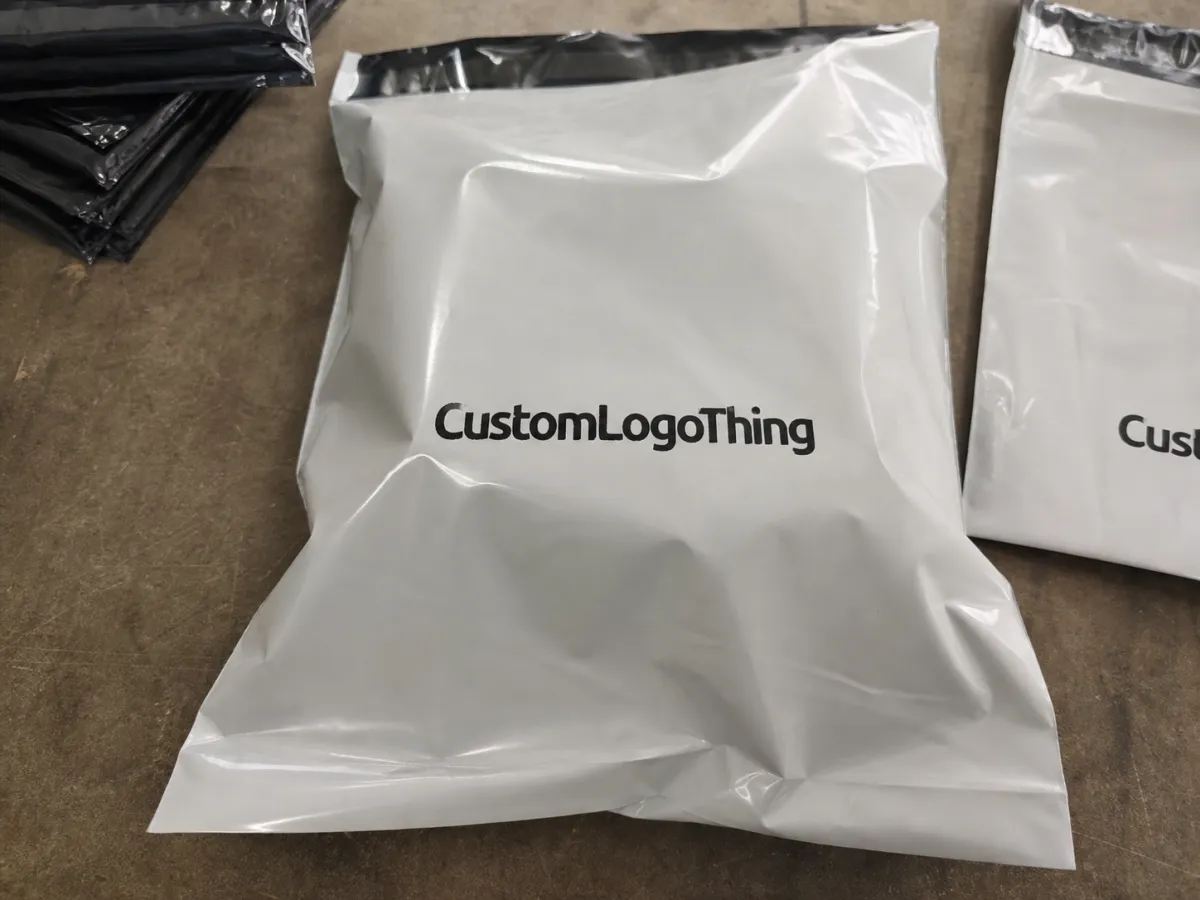
Flexible mailers move less air than cartons. That is the first savings, and it is not minor. A rigid box may look sturdier, but if the contents are small and the shipping network is efficient, the extra cubic volume becomes paid-for empty space. Poly mailers reduce that dead volume, which can lower carton count, pallet height, and dimensional freight charges. For small pet treat packs, that difference compounds quickly across a season.
The second savings is handling. A tight mailer can be packed faster than a box with inserts, void fill, and tape on multiple seams. Less assembly means fewer touchpoints and fewer chances for line errors. If the product already sits in a sealed inner pouch, the outer mailer does not need to duplicate every protective function. It just needs to keep the shipment intact and recognizable.
There is also a damage angle that tends to be underestimated. Overfilled boxes crush at corners. Underfilled boxes shift in transit. Either way, the package spends part of the journey fighting its own geometry. A properly sized mailer keeps the bundle closer to its natural footprint. That often leads to fewer dents, fewer failed closes, and fewer claims tied to cosmetic damage rather than product failure.
For pet treat buyers, odor and moisture are practical concerns as well. The mailer is usually not the freshness barrier if there is an inner pouch, but it can help protect the package from light scuffing, handling dirt, and incidental dampness during distribution. If the outer bag is the first thing the customer sees, the surface finish matters too. A clean matte film reads differently from a glossy one; it looks calmer, more controlled, and usually shows scratches less aggressively.
That is the real economic story behind pet treat Poly Mailers Unit cost. The lowest quote is not always the lowest cost to move the product. The right format can save more in shipping and labor than it costs in material.
Material Options, Print Finishes, and Closure Features
Most buyers start with film structure. Standard polyethylene is common, but the better performing option is often a co-extruded PE film or a blend with a stronger outer layer. Those structures usually hold seals more consistently and resist puncture better than a basic single-layer film. If the package will travel through a rougher fulfillment chain, that extra margin can be worth more than the small increase in resin cost.
Opacity is another choice with direct cost implications. White or fully opaque films hide the contents and create a cleaner print base, while clear films can work if the inner pack already carries the branding and you want to show it through the outer layer. Metallic or specialty finishes can raise perceived value, but they also raise complexity. More layers and more ink coverage usually mean more setup time and a higher unit number.
Printing style matters almost as much as film. A simple one-color logo on a blank field is usually the least expensive custom route. Add full bleed graphics, multiple colors, or precise registration, and the print bill goes up. Reverse print, white ink underbase, and complex gradients can all look sharp, but they are not free. If a barcode or lot code needs to be applied later, ask for a label-friendly zone rather than assuming any glossy area will hold adhesive well.
Closure features are easy to underestimate. A peel-and-seal flap is standard in many mailers, but there are meaningful differences in adhesive strength, release liner quality, and how the seal behaves after a bag has been stored warm. Buyers often ask for tear notches, tamper-evident seams, or reinforced side welds. Those features are not decoration. They affect line speed, package integrity, and whether the bag still looks presentable after a cross-country run.
Food packaging deserves one careful distinction. The outer mailer is often secondary packaging, not the food-contact layer. That matters because the performance target is different. The inner pouch should do the freshness work. The mailer should protect the shipping unit, support branding, and resist handling damage. If you need extra odor control or moisture resistance, ask the supplier what the film can actually do, then verify the inner pack separately instead of asking the mailer to solve both jobs.
For quality checks, practical testing tells you more than a polished brochure. Ask how the seal was evaluated, whether the film has been checked for puncture resistance, and what kind of transit stress the structure is expected to survive. If a supplier can reference common transport testing practices or dimensional tolerance checks, that is more useful than a vague claim that the bag is "strong."
Sizes, Gauge, and Seal Specs to Lock Down
Size should be based on the finished product, not the retail mockup. That seems obvious until the first sample fits the artwork beautifully and then fails once the real treat pack, insert card, and barcode label are added. Measure the filled bundle, then account for the flap, welds, and the room needed for a proper seal. Too tight, and the bag wrinkles or seals weakly. Too loose, and the product shifts, which defeats the point of using a smaller format in the first place.
Gauge, or film thickness, deserves the same discipline. Many printed mailers land somewhere between 2.0 and 4.0 mil, with heavier constructions used for sharper corners, denser bundles, or rougher handling. Thicker is not automatically better. A heavier film can improve puncture resistance and hand feel, but it also increases material cost and can make the pack stiffer than necessary. The goal is the thinnest film that still survives the route you actually use.
Before approval, lock down the spec details that tend to cause rework later:
- Usable width and length after the seal flap is counted
- Flap depth and adhesive type
- Filled weight target and pack density
- Side seam style and seam width
- Tear notch or easy-open requirement
- Barcode, lot code, or blank zone placement
One of the most expensive mistakes is approving a sample against a single SKU and then expanding the line without checking the heaviest version. That is how a package that looked fine on paper becomes too tight in production. If the treat line is likely to expand, test both the current fill and the largest expected fill before locking the dimensions. A little extra time here usually prevents a second round of tooling, art correction, or rush freight later.
Dimension discipline has a direct effect on pack-out speed. Fulfillment teams notice when a mailer opens cleanly, fits consistently, and seals without extra pressure. They also notice the opposite. A few millimeters can be the difference between an order that moves through the line and one that stalls for manual adjustment.
Pet Treat Poly Mailers Unit Cost, MOQ, and Quote Drivers
This is where pet treat Poly Mailers Unit cost starts to look less like a number and more like a formula. Suppliers are pricing film width, thickness, print coverage, closure style, packing configuration, and freight method. Change any one of those and the quote moves. Two samples can look close at first glance and still land in very different places once you compare the actual landed cost.
Material consumption is usually the biggest driver. A wider bag uses more resin. A heavier gauge uses more resin. Full-coverage art adds press time, ink, and proofing effort. Tamper-evident features, reinforced seams, and specialty finishes all add steps. Then MOQ enters the picture. Short runs almost always carry a higher per-piece cost because setup gets spread across fewer units. That is basic manufacturing math, not supplier behavior.
Quote comparisons make more sense if you separate base price from hidden charges. A low unit number can hide plate charges, tooling, freight minimums, or packing constraints. A slightly higher quote may include cleaner proofs, better tolerances, or a more predictable production window. The useful question is not which bag looks cheapest. It is which spec gives the lowest landed cost for the product you are actually shipping.
| Spec Type | Typical MOQ | Typical Cost Per Piece | Best Fit |
|---|---|---|---|
| Plain custom mailer, simple print | 5,000+ | $0.10-$0.18 | Basic launches, sample packs, simpler branding |
| One- to two-color branded mailer | 5,000-10,000 | $0.16-$0.28 | DTC orders, subscription shipments, repeat SKUs |
| Full-coverage print or specialty build | 10,000+ | $0.24-$0.45 | Retail-ready presentation, premium branding, stronger film needs |
Those figures are directional. Small runs with complex art can cost more than larger runs with simpler graphics, and freight can move the final number enough to matter. Even so, the pattern is stable: standard sizes and efficient artwork usually improve unit economics, while custom dimensions, dense ink coverage, and short-run orders push cost upward.
If the launch is urgent, a lower MOQ and a faster proof cycle may be worth the premium. If margin is the priority, the better move is usually to simplify the size, keep the art efficient, and consolidate SKUs where possible. In packaging, the best number rarely comes from one decision. It comes from half a dozen small ones that all point in the same direction.
Process and Timeline: Artwork, Proofing, and Production Steps
A clean quote process saves time before production even starts. Usually it begins with inquiry review, then moves into artwork checks, proof approval, production, inspection, packing, and freight booking. The process slows down fast when the supplier has to chase basic information. It moves faster when the spec is complete on day one.
Most delays are predictable. Missing dielines slow layout work. Low-resolution files create proof corrections. Last-minute copy changes force another round of checking. Barcode placement, legal text, and color expectations should be settled before the proof is signed off. Even a small revision can affect registration and packing schedule.
Buyers also need to separate sample turnaround from production lead time and transit time. Those are different clocks. A sample can often be produced faster than a full run, but that does not compress manufacturing and shipping for the full order. A practical planning window for custom printed mailers is often 5-10 business days for sampling, 15-30 business days for production, and then freight on top of that, depending on the route and order size. If the launch date is fixed, building in a buffer is cheaper than paying for expedited freight after the fact.
Once the spec is locked, repeat orders usually move faster because the proof and tooling steps are already on file. That is one reason procurement teams care so much about documentation. A detailed spec sheet and final art package make reorder planning simpler, cut the risk of small changes, and keep the unit cost from drifting because of avoidable revisions.
For teams that need several branded items at once, it helps to keep the artwork and packing conversation in one place through Custom Packaging Products. If the mailer is the main decision, reviewing Custom Poly Mailers can help clarify where print method, gauge, and size choices start to change the quote.
What Repeat Orders Reveal About the Spec
Repeat orders expose the weak points. A first run can hide inconsistency because everyone is paying close attention. On the second or third run, the real questions show up. Did the dimensions hold? Did the adhesive behave the same way after storage? Did the print color stay stable across batches? That is the difference between a nice sample and a production-ready package.
Pet treat packaging is sensitive to small deviations because fulfillment teams need consistency. If one batch packs easily and the next batch feels slightly off, the problem shows up in labor time before it shows up in returns. The same is true for print finish. A surface that looks elegant on a sample but scuffs easily in transit may be acceptable for a launch kit and unacceptable for a subscription program that ships every month.
Quality-control checks should be plain and specific. Dimensional verification. Seal integrity checks. Adhesive performance after storage. Visual inspection for registration drift, color shifts, and pinholes. None of that is glamorous. It is the work that keeps the reorders from turning into arguments over whether the package changed or the product changed.
There is also a procurement lesson here. Buyers who ask about annual volume, seasonal swings, and expected reorder timing usually get more accurate quotes. That information helps a supplier choose the right run size and pack configuration. It also reduces the odds of a rushed reprint when the first order performs better than expected and inventory runs down too fast.
Packaging Mistakes That Raise Unit Cost Fast
The easiest way to overpay is to specify more packaging than the product needs. A heavier gauge than necessary, a finish that does not change performance, or full-coverage art on a bag that could work with a simpler layout all add cost. If the treats are light and the shipping route is controlled, many brands can simplify the structure without weakening protection.
Too many sizes create a second kind of waste. Every added SKU splits volume, weakens MOQ leverage, and complicates forecasting. More sizes mean more artwork versions, more inventory to manage, and a higher chance that one format gets stuck on the shelf while another sells through. Standardization does not remove brand control. It just forces a sharper distinction between what matters and what only looks important.
Skipping proof review is another expensive habit. A small typo, a barcode clash, or a seal zone that lands too close to the edge can trigger delays and reprint risk after approval. That gets painful quickly if the order is tied to a launch or a retail ship date. Even when the bag itself is fine, a bad proof can add setup work that wipes out the savings you were trying to protect.
Freight and warehousing are part of the same equation. Oversized cartons, inefficient pallet counts, and rush shipping can erase a lower piece price. A slightly more expensive mailer can still win on landed cost if it stores better and ships more efficiently. That is the comparison that matters. Buyers who focus only on the bag price often miss the bigger leak in the system.
If the spec feels overbuilt, ask which feature is carrying real value and which one is just habit. That question usually gets you closer to the right number than another round of abstract price shopping.
What to Send for a Fast Quote and Next Steps
To get a useful quote, send the filled product dimensions, treat weight, target bag style, artwork files, estimated annual volume, and preferred ship date. Add retail or fulfillment requirements too, especially if the mailer needs a barcode zone, tamper evidence, or a particular print finish. A clean brief shortens the back-and-forth and makes the quote more accurate.
Side-by-side pricing helps more than a single number. Ask for a lean launch option, a mid-tier production option, and a volume option. That makes the MOQ trade-off visible. It also shows whether the quote is being driven mostly by material, printing, or freight. Once those drivers are visible, the buying decision gets simpler.
After that, the next step should be straightforward: approve the proof or sample, confirm the final spec sheet, and lock the reorder plan before inventory gets tight. If the first run performs well, document the exact construction so future purchasing stays consistent. Reorder speed usually comes from disciplined specs, not luck.
For pet treat brands, the best answer to pet treat Poly Mailers Unit cost is not a generic lowest-price target. It is a spec that protects margin, survives the route, and does not add work for fulfillment. That is the version worth ordering.
What drives pet treat poly mailers unit cost up the most?
Film thickness, bag size, print coverage, and closure features move the price fastest. Low-volume orders also raise the per-piece number because setup costs are spread across fewer units. Freight method can matter almost as much as the bag itself.
Can a standard size lower custom pet treat mailer pricing?
Yes. Standard dimensions usually reduce setup complexity and can improve MOQ efficiency because the run does not need a custom size adjustment. If the product fits a common format, the savings often come from simplification rather than from trimming a small amount of film.
What MOQ should I expect for printed pet treat poly mailers?
MOQ varies by print method, size, and film structure, but smaller orders almost always carry a higher per-unit price. If you are launching a new treat line, ask for tiered pricing so you can compare a pilot run with a larger production buy.
What information do I need before requesting a quote?
Provide filled dimensions, treat weight, artwork files, closure style, estimated annual usage, and any shipping or retail requirements. Exact inputs help a supplier quote accurately and reduce revisions after the first proof.
How long does production take after artwork approval?
Production lead time depends on order size, print complexity, and current production load, while shipping time is separate. A practical planning window is often 5-10 business days for samples and 15-30 business days for production, plus freight. If you need repeat runs to move faster, keep the final spec unchanged so the quote and schedule stay stable.


