A pet treat trucker caps Unit Cost Review usually starts with a simple surprise: the cap looks more finished than the price implies. The mesh back is doing a lot of the work here. It reduces material volume, trims sewing time, and keeps the silhouette light enough that the money goes where buyers actually see it - the front panel, the logo, and the finishing details.
For pet treat brands, that matters because the cap is rarely a standalone fashion item. It might sit in a trade-show bag, become staff wear, ride along with retail bundles, or serve as a giveaway that needs to feel useful instead of disposable. The buying job is not to make the cap fancy. It is to make it look intentional, hold up in use, and stay within a cost band that still leaves room for packaging, freight, and margin.
The market tends to reward restraint. A clean trucker cap with a disciplined spec often looks better than a heavily dressed-up cap with too many extras. That pattern shows up across small brands and larger programs alike: the more complicated the build, the less predictable the cost.
Why the mesh-back format keeps costs low
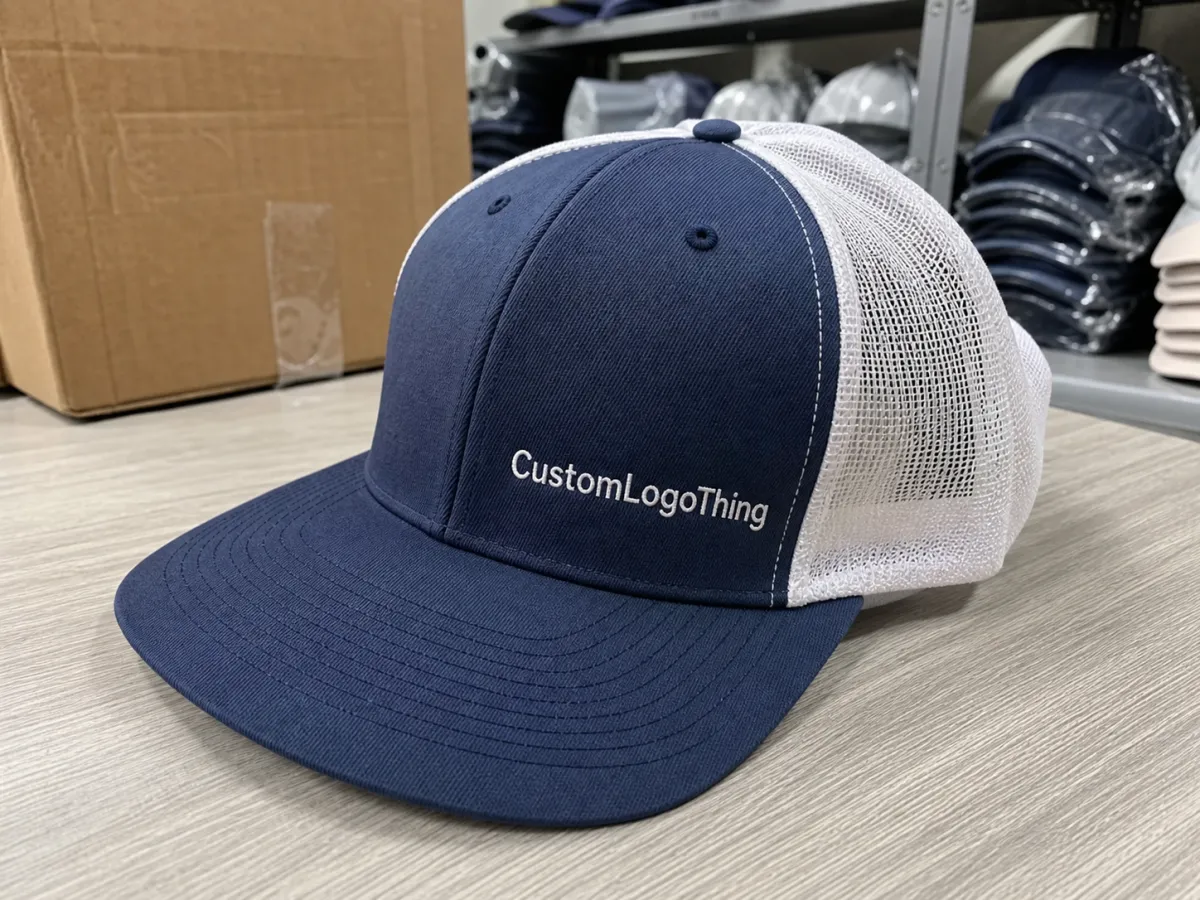
The trucker cap stays economical because it does not ask for much fabric. A standard version usually combines a structured front panel or two, polyester mesh at the sides and back, a brim, and a plastic snap closure. The mesh is lighter than full cloth panels and faster to sew, which lowers both material cost and labor pressure. That is why the style has stayed durable in the promo and retail space for years.
Cost control begins with the crown. A full cloth cap, especially one made from heavier twill or brushed cotton, absorbs more material and usually carries a stronger visual expectation. A trucker cap gets a pass on simplicity because the design language already says casual, breathable, and practical. Buyers can take advantage of that. If the brand does not need premium fabric hand-feel, the trucker format keeps the base price in a workable range.
The real budget swing comes from the front. A blank mesh back barely moves the unit cost. A front logo with simple embroidery, on the other hand, can stay efficient. Once artwork turns into dense thread work, multi-color patches, or special label construction, the quote starts climbing. That is not a flaw in the cap; it is a direct reflection of production steps.
For pet treat brands, the style also makes behavioral sense. The cap reads friendly rather than formal. That suits sampling events, warehouse teams, field reps, and retail promotions where the goal is approachability. The product needs to feel on-brand without trying too hard. Overdesigned caps often fail that test.
There is one more practical advantage. Truckers are forgiving. Minor surface imperfections on a front panel are easier to hide than on a smooth, full-fabric cap. Breathability also matters if the cap is worn for long hours at events or during distribution work. Comfort does not show up in a price line, but it affects how often the cap is actually worn.
Cap build, fit, and logo placement options
Most unit cost mistakes begin with vague build choices. A structured front panel gives a sharper branding surface, especially for embroidered logos and patches. A softer front can feel more relaxed, but it may collapse slightly around heavier decoration. Five-panel truckers often offer a larger uninterrupted front field, while six-panel versions can create a rounder crown. Neither is universally better. They solve different problems.
Mesh choice matters too. Coarser mesh is usually cheaper and more breathable, while finer mesh can look cleaner and feel a bit more retail-ready. That difference sounds minor until a buyer compares samples side by side. Under show lighting, finer mesh often looks more deliberate; under warehouse use, coarser mesh is perfectly acceptable and easier on the budget.
Brim shape changes the wearing profile. A pre-curved brim softens the look and suits teams that want a traditional cap feel. A flatter brim can feel more contemporary and may appeal to brands leaning toward a younger retail audience. Closure type is another small cost lever. Plastic snapbacks are standard and affordable. Metal buckles, fabric straps, and tuck closures usually add a little more per unit and can extend handling time during assembly.
Decoration methods that move the number
Embroidery is still the workhorse. It is durable, familiar, and good for logos with moderate detail and limited colors. Woven patches handle fine lines more cleanly than heavy thread work and can give a sharper retail finish. PVC patches add a molded, raised look and are useful for bold art or simple shapes. Screen print is usually the lowest-cost method if the cap surface and artwork suit it, though it is less forgiving on fine detail. Woven labels, side labels, and small woven flags are best treated as finishing touches, not as free add-ons.
Logo placement affects both visibility and cost. Center-front branding usually gives the best balance of impact and efficiency. Side-panel placement can look polished, but it is smaller and often less legible from a distance. Brim prints draw attention quickly, though they can date a design faster and may not fit staff wear as well. If the cap is going into a retail bundle, front placement is usually the most sensible use of decoration budget.
The artwork itself should decide the method. Simple text and flat shapes can be embroidered cleanly. Thin lines, gradients, and complex outlines usually need patch work or they lose clarity. That is one of the easiest ways to avoid disappointment. A cheap decoration method is not cheap if it makes the logo hard to read.
Keep the cap simple where the eye does not land. Spend on the surface that sells the brand in the first second.
Fit deserves equal attention. A one-size adjustable cap can still sit badly if the crown depth is wrong. Too shallow and it rides high. Too deep and it swallows the face. Ask for a sample that includes the actual closure hardware and finished sweatband, not just a mockup shell. If the cap is for staff wear, long-shift comfort is part of quality. That means checking the interior tape, seam softness, and how the band feels against the forehead after repeated wear.
Specs to confirm before you approve a sample
Sampling is where hidden assumptions turn into invoices. Before production starts, lock the crown height, panel count, brim shape, mesh color, closure type, sweatband material, and decoration size. If any of those are still floating, the factory may make a reasonable guess - and reasonable guesses are expensive to fix later.
Color control matters more than many buyers expect. Pet treat brands often work with packaging systems that already have precise palette rules, and the cap has to sit beside those colors without looking off. If the brand uses a specific orange, green, tan, or teal, ask for Pantone targets or physical standards. A digital mockup is not enough. Mesh, thread, and brim fabric can all shift slightly under different light, so a real sample should be checked in daylight and indoors.
Decide how the cap will be packed before the run starts. Individual polybags are common for retail and e-commerce. Bulk packing is cheaper and faster for staff gear or event stock. Tissue wrap, barcode stickers, hangtags, and insert cards all change both labor and cost. If the caps need outer carton marks, mixed-size labels, or pallet notes, that should be part of the first brief, not a late request.
Transit planning belongs in the same conversation. If the caps will move with other goods or travel long distances, carton strength and stacking stability matter. [ISTA transit testing standards](https://www.ista.org/) are a useful reference for packaging performance, and [FSC](https://fsc.org/) can help buyers verify responsibly sourced carton or paper components where sustainability requirements are part of the spec.
A practical approval checklist helps cut noise:
- Confirm crown depth, panel count, and brim shape.
- Match front color, mesh color, and brim color to the approved palette.
- Check logo size, stitch density, patch border width, or print coverage.
- Test the closure, sweatband, and internal seam comfort.
- Review packaging, carton count, and label placement.
If the sample misses on one of these points, fix the spec first. Trying to "work around" a bad sample usually creates a larger problem on the bulk run.
Pet treat trucker caps unit cost review: pricing and MOQ
A useful pet treat trucker caps Unit Cost Review should break the quote into real components. The core pieces are the blank cap, decoration, setup charges, packaging, freight, and any special labeling. Once those are separated, two quotes that looked far apart often become easier to compare. One may be cheaper on the cap and more expensive on decoration; another may hide the cost in packaging or freight assumptions.
MOQ changes the math quickly. A 100-piece order carries more setup weight per unit, so the price per cap usually feels high. At 300 pieces, the balance improves. At 500 pieces, many buyers start to see a more workable bulk cost. By 1,000 units, the setup is diluted enough that standard decoration methods usually settle into a cleaner range, provided the spec does not become too elaborate.
For standard pet treat Branded Trucker Caps with one front decoration and no heavy custom packaging, these are realistic ex-factory ranges buyers often see:
| Order quantity | Simple embroidery | Woven or PVC patch | Best use case |
|---|---|---|---|
| 100 pcs | $4.20-$6.80 | $4.90-$7.60 | Testing, small launches, staff samples |
| 300 pcs | $3.10-$4.90 | $3.60-$5.60 | Events, distributor packs, limited retail runs |
| 500 pcs | $2.55-$3.95 | $3.00-$4.70 | Core bulk orders and repeat programs |
| 1,000 pcs | $1.95-$3.10 | $2.35-$3.85 | Retail bundles, chain promotions, ongoing stock |
Those ranges are not fixed. Stitch count, patch size, logo coverage, mesh grade, and packaging all move the final number. A small change in decoration can shift cost more than expected. A dense embroidery file with lots of stitch fill takes longer to produce and can distort on a soft crown. A larger patch uses more material and may need more secure attachment. Even the closure choice can move the quote if the buyer wants an upgraded buckle or custom color-matched hardware.
Setup charges are usually manageable, but they matter on small runs. Embroidery digitizing may fall around $25-$75. Woven patch tooling can land around $40-$120. PVC mold fees are often $60-$180 depending on detail and size. Custom inside tape prints or private labels can add another setup layer or a small per-unit fee. None of that is unusual. It just needs to be visible before the order is compared against competitors.
Freight and packaging often cause more surprise than the cap itself. If the quote does not show whether it is ex-factory, FOB, or landed, the buyer is not comparing the same thing. A low ex-factory number can end up more expensive than a mid-range quote once packaging upgrades and shipping are added. That is why a clean quote should always separate unit cost from movement cost.
The simplest way to improve pricing is to simplify the spec before asking for a discount. One fewer color, a standard snap closure, or a single front logo can do more for unit cost than aggressive haggling. If the supplier is quoting a lower number but excluding packaging, freight, or decoration changes, the quote is incomplete, not cheaper.
Ask for both ex-factory price and landed cost. A bargain that arrives expensive is just a missed detail with a better headline.
For buyers comparing several factories, request the same spec from each one and ask for unit cost at 100, 300, 500, and 1,000 pieces. That makes the break points visible. If one supplier improves sharply at 500 while another stays flat, the volume threshold becomes obvious. That is the kind of data that turns a Unit Cost Review into a decision tool.
Production steps and turnaround expectations
The production path should be ordinary. Quote, artwork review, proof, sample approval, bulk production, inspection, packing, shipment. That is the sequence buyers want because it makes delay visible early. Any uncertainty in the middle tends to spread outward into timing and cost.
Lead times depend on decoration method and factory load, but practical planning ranges help. Proofing can take one to three business days if the logo file is ready. A sample may take five to ten business days for standard embroidery, and longer if the cap uses a patch, custom label, or unusual material combination. Bulk production commonly runs 12 to 20 business days after approval for straightforward orders. Mixed specs, color changes, or packaging customization can stretch that further.
Several things slow the schedule more than buyers expect. Missing vector artwork. Late color changes after proofing. A sample review that drifts for days without comments. Requests for custom inserts after the bulk run has already started. None of those are dramatic, but each one pushes the timeline.
Rush orders are possible in some cases, but not every build is rush-friendly. Simple embroidery on a standard cap can move faster than a molded patch, a multi-location logo, or a mixed-color run with custom carton marks. If the order includes several decoration steps, assume the factory needs more schedule room. That is a capacity issue, not a negotiation point.
Buyers can reduce friction with a few habits:
- Send a vector logo or a clean high-resolution file.
- Confirm Pantone or PMS targets before proofing.
- Reply to sample comments in one clear round.
- Put packaging and labeling requirements in the first brief.
- Ask for separate sample timing and bulk timing.
That last item matters because a quick sample does not always mean a quick order. Material supply, decoration queues, and carton availability can all affect the bulk run independently. Splitting the schedule into parts keeps planning realistic.
Why buyers reorder the same cap spec
Repeat orders are the real quality test. A supplier can make one good sample. The harder task is making the same cap again six months later and keeping the fit, color, and decoration consistent. That consistency is what buyers remember when they decide whether to reorder.
Why do brands keep repeating the same spec? Because it removes guesswork. The logo already fits. The patch size already works. The cap already wears well. The carton count is known. The reorder becomes a production exercise rather than a design debate. For a pet treat brand juggling packaging, promos, and distribution, that stability has real value.
Quality checks on reorders should be specific, not vague. Look at stitch density on embroidery. Check patch alignment against the crown seam. Test the snap closure after repeated use. Measure logo placement against the approved sample, not against memory. Confirm carton counts, sticker placement, and outer marks. If any of those drift, the product may still look acceptable at a glance, but it will not feel like the same order.
Underquoting is another issue buyers learn to watch for. Some suppliers give a low first-order number and then recover the margin through add-ons, unusual packaging assumptions, or surprise tooling language. Better partners keep the quote structure stable and explain the cost drivers early. That makes budget planning easier and reduces back-and-forth later.
From the buyer side, the best reorder outcome is simple: fewer defects, fewer delays, and no invoice surprises. If the cap arrives looking like the approved sample and the carton count matches the paperwork, the job is doing what it should do.
What to send for a fast quote and next step
Fast quotes usually come from complete briefs. Send the logo file, quantity breaks, target delivery date, preferred decoration method, and packaging requirements in the first message. If the supplier has to guess at any of those pieces, the quote will be vague, and vague quotes are hard to compare.
Ask for a side-by-side breakdown at 100, 300, 500, and 1,000 pieces. Those four points are usually enough to show where the unit cost starts to improve. Also request proof timing and freight estimates. A quote without those details leaves too much room for later revisions.
Do not hide the items that change cost. If the cap needs a woven patch, say so. If the carton should use recycled material, include that. If barcode stickers or retail hangtags are required, state it up front. None of those choices are minor to production, so they should not appear late in the process.
A clean order sequence keeps things moving:
- Confirm the spec sheet.
- Compare ex-factory and landed cost.
- Approve the sample path.
- Lock the production schedule.
- Place the order with final artwork.
That process protects the buyer from drifting specs and hidden extras. It also keeps the Unit Cost Review anchored to the actual cap, not a rough idea of one. If the brief is clear, the quote usually is too.
FAQ
What affects the unit cost of pet treat trucker caps the most?
Decoration method usually has the biggest impact, followed by order quantity, packaging, and freight assumptions. A simple front logo is often cheaper than dense embroidery, patch work, or multiple logo placements. Retail packaging, inserts, and custom stickers push the price higher fast.
What MOQ makes trucker caps worth ordering for a pet treat brand?
Small test runs can work, but 100 pieces rarely give the best cost per unit. Around 300 to 500 pieces is where the pricing often becomes more practical for bulk buyers. If the goal is retail margin or repeat use, larger quantities usually make better financial sense.
Which decoration gives the best value on pet treat trucker caps?
For a clean premium look, simple embroidery or a woven patch is often the best balance. For the lowest price, a basic print or single-color mark can be efficient if the artwork is simple. The right choice depends on logo detail, durability needs, and the look the brand wants to project.
How long does production usually take after artwork approval?
Proofing is usually quick, but sample and bulk timing depend on decoration method and factory capacity. A straightforward run may move faster than patch-heavy or custom-packaging orders. Ask for sample timing and bulk turnaround separately so the schedule is clear.
What do I need to send for an accurate quote?
Send a vector logo, target quantity, preferred colors, decoration method, delivery deadline, and packaging needs. The more exact the brief, the cleaner the quote and the fewer revisions later.

