Buyer Fit Snapshot
| Best fit | Printed Cartons with Foil Stamping projects where brand print, material claims, artwork control, MOQ, and repeat-order consistency need to be specified before quoting. |
|---|---|
| Quote inputs | Share finished size, material target, print colors, finish, packing count, annual reorder estimate, ship-to region, and any compliance wording. |
| Proofing check | Approve dieline scale, logo placement, barcode or warning zones, color tolerance, closure strength, and carton packing before bulk production. |
| Main risk | Vague material claims, crowded artwork, missing packing details, or unclear freight terms can make a low unit price expensive after revisions. |
Fast answer: Printed Cartons with Foil Stamping: Board, Finish, Dieline, and Unit Cost should be specified like a repeatable production item. The safest quote records material, print method, finish, artwork proof, packing count, and reorder notes in one written spec.
Production checks before approval
Compare the actual filled-product size with the drawing, then confirm tolerance on folds, seals, hang holes, label areas, and retail display edges. Reserve space for logos, QR codes, warning copy, and material claims before decorative graphics fill the panel.
Quote comparison points
Review material grade, print process, finish, sampling route, tooling charges, carton quantity, and freight assumptions side by side. A quote is only useful when the supplier can repeat the same color, closure quality, and packing count on the next order.
Printed cartons with foil stamping can turn an ordinary folding carton into packaging that feels considered the second it reaches a customer’s hand. That flash of metallic detail catches light fast, reads clearly from a distance, and adds a sense of care without changing the carton’s basic structure. The product still gets the protection it needs, the pack still stacks and ships the way it should, and the front panel gains a detail that tells the eye where to look.
For a packaging buyer, the appeal is pretty easy to understand. A well-placed foil accent can shift perception before anyone opens the box, which is why printed cartons with foil stamping show up so often on cosmetics, confectionery, spirits, specialty foods, supplements, and seasonal gift packs. The trick is not just making something shiny. The real skill lies in putting the shine in the right place, on the right board, with a process the converter can run cleanly from proof to finished carton.
Too many foil issues start when the finish is treated like decoration added at the end. Printed cartons with foil stamping work best when board selection, print method, coating, die cutting, and folding are planned together from the start, because each choice changes how the carton looks on press and how it behaves after converting, packing, and shipping. If one piece is off, the whole thing can feel kind of forced.
Printed Cartons with Foil Stamping: Why They Stand Out
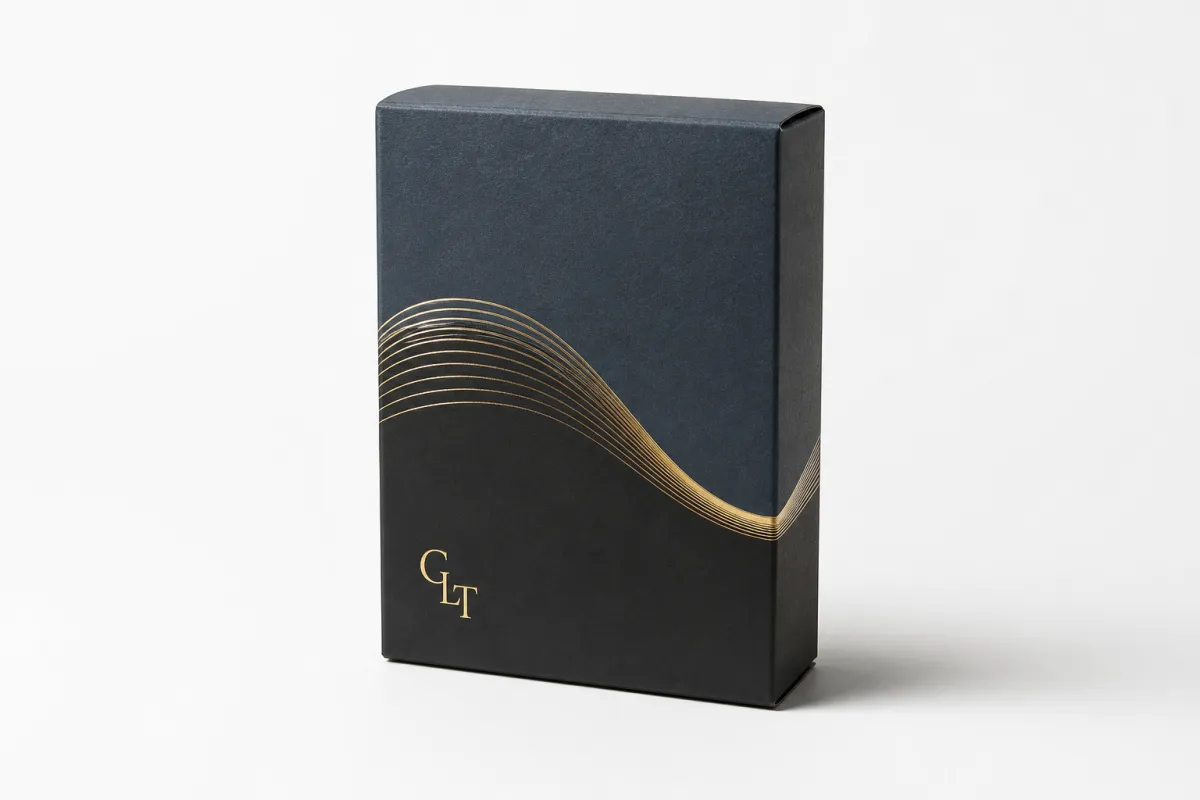
Printed cartons with foil stamping stand out because the effect has real definition. Metallic ink can hint at shine, but foil gives a sharper edge, stronger reflectivity, and a surface feel that changes as the carton moves under light. On a crowded shelf, that difference matters. Buyers often make a snap judgment in a second or less, and a foil logo, border, or seal can give a carton a clear point of focus without crowding the whole design.
At a technical level, foil is a transferred layer. Heat and pressure push the foil film onto the carton surface through a shaped die, leaving the chosen area highlighted with precision. Because that metallic layer sits on top of the printed sheet rather than being mixed into the ink film, printed cartons with foil stamping usually deliver higher contrast on matte backgrounds, dark colors, and restrained layouts. Luxury cosmetics, premium chocolate, holiday packaging, and giftable products rely on that contrast because it reads as intentional rather than flashy.
Buyers also respond to the psychology of the finish. Reflective detail suggests care and attention, which is different from simply looking expensive. That distinction matters. Printed cartons with foil stamping do not need to cover every panel to feel premium; a narrow border, a seal, a monogram, or a small nameplate can carry more presence than a full-panel metallic treatment.
The result is strongest when the rest of the pack supports the finish. Smooth coated board, disciplined artwork, and accurate trimming help the foil feel deliberate. Put the same foil on a rough uncoated board and the edges can soften. Place it too near a fold and it may crack after converting or during use. Printed cartons with foil stamping are judged after folding, gluing, shipping, and handling, not just under the press lights.
Use foil where the eye naturally lands: the brand mark, the product name, a crest, a seasonal accent, or one focal detail. That approach keeps printed cartons with foil stamping elegant and avoids a scattered, overworked look. I’ve seen more than one nice design get watered down because someone tried to make every empty corner do the same job.
A foil accent is strongest when it looks chosen, not added because the design had empty space. Spread it across every panel and the carton loses contrast, which makes the premium detail feel less special.
- Best fit: premium retail cartons that need stronger shelf presence.
- Common look: metallic logo, border, seal, or compact highlight panel.
- Best result: smooth board, controlled artwork, and careful post-press handling.
For a wider packaging context, industry resources such as packaging.org can help you compare carton structures, finishing methods, and production terminology before you settle on a spec.
How Printed Cartons with Foil Stamping Work in Production
The production sequence matters more than many teams expect. Printed cartons with foil stamping usually start with artwork setup, then move into print, coating if required, foil application, die cutting, folding, and final converting. Some shops apply foil before the final die-cut stage. Others shift the order based on press configuration, sheet size, and whether the job also includes embossing, spot UV, or lamination. The exact route changes from plant to plant, but the logic stays the same: each step has to support the next one.
Tooling sits at the center of the process. A custom metal die is made for the foil area, and that die has to match the artwork closely if the finish is going to land cleanly on a logo, seal, or line element. Fine type can be stamped, although it needs discipline. Letters that are too small, too thin, or too tight together can fill in or lose their edges. For most carton work, solid shapes, clear spacing, and stronger serif structures are easier to run than delicate line art. Printability should lead the conversation before decoration does.
During the press run, heat activates the adhesive layer on the foil while pressure bonds the metallic or pigmented film to the carton surface. Dwell time, pressure balance, and substrate smoothness all affect the crispness of the transfer. A press that is slightly off can still produce a serviceable carton, but a well-tuned press is where printed cartons with foil stamping really show their quality. The differences appear in the details: cleaner edges, less haloing, more even brightness, and better transfer on narrow strokes.
Register deserves real attention. Foil can sit over printed graphics, but the alignment window is tight, especially when the design uses borders, reverse type, or a logo that needs to land in the exact center of a panel. A careful run may hold foil and print within about 0.25 to 0.5 mm on many jobs, though that is not a universal spec. The usable tolerance depends on the board, the press, the carton size, and the converting method. Larger cartons and heavier boards can move differently through the line, so the converter has to account for that movement during setup.
Lead time follows the production path. If the die must be made from scratch, if the job needs multiple colors, or if the carton needs coating cure time before the foil pass, the schedule stretches. For simple printed cartons with foil stamping, total production often lands around 12 to 15 business days after proof approval, though that can move up or down depending on shop workload, make-ready time, and whether embossing or other finishing steps are part of the order. That timing is a working estimate, not a promise, and it can shift fast if approvals slow down.
A good converter will explain where the real bottleneck lives. Sometimes the delay comes from approved art. Sometimes it is board drying. Sometimes it is the die itself. Clear answers make better buying decisions, and they save everyone from guessing where the schedule slipped. If someone can’t explain the sequence in plain language, I’d ask again before signing off.
If you need a more technical look at transit and packaging performance, the test methods and guidance from ISTA are useful when cartons need to survive distribution as well as look sharp on shelf.
Cost, Pricing, MOQ, and Quote Drivers
Pricing for printed cartons with foil stamping usually comes down to a small set of repeatable variables: foil area, board choice, carton size, number of printed colors, finish complexity, and whether the foil lands on one panel or several. A small logo accent on a standard carton is a very different job from a wraparound design with foil across multiple panels, especially if the pack also asks for embossing, soft-touch lamination, or spot UV. Every extra step adds setup time, make-ready, and waste allowance.
Tooling is a major piece of the math. A custom foil die may not be expensive on its own for a small logo, but it still takes time to make, mount, test, and adjust. Make-ready matters too. When the press operator has to set temperature, pressure, foil feed, and register, that labor becomes part of the run cost. Unit price usually falls as quantity rises, so low-volume orders can feel high on a per-carton basis. That is normal and does not automatically mean the quote is padded; it usually means setup cost is being divided across fewer cartons.
MOQ is a practical reality buyers have to plan around. Many converters set minimum order quantities because printed cartons with foil stamping require setup waste, die handling, and press stabilization before the first sellable sheet comes off the line. Very low quantities force those fixed costs into a smaller run, which pushes the unit price higher than expected. A small pilot run can make sense for testing, but it is rarely the lowest-cost path for final production.
Here is a useful way to compare common options.
| Option | Typical Use | Setup Complexity | Approx. Unit Cost at 5,000 pcs | Notes |
|---|---|---|---|---|
| Foil accent only | Logo, seal, nameplate | Low | $0.18-$0.28 | Best on smooth coated board with simple art |
| Foil + embossing | Crest, medallion, hero mark | Medium-high | $0.28-$0.45 | Requires extra tooling and tighter approval control |
| Full-panel foil | Seasonal packs, gift sleeves | High | $0.35-$0.65 | More waste, more risk, stronger visual impact |
| Foil + spot UV | Contrast-heavy premium cartons | Medium | $0.22-$0.40 | Depends on coating compatibility and print sequence |
Those figures are practical reference points rather than fixed rules. A carton with a complex shape, heavy coverage, or unusual board can move outside those ranges quickly. The same is true for a run that needs special handling after lamination or a carton that has to be packed in a very specific way. Even so, the table gives a buyer a better starting point than a vague promise of “premium finishing.”
A budget rule that saves time: ask for separate line items for printing, foil stamping, die creation, coating, and converting. That split shows where the money is going and makes quotes easier to compare fairly. If one vendor bundles tooling into the unit price and another lists it separately, the second quote can look more expensive even when the total is similar. Printed cartons with foil stamping reward careful comparison, because the line items often matter more than the headline price.
Design and Material Factors That Affect the Finish
Substrate choice is one of the first technical decisions that shapes printed cartons with foil stamping. A smooth coated board usually gives the cleanest transfer because the die can press the foil evenly against a stable surface. A rough or highly absorbent stock can soften the edges, reduce reflectivity, or make the foil read uneven under strong light. That does not rule out uncoated or textured board. It simply means the result should be tested before you commit to production.
For carton work, board types such as SBS, C1S, and coated artboard are common because they hold detail well and convert cleanly. A premium carton often uses 300gsm to 400gsm board, though the right choice depends on product weight, carton size, and how much rigidity the pack needs. If the carton has to survive retail handling, distribution, and a fairly hard shelf life, the board spec belongs in the finishing conversation from the start, not as a late change.
Artwork has nearly as much influence as paper. Bold logos, larger type, and clear shapes are easier to stamp consistently than tiny copy, hairline rules, or crowded decorative patterns. Leaving enough clear space around foil elements helps the eye read the detail instead of fighting through clutter. If the goal is a premium look, clarity often beats complexity. That is especially true for printed cartons with Foil Stamping on small packs where every millimeter of panel space counts.
Color changes the mood as well. Foil on a matte black carton looks very different from foil on a glossy white carton. Warm gold can read rich and classic against deep navy, while the same gold can feel louder over red. Silver can look cool and technical, or it can feel soft and restrained, depending on the background colors. Surrounding print colors affect how the foil is perceived, so buyers should not judge the finish by foil swatches alone.
Coating and varnish deserve their own review. UV coating can protect the print, yet it also changes the visual relationship between foil and the rest of the artwork. Spot UV around a foil logo can create clean contrast if the layout is disciplined. If the coating system does not match the foil method, adhesion suffers and the finish can look dull or patchy. Lamination, including soft-touch lamination, can be beautiful, but it may require a foil system tested for that surface. A sample is cheaper than a remake, and I’d rather lose an afternoon on a press check than a week on a reorder.
Structural design matters too. Creases, folds, scores, and glue zones should stay clear of foil whenever possible. A foil layer that crosses a fold line can crack once the carton is converted and handled. That may be acceptable on a display-only pack, but for a retail carton that will be opened and closed, it is a risk. The safest designs place foil on flat panels or on areas that do not flex much in normal use.
Embossing can raise perceived value even further, but it changes the design rules. The raised area needs breathing room, and the foil impression has to align with the relief. Used well, embossing and foil give a carton depth print alone cannot match. Used poorly, they make the pack more expensive without improving it. Printed cartons with foil stamping work best as a planned finishing system, not as a decorative add-on pasted in at the end.
Step-by-Step Process and Timeline for Approval
Good approval workflow keeps printed cartons with foil stamping from turning into a cycle of corrections. The cleanest path starts with the file package. Send vector artwork when possible, keep the foil layer separate from the print layer, and label every foil element clearly. If the foil should only hit a logo or title, say that directly. If you want a particular metallic tone, define it too. “Gold” can mean a bright mirror finish, a softer champagne, or a warmer antique look, and the converter should not have to guess.
Once the files are in hand, proofing begins. A digital proof is useful for spelling, placement, panel alignment, and overall layout, but it cannot fully show how foil will reflect light. That is why a physical mockup or flat sample matters so much when the design uses small type, narrow borders, or tight registration. On a premium carton, one millimeter can decide whether the finish reads as sharp or slightly off. Slowing down for one sample is cheaper than correcting a full run later.
- Preflight artwork: confirm dimensions, bleed, foil layer separation, and fold positions.
- Review the substrate: check whether the board, coating, or lamination is appropriate for the finish.
- Approve the mockup: inspect foil placement, type size, color balance, and carton structure.
- Make the tooling: produce the custom foil die and any embossing die if needed.
- Run the press: print, foil stamp, cure or dry, then move into die cutting and converting.
- Inspect final cartons: check folds, glue, edge quality, and how the finish behaves after conversion.
The sequence sounds straightforward, yet timing is where schedules often slip. Die fabrication can take several days. Press scheduling may depend on where the run fits into the shop calendar. If the carton also needs spot UV, embossing, or lamination, each step can add queue time and a separate approval gate. For simple printed cartons with foil stamping, work may move quickly once the proof is signed. Complex work rewards patience.
Sign-off discipline helps more than most people expect. Approve the carton only after checking spelling, size, foil tone, fold positions, and special finishes together. Do not approve print first and then decide to move the foil unless you want the schedule to expand. A late change in foil placement can ripple through die making, press setup, and carton folding alignment. The earlier the finish details settle, the easier the project becomes.
Ask for the production order in plain language. A good vendor should be able to tell you whether the foil runs before or after print, where the drying window sits, and how the die-cutting stage is handled. If the answer stays vague, ask again. Printed cartons with foil stamping are easier to manage when the whole team can picture the sequence instead of only seeing the artwork on a screen.
Common Mistakes to Avoid Before You Approve
The most common mistake is using too much foil. It feels premium in concept, yet in production it can flatten the design, raise cost, and reduce the contrast that makes foil effective in the first place. If every panel carries a shiny element, nothing feels special. Printed cartons with foil stamping work best when the foil has a clear reason to be there. A focal point, a signature mark, or a seasonal accent usually does more for the pack than blanket coverage.
Poor spacing creates another set of problems. Foil placed too close to an edge, a fold, or a cut line can crack, misregister, or disappear once the carton is converted and packed. That risk grows when the pack will be handled often or shipped in bulk. In real use, cartons flex, stack, and rub against each other. A design that looks perfect on a PDF may behave very differently after die cutting and folding.
Tiny details can also cause trouble. Small text may fill in. Hairline rules can break apart. Decorative borders can wander if the substrate shifts a little during press setup. Fine detail is possible, but it needs a converter who knows what size is realistic on the chosen board and finish. Printed cartons with foil stamping are much more forgiving when the artwork is bold and the hierarchy is clear.
Budget mismatch causes another kind of damage. A presentation board may show a foil field, embossing, soft-touch lamination, and spot UV all at once, but that does not mean the final carton should carry every effect. The better question is not “Can we do all of it?” The better question is “Which finish choices support the brand, the product, and the price point?” That approach keeps the carton from becoming overworked.
- Avoid foil over folds unless the design has been tested for flex.
- Avoid tiny reversed type unless the converter confirms the minimum size.
- Avoid assuming metallic ink and foil will look identical.
- Avoid skipping a physical sample when the finish is critical.
- Avoid mixing incompatible coatings, lamination, and foil systems without a test.
Approval mistakes are expensive because they stack on each other. If the foil lands wrong, the board may feel wrong. If the board feels wrong, the carton may not fold cleanly. If the carton does not fold cleanly, the finishing cost stops being the main issue and the structural issue becomes the real one. Experienced buyers treat printed cartons with foil stamping as a coordinated production choice, not a style decision added at the last minute.
Expert Tips and Next Steps for Printed Cartons with Foil Stamping
If you want the safest route, use foil as an accent. Let the carton carry the brand story through structure, color, and typography, then let the foil highlight the part you want people to remember. That might be the logo, a product name, a seal, or one clean line that catches light on a retail shelf. Printed cartons with foil stamping usually look strongest when the finish feels controlled rather than crowded.
Match the finish to the brand personality. A champagne foil can read refined and quiet. Bright gold can feel celebratory. Silver can feel technical or clean. Holographic foil speaks more loudly and can work well for seasonal or youth-oriented packaging. There is no single right answer, only the right answer for a specific brand and audience. The carton should say what the product needs it to say.
Ask for a press-friendly review before you approve the artwork. A quick preflight check can catch weak line weights, risky fold-line placement, and spacing issues that would otherwise appear later on press. That matters even more if the carton also includes die cutting, embossing, UV coating, or lamination. Those details can interact in ways that are hard to spot in a flat design file. A production-minded review is one of the easiest ways to protect budget and schedule.
Think about how the carton will travel. A display carton that stays in a controlled retail environment has different demands from a carton that moves through fulfillment, truck freight, and warehouse stacking. Abrasion matters. Edge crush matters. Scuff resistance matters. If the finish has to survive contact with other cartons, choose a board and foil combination that has already been tested for real handling, not just for a presentation sample.
Printed cartons with foil stamping also become easier to manage when the buying brief is specific. If you are requesting quotes, include the target quantity, carton dimensions, board preference, foil finish, print coverage, and desired timeline. If you already know whether you want spot UV, embossing, or a particular lamination, say that up front. The more exact the brief, the more useful the quote. A vague request usually returns a vague answer.
A solid next step is simple: gather your specs, ask for a line-item quote, and request a sample plan before production starts. That gives you a clear comparison across options and keeps the finish decision grounded in reality rather than guesswork. Once the sample is approved, lock the foil placement, confirm the board, and keep the finishing sequence unchanged unless there is a real production reason to move it. Handled that way, printed cartons with foil stamping can do exactly what they are supposed to do: make the product look more valuable, more polished, and more ready for shelf.
Keep one idea in mind as you move forward. Printed cartons with foil stamping should feel like part of the carton design, not a sticker placed on top of it. When the board, artwork, and finishing process are aligned, the result is clean, durable, and memorable. When they are not, the shine is still there, but the carton loses the quiet confidence that makes the finish work.
What board works best for printed cartons with foil stamping?
A smooth coated board usually gives the sharpest transfer because the die can press the foil cleanly onto the surface. If the carton uses a rough or uncoated stock, ask for a sample first so you can judge brightness, edge definition, and adhesion before you commit to full production.
Are printed cartons with foil stamping more expensive than metallic ink?
Usually yes, because foil stamping needs a die, setup time, and press handling that metallic ink does not. For smaller runs, the setup cost matters more; for larger runs, the unit difference can shrink if the artwork is simple and the foil area is modest.
How long does turnaround usually take for printed cartons with foil stamping?
Turnaround depends on artwork approval, die making, press scheduling, and whether the carton needs extra finishing like embossing, coating, or lamination. Simple projects can move quickly, while more complex jobs with tight registration need more lead time and a cleaner approval path.
Can printed cartons with foil stamping include embossing too?
Yes, foil and embossing are often paired to create both shine and dimension, but the design needs to be built for both processes from the start. That combination usually adds cost and setup time, so it is best reserved for the areas where the brand wants the strongest visual impact.
What artwork should I prepare for printed cartons with foil stamping?
Provide vector files with a separate foil layer, exact placement notes, and clear type sizes so the converter can review pressability before production. Keep tiny text, hairline rules, and foil near folds to a minimum unless the printer confirms the design will hold up on the chosen board.
Related packaging resources
Use these related guides to compare specs, costs, quality checks, and buyer decisions before making the final call.


