Printed Custom Plastic Garment Bags Quote for Jewelry
Why jewelry brands choose custom printed plastic bags over plain packaging
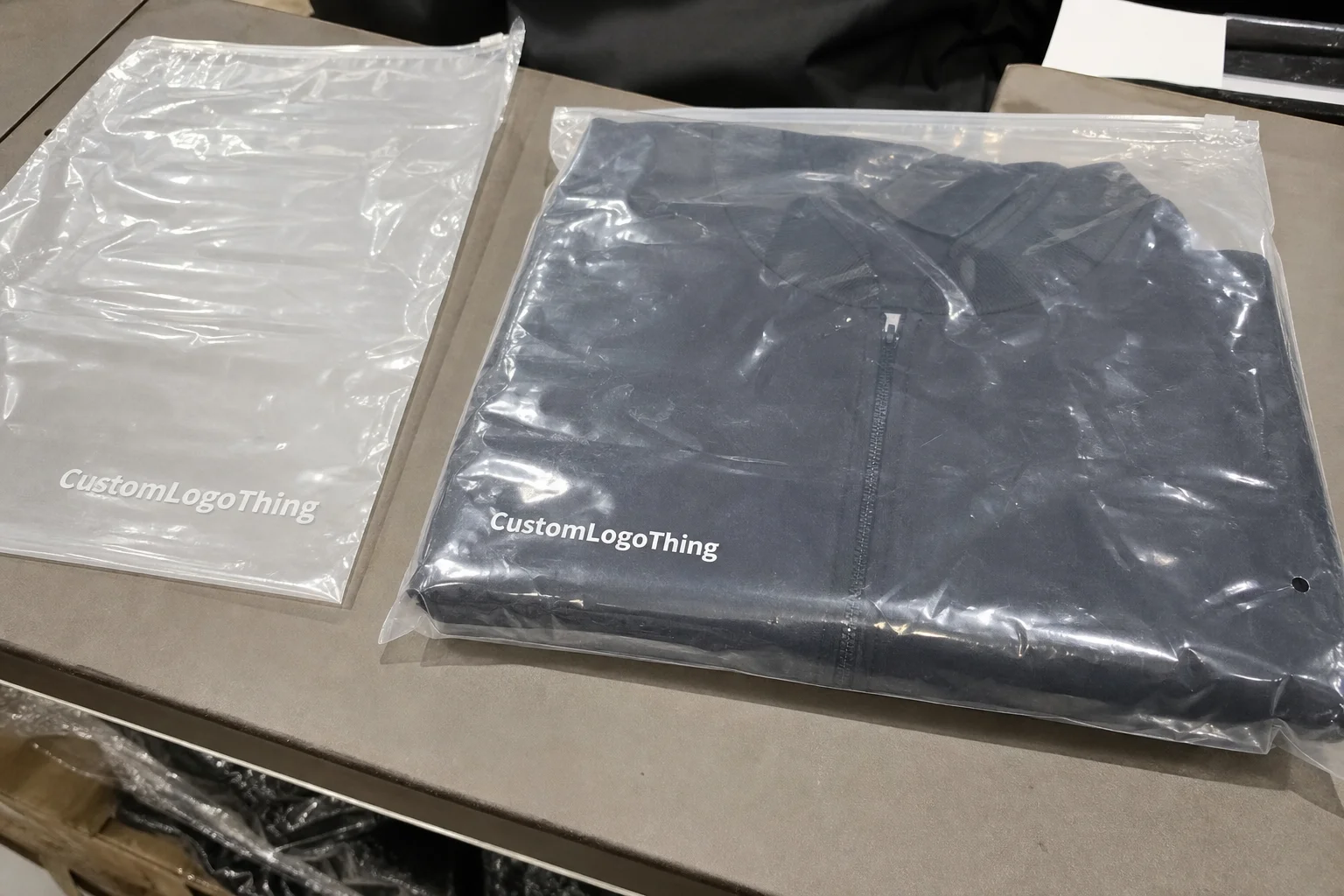
A printed Custom Plastic Garment Bags quote for jewelry often begins with a detail that looks minor on a spreadsheet: film thickness, clarity, closure placement, or how large the logo should print once the flap folds over. Those details matter because jewelry packaging has a narrow job to do. It needs to protect polished surfaces, keep small components together, support quick inventory handling, and still look refined when the customer opens the parcel or retail box.
Plain stock bags can be useful for sampling or emergency fulfillment, but they rarely carry a brand program cleanly for long. A necklace chain, velvet pouch, polishing cloth, care card, barcode label, and return insert can become an uneven bundle if the bag is too thin, too slick, or sized without the final contents in mind. Staff may compensate with tape, extra labels, tissue, or a second bag. Those fixes cost time, and they often make a premium product look less controlled than it should.
With jewelry, the difference between “acceptable” and “finished” is often physical rather than decorative. A clearer 2.5 mil bag may show a metallic piece better than a cloudy light-gauge film. A frosted bag can soften glare and hide busy inserts. A resealable strip can make inspection and returns easier. Logo placement can help a product look organized in a pick bin, on a sample board, or inside a rigid gift box.
Packaging buyer reality: the lowest bag price can still become expensive if the bags require relabeling, trimming, taping, or replacement before shipment.
The best quote is not simply the lowest unit price. It should tell you whether the bag fits the jewelry, supports the packing workflow, and can be repeated without drift in size, print, or closure quality. For a small charm set, that may mean a light clear bag with one-color print. For a higher-value set that moves through fulfillment, retail presentation, and returns, the specification usually needs more structure.
Print methods, branding choices, and finish options that change the look
Print choices control more than brand visibility. They affect contrast, rub resistance, color consistency, registration tolerance, and how the bag looks after it is folded, sealed, stacked, or handled. A one-color logo is often the most efficient choice for jewelry packaging. It keeps setup lower, shortens proofing, and usually prints cleanly on clear, frosted, or lightly tinted film.
Multi-color artwork can make sense when the bag needs to match boxes, hang tags, counter displays, or seasonal retail kits. The tradeoff is added setup, tighter registration requirements, and more proofing attention. Fine lines, small serif type, and pale metallic-looking colors may not reproduce as expected on flexible film, especially if the bag surface is frosted or textured. If the logo has delicate details, ask whether minimum line weights should be adjusted before plates or screens are made.
Full-panel branding can look strong for launch kits or promotional packaging, but it should be specified with care. Higher ink coverage can affect cost, curing time, opacity, and the way stacked bags behave. A heavy print area may also call attention to scratches or friction marks during handling. For many jewelry brands, a restrained logo, small repeat pattern, or printed identification panel gives a cleaner result than filling the whole bag with artwork.
Finish changes the message before the customer reads a single word. Gloss film gives clarity and can show sparkle, stone color, or metal tone more directly. Matte or frosted film reduces glare and can make a black, charcoal, white, or deep green logo feel more considered. Opaque panels help when the contents include several visual elements, such as a pouch, insert card, warranty card, and barcode label. Tinted film can be attractive, but color needs testing; champagne ink on blush film may look elegant in a proof and almost vanish under warm retail lighting.
Artwork placement deserves its own check. A logo centered on the flat bag may sit too low after the flap is folded. A mark that looks balanced on an empty bag may be hidden by a velvet pouch once the product is inserted. If the bag will hang from a peg, the hole position, seal area, and print zone need to work together. If it will be packed inside a mailer or custom printed box, the face visible at unboxing may be different from the face visible during fulfillment.
For faster proofing, send vector artwork in AI, EPS, or print-ready PDF format, along with Pantone references if color control is part of the brief. A PNG pulled from a website may be fine for a rough mockup, but it is usually not enough for production artwork. Clean files save days, and on a launch schedule, days are not small.
Material specs, thickness, and closure details that protect product quality
The right film depends on how the jewelry is stored, packed, displayed, and shipped. Polyethylene is common for flexible garment-style bags because it is practical, printable, and available in clear, frosted, opaque, or tinted formats. Polypropylene can offer higher clarity and a crisper feel, though it may crease differently and may not suit every closure or handling requirement. Recycled-content or recyclable film can be part of the brief, but availability depends on gauge, print coverage, additives, and local recycling acceptance.
Before requesting a Printed Custom Plastic Garment Bags quote for jewelry, define the finished width, finished length, flap length, film thickness, closure style, venting, hanging hole, and resealability. Common thickness targets for jewelry packaging often fall between 1.5 and 3 mil. A 1.5 mil bag may be suitable for inner protection, sample organization, or low-contact storage. A 2 to 2.5 mil bag usually feels more stable in the hand and presents better inside a retail box. A 3 mil bag gives more stiffness and tear resistance, which can help when the same package may be opened, inspected, and resealed.
Closure style changes both cost and workflow. A peel-and-seal strip speeds packing and gives a tidy edge, but it is not always ideal if the bag will be opened again. A resealable adhesive strip is useful for returns, inspection, photography pulls, and sample circulation. A permanent closure can discourage tampering, though it is less forgiving when a picker inserts the wrong item. Vent holes can help air escape during packing and stacking, but they may not suit products where dust protection is the main goal. Hanging holes are useful for showroom storage, peg display, or sample boards, provided the film gauge and hole placement can handle the load.
| Specification choice | Typical use | Buyer tradeoff |
|---|---|---|
| 1.5 mil clear film | Inner storage, low-contact fulfillment, lightweight sets | Lower material cost, less stiffness, higher wrinkle risk |
| 2 to 2.5 mil frosted film | Gift-ready jewelry kits, boutique retail packaging | Better feel and privacy, slightly higher unit price |
| 3 mil clear or opaque film | Premium sets, repeated handling, returns processing | Higher durability, more freight weight per carton |
| Resealable closure | Returns, inspection, product sampling | More flexible workflow, closure cost must be included |
Quality checks should cover more than whether the logo appears in the right place. Look at edge finish, closure alignment, measurement tolerance, seal strength, clarity consistency, blocking between stacked bags, ink adhesion, and how the film behaves after repeated handling. If a bag is meant to hold a pouch plus a card, test the full packed set rather than an empty sample. Empty bags can feel fine and still wrinkle badly once a rigid insert creates pressure points.
ASTM test methods are often used in plastic film evaluation, and distribution testing guidance from ISTA can help brands think more clearly about transit stress. Not every jewelry packaging order needs lab testing, but every order benefits from a physical review before scale production. A small sample charge is easier to absorb than a full carton run with poor fit, weak adhesive, or a logo that disappears behind the product.
Printed custom plastic garment bags quote for jewelry: what changes the price
A printed Custom Plastic Garment Bags quote for jewelry is built from several cost drivers. Bag size determines material usage. Film grade affects raw cost, clarity, stiffness, and feel. Thickness changes weight, carton count, and durability. Print complexity affects setup, registration, ink coverage, proofing time, and production speed. Quantity determines how setup charges are spread across the run.
As a broad planning range, a simple one-color logo on a small to mid-size clear bag may price around $0.12 to $0.30 per unit at several thousand pieces, depending on size, gauge, closure, packing method, and freight. A thicker frosted bag with two-color print, resealable closure, tighter presentation requirements, or special tinting can move higher. Very small orders often look disproportionately expensive because plate fees, setup labor, proofing, and material preparation do not shrink in proportion to the run.
MOQ is a common sticking point. A supplier may be able to support a lower quantity for standard clear film with one-color print, while custom sizes, tinted materials, full-coverage print, or special closures may require a larger run. That is usually a reflection of material minimums, machine setup, and production efficiency. A 2,000-piece pilot order can be useful for fit testing and brand review, but a 10,000-piece replenishment may carry a much lower unit cost if the specification is stable.
Freight can change the decision. A low factory price is not the same as a low landed cost. Carton configuration, outer packing, dimensional weight, delivery address, customs duties, and shipping method all affect the final number. Air freight may protect a launch date, but it can erase savings from a cheaper bag. Slower freight can work well for planned replenishment, though only if the reorder calendar leaves enough room for proofing, production, transit, and receiving.
The cleanest way to compare suppliers is to build one specification sheet and ask each supplier to quote the same version. Include finished size, material, thickness, print colors, print location, closure, quantity, packing method, sample requirement, and delivery term. If one quote is far lower, ask what changed. Sometimes the supplier has a genuine production advantage. Other times the difference comes from lighter film, wider tolerances, fewer quality checks, a different adhesive, or a lead time that does not fit your selling calendar.
Pricing should also reflect waste and tolerance. Flexible packaging production normally allows some variation in dimensions, color, and quantity. A buyer expecting exact count, exact color, and tight measurement control should say so before quoting, because tighter standards can affect inspection time and cost. For jewelry packaging, that extra clarity is worthwhile when bags support multiple SKUs or sit directly in the customer-facing presentation.
Production process and lead time: from artwork approval to shipment
The production path is straightforward when the brief is complete. The supplier reviews the inquiry, confirms size and material, checks thickness and closure, reviews artwork, and prepares a digital proof. That proof should show dimensions, logo placement, color callouts, closure position, hole position if used, and any special notes about print coverage or tolerance. After approval, the order moves into material preparation, printing, bag converting, quality checks, packing, carton labeling, and shipment.
Most delays happen before production begins. Missing vector artwork, unclear color targets, late size changes, and closure revisions are frequent causes. If a buyer sends a low-resolution logo, requests a Pantone match, then changes the bag width after proofing, the quote and production schedule may both need revision. Material availability can also affect timing, particularly with frosted, tinted, opaque, recycled-content, or nonstandard gauge film.
Plan the schedule in three parts: proofing, production, and transit. Digital proofing may take 1 to 3 business days once usable artwork and specifications are available. A straightforward printed bag order often runs about 12 to 20 business days after proof approval, depending on quantity, print complexity, closure style, and material availability. Transit may take a few days by express service or several weeks through slower freight channels.
Rush orders are possible only when the buyer locks details early. Artwork should be final. Bag dimensions should be confirmed against the product and inserts. Delivery address, required date, and shipping method should be known. Compressed schedules can limit print options, reduce the chance for sample review, and leave less time to correct a proof issue. That does not mean rush work is unworkable; it means the specification needs to be disciplined.
Proof approval should be written, dated, and tied to a specific file version. A job can sit idle because the supplier is waiting for confirmation while the buyer assumes approval was implied. For a reorder, that pause is preventable. For a launch order, it can be costly.
What a dependable supplier should document before you place the order
A dependable supplier documents the details before the order reaches production. The quote or order confirmation should list finished dimensions, film type, thickness target, closure style, print method, ink colors, artwork placement, quantity, packing count per carton, measurement tolerance, color tolerance, lead time, and delivery term. If samples are involved, the sample type should be clear: stock sample, blank material swatch, digital mockup, or pre-production printed proof.
Good communication is not a vague service promise. It is risk control. If the requested frosted film is unavailable, the buyer should know before proof approval. If a fine-line logo needs adjustment to print cleanly at a small size, that should be addressed during artwork review. If a resealable strip changes the usable interior length, the supplier should point it out before the bag is converted.
Ask which quality control checkpoints apply to the order volume. For a small pilot run, visual checks, dimension confirmation, and closure review may be enough. For a larger replenishment, buyers may want print registration checks, carton count consistency, random size checks during production, adhesive function testing, and inspection of packed cartons before shipment. If the package will make recyclability claims, review the EPA recycling guidance and avoid language that local programs may not support.
Reorders need a record. Keep the approved spec sheet, final artwork, proof, sample notes, carton count, and reorder quantity together. That prevents the team from rebuilding the same decision six months later, and it reduces variation across future product packaging runs. For jewelry lines with many SKUs, consistency across packaging matters more than a single unusually low quote.
If the bags are part of a wider branded packaging program, compare them alongside Custom Packaging Products such as inserts, pouches, mailers, tissue, and custom printed boxes. The point is not to buy every format at once. The point is to make sure one polished component is not undermined by another component that feels accidental, too light, or poorly matched.
What to send for a faster quote and cleaner next step
To receive a sharper quote, send the finished bag size, order quantity, artwork file, closure type, film preference, thickness target, delivery location, and required date in the first message. If you do not know the exact size, send the product dimensions plus the inserts or pouch dimensions, and explain how much room you want around the contents. A quote without destination can be useful for early budgeting, but freight may change landed cost enough that it should not be treated as final.
Add the use case. Storage, shipping, showroom display, subscription packaging, retail handoff, and returns processing can require different specifications. A bag used only inside a rigid gift box can often be lighter than one that will be handled through inspection and return intake. A hanging display bag may need a stronger film or reinforced hole. A premium retail bag may need frosted film, a cleaner closure line, and more careful print contrast.
Reference images help, especially when the desired finish is difficult to describe. Brand guidelines help even more. Send Pantone numbers, logo spacing rules, preferred print size, and any finish expectations tied to existing packaging. If the bag must visually coordinate with tissue, pouch fabric, hang tags, inserts, or boxes, mention those materials early. Ink viewed through clear film can shift against metallic jewelry, black cards, white foam, or velvet pouches.
If you are comparing suppliers, request a mockup or sample before approving a larger production run. A spreadsheet cannot show whether the bag wrinkles around the product, whether the adhesive strip feels secure, whether the film is too cloudy, or whether the logo lands in the wrong position after folding. A physical sample gives the buyer, fulfillment team, and brand team something real to evaluate.
For a complete printed Custom Plastic Garment Bags quote for jewelry, send size, quantity, artwork, closure type, film preference, thickness target, delivery location, required date, and intended use through Contact Us. Ask for MOQ, lead time, sample options, packing method, and shipping method in the same exchange so approval does not get slowed by avoidable clarification.
FAQ
How do I request a printed custom plastic garment bags quote for jewelry?
Send the finished size, material preference, thickness target, closure style, print artwork, and order quantity. Include the delivery location and required date so freight and turnaround can be estimated. If you are comparing suppliers, ask each one to quote from the same specification sheet.
What changes the unit price the most on jewelry garment bags?
Quantity, total bag size, film thickness, closure type, print complexity, and freight usually have the largest impact. Setup fees and tooling are spread across the run, so higher quantities often reduce the per-bag cost. Landed cost can still shift if carton count, shipping method, or delivery destination changes.
What MOQ should I expect for printed custom plastic garment bags for jewelry?
MOQ varies by material, print method, size, and closure. Simple one-color orders on standard clear film often have lower entry quantities than tinted, opaque, multi-color, or full-coverage printed runs. If you need a small test, ask whether a sample run or pilot quantity is available before committing to a larger replenishment order.
How long does production usually take after proof approval?
Production time starts after the proof is approved, not when the first inquiry is sent. A straightforward printed bag order may take about 12 to 20 business days after approval, depending on order size, material availability, print complexity, and closure style. Transit time should be added separately for an in-hand delivery date.
Can I see a sample before placing a jewelry packaging order?
Yes. A sample is the safest way to check size, clarity, thickness, closure style, print placement, and overall feel. For exact branding, ask for a digital proof and, when timing and budget allow, a pre-production printed sample before the full run begins.


