Buyer Fit Snapshot
Use this page when brands need insert cards that support unboxing, instructions, warranty cards, or promotional messages.
| Decision point | What to specify before quoting |
|---|---|
| Card format | Card stock, size, finish, print sides, corner radius, and folding requirements. |
| Pack-in workflow | Insertion method, bundle counts, carton marks, SKU matching, and fulfillment instructions. |
| Production control | MOQ, proof approval, color checks, reorder files, and delivery timing. |
Printed Insert Cards with Logo: Smart Packaging Basics
A plain mailer can do its job and still feel forgettable the moment the customer opens it. A well-made printed insert cards with logo setup changes that feeling fast, before the product is even in hand. The box may stay simple, but the card gives the shipment a point of view, a finished look, and the sense that someone paid attention to the details. For brands that want recognition without rebuilding every outer package, printed insert cards with logo are one of the most efficient ways to add polish.
From a packaging buyer’s perspective, these cards carry more than one responsibility. They can welcome the customer, explain care steps, point to a QR code, or offer a reason to buy again. That is why printed insert cards with logo show up in ecommerce cartons, subscription kits, sample boxes, retail sets, and influencer mailers. They give the unboxing moment structure. They also make the package feel assembled on purpose instead of pieced together from whatever happened to be available that week.
The logo does more work than many teams expect. A card can still hold useful information without branding, but printed insert cards with logo connect the message to a real company rather than a generic shipment. That recognition helps build consistency across channels. It also lets a modest product presentation feel complete. In a lot of packaging systems, the card carries the emotional weight while the box itself stays controlled on cost and fairly plain in construction.
A good insert card should earn its space in the box. If it does not answer a question, reinforce the brand, or move the customer toward a next step, it is probably adding clutter instead of value.
That is the practical strength of printed insert cards with logo: they shape perception without changing the product itself. A crisp card can signal quality, while a sloppy one can pull the whole experience down. Material choice, color contrast, layout, and print accuracy all matter because the buyer usually sees the card before anything else. The card sets the tone, which means it can quietly influence how the product is received.
Small details carry real weight in a crowded packaging market. Thoughtful printed insert cards with logo can support repeat purchases, cut down on support tickets, and make the packaging system feel planned instead of improvised. That is why brands keep using them even when budgets get tight. They are modest pieces of paper, but they are never trivial.
How printed insert cards with logo move from proof to packout
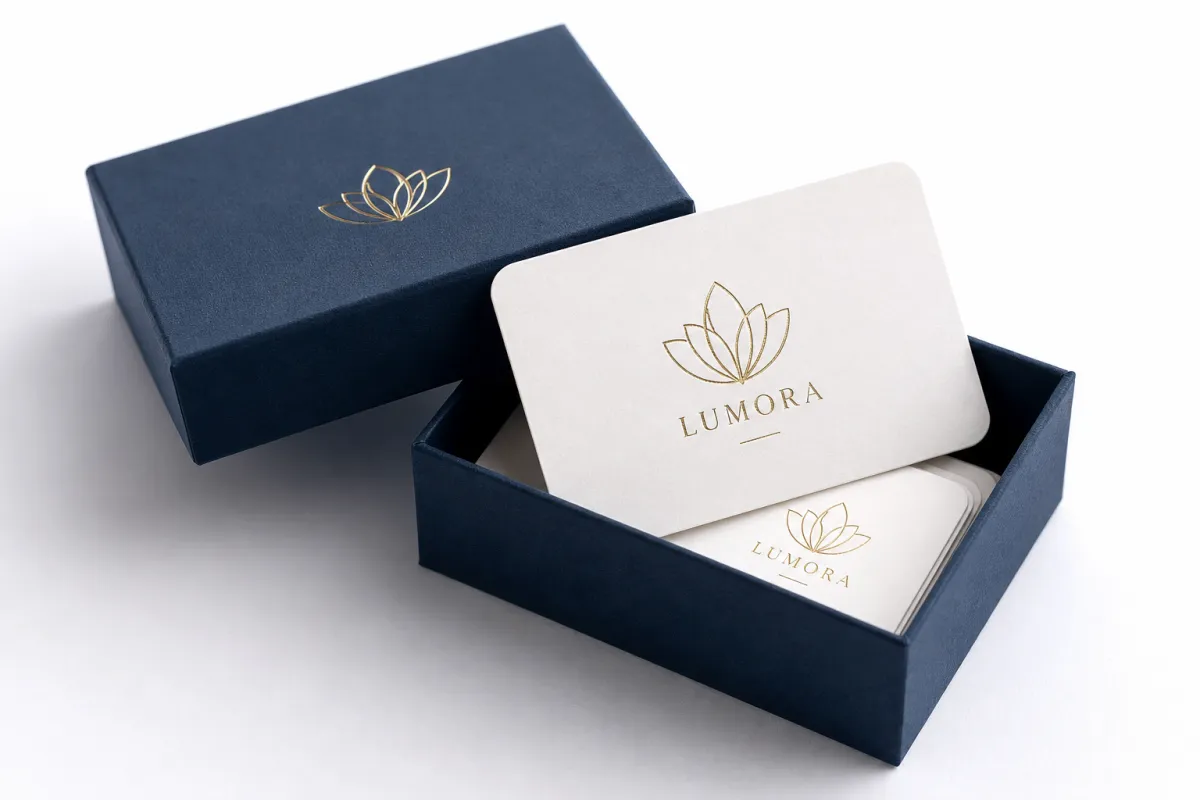
The production path for printed insert cards with logo is usually shorter than a custom carton project, but the process still has enough moving parts to cause delays when one detail is missing. Everything begins with the artwork handoff. Someone needs the logo files, the card size, the copy, the colors, and the print side count. If those items are unclear, the proof cycle stretches out, and that is usually where the calendar starts slipping.
The proof stage deserves more attention than most teams give it. Before anything goes to press, the printer should confirm trim size, bleed, safe area, logo placement, and any special finish. With printed insert cards with logo, even a small placement error can make the design feel off-center or push a QR code too close to the cut line. That sort of miss jumps out the second the card lands in the box.
Printing itself is usually straightforward. Short runs often use digital printing, while larger quantities may go through offset printing. After that come cutting, scoring if the card folds, and any coating or finish step. Quality checks belong before packout, not after. A batch of printed insert cards with logo that shows a color shift, a dull mark, or a trimming issue should be caught early, before it becomes a reprint and a shipping headache.
Turnaround depends on more than press speed. File readiness often has the biggest impact. A clean file moves through proofing quickly, while missing fonts, low-resolution images, or incorrect dimensions can stall the order for days. Stock availability matters too. If the paper grade needs to be ordered, the timeline lengthens. Custom shapes and specialty finishing add more time. For most simple printed insert cards with logo jobs, 5 to 10 business days after proof approval is common. Premium finishes, larger quantities, or die-cut shapes can push the schedule closer to 10 to 15 business days.
Packout is the final handoff. Sometimes the cards are inserted by hand at the fulfillment center. Sometimes the packaging manufacturer drops them in before the carton ships. Either way, the dimensions need to fit the box system. If printed insert cards with logo are too large, they can buckle or cover the product. If they are too small, they can look accidental. Fit is not a minor detail. It is part of the design.
For teams building a repeatable process, it helps to treat the workflow as four checkpoints:
- Artwork intake: confirm size, messaging, print side, and logo files.
- Proof approval: verify bleed, colors, spelling, and finishing details.
- Production: print, cut, coat, fold, and inspect the run.
- Packout: confirm insertion method, box fit, and shipping schedule.
That sequence looks basic, yet it prevents the failures that slow jobs down. With printed insert cards with logo, the best results usually come from disciplined work: clean artwork, clear approvals, and realistic timing. Not flashy. Just controlled.
Design and material factors for printed insert cards with logo
Design choices shape how printed insert cards with logo feel in the hand, how quickly they are read, and how naturally they fit the brand. Paper stock is usually the first decision. Heavier cardstock gives the card more presence. Lighter paper stock can make sense for high-volume campaigns where the insert is mainly informational. For many ecommerce brands, 14pt to 18pt stock is the practical range. It feels intentional without turning into unnecessary waste.
Finish comes next. Gloss coatings make colors pop, though they can also create glare, which is not ideal if the card includes detailed instructions or a QR code. Matte and satin finishes often read more cleanly. Soft-touch lamination adds a premium tactile feel, but it also changes how the logo looks under light. With printed insert cards with logo, I usually tell teams to think of the card as a small object the customer handles for two or three seconds. That is long enough for texture to matter.
Color can help a design or quietly undermine it. Dark backgrounds can make a logo feel elegant, but they can also reduce contrast. Light backgrounds usually improve readability. The simplest rule holds up well: if the message has to be read quickly, prioritize contrast over decoration. That matters even more on printed insert cards with logo that carry a call to action, a discount code, or a support note. If the text is not easy to read at a glance, the card loses most of its purpose.
Layout works best when it serves one main idea. A card that tries to do everything often ends up doing nothing clearly. One strong headline, one logo treatment, one action. That is enough in many cases. The strongest printed insert cards with logo do not crowd the reader with five offers and three QR codes. They build a clear hierarchy. First the brand. Then the message. Then the next step.
Logo placement deserves careful thought because it shapes the entire card. If the mark is too large, it can overpower the copy. Too small, and it disappears into the background. The right balance depends on the card size and the rest of the layout. A centered logo often works for thank-you notes. A corner placement can work better for instructional inserts. In both cases, printed insert cards with logo should support the message rather than compete with it.
Sustainability is part of the conversation now, whether a brand leads with it or not. Recycled stocks, uncoated papers, and fewer coatings can all reduce material intensity. If the card needs a chain-of-custody claim, the Forest Stewardship Council is a useful reference for certified fiber sourcing: fsc.org. For brands that already publish packaging standards, printed insert cards with logo should fit that system instead of feeling like an afterthought.
The practical design rule is simple: match the material to the promise. A premium skincare box with flimsy insert cards feels mismatched. A value-driven subscription kit does not need an expensive card stock to work well. The right version of printed insert cards with logo is the one that fits the product, the audience, and the budget. That part is kinda boring on paper, but it is what keeps the whole system honest.
- Premium feel: 16pt to 18pt stock, matte or soft-touch finish, restrained layout.
- High-volume efficiency: 14pt to 16pt stock, simple 4-color print, minimal finishing.
- Instruction-heavy insert: larger size, strong contrast, more white space, QR code tested at print size.
Printed insert cards with logo pricing: what changes the cost
Pricing for printed insert cards with logo is less mysterious than it first appears, though the variables pile up quickly. Quantity is the biggest driver. Size comes next. Then stock, color count, finish, and whether the design is single-sided or double-sided. A simple 4/0 card on standard cardstock can stay surprisingly affordable. A thick card with foil, spot UV, or die cutting moves into a different price band fast.
Setup costs matter most on small runs. A short order carries a higher unit price because the prepress work, proofing, and machine setup are spread across fewer cards. Larger volumes usually lower the per-unit cost, which is why printed insert cards with logo become much more economical once a brand knows the design will be reused. Template-based designs help for the same reason. If the artwork can be updated without rebuilding the file, repeat orders stay efficient.
The table below gives a realistic comparison for common options. These are broad ranges, since pricing depends on supplier, location, and finishing complexity, but they are useful for planning.
| Option | Typical Use | Common Spec | Approx. Unit Cost at 1,000 | Approx. Unit Cost at 5,000 |
|---|---|---|---|---|
| Uncoated text card | Thank-you note, simple brand message | 14pt uncoated, 4/0 print | $0.18-$0.32 | $0.06-$0.12 |
| C1S cardstock | Promo code, care note, short instructions | 16pt C1S, 4/1 or 4/0 | $0.22-$0.38 | $0.08-$0.15 |
| Premium coated card | Luxury box insert, brand story card | 18pt stock, matte or satin finish | $0.32-$0.55 | $0.12-$0.22 |
| Soft-touch or specialty finish | High-end launch, influencer mailer | 18pt with lamination or foil | $0.45-$0.75 | $0.18-$0.30 |
| Die-cut or foil-enhanced card | Limited edition, premium presentation | Custom shape, foil, or spot UV | $0.80-$1.50 | $0.30-$0.60 |
Those numbers do not cover every possible fee. Proof revisions can add time and sometimes cost. Rush orders usually carry a premium. Shipping to multiple fulfillment sites can also increase the total. If the order needs custom packaging around the cards themselves, that becomes another line item. With printed insert cards with logo, buyers sometimes focus only on the print quote and forget the operational cost of getting the cards into the box.
That is why value should be measured against purpose. What is the card supposed to do? If it is meant to reduce support questions, compare the print cost with the labor saved by not answering the same care question 500 times. If it is meant to drive repeat orders, compare the cost with the expected lift in retention or repeat purchase rate. If it is meant to improve perceived brand quality, compare the card’s cost with the effect on average order value and customer reviews. Printed insert cards with logo are not only a print expense. They are a packaging and marketing decision.
For teams that want to sanity-check a packaging quote, a general industry reference like packaging.org can help frame basic terminology and material categories. Exact numbers still depend on size, quantity, and finish, but a clear specification usually earns better pricing than a vague request. That is especially true for printed insert cards with logo, where a little clarity can remove a lot of back-and-forth.
One more pricing note: the cheapest card is not always the best buy. If the logo prints too lightly, the color shifts, or the finish looks thin, the card can weaken the entire packaging experience. A slightly higher spend on printed insert cards with logo often makes sense when the product sits in a premium category or when the insert does customer service work instead of decoration alone.
Step-by-step timeline for printed insert cards with logo
The cleanest way to avoid delays is to treat printed insert cards with logo like a small production project rather than a casual add-on. Start by defining the job. Is the card onboarding? Is it selling a second item? Is it reducing support questions? The answer determines the copy, the size, and the placement. A card that exists only because the box looks empty is harder to justify and usually harder to design well.
Next comes the artwork stage. Gather the logo file in vector format if possible, then confirm brand colors, copy, dimensions, and the number of sides that need printing. If the insert includes a QR code, test it before proof approval and again after the proof is laid out. With printed insert cards with logo, the timeline often slips when a team sends fragmented inputs. One person has the logo, another has the copy, and a third is still deciding on the offer. That combination slows everything down.
Proofing is the most important checkpoint. A print proof should confirm trim, bleed, safe area, color expectations, and any special treatment such as foil or soft-touch lamination. The internal review should catch spelling, pricing, legal text, and QR code destination. If the customer service team needs the card to answer a common question, they should review the copy too. For printed insert cards with logo, one missing word can shift the message from helpful to confusing.
After approval, production begins. Simple orders often move quickly once the proof is approved, especially when standard stock is already on hand. Custom paper, specialty finishing, or heavier quantities extend the schedule. A practical planning window for many printed insert cards with logo jobs is 1 to 2 weeks from final proof approval, with more time needed for custom shapes or premium finishes. If the cards have to land before a product launch, do not wait until the last shipping week to place the order.
The last step is packout coordination. Confirm who is inserting the cards and where that happens. If the fulfillment center handles insertion, send the card dimensions early so the team can plan the packing sequence. If the cards are going into the box at the packaging plant, confirm how they are boxed and counted. A miscommunication here can leave you with a stack of perfectly printed printed insert cards with logo that arrive on time but miss the packing window.
If you want a tighter timeline, use this sequence:
- Brief the job: define purpose, audience, and CTA.
- Collect assets: logo, copy, brand colors, dimensions, QR code.
- Approve the proof: verify trim, finish, and content.
- Schedule production: align print timing with stock and shipping.
- Coordinate insertion: confirm who packs the card and how it is counted.
That sequence sounds simple, yet it saves real time. In packaging, the delays usually come from missing decisions, not from the press itself. The more complete the brief, the faster printed insert cards with logo move through the system. I have seen tiny orders get held up for days because one side note about coupon timing never got answered, and I have seen larger runs sail through because the team had its act together from the start.
Common mistakes with printed insert cards with logo
The most common mistake is crowding the card. Brands often try to fit a welcome note, a discount, a referral prompt, a product story, and a support message into one small insert. The result is visual noise. The logo loses impact, the call to action gets buried, and the reader gives up. Strong printed insert cards with logo usually stay focused on one primary purpose.
Low contrast is another frequent issue. A design may look elegant on screen, then print too lightly or too small to read comfortably. That risk rises on cards with photography or dark backgrounds. If the print is going into bright retail lighting or mixed home lighting, readability matters even more. With printed insert cards with logo, a beautiful card that cannot be read is a missed opportunity.
Wrong sizing causes more trouble than people expect. A card that is too large can curl in the box or cover the product. A card that is too small can look like a leftover coupon rather than part of the package. Size should match the box interior and the message. If the package is a compact mailer, the card may need to be 3.5 x 5 inches or similar. If the insert carries instructions or multiple languages, a 4 x 6 inch or A6 format may work better. Good printed insert cards with logo fit the box and the brand at the same time.
Proofing mistakes are painful because they are preventable. Cropped logos, incorrect bleeds, spelling errors, and QR codes that do not scan are the classic failures. They are also the most expensive to fix after printing. A proof should be reviewed by at least one person who knows the packaging layout and one person who knows the message. For printed insert cards with logo, double-checking is not overkill. It is normal operating practice.
There is also a brand mismatch problem. A premium carton paired with a thin, flimsy card can make the whole package feel inconsistent. The customer may not consciously analyze the materials, but they feel the gap. The same goes in reverse: a value-focused product does not need a luxury insert that looks out of place. The best printed insert cards with logo match the rest of the packaging system in tone, weight, and finish.
Here is a quick checklist that catches most errors before they become expensive:
- Use vector logo files whenever possible.
- Keep key text inside the safe area.
- Test every QR code at final print size.
- Match the finish to the reading conditions.
- Confirm the card fits the box and the packout method.
Expert tips and next steps for printed insert cards with logo
The clearest advice is simple: design printed insert cards with logo around one job. If the job is onboarding, the card should make first use easier. If the job is upselling, the card should point to the next logical product. If the job is support reduction, the card should answer the most common question before the customer has to ask it. One clear outcome usually beats three competing ones.
Reusable templates help a lot too. A brand that plans seasonal promotions, subscription changes, or rotating offers saves time when the card design has a stable structure. The copy can change without rebuilding the layout each time. For printed insert cards with logo, that matters because the logo, margins, and visual hierarchy stay consistent while the message shifts. Consistency lowers reproofing and keeps the packaging system easier to manage.
Always request a physical sample when the card is going into a premium box. Screens hide paper texture, coating, and weight. A sample shows how the logo holds up under real light and how the finish feels in the hand. Tiny issues become obvious there. The touch test matters because printed insert cards with logo are physical objects. They are not only graphics on a screen.
If you are setting up a new order, use this working checklist:
- Size: confirm the card fits the insert space without bending.
- Stock: choose a paper weight that matches the brand and the use case.
- Finish: decide whether matte, satin, gloss, or soft-touch is best.
- Quantity: order enough to cover the launch plus the next run.
- Timeline: build in proof time before the ship date.
- Approver: name one person who signs off on the final proof.
- Insertion: confirm whether the cards are packed by hand or by a partner.
When the brief is clear, the card does its job cleanly. When the brief is vague, the design gets slower, more expensive, and less effective. That is the pattern I see most often with printed insert cards with logo. The strongest versions are not complicated. They are disciplined.
Do not separate the card from the rest of the packaging conversation. The insert should sit inside the same brand system as the box, tissue, tape, and outer label. If those parts feel aligned, the customer experiences one coherent message instead of a pile of unrelated materials. That is why printed insert cards with logo keep showing up in strong packaging programs. They are small, but they have a disproportionate effect on how the order is remembered.
The practical takeaway is this: start with the job the card needs to do, choose a stock and finish that fit the handling conditions, and approve the proof with the same care you would give the outer carton. If you do that, printed insert cards with logo stop being filler and start doing real work inside the package.
FAQ
What size should printed insert cards with logo be for ecommerce boxes?
Match the card to the inner box space first, then decide how much information it needs to carry. A small thank-you card may work at 3.5 x 5 inches, while instructions, QR codes, or multi-step offers often need 4 x 6 inches or larger. The point is fit. Printed insert cards with logo should slide into the package without bending, drifting, or covering the product.
How much do printed insert cards with logo usually cost?
Cost depends on quantity, size, stock, print coverage, and finish. Short runs carry higher unit pricing because setup work is spread over fewer cards. Larger orders usually lower the unit cost. Premium finishes like foil, spot UV, embossing, or soft-touch lamination raise the price. As a practical range, printed insert cards with logo can land anywhere from a few cents each on large simple runs to well over a dollar for small premium jobs.
How long does it take to produce printed insert cards with logo?
Timing depends on proof approval speed, stock availability, and finishing complexity. Simple jobs with ready files can move quickly once the proof is approved. More complex printed insert cards with logo orders take longer if they need custom shapes, specialty coatings, or multiple proof revisions. The fastest path is always the cleanest file and the clearest brief.
Which paper stock works best for printed insert cards with logo?
Heavier cardstock usually feels more premium and holds up better in transit. Uncoated or recycled stock can be a better fit if the brand wants a softer, natural presentation. Coated stock improves color pop, while matte or satin finishes often improve readability. The right choice depends on the message and the rest of the package, not just the logo on its own. Printed insert cards with logo should match the feel of the product they support.
Can printed insert cards with logo be used as a marketing tool?
Yes. They can carry discount codes, QR codes, referral prompts, care notes, review requests, or cross-sell offers. The strongest versions are focused and useful, not crowded. If one clear action matters most, build the card around that action. Done well, printed insert cards with logo become a small but effective post-purchase marketing asset.
Related packaging resources
Use these related guides to compare specs, costs, quality checks, and buyer decisions before making the final call.


