Buyer Fit Snapshot
| Best fit | Printed Non Woven Bags Supplier projects where brand print, material claims, artwork control, MOQ, and repeat-order consistency need to be specified before quoting. |
|---|---|
| Quote inputs | Share finished size, material target, print colors, finish, packing count, annual reorder estimate, ship-to region, and any compliance wording. |
| Proofing check | Approve dieline scale, logo placement, barcode or warning zones, color tolerance, closure strength, and carton packing before bulk production. |
| Main risk | Vague material claims, crowded artwork, missing packing details, or unclear freight terms can make a low unit price expensive after revisions. |
Fast answer: Printed Non Woven Bags Supplier: Film, Print, MOQ, and Carton Packing should be specified like a repeatable production item. The safest quote records material, print method, finish, artwork proof, packing count, and reorder notes in one written spec.
Production checks before approval
Compare the actual filled-product size with the drawing, then confirm tolerance on folds, seals, hang holes, label areas, and retail display edges. Reserve space for logos, QR codes, warning copy, and material claims before decorative graphics fill the panel.
Quote comparison points
Review material grade, print process, finish, sampling route, tooling charges, carton quantity, and freight assumptions side by side. A quote is only useful when the supplier can repeat the same color, closure quality, and packing count on the next order.
Printed Non Woven Bags Supplier: How to Choose Well
A printed non woven bags supplier earns trust fast, usually in the first few seconds someone handles a sample. The logo either sits cleanly on the surface or it does not, the handles either feel steady or a little flimsy, and the quote either fits the budget or starts forcing compromises. For Custom Logo Things, that first impression matters because a bag is doing two jobs at once: carrying product and carrying the brand message in a way people can see, touch, and reuse.
The better suppliers are not just printing a logo on fabric. They are converting spunbond polypropylene into shoppers, totes, event bags, and promotional packs with the right dimensions, the right print method, and the right reinforcement for the way the bag will actually be used. I have seen bags look fine in a product shot and then fail the first time they are loaded with books or bottled drinks. That kind of miss is expensive, and it is usually avoidable.
That is why choosing a printed non woven bags supplier is really a quality decision, not just a sourcing decision. If the seams are weak, the print is muddy, or the handles are attached too close to the edge, the bag feels cheap no matter how nice the artwork looks. A buyer can save a little on the unit price and still lose far more in complaints, replacements, and damaged brand trust.
What a printed non woven bags supplier really does
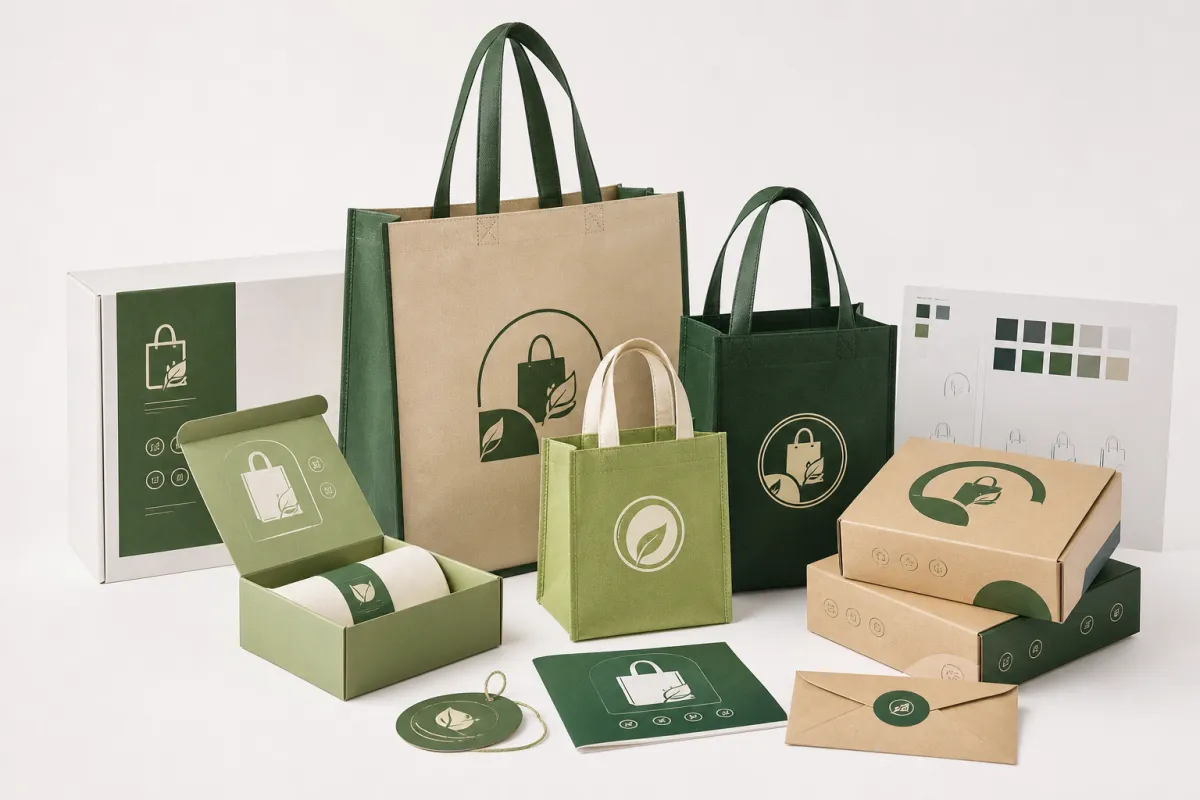
A printed non woven bags supplier starts with non woven polypropylene roll stock and turns it into a usable carry bag shaped for a specific purpose. Size, panel structure, print coverage, and handle style all need to work together. On paper, that sounds simple. In practice, the details matter: GSM, panel cut, seam type, handle attachment, and the way the print survives folding, stacking, and daily handling.
The failure point is not always the fabric. Weak print adhesion, poor registration, and handles attached with too little reinforcement can create more trouble than a basic material defect. A good printed non woven bags supplier should be able to explain which print method fits your artwork, how the seams are secured, and how the finished bag will behave once it starts carrying real weight. Buyers who ask those questions usually end up with better bags and fewer surprises.
Three business models show up often in this space. A manufacturer usually controls more of the production process, a converter may buy fabric and transform it into finished bags, and a trading company often coordinates the order through a separate factory. None of those models is automatically better, but each one changes what a printed non woven bags supplier can directly manage. Tight control over stitching, repeatable reorders, and stable quality all depend on understanding that difference before you place the order.
Clear specifications make the quoting process much more useful. A printed non woven bags supplier will usually need:
- Bag size - for example 30 x 35 x 10 cm or 40 x 45 x 12 cm.
- Fabric weight - usually described as GSM, such as 60gsm, 80gsm, or 100gsm.
- Print method - screen print, heat transfer, or another process matched to the artwork.
- Handle style - cut-out, loop handle, stitched webbing, or reinforced carry handles.
- Finish - matte, glossy laminate, stitched gusset, hemmed edge, or ultrasonic weld.
The strongest printed non woven bags supplier is often the one that asks a few practical questions before quoting. If nobody asks what the bag will carry, whether it is meant for retail resale or a giveaway, or how the bags will be packed for distribution, the quote is probably built around a generic bag rather than a fit-for-purpose one. A supplier that thinks about load, use, and presentation is usually a better long-term partner than one that only thinks about the print.
A bag that looks polished on a screen but fails at the handles in use will cost far more in complaints than a slightly heavier fabric ever will.
For teams that want a broader packaging vocabulary around material choice, print expectations, and transit protection, resources from packaging.org can be useful. If the bags will be packed into cartons for distribution, ista.org helps explain the kind of shipping stress cartons may face before the bags reach stores, warehouses, or event teams.
How a printed non woven bags supplier manages the process
A printed non woven bags supplier usually follows a familiar path from artwork to shipment, yet the result can feel polished or rushed depending on how each stage is handled. The process should begin with artwork review, because a logo file that looks crisp on a monitor can turn muddy on a textured surface with limited print resolution.
Artwork review and proofing
File cleanup is usually the first useful step. A printed non woven bags supplier should check whether the artwork is vector-based, whether fonts are outlined, and whether the colors are defined clearly enough for the selected print method. A low-resolution JPG may look acceptable on a laptop screen, then fall apart when it is placed on a textured non woven surface with sharp edges, thin strokes, and small type.
Color matching deserves the same care. A printed non woven bags supplier may ask for Pantone references, a physical sample, or a printed proof so the brand can see how the ink sits on the fabric. Screen printing can create strong, solid logos, although the exact shade can shift depending on fabric color, mesh count, and ink thickness. That variation is normal, which is why proof approval matters so much.
On jobs with delicate type or thin lines, I usually recommend simplifying the artwork before production. Non woven fabric does not reward tiny details the way coated paper or smooth film can. A cleaner mark often looks stronger once it is printed, and honestly, that is kind of the point.
Cutting, printing, and forming
Once the artwork is approved, the fabric is cut into panels, printed, and then formed into the final bag shape. Depending on the construction, the supplier may print first and stitch later, or cut first and print on the finished panel. A printed non woven bags supplier should know which sequence protects logo placement best, especially when the design crosses a seam or runs close to a gusset.
Handle attachment is another place where experience shows. A soft promotional tote may use simple stitched handles, while a retail bag often needs reinforcement at the stress points. Narrow handles, weak stitching, or a seam line placed too close to the edge can lead to tearing even when the bag body still looks fine. A printed non woven bags supplier should talk about the whole build, not just the print sitting on top of it.
For heavier carry uses, the bottom panel and side gusset deserve as much attention as the front logo. A bag can pass a visual check and still fail once it is filled with catalogs, produce, or boxed goods. That is why build details matter just as much as graphics.
Samples, checks, and packing
Sampling usually arrives in three stages: a pre-production sample, a color strike-off, and final approval of the production standard. A serious printed non woven bags supplier will not treat those as unnecessary delays. They are the points where the buyer can confirm size tolerance, print placement, handle style, and seam reinforcement before the full order is locked in.
Inspection should cover more than appearance. Ask about size tolerance, print registration, seam strength, stitch count, and basic load-bearing performance. Many buyers also ask for a practical carry test at 5 kg, 8 kg, or 10 kg, depending on the bag size and end use. A printed non woven bags supplier does not always need a certified lab report, but they should be able to explain how the bag is checked before it leaves the floor.
Packing is the detail many people overlook, yet it matters when thousands of bags arrive at once. Carton labeling, bundle counts, compression during transit, and pallet stacking all affect how easily the order can be stored and distributed later. A printed non woven bags supplier that packs clearly saves time for warehouse staff and reduces the chance of short counts or damaged cartons.
When the order is set up well, the process feels controlled rather than stressful. A printed non woven bags supplier that understands proofing, conversion, inspection, and packing is usually the kind of partner that makes reorders easier, because the next run can follow the first one with fewer corrections and much less back-and-forth.
Cost, pricing, MOQ, and quote factors for printed non woven bags supplier orders
Price is where many buyers get caught, because two quotes from a printed non woven bags supplier can look nearly identical at first glance while hiding very different builds underneath. The first thing to check is whether the same fabric weight, same bag size, same handle style, and same print coverage are actually being compared. If one quote uses 60gsm and the other uses 80gsm, those are not equal offers even when the headline number looks attractive.
MOQ exists because setup is not free. Screens, plates, cutting dies, sample runs, and line changeovers all take time, and those costs have to be spread across the order. A printed non woven bags supplier will usually price smaller runs higher per unit because the fixed work does not shrink just because the quantity is lower. That means a small order almost always carries a higher per-bag price, while a larger order lets the setup cost soften across more units.
The quote should clearly list the basics. A printed non woven bags supplier should be matching material weight, dimensions, handle type, print method, print colors, packaging format, and destination. If the quote does not say whether freight is included, whether cartons are master-packed or individually bundled, or whether proofing is part of the cost, the landed price can end up very different from the first number you saw.
| Typical build | Best for | Typical MOQ | Typical unit price at 5,000 pcs | Main cost drivers |
|---|---|---|---|---|
| 60-70gsm, one-color screen print, basic stitched handle | Giveaways, exhibitions, simple retail inserts | 2,000-5,000 pcs | $0.18-$0.32 | Fabric weight, print coverage, carton packing |
| 80gsm, one to two colors, reinforced loop handle | Retail carry bags and repeated use | 3,000-5,000 pcs | $0.28-$0.48 | Handle reinforcement, print registration, stitching complexity |
| 100gsm, multi-color logo, gusseted premium tote | Heavier goods, premium promotion, long-life reuse | 3,000 pcs and up | $0.42-$0.78 | GSM, extra colors, larger size, finishing details |
| Laminated or specialty finish with detailed art | Higher-end campaigns and brand retail | Often 5,000 pcs and up | $0.55-$1.10 | Surface finish, ink system, sample approvals, tighter QC |
Those numbers are directional rather than fixed, because geography, freight mode, and order timing all move the final price. A printed non woven bags supplier in one region may quote a lower factory price but add higher shipping or packaging charges, while another may build more value into the base unit and make the landed cost easier to predict. The most honest comparison is not just unit price, but total delivered cost.
Hidden extras deserve attention. Rush fees, specialty inks, additional proofing, split shipments, storage hold charges, and unusual carton requirements can quietly change the total. A printed non woven bags supplier should disclose those items before approval, not after production starts. If a seller stays vague on those points, the order may still work, but the risk shifts to the buyer.
A practical budgeting lens helps. For a smaller order, a printed non woven bags supplier may quote a higher unit cost because setup is spread over fewer bags. For a larger order, that same setup cost is diluted, so the per-bag figure often drops more than buyers expect. Many teams choose a slightly higher quantity than the first forecast, especially when the bags are tied to repeat promotions or seasonal campaigns.
Key factors to evaluate before you choose a supplier
If you are comparing one printed non woven bags supplier against another, start with material quality, because the fabric tells you a lot about how seriously the order will be handled. GSM matters, but so do hand feel, opacity, and consistency from bag to bag. A lower-priced bag can still work well if the fabric is even and the cut is clean, while a higher-priced one can disappoint if the material feels flimsy or varies too much across the run.
Print durability should come next. Ask whether the ink stays readable on folds and seams, whether the color has been matched under the same lighting your brand uses, and whether the print method suits the artwork density. A printed non woven bags supplier may be excellent at simple one-color logos but less suitable for gradients, tiny text, or fine line work. That is not a problem if the supplier is honest about it; it becomes a problem only when the buyer never checks.
Construction strength matters just as much as appearance. Handle attachment, stitch quality, gusset depth, and edge finishing all influence how the bag performs in actual use. A printed non woven bags supplier should be able to explain the load the bag is intended to carry, whether the bottom panel is reinforced, and how the seams are protected from tear-out. In a retail setting, those details decide whether the bag gets reused or replaced quickly.
Communication says a lot too. The better printed non woven bags supplier will answer specification questions clearly, provide sample timing without guessing, and point out where your artwork might need adjustment. If they avoid specifics or give very broad promises on turnaround, that usually means the quote is not fully anchored yet. Vague communication often turns into vague delivery.
Compliance and quality control should also be checked in plain language. Ask how the supplier inspects dimensions, whether there is a documented check for print alignment, and how carton counts are verified before shipping. If your internal team cares about packaging standards, ask what testing they know by reference, not just by name. Some buyers use internal pull tests, some refer to ASTM fabric checks, and some want cartons packed with transit stress in mind. The point is not to demand every standard available, but to see whether the printed non woven bags supplier understands quality as a process instead of a sales claim.
That is where a printed non woven bags supplier earns trust. Not by pretending every order is simple, but by explaining what can vary and where the buyer should pay close attention. When that conversation stays concrete, the relationship tends to improve from the first run to the repeat order.
Step-by-step ordering guide for a printed non woven bags supplier
The easiest way to work with a printed non woven bags supplier is to treat the order like a small specification project rather than a casual purchase. Define the use case, the quantity, the delivery date, and the load the bag has to carry before you ask for pricing, and the quote will be cleaner while the sample stage moves faster.
Step 1: define the job. Is the bag for a trade show, a retail purchase, a subscription insert, or a seasonal event? A printed non woven bags supplier needs that context because the build changes with it. A giveaway bag can be lighter and simpler, while a retail bag may need thicker fabric, stronger handles, and more careful print placement.
Step 2: send a clear brief. Include the exact size, GSM, quantity, artwork file, print colors, preferred handle style, and any Pantone references you want matched. A printed non woven bags supplier can only quote accurately when the spec is specific. If you have a target budget, say so. If you have a hard ship date, say that too. Better briefs lead to less guesswork in the estimate.
Step 3: review sample or proof. This is the point to confirm dimensions, color, seam style, and reinforcement details in writing. A printed non woven bags supplier may send a virtual proof, a printed strike-off, or a full sample depending on complexity. Do not rush through it. A small correction at proof stage costs far less than a correction after production begins.
Step 4: approve production details. Once the sample is right, confirm the packing method, carton count, shipping terms, and delivery schedule. A printed non woven bags supplier should be able to tell you how many bags go in each carton, whether the cartons are labeled by SKU, and whether the goods will ship as a single lot or in partials. That matters a great deal if your own warehouse or distributor is receiving the order.
Step 5: inspect and plan the reorder. When the delivery arrives, check count, appearance, and a few practical carry tests right away. If something is off, document it quickly with photos and measurements. Then build a reorder calendar before stock gets tight. A good printed non woven bags supplier is easier to work with when the next order is based on an approved spec instead of memory.
Here is the short version: define the use, quote the right spec, approve a proof, lock the packing details, and review the delivery before the stock is consumed. A printed non woven bags supplier that respects that sequence is usually easier to buy from twice, which is really what most brands want.
One more practical point: if your artwork is simple, ask whether a one-color or two-color setup will deliver the same brand impact at lower cost. A printed non woven bags supplier can often save you money by matching the print method to the artwork instead of forcing a more complicated process than the design needs.
Common mistakes that hurt quality or inflate cost
The most common mistake is choosing the cheapest printed non woven bags supplier quote without checking whether the spec is truly the same. One supplier may be quoting a lighter fabric, a smaller print area, or a simpler handle attachment. The price looks strong until the bag is used in the real world and the differences show up immediately.
Handle strength and gusset design get overlooked more often than many buyers expect. A printed non woven bags supplier can make a bag that looks fine on a table but fails once it carries bottles, folded apparel, or heavy brochures. Narrow handles or a shallow bottom panel can pass a casual visual check and still fail after a few repeated uses. That is not a print problem; it is a construction problem.
Another mistake is overcrowding the print. Buyers sometimes try to fit a logo, web address, tagline, QR code, and several extra messages onto a small surface. On non woven fabric, that often reduces readability because the surface is soft and the panel may flex around seams. A printed non woven bags supplier will usually produce better results when the design stays bold, clear, and sized for the actual bag panel rather than the design file on a screen.
Color approval on screen alone is risky. Even a good printed non woven bags supplier cannot make a digital display behave like a physical proof. Light, fabric texture, and ink density all shape the final look. Approve a physical sample if color matters to the brand, especially for retail programs where the bag needs to sit comfortably beside cartons, tissue, or hangtags.
Planning for replenishment is another quiet failure point. A printed non woven bags supplier may deliver on time, but if the order matches the forecast too closely and the campaign gets extended, stock can disappear fast. A small buffer is usually cheaper than a rush reorder. In many programs, 5 percent to 10 percent extra is enough to cover damage, sampling, and surprise demand without creating a large inventory burden.
The biggest cost mistakes are usually not dramatic. They come from small gaps: incomplete specs, weak proofing, unrealistic timing, or assuming every printed non woven bags supplier will interpret the order the same way. Once those gaps close, the process becomes more predictable, and the bag itself tends to perform the way the buyer expected.
Expert tips and next steps with a printed non woven bags supplier
If you want a smoother order, ask for production photos, a small paid sample run, or a reference sample before placing a larger order. A printed non woven bags supplier that is comfortable sharing process evidence is usually a safer choice than one offering only broad promises. You are not asking for perfection; you are asking for proof that the build can be repeated.
Match the print method to the artwork. A simple logo with one or two solid colors may be ideal for screen printing, while more detailed art may need a different process or a simplified version of the design. A printed non woven bags supplier should be direct here, because forcing the wrong method onto the artwork often makes the design look weaker than it should. The best result usually respects both the bag material and the logo itself.
Order a small buffer above forecasted demand. That advice sounds basic, yet it protects you from reorders triggered by damages, giveaways that exceeded expectations, or extra store launches. A printed non woven bags supplier can only help you if there is enough planning time, and a buffer gives you that time. It also helps if you need replacements later for a matching campaign.
Write the final spec down in a checklist and keep it tight. Size, GSM, color, handle style, pack count, carton labeling, delivery date, and approval version should all live in one place. A printed non woven bags supplier should sign off on that checklist or confirm it in an email trail. Once the order is documented that clearly, mistakes are much easier to catch before production instead of after delivery.
If you are still comparing options, ask three suppliers for quotes on the same spec, request one sample, and compare landed cost instead of unit price alone. A printed non woven bags supplier is worth working with when they make the process easy to understand, the sample easy to judge, and the delivery easy to receive. That combination tells you more than any sales pitch ever will.
For Custom Logo Things, the smartest move stays simple: compare the material, check the proof, confirm the timeline, and then place the order with the printed non woven bags supplier that answers your questions clearly and backs up the details. That is how you get a bag that looks right, carries well, and supports the brand without turning into a production headache.
The takeaway is straightforward: choose the printed non woven bags supplier that can explain the fabric, show the proof, and confirm how the bag will hold up after it leaves the factory. If those three pieces are solid, the rest of the order usually falls into place far more easily.
What details should I send a printed non woven bags supplier for an accurate quote?
Send the exact bag size, GSM, quantity, and handle style so the supplier can price the correct build. Include the artwork file, the number of print colors, and any Pantone references you want matched. Add the delivery location, target date, and whether you need samples, cartons, or special packing. The more complete the brief, the easier it is to compare quotes without hidden differences, and the more useful the response from a printed non woven bags supplier will be.
How long does a printed non woven bags supplier usually need for sampling and production?
Sampling time depends on artwork complexity, material selection, and whether color matching needs extra proofing. Production speed depends on quantity, print method, and the supplier's current workload. Shipping time is separate from factory lead time, so confirm both before you approve the order. Urgent jobs usually cost more, so ask for the turnaround early if your event date is fixed, especially when working with a printed non woven bags supplier that also handles packing or export paperwork.
What GSM is best for retail and promotional non woven bags?
Lighter GSM works for giveaways and low-load promotions where the bag only needs basic carry strength. Medium GSM suits most retail uses because it balances cost, feel, and durability. Heavier GSM is better for repeat use, thicker goods, and a more premium presentation. Match the fabric weight to the heaviest item the bag will carry in real use, and ask the printed non woven bags supplier to confirm whether the handles and seams are built for that load.
How do I compare two printed non woven bags supplier quotes fairly?
Check that size, GSM, print coverage, and handle style are identical across both quotes. Compare setup charges, freight, sample cost, and carton packing so you see the full landed cost. Verify whether taxes, duties, or finishing extras are included or billed separately. Ask for a side-by-side spec sheet because small material differences can change price and performance, and a printed non woven bags supplier should be willing to explain those differences clearly.
Can a printed non woven bags supplier match my brand colors closely?
Yes, but color accuracy depends on the print method, the material surface, and the proofing process. Expect a close match rather than perfect screen consistency on every fabric run. Provide Pantone references when possible and approve a physical sample before mass production. Keep color-critical elements simple and bold for the best result on non woven fabric, and ask the printed non woven bags supplier how they handle reorders if exact shade continuity matters to your brand.
Related packaging resources
Use these related guides to compare specs, costs, quality checks, and buyer decisions before making the final call.

