Buyer Fit Snapshot
| Best fit | Resealable Pouches with Logo projects where brand print, material claims, artwork control, MOQ, and repeat-order consistency need to be specified before quoting. |
|---|---|
| Quote inputs | Share finished size, material target, print colors, finish, packing count, annual reorder estimate, ship-to region, and any compliance wording. |
| Proofing check | Approve dieline scale, logo placement, barcode or warning zones, color tolerance, closure strength, and carton packing before bulk production. |
| Main risk | Vague material claims, crowded artwork, missing packing details, or unclear freight terms can make a low unit price expensive after revisions. |
Fast answer: Resealable Pouches with Logo: Film, Print, MOQ, and Carton Packing should be specified like a repeatable production item. The safest quote records material, print method, finish, artwork proof, packing count, and reorder notes in one written spec.
Production checks before approval
Compare the actual filled-product size with the drawing, then confirm tolerance on folds, seals, hang holes, label areas, and retail display edges. Reserve space for logos, QR codes, warning copy, and material claims before decorative graphics fill the panel.
Quote comparison points
Review material grade, print process, finish, sampling route, tooling charges, carton quantity, and freight assumptions side by side. A quote is only useful when the supplier can repeat the same color, closure quality, and packing count on the next order.
Resealable Pouches With Logo earn attention fast. A shopper touches the zipper, glances at the front panel, and decides whether the package feels trustworthy enough to pick up. That sequence is not subtle, and it is not kind. The closure gets judged before the branding gets admired, which means a weak seal can flatten a strong design in a second flat. Resealable pouches with logo are packaging first and branding second, even if the mockup tries to tell a prettier story.
Food brands use resealable pouches with logo for snacks, coffee, tea, pet treats, supplements, and meal ingredients. Non-food brands use them for powders, wipes, refill kits, and small hardware. The format keeps products cleaner after opening, stores neatly in cabinets and pantries, and usually feels more intentional than a stock bag with a slapped-on label. But the package only works if the structure, closure, print method, and fill weight fit together. Miss one piece and the whole thing starts to wobble, kinda like a table with one short leg.
I have watched this go wrong more than once. A team approves artwork first, then discovers the pouch is too shallow for the fill. Or the finish looks elegant in a digital proof and turns oddly dull under store lighting. Or the logo is centered on the flat file but lands directly across a zipper seam after filling. Resealable pouches with logo reward a different order of operations: start with the product, then build the package around what the product actually needs. That is the difference between packaging that earns its shelf space and packaging that only looks good in a deck.
What Are Resealable Pouches With Logo?
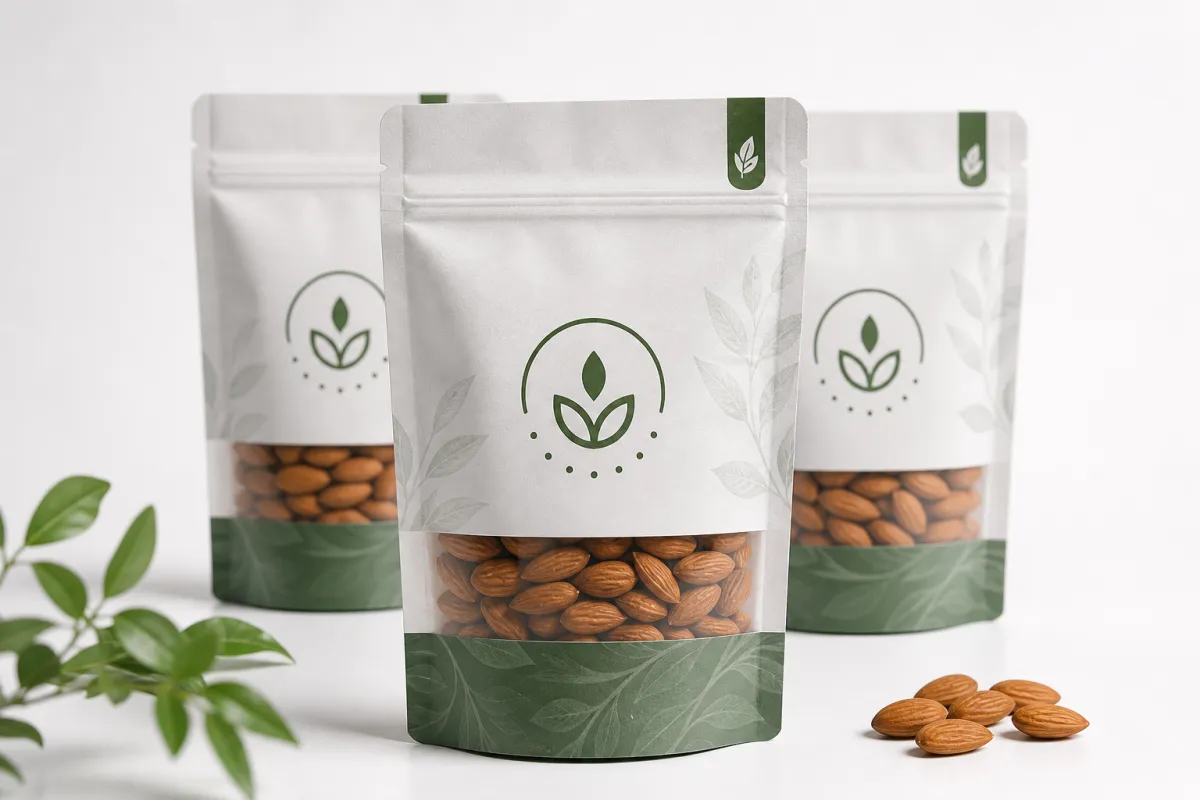
Resealable pouches with logo are flexible packaging formats that combine a repeat-close feature with branded printing, labels, or both. The closure is usually a zipper-style lock, although press-to-close and slider options are common too. The format might be a stand-up pouch, flat pouch, side gusset bag, or flat-bottom pouch. The basic idea is simple: the customer opens the pack, uses part of the product, closes it again, and keeps the contents in better condition than they would in a torn-open bag.
That simple idea explains why resealable pouches with logo show up in so many categories. Crunchy products need a fresh seal. Coffee needs aroma control. Protein powders need moisture protection. Pet treats need odor control and practical storage. Samples need a tidy finish after opening, which sounds minor until a product sits on a pantry shelf next to cereal and old granola bars for six weeks. Even wipes and small tool kits benefit because the package stays useful after the first use instead of becoming packaging waste on day one.
The logo is not just decoration on the front panel. Its placement has to account for the pouch shape, fill height, seal area, and the place where a hand naturally grips the pack. A beautiful mark can disappear behind a bulging product or get cut by a zipper seam. Then the package is branded in theory and invisible in practice. Good resealable pouches with logo are planned from two angles at once: shelf view and hand-held view. Ignore either one and the package loses force.
Brands choose resealable pouches with logo for a few repeat reasons. First, the format usually feels more premium than a plain bag. Second, it helps keep the product in better condition after opening, which can reduce complaints about staleness, leaks, and mess. Third, it often fits a crowded shelf better than rigid packaging, especially when space is tight and products need to face forward. In a category with 200 facings and a dozen lookalike competitors, a well-built pouch can do quiet brand work that louder copy never manages.
One misconception deserves a hard stop: resealable pouches with logo are not just about appearance. The film stack, seal quality, and closure type affect shelf life, opening behavior, and how the package feels in the hand. A pretty logo on a weak pouch still leaves you with a weak pouch. Buyers discover that after launch when returns start mentioning loose zippers, bad seals, or product that no longer tastes or smells right. Packaging is honest in that way. It tells the truth eventually.
For a wider view of packaging performance and testing, the Packaging Institute and ISTA are useful references if you are comparing structures, transit durability, or shipment abuse expectations.
How Do Resealable Pouches With Logo Work?
The mechanics are straightforward enough to explain and complicated enough to get wrong. The pouch body is built from one or more film layers. One layer carries print. One layer seals. Middle layers may add oxygen barrier, moisture resistance, puncture resistance, or light protection. A zipper or press-to-close closure allows repeated opening and closing. That layered approach is why these pouches can stay light while still performing well.
The closure is what consumers touch first. A standard zipper lock works for many dry goods and remains the most familiar option in the category. Press-to-close seals behave similarly and are easy for shoppers to understand. Slider closures cost more, though they can make the pouch feel more substantial and easier to use on larger packs. Child-resistant features may be required in regulated categories. Tear notches help the first opening feel clean rather than chaotic. Resealable pouches with logo sit at the intersection of film engineering and ordinary human impatience.
- Zipper lock: common, economical, and suitable for most dry products.
- Press-to-close seal: familiar, quick to use, and often the default choice.
- Slider closure: higher cost, better perceived convenience, often used for premium packs.
- Child-resistant options: used where product safety or regulation calls for extra control.
- Tear notch plus zipper: gives the first opening a cleaner edge without harming reclose use.
Print method changes both economics and schedule. Digital printing works well for shorter runs, designs with many colors, and artwork that may change often. Rotogravure suits larger quantities because the unit cost can fall once setup is absorbed, though the front-end effort is heavier. Some brands start with a stock pouch and a label if the launch is small or the design is still moving. That approach can be smart, especially when the goal is to test demand rather than commit to a full custom line. Resealable pouches with logo do not need the same production route every time.
The pouch shape changes how the logo reads. Stand-up pouches are easy to merchandise because they present a clean front panel and sit neatly on shelf. Flat-bottom pouches add structure and often read as more polished. Side gusset bags are common for coffee and larger dry goods, though the branding field behaves differently once the product is inside. Lay-flat pouches save space, yet they can offer less room for hierarchy. The best resealable pouches with logo keep the mark visible before opening and after reopening. A logo hidden in a fold might as well be working the night shift.
Think of the pouch as a tiny building with a job description. It needs to open cleanly, close cleanly, hold shape, survive shipping, and keep the product from ballooning or collapsing. Mockups hide most of that. Real resealable pouches with logo have to work in the hand, in a cart, in a pantry, and in transit, which is where design theory usually turns expensive. Flexible packaging only looks simple from a distance.
Key Factors That Change Performance and Appearance
Material choice usually makes the biggest difference after size. PET/PE laminates are widely used because they balance print quality, seal performance, and price. BOPP/PE is another frequent choice for dry products. Kraft-look laminates create a paper-like appearance without giving up all the functional benefits of film. Metallized layers improve light and aroma protection while adding a stronger shelf presence. Clear films make sense when the product itself does the selling. Resealable pouches with logo can look dramatically different depending on the stack beneath the print.
Barrier requirements should follow the product, not the mood board. If the product is sensitive to oxygen, moisture, or aroma loss, the structure needs to handle that reality. Coffee and flavored snacks often need stronger oxygen and aroma control. Powders may care more about moisture. Light-sensitive formulas may need opaque or metallized film. Matte finish can look premium, though it does nothing to improve freshness on its own. Packaging that looks refined but fails early is an expensive compliment to a weak product.
Size affects both appearance and use. A pouch that is too large wastes shelf space and makes the brand look undecided. A pouch that is too tight wrinkles around the product and weakens logo readability. Fill weight, product density, and headspace all matter. An 8 oz coffee pouch, a 250 g snack pouch, and a 1 lb protein powder pouch will behave very differently even if the artwork looks nearly identical on a computer screen. Good resealable pouches with logo are sized to the actual product, not the estimate someone made after glancing at a spreadsheet.
Finish decisions affect the tone of the brand. Gloss creates contrast and makes color appear sharper. Matte softens glare and often reads as more upscale, especially on restrained designs. Soft-touch coating adds a tactile cue, though it raises cost and does not belong on every product. Clear windows can be useful when the product itself is part of the pitch, yet too much transparency can weaken the logo if the contrast disappears. Foil accents can add hierarchy, but too many metallic details turn a good package into a shiny argument. That risk grows fast with resealable pouches with logo that already carry nutritional copy, legal text, and regulatory symbols.
Compliance and sustainability belong in the conversation from the start. Food contact rules, shelf-life targets, storage conditions, and claims about recycled content or responsible sourcing all need review before production. Paper-based outer layers may support an FSC claim, but the supply chain has to be documented correctly. The FSC site is a good starting point if you need to understand what that certification covers. For shipping performance, ask whether the finished pack or shipper has been tested against an ISTA method that matches your distribution route.
From a buyer's point of view, the right structure solves the most likely failure mode. If freshness is the problem, barrier matters most. If breakage is the problem, puncture resistance climbs the list. If shelf presence is the problem, print contrast, panel size, and pouch shape deserve the most attention. Resealable pouches with logo work best when the spec answers a real risk instead of dressing up a weak one.
Resealable Pouches With Logo: Pricing and Cost Drivers
Pricing for resealable pouches with logo usually moves with five variables: material complexity, pouch size, closure type, print method, and quantity. A thicker laminate with stronger barrier costs more than a simple dry-goods structure. A slider zipper costs more than a standard press-to-close zipper. A large pouch uses more material than a compact one. Heavy coverage or multiple colors raise print costs. Quantity changes everything because setup costs can be spread across more units or trapped in a small run.
Small runs often look expensive per unit for a very ordinary reason. Artwork prep, plates, machine setup, proofing, and color matching do not shrink just because the order is tiny. At 500 or 1,000 pieces, the fixed costs have very little room to spread out. At 5,000 or 10,000, the math starts to look different. That is why resealable pouches with logo can move from "too expensive" to "reasonable" with one change in the quantity column.
Here is a practical comparison for a 5,000-piece order. These are broad ranges, not promises, because finish, format, freight, and current material prices can all shift the number.
| Option | Typical Unit Cost | Best Fit | Main Tradeoff |
|---|---|---|---|
| Stock pouch + label | $0.18-$0.35 | Very short runs, fast launches, test products | Less integrated branding, label placement can look generic |
| Digital custom print | $0.30-$0.65 | Small to medium runs, complex artwork, frequent updates | Higher unit cost than large-volume print |
| Rotogravure custom print | $0.12-$0.30 | Higher volume, repeat orders, strong color consistency | Higher setup cost and less friendly for tiny runs |
| Premium structure with slider or special finish | $0.28-$0.80 | Retail products, stronger shelf display, premium positioning | More cost pressure from extras like finish, zipper, and structure |
Those numbers only help if the quote reflects the real package. A pouch for 3 oz of granola is not the same as a pouch for 2 lb of pet treats. Width, height, gusset depth, and fill weight all change film usage. Ask for pricing against exact dimensions, not a vague "roughly this size" estimate. If the supplier does not know the fill weight, the pouch may be too small, too tall, or more expensive than it needs to be. Resealable pouches with logo should be quoted against the final use case, not a guess that feels close enough.
Hidden costs usually appear one by one, then all at once. Sample charges. Freight. Artwork revisions. White ink layers. Matte coating. Tear notch tooling. Valves for coffee. Special zippers. Color matching approvals. A premium retail bag can move fast once those features start stacking up. That does not mean the quote is wrong; it means the quote needs to be read carefully. These pouches often look simple until the extras pile up like luggage on a short trip.
A good packaging quote should make the tradeoffs visible: what the pouch protects, what it costs, and what the brand gives up to hit the number.
Short-run buyers usually want speed and flexibility. High-volume buyers usually want lower unit cost and tighter consistency. Neither is wrong. A start-up launching a new snack line may be better off with digitally printed resealable pouches with logo because the market can be tested without ordering 50,000 units. A mature brand with predictable demand may save real money by moving to a higher-volume print method. The right answer depends on sell-through, warehouse space, and how often the artwork changes.
Ask for three quantity breaks, not one. Try 1,000 units, 5,000 units, and 10,000 or 20,000 units. That usually shows where the price curve starts to flatten. It also makes it easier to see whether the cheapest quote is actually cheaper once freight and sample costs are included. The best resealable pouches with logo make business sense across the full run, not just in the unit price line.
Step-by-Step Process and Timeline for Ordering
Ordering resealable pouches with logo goes better when the brief is specific. Start with the product type, fill weight, shelf-life target, closure preference, and the dimensions you expect to use. Add the logo files, barcode if needed, warning text, and the quantity tiers you want quoted. A supplier cannot recommend the right pouch if the only instruction is "make it look premium." That is not a spec. It is a guess wearing nicer shoes.
- Write the packaging brief: include product, fill weight, finish, barrier needs, and order quantity.
- Review the dieline: confirm panel sizes, seal zones, and where the logo will land on the finished pouch.
- Check artwork carefully: watch safe zones, bleed, small text, and barcode quiet space.
- Approve the sample or proof: test the pack before production commits your budget to inventory.
- Plan shipping and storage: make sure cartons, pallets, and warehouse space are ready before the run lands.
Dielines are where pretty ideas meet geometry. A logo that looks centered on a flat file may sit too close to a zipper once the pouch is formed. Small copy can disappear near the bottom seal. A QR code can become useless if it lands on a curve or crease. Good artwork for resealable pouches with logo respects the physical package. It does not pretend the pouch is a billboard with no folds, seams, or limits.
Sample and proof approval is the stage many teams rush through and later regret. A digital proof shows layout, not hand feel. A physical sample shows zipper behavior, panel stiffness, gloss level, and how the package sits when filled. If a supplier can provide a sample pack or a close material match, take it seriously. Fill it. Seal it. Put it in a carton. Shake it. Open it. Close it again. That tells you more than a dozen emails about how the pouch should behave.
Timing depends on the print route and the amount of artwork work required. Simple stock-based or digitally printed resealable pouches with logo may move from proof to production in a few weeks. Custom laminated runs with special finishes, more complex zippers, or heavy revisions usually take longer. Build in extra time if compliance copy, barcode placement, or logo usage still needs cleanup. Waiting until the week before launch is how people discover that production is not a vending machine.
Shipping and receiving need planning too. Ask how many cartons or pallets the order will create, and whether the cartons are packed for counting or just for moving. Check pallet height if your warehouse has racking limits or a lift gate. If the product is time-sensitive, plan for transit time and add a buffer for inspection. Resealable pouches with logo are only useful if they arrive before launch and arrive in usable condition.
Common Mistakes When Designing Resealable Pouches With Logo
The first mistake is choosing the wrong barrier level and then acting surprised when the product loses freshness, aroma, or texture too early. A snack that goes stale in a week does not need a louder logo. It needs a better film stack. Resealable pouches with logo should be selected around product behavior, not brand vanity.
The second mistake is putting the logo in the wrong place. Too close to the top seal and it gets crowded out. Too small and it disappears on shelf. Too busy and it competes with the nutritional panel, barcode, and legal copy. Too low and it can vanish behind the filled product. The logo should read from a few feet away without turning the entire package into an advertisement for itself. Good resealable pouches with logo strike that balance and keep the front panel calm enough to work.
The third mistake is guessing the pouch size. Product density changes the final look more than most teams expect. A fluffy protein powder does not pack like coffee grounds. A gummy candy does not settle like a crunchy snack mix. Teams often estimate volume loosely, then order a pouch that looks half empty or bulges like it is under pressure. Both outcomes look off. Both cost money. Resealable pouches with logo should be sized from actual fill data whenever possible.
- Wrong barrier: product quality drops before the package is fully used.
- Logo in a bad zone: visibility gets worse after filling.
- Bad sizing: the pouch looks awkward or wastes material.
- No sample approval: proof and reality do not match.
- Cheap finish only: readability, seal, or shelf appeal suffers.
The fourth mistake is skipping sample approval because the proof "looks fine." Fine is not a spec. The customer never lives inside the proof file. They see the pouch on a shelf, in a pantry, in a shipping box, and in their hands. Test the real package. If resealable pouches with logo are going into retail, check them under real light and at real distance, not only on a bright monitor in a quiet office.
The fifth mistake is choosing the cheapest finish without thinking through the tradeoff. A matte film can improve feel, but it can also soften contrast if the artwork is already pale. A clear window can show the product, yet it can steal space from the logo. A glossy pack can look sharp, though it may reflect light badly under retail fixtures. The least expensive choice is not always the least expensive result. That is especially true with resealable pouches with logo, where the package itself does part of the selling.
Special handling should be mentioned early, not after the quote lands. Powder dust, sharp edges, greasy food, strong aroma, and moisture-sensitive contents all change the final spec. A pouch that works for one category can fail in another. Resealable pouches with logo are flexible, but they are not magic.
Expert Tips and Next Steps for Resealable Pouches With Logo
Build a one-page spec sheet before asking for quotes. Keep it plain and useful. Product type. Fill weight. Dimensions. Closure type. Finish. Barrier need. Quantity. Shelf-life target. Barcode or not. That sheet saves time and usually produces better answers because the supplier responds to facts instead of guesswork. It also makes comparing resealable pouches with logo much easier because every quote starts from the same assumptions.
Ask for a sample pack or a close material match if the project matters. Hand feel, zipper quality, stiffness, and print clarity are much easier to judge in person. A pouch that looks beautiful on screen can feel cheap in the hand if the film is too soft or the zipper is clunky. A good sample can save an ugly first run. That is not a luxury. It is basic due diligence.
Test the package in the real workflow. Fill it. Seal it. Ship it. Stack it. Open it. Close it again. Store it for a few days. Then look again. If the logo smears, if the zipper jams, if the pouch tips over, or if the product clumps because moisture got in, you want to know before the full order. Resealable pouches with logo are not finished until they survive actual use.
A pouch should survive the customer's first week, not just the approval email.
Review the logo from distance, not only close up. If the brand mark cannot be read from a few feet away, simplify the design. Increase contrast. Reduce background texture. Give the logo more open space. Too many brands over-decorate the front panel and then wonder why the main mark disappears. With resealable pouches with logo, a cleaner layout usually wins over a crowded one.
Here is a practical action list before you place the first run:
- Choose the structure that matches the product, not the trend.
- Confirm the closure style and whether a tear notch is needed.
- Get quotes at multiple quantities so the pricing curve is visible.
- Approve a sample or close material match before production starts.
- Check that the logo, barcode, and legal copy are legible on the finished pouch.
If you treat resealable pouches with logo as a full packaging system, the result is usually cleaner and cheaper over time. The product stays protected, the brand looks more credible, and the ordering process stops feeling like a gamble. That is the practical goal. Good resealable pouches with logo are not just branded. They are useful, readable, and worth repeating on the next order.
Frequently Asked Questions
How much do resealable pouches with logo usually cost?
Pricing depends on size, material, closure type, print method, and quantity, so there is no honest one-price answer. Small runs usually cost more per pouch because setup costs are spread across fewer units. Ask for quotes at multiple quantities so you can see where the price drops start to make sense for resealable pouches with logo.
What size resealable pouches with logo should I choose?
Use the actual fill weight and product density, not a rough guess, to size the pouch correctly. Leave enough headspace for sealing and a clean shelf shape without making the pack look half empty. Request a dieline or sample so you can test the fit before placing a larger order for resealable pouches with logo.
How long does it take to make resealable pouches with logo?
Timing depends on artwork approval, sample approval, print method, and current production capacity. Simple jobs move faster; custom structures, special finishes, or complex branding take longer. Build in extra time for revisions if your logo, barcode, or compliance text still needs cleanup before production begins.
Are resealable pouches with logo good for food products?
Yes, if the material barrier and seal are matched to the product's moisture, oxygen, and aroma needs. Choose food-safe materials and confirm any compliance requirements before production starts. For snacks, coffee, protein powders, and dry goods, resealable pouches with logo are often a strong fit.
What should I send to a supplier for resealable pouches with logo?
Send the product type, fill weight, pouch size, closure preference, logo files, and target quantity. Include any finish, barrier, or shelf-life requirements so the quote is based on the real spec. If possible, send a sample of the product itself; it helps the supplier recommend the right structure faster.
Good resealable pouches with logo protect the product, show the brand clearly, and hold up through real use. Start with the spec sheet, not the artwork fantasy, and the rest gets much easier.
Related packaging resources
Use these related guides to compare specs, costs, quality checks, and buyer decisions before making the final call.


