Toy PVC garment bags Unit Cost Review is not just a pricing exercise. It is the difference between a clean, sellable presentation and a bag that looks fine on paper but causes haze, cracking, bad sealing, or a reorder nobody planned for. Buyers usually start with sticker price, then discover the real cost lives in the details: material grade, thickness, print coverage, MOQ, and how well the bag holds up in packing and display.
For a toy line, a sample garment, or a seasonal display program, the bag is part of the product story. It has to protect, show off, and survive handling without turning cloudy or wavy. That is why a proper quote should read like a build spec, not a guess.
Why PVC Garment Bags Win On Shelf Readiness
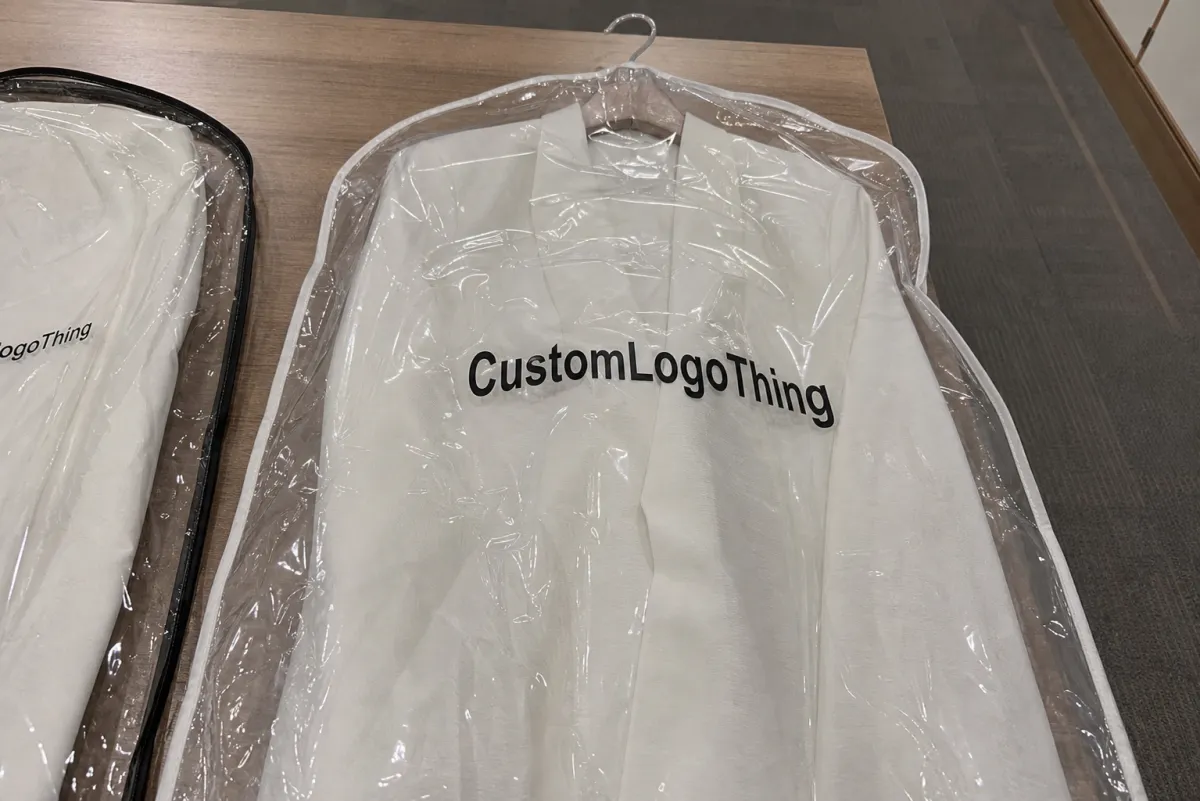
PVC garment-style bags earn their place because they do three jobs at once. They keep dust off the product, show the product clearly, and add a cleaner retail look than a plain poly bag. That matters more than people admit. A bag that looks sharp on a shelf reduces the need for extra wrap, extra hang tags, or secondary packaging that eats into margin.
A toy PVC Garment Bags Unit Cost review should start there. The cheapest bag is often the most expensive once haze, poor sealing, or split seams force a reorder. In practice, buyers do not complain about paying a few cents more for a bag that keeps its shape. They complain about the run that arrives with curled edges and inconsistent transparency.
This format works especially well for toy lines, apparel samples, and promo sets that need a front-facing clear panel. A buyer can see color, shape, and finish before anyone opens the package. That is useful on a crowded retail shelf, and it is even more useful for warehouse teams that need fast visual checks.
Compared with soft PE film, PVC usually gives more rigidity and a crisper presentation. Compared with generic poly bags, it feels more deliberate. Not luxurious in a fake way. Just better built. For brands that want the package to do some selling, that extra structure usually pays for itself through lower damage claims and fewer presentation complaints.
A bag that looks flat in a sample photo and curls like a potato chip in production is not premium. It is a problem waiting to happen.
From a packaging buyer's point of view, the real value is simple: a decent bag lowers returns, improves first impressions, and cuts down on the awkward need to explain why the packaging looks cheap even though the product does not.
Product Build: Panels, Zippers, Handles, and Inserts
The build tells you where the money goes. A standard custom PVC bag usually has front and back panels, welded or stitched seams, and some type of closure. That closure might be a zipper, a snap, or a flap with adhesive. Each version changes both the unit cost and the way the bag behaves after repeated handling.
Fully clear bags are the simplest route. They keep the product visible and usually carry the lowest setup burden. Frosted PVC shifts the look toward a softer, more finished feel, which some brands prefer for higher-end display. Printed accent panels sit somewhere in the middle: enough decoration to carry branding, but not so much coverage that the bag stops doing its main job.
Handles are optional, not magic. A top handle helps on display and makes the bag easier to move, but it also adds construction work and sometimes extra reinforcement. Inserts do a different job. A stiffener, hang card, or inner board helps the bag hold its line during shipping and on a shelf. For buyers comparing bulk pricing, inserts are one of those add-ons that look small on paper and become noticeable on the invoice.
- Front and back panels: standard on most builds; thickness and clarity matter more than people expect.
- Closure: zipper, snap, or flap; choose based on reuse, seal strength, and retail handling.
- Handles: useful for display and carry, but they raise labor and hardware costs.
- Inserts: improve shape retention and reduce wrinkling during transit.
- Print areas: logo strip, corner mark, or full-panel branding; each one changes setup charges.
Better build quality usually shows up fast. Edges are cleaner. Seals run straighter. The packed bag stands up instead of sagging. That is the difference between a bag that looks intentional and one that looks like a rushed substitute.
Size, Thickness, and Print Specs That Actually Matter
Most quote problems start with vague specs. If a buyer says “medium size” or “strong enough,” the supplier has to fill in the blanks. That is how prices drift. The dimensions, usable depth, flap overlap, and bag opening all affect material usage and packing efficiency. A bag that is technically the right size but 5 to 10 mm off in tolerance can slow down packing lines and create a pile of rejected pieces that should have been usable.
Thickness is one of the clearest cost drivers. Light-duty bags often sit around 0.15 mm to 0.20 mm, while a sturdier presentation bag may run 0.25 mm to 0.35 mm or higher depending on structure. Thinner film cuts cost and freight weight, but it can also feel flimsy and crease more easily. Thicker film looks better and resists handling damage, yet it adds both material cost and shipping weight. There is no free lunch here.
Printing changes the equation too. A small single-color logo on a closure strip is very different from a full-area branded panel with tight registration. Buyers should confirm whether the artwork sits on the bag body, the insert card, or the closure. That detail affects tooling fees, setup charges, and the number of production steps.
Good print specs should answer four questions:
- How large is the logo area?
- How many colors are being printed?
- What surface carries the artwork?
- Does the design need front-and-back registration?
If the bag will be reused, the closure design matters as well. A repeated-open bag needs smoother edge finishing and better zipper alignment than a one-time display sleeve. If the bag is only for shelf presentation, the buyer can often save money by simplifying the closure and using a cleaner insert card instead.
For distribution testing, some buyers also ask whether the packed carton can survive standard transit checks. That is a good question. Not every supplier will run full test protocols, but asking about ISTA methods is a sensible filter. See ista.org for the test framework that many shipping teams reference.
Toy PVC Garment Bags Unit Cost Review: What Drives the Quote
The cleanest way to think about toy PVC garment Bags Unit Cost Review is to split the price into five buckets: material, labor, printing, setup, and logistics. Buyers usually focus on material first because it is visible, but the other four can move the quote just as much.
Material grade and thickness change the base cost. Better clarity, better feel, and higher stiffness usually mean a higher unit cost. MOQ matters because setup time has to be spread across the run. A 1,000-piece order carries more setup burden per bag than a 10,000-piece order. That is basic math, not supplier greed.
Printing is where many quotes jump. One-color branding is usually the most efficient path. Multi-color artwork, big coverage areas, metallic accents, and custom shapes all add to setup and production time. Tooling fees show up when a design needs custom cutting, special hardware, or a nonstandard closure system. Those charges are not always large, but they are rarely zero.
Here is a practical way to read bulk pricing. The numbers below are rough ex-works ranges for standard clear or frosted PVC Garment Bags with basic logo work. They are not promises, because size, thickness, and decoration can change the math quickly.
| Order Tier | Typical MOQ | Estimated Cost Per Piece | Best Fit |
|---|---|---|---|
| Small trial run | 500-1,000 pcs | $1.10-$1.85 | Sample approvals, short promotions, test market launches |
| Standard bulk order | 3,000-5,000 pcs | $0.42-$0.92 | Regular retail programs and repeat packaging schedules |
| Higher volume | 8,000-10,000 pcs | $0.24-$0.55 | Established SKUs with stable specs and consistent print |
Those ranges move fast if the bag needs heavier PVC, a custom zipper pull, a printed insert, or specialized packing. Freight can also surprise buyers. A quote that looks cheap before shipping may not be cheap once carton count, cube size, and destination are added. That is why I always ask whether the number is landed or not. If it is not landed, it is only half a quote.
Hidden costs deserve a separate line on the checklist: sampling fees, proof charges, carton configuration, export labels, and any charge for revised artwork after approval. If a supplier cannot explain these clearly, the quote is not ready for comparison. It is just decorative.
Production Steps, Sample Check, and Lead Time
A proper order follows a predictable path: inquiry, spec confirmation, artwork review, sample production, approval, mass production, inspection, and shipment. If one of those steps is skipped, the risk moves straight into your warehouse. Simple as that.
Most delays happen before production even starts. Artwork comes in incomplete. The buyer changes dimensions after the sample is built. The closure style shifts from zipper to flap after proof approval. Each change creates another round of checking and usually another round of setup charges. The fastest project is the one that stops moving.
Realistic lead times depend on complexity. A standard run with clear specs and a simple logo often takes 12-18 business days after sample approval. More complex prints, custom inserts, or special hardware can stretch that to 18-25 business days. Rush orders are possible, but they are not magical. They usually cost more because they compress the time available for inspection, packing, and export prep.
The sample stage matters more than many buyers want to admit. A good sample should confirm:
- Exact dimensions and tolerance range
- Film clarity, haze, and surface finish
- Seal strength and edge consistency
- Logo position and print sharpness
- Carton fit and pack-out count
That is also the time to think about testing and documentation. If the product will move through multiple distribution points, some buyers ask for carton drop references based on ISTA procedures. If the project includes paper inserts or hang cards, FSC chain-of-custody paper may matter. See fsc.org if that certification needs to be part of your documentation set.
After production starts, the final checks should cover seal strength, print alignment, scratch inspection, and carton labeling. Those are not luxury checks. They are the basic things that keep a low-cost quote from turning into a messy receiving report.
Why Buyers Stick With Our Factory for Repeat Orders
Repeat orders are where a supplier proves whether the first quote was real or just optimistic. Buyers stay with a factory that can repeat sizing, keep material sourcing stable, and hold the same visual standard from one run to the next. That consistency is worth money because it reduces re-approval, rework, and warehouse confusion.
Quality control should be visible at several points, not just at final inspection. A buyer should know how the factory checks seal strength, print alignment, clarity, and scratch marks before cartons leave the floor. If the supplier only talks about final QC, that usually means the earlier checkpoints are loose.
Direct communication helps too. It shortens revision cycles and cuts the back-and-forth that usually inflates project time. A buyer does not want three emails just to confirm that the flap overlaps the intended 25 mm. That is the sort of detail that should be settled in one spec sheet and one proof.
Repeat customers also benefit from scaling. A test run of 1,000 pieces can move into 5,000 or 10,000 without rebuilding the spec sheet from scratch, as long as the original sample is well documented. That is where a disciplined factory saves time. The buyer does not have to explain the same product twice.
Honestly, the best repeat-order factories are not the ones that promise everything. They are the ones that keep the same answer when the buyer asks for the same bag six months later. That sounds dull. It is also exactly what packaging buyers want.
What to Send for an Accurate Quote and Next Steps
If you want a fast, accurate quote, send the full spec set on the first pass. Dimension, thickness, closure style, print colors, and quantity are the minimum. Add the product use case too, because a display bag, shipping bag, and sample bag do not need the same build or the same price point.
The best quote requests also include artwork files and a reference photo. That helps the supplier avoid guessing about print coverage, logo placement, and color blocking. If you already have a dieline, send it. If you do not, send the product dimensions and a rough sketch. That is still better than “standard size” with no context.
Before comparing offers, confirm these items:
- Sample timing and approval steps
- Carton pack count and outer carton size
- Delivery destination and freight terms
- Whether the quote includes labels, inserts, or hang cards
- Whether the unit cost is ex-works or landed
That last point matters more than buyers think. A fake-low quote often hides freight, extra cartons, or a surprise charge for artwork changes. A real quote is boring in the best way. It tells you exactly what the bag costs, what the setup costs, and what the shipment will cost before anyone starts production.
So if you are comparing suppliers for Custom Logo Things, use this toy pvc garment bags Unit Cost Review as a filter, not a headline. Ask for the build spec, check MOQ tiers, compare bulk pricing side by side, and choose the cleanest value. Not the loudest quote. Not the cheapest number that evaporates later. The one that holds up in production, on shelf, and in receiving.
What affects toy PVC garment bags unit cost the most?
Material thickness, bag size, and closure style usually move the price first. Printing, custom inserts, and special finishes add cost quickly. MOQ matters too, because setup expenses spread across the total order.
What MOQ is typical for custom PVC garment bags?
MOQ depends on size, print count, and whether the bag uses standard tooling. Higher quantities usually unlock a lower unit cost. Small runs are possible, but they usually carry a higher per-piece price.
Can toy PVC garment bags be printed with a logo?
Yes, most buyers add a logo, product name, or retail mark. Simple single-color printing is usually the most cost-efficient option. Multi-color or large-area printing raises both setup time and unit cost.
How long does production take after sample approval?
Lead time depends on order size and print complexity. Standard runs often move in 12-18 business days after approval when artwork and specs are already locked. Rush jobs are possible, but they need early confirmation and clear deadlines.
What should I send to get an accurate quote fast?
Send size, thickness, quantity, print details, and closure type. Include product photos or dielines if you already have them. Add the delivery address so freight and packing can be estimated correctly.

