Ribbed Winter Hats reorder planning guide sounds straightforward until the second run arrives with a cuff that folds differently, a logo that sits a little too high, and a yarn shade that does not quite sit next to the original sample. That kind of drift is common enough to be worth planning for, which is why the strongest repeat orders begin with records, not memory.
The most reliable way to handle a repeat is to treat it like a controlled rebuild. Pull the last approved spec sheet, compare the artwork files, check the packing details, and verify that the new quote matches the exact build you already signed off on. If the prior order is only described in broad terms, the chance of mismatch goes up fast, especially once yarn lots, knit tension, and decoration placement enter the picture.
Winter accessories also move on a short clock. Retail demand can climb quickly when the weather shifts, and a delayed reorder can leave a display half stocked just when sell-through should be strongest. A clean reorder process protects timing, but it also gives the buyer a better way to compare suppliers because the product definition is fixed instead of vague.
"If the product cannot be rebuilt from the paperwork alone, it is not really a repeat order."
That is the practical standard worth using for any ribbed beanie reorder. Keep the file trail tight, call out every change, and do not rely on a good memory for details that affect fit, price, or presentation.
Ribbed Winter Hats Reorder Planning Guide That Prevents Stockouts
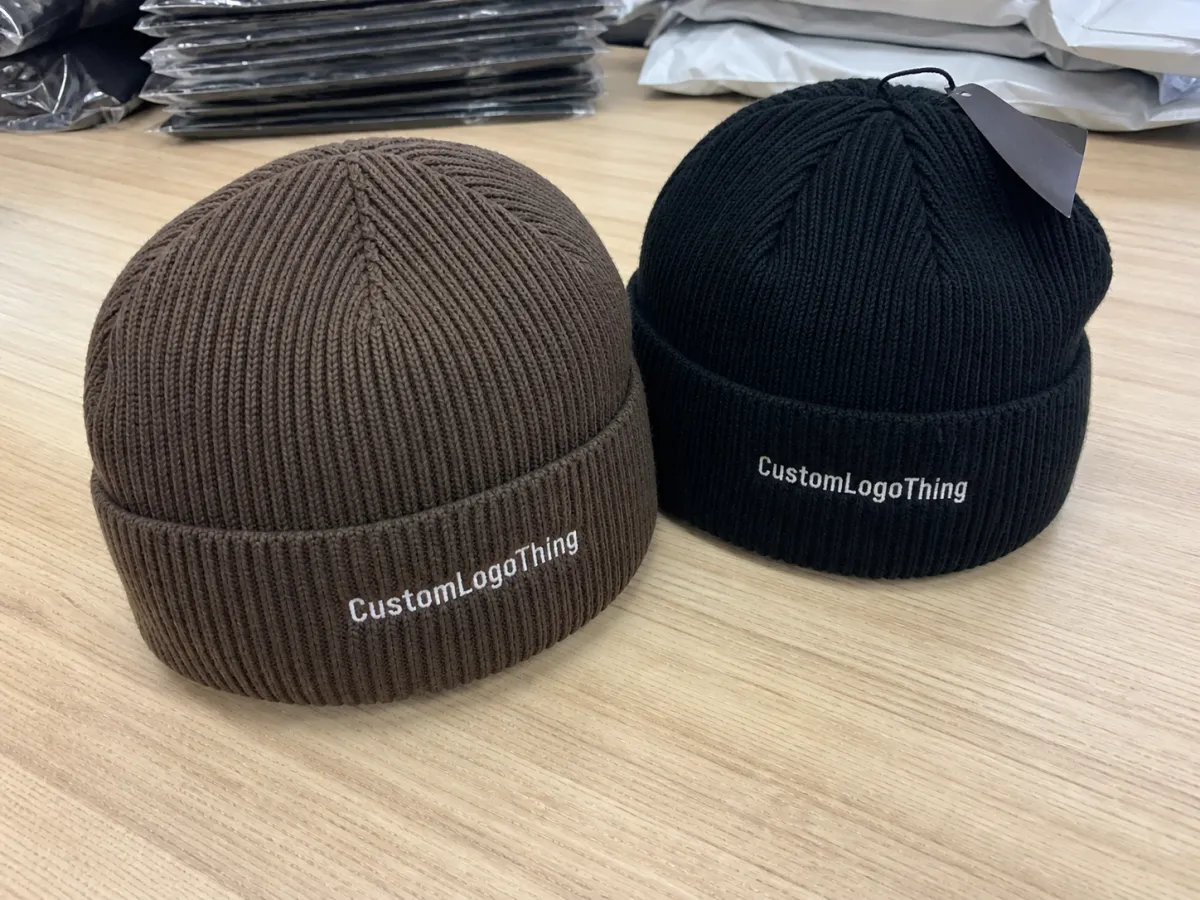
The first mistake buyers make is assuming a repeat order is just a rerun of the same hat. Ribbed Winter Hats are sensitive to small shifts in yarn, knit density, cuff depth, and branding placement, so a verbal recap rarely protects the next production run. A proper ribbed winter Hats Reorder Planning guide starts with the previous order file: the approved PO, final artwork, production sample photo, carton count, and shipping method that actually left the warehouse.
Most delays do not come from the knitting step itself. They come from the quiet missing pieces that show up after the quote is already moving, like a label layout nobody saved, a trim color described loosely, or a logo placement judged by eye rather than measured from the cuff. If the old sample is still available, put a ruler on it. If it is gone, use the last approval email and any retained photos with dimensions written on them. That small discipline saves time later and keeps the reorder from turning into a new development job.
Repeated orders also go smoother when everyone agrees on what is supposed to stay fixed. Buyers often focus on color and logo while overlooking fit, seam finish, or the way the cuff folds after packing. Yet those are the parts that make the hat feel like the same product in hand. If the order is meant to support retail shelves, employee kits, or promotional distribution, consistency matters more than a slight improvement that was never requested.
There is also a cash-flow angle. A buyer who has clear history can move faster through approval, which helps avoid rush freight or emergency restocks. That matters because winter demand often comes in a narrow window. Once the season is underway, a good reorder is not a theory exercise; it is a deadline.
Product Details That Keep a Repeat Ribbed Beanie Consistent
Rib construction is the backbone of the hat, and the knit pattern matters more than many buyers expect. A 1x1 rib creates a tighter, more uniform stretch and usually recovers well after wear. A 2x2 rib feels fuller and can look more substantial on a shelf. Heavier rib structures add texture, but they also change how the cap sits once the cuff is folded. If the first run used one pattern and the repeat assumes another, the product will not feel like a true repeat.
Body shape matters just as much. Confirm the body height, cuff fold, relaxed width, and crown finish before the reorder is approved. A beanie that is half an inch taller or an inch wider can look and feel different, especially if it is packed in retail packaging or distributed as a uniform piece. Even small shifts in knit density can change the drape enough to matter.
Branding method is another place where repeat orders drift. Embroidery usually gives the cleanest and most durable look, but stitch count, thread coverage, and logo size all affect price and hand feel. Woven labels are lighter and often less expensive. Sewn patches create a more premium retail impression, though they can add a step in finishing. Inside labels help with size or fiber content, but they also create another proof point that should be checked before production starts.
Color matching should never rest on memory alone. Yarn lots move, and even a close match can read differently under warehouse light, daylight, and retail lighting. If the reorder depends on a particular shade, compare the old sample to the new swatch in the same room if possible. Ask for the closest match to the original reference, not just a general color family. A buyer who wants repeatability should ask for the original look, not an improvement that was never requested.
Another detail that is easy to overlook is the way the hat behaves after packing and unpacking. Some knits spring back quickly, while others hold a crease where the cuff was folded. That can affect how the product looks on arrival and how much steaming or reshaping a warehouse team needs to do. For bulk winter accessories, the post-pack appearance matters almost as much as the sample photo.
Specifications Buyers Should Confirm Before Reordering
The Ribbed Winter Hats reorder planning guide works best when the buyer locks the numbers down in writing. Start with the measurements that affect fit and appearance most directly. For adult unisex beanies, a relaxed width around 8.5-9.5 inches, a stretched width near 11.5-13 inches, a body length around 8.5-10.5 inches, and a cuff height in the 2.5-3.5 inch range are common reference points. Youth sizing should be listed separately rather than assumed to scale down cleanly.
After measurements, confirm the material build in plain language. Fiber content, yarn weight, and knit gauge matter because they change warmth, hand feel, and price. A denser acrylic knit behaves differently from a lighter blend, and if the hat is headed into colder retail regions, the buyer may want a firmer, warmer hand and stronger recovery. If the product is more fashion-driven, a softer drape and lighter gauge may make better sense. There is no universal best choice. The right answer depends on how the hat will actually be worn and sold.
Finishing details are where repeated orders often drift. Spell out the fold style, seam finish, label placement, hang tag format, polybag count, carton quantity, and barcode location. If the prior order used a sticker label in one market and a sewn-in label in another, write that down. Packaging choices affect how the product lands on the shelf and how much handling is required in the warehouse.
- Fit: relaxed width, stretched width, body height, cuff height, and any youth or adult notes.
- Build: rib pattern, knit gauge, fiber content, seam finish, and yarn weight.
- Branding: embroidery, woven label, patch, inside label, or mixed decoration.
- Pack-out: polybag style, carton count, barcode placement, hang tag, and case marking.
- Tolerance: acceptable variation for knit goods, dye lots, and trim placement.
Define acceptable variation before the run starts. Knit goods have normal tolerance ranges, and dye lots can move a little even when the source stays the same. The point is not to eliminate every difference. The point is to agree on what difference is acceptable so release does not turn into a debate later.
Buyers who handle many winter accessory programs usually keep a simple comparison sheet beside the old sample. That sheet tracks measurements, decoration position, packaging count, and any exceptions that were approved the first time. It is plain paperwork, but it is far easier to use than hunting through a chain of emails while the order is already moving.
Pricing, MOQ, and Unit Cost Breakpoints for Reorders
Pricing on ribbed beanies is built from several buckets, and buyers get a clearer read when those buckets are separated. Quantity is the obvious driver, but yarn selection, decoration method, packaging complexity, and whether the order is an exact repeat or a changed version all affect the final number. A reorder with the same build is usually cheaper than a partial update because sampling and proofing can be reduced, but that only holds if the supplier has the original records ready.
MOQ changes the math quickly. Lower quantities usually carry a higher per-unit cost because setup is spread over fewer hats, while larger reorders can push the price down once knitting, finishing, and packing are amortized across volume. Buyers should ask for a quote that shows unit price at each quantity tier instead of a single number with no context. That makes it easier to compare a 500-piece replenishment against a 2,000-piece seasonal restock.
| Reorder Type | Typical MOQ | Typical Unit Price | What Changes |
|---|---|---|---|
| Exact repeat, same yarn and logo | 250-500 pcs | $2.80-$4.20 | Lowest risk, minimal proofing, faster release if records are complete |
| Repeat with new woven label or hang tag | 500-1,000 pcs | $3.10-$4.75 | Extra label proof, possible carton update, small added labor |
| Repeat with embroidery change | 1,000+ pcs | $3.25-$5.25 | New stitch file or sew-out approval, longer sample path |
| Repeat plus new color or custom packaging | 1,500+ pcs | $3.60-$6.00 | Material sourcing, carton checks, and more packing time |
That table is not a universal price card, because yarn choice and decoration coverage can move the number in either direction. Still, it shows the breakpoints buyers should expect to see. A small reorder with custom embroidery and gift packaging will cost more per unit than a basic restock, and there is nothing mysterious about that. The work simply takes longer and touches more hands.
Ask whether the quote includes cartons, standard packing, and any basic labeling, or whether those are separate lines. Clear quoting prevents one supplier from appearing cheaper only because freight, pack-out, or print costs were left outside the base price. That is how apples-to-apples comparison becomes possible. A clean quote is one of the best signs that a reorder will stay controlled after approval.
Production Steps, Lead Times, and Approval Milestones
A clean reorder follows a predictable path: order intake, spec review, artwork check, yarn or material confirmation, knitting, finishing, quality inspection, packing, and dispatch. A buyer does not need to manage every step, but the buyer should know where the order can pause. If the quote is based on an old file and the artwork needs a refresh, the calendar changes immediately. If the yarn color must be reconfirmed, that adds time too.
The approval gates are usually the real schedule drivers. Sample sign-off, label proofing, color confirmation, and carton-mark review all add days, especially when several people need to approve the same file. A repeat order is fastest when the supplier already has the approved sample, the final art, and the pack-out record on file. A fresh round of comments on any one of those items can push the finish line out by a week or more.
For most buyers, the useful lead-time question is not, “How fast can you make it?” It is, “How much room do we have before the season turns?” A repeat ribbed beanie order often lands in the 12-18 business day range after approval if materials are in hand and decoration stays unchanged, but that should be treated as a planning baseline, not a promise. Larger runs, custom packaging, and crowded factory schedules can stretch that window. If the order has a hard shelf date, build in buffer time instead of hoping transit behaves.
Late artwork changes are the easiest way to turn a good schedule into a stressed one. Once production has started, even a small edit to a label or barcode can create rework. The safest path is to freeze the pack-out before knitting begins and keep extra edits out of the production lane unless they are truly necessary. That one habit protects both lead time and margin.
For buyers shipping through distribution, pack-out matters as much as the knit itself. If cartons are expected to survive parcel handling, some teams reference ISTA test methods. If the order includes paper hang tags, inserts, or carton board where sourcing is a concern, FSC certification is worth asking about. Those standards do not make the hat itself better, but they do help when a buyer needs traceability and packaging discipline.
One more practical point: lead time should include recheck time after production, not just manufacturing time. A quick inspection at the end can catch loose stitching, label placement drift, or a carton count mismatch before the shipment leaves. That final look is not wasted time. It is often the last chance to catch a small issue when the fix is still cheap.
What a Reliable Ribbed Beanie Supplier Should Handle
A dependable supplier should be able to open the last file and understand the order in minutes, not after a long search through old emails. That means the prior spec, final artwork, label version, carton count, and shipment method should be stored in a retrievable format. If those records are scattered, the reorder behaves like a new development job even if the buyer asked for a repeat.
Good partners also explain what can be matched exactly and what may move slightly because of yarn lot, dye variation, or trim availability. They do not overpromise on things that are naturally variable. Instead, they lay out the risk before the buyer commits. That honesty matters because a small shift in texture or color can be acceptable if everyone agrees on tolerance, but it becomes a problem if it arrives as a surprise.
The best suppliers flag the cost of change early. A label update may be simple, but a new patch style can alter sewing time, minimums, and pack-out. A color change may force a yarn substitution. A different carton count can affect freight efficiency. Buyers should want those tradeoffs in writing before production starts, not after the first sample arrives.
Quality control on ribbed winter hats is usually practical rather than complicated. Buyers should expect checks for stitch consistency, symmetry across the cuff, clean thread trimming, correct logo placement, and reasonable size variation across the run. On knit goods, a small amount of variation is normal. What matters is whether the variation stays inside the approved tolerance and whether the final hand feel still matches the original sample.
A strong reorder partner keeps the record clean, tells you what can be repeated, and warns you before a small edit turns into a schedule problem.
That process discipline is what makes a ribbed winter hats reorder planning guide actually useful in the field. The guide is not just about buying hats. It is about making the next order easy to approve, easy to receive, and easy to sell without extra cleanup in the warehouse.
Next Steps for a Clean Ribbed Hat Reorder
Start by pulling the last approved spec sheet, photos, artwork files, and carton details into one folder. That sounds basic, but it is the fastest way to stop a repeat order from becoming a guessing exercise. Once the records are together, compare the old build against the new request line by line: rib structure, body size, cuff depth, branding method, packing, and ship window. If there is a change, write down whether it is cosmetic, functional, or both.
Next, review inventory and sales timing together. A buyer who knows the next sell-through window can order a quantity that supports the season without overcommitting cash or warehouse space. If the order is a true repeat, the quote should be straightforward. If labels, packaging, or color are changing, separate the base hat price from the update cost so the decision is easy to evaluate. That keeps the conversation grounded in facts rather than assumptions.
A short approval checklist helps close the loop:
- Confirm the last approved sample or production reference.
- Verify measurements, rib pattern, and cuff height.
- Check embroidery, patch, or label artwork against the old version.
- Approve carton count, packing format, and barcode location.
- Set a target ship date with a real buffer for transit.
That is the real value of a ribbed winter hats Reorder Planning Guide: it reduces guesswork, speeds sign-off, and protects the buying cycle when the season is already moving. Keep the records tight, confirm the details early, and the reorder should feel like a controlled repeat instead of a fresh scramble.
A final check worth making before release is how the order will be received and handled. If the hats are going into retail, make sure the case count fits the receiving plan. If they are for promotions or uniforms, confirm whether individual polybags are actually needed or whether a simpler pack-out works better. Small decisions like that rarely change the product image, but they can change labor cost and warehouse speed in a real way.
How far ahead should I place ribbed winter hat reorders?
Plan backward from the date you need goods in hand, not from the day you approve the quote, because knitting, finishing, packing, and transit all need room. If the order is tied to a seasonal launch, add extra time for proofing and any artwork or packaging changes before production starts. A little buffer is cheaper than an emergency shipment.
What specs matter most when repeating ribbed winter hats?
The most important repeat specs are the rib pattern, body length, cuff height, relaxed width, and the exact branding method used on the last order. Photos help, but the cleanest reorder comes from a written spec sheet plus the last approved sample or production reference. If those two sources disagree, resolve the conflict before quoting.
How does MOQ affect ribbed beanie pricing?
MOQ affects how setup costs are spread across the order, so lower quantities usually mean a higher unit price. If you need custom yarn, labels, or packaging, the MOQ may rise because those components add separate setup and handling steps. Bigger runs usually bring the unit cost down, but only if the build stays stable.
Can I change labels or packaging on a repeat ribbed hat order?
Yes, but even small packaging changes can affect cost, carton counts, and production timing, so the update should be called out before quoting. If the core hat stays the same, ask the supplier to separate the price impact of the packaging change from the base product price. That makes the tradeoff easier to judge.
What should I send for the fastest reorder quote?
Send the previous PO, approved sample photos, specs, artwork files, target quantity, and any updated packing instructions. If you already know your ship date, include it up front so the quote can reflect the lead time you actually need. The more complete the starting file, the less back-and-forth the reorder needs.