Walk through a retail checkout with a supplement bundle in hand, and the first thing most shoppers notice is not the logo. They notice whether the handle feels secure, whether the base stays square, and whether the bag still looks controlled after it takes the weight of bottles, pouches, and inserts. That is why a supplement Brand Paper Shopping Bags Material guide matters: the paper has to carry load, hold shape, and support the brand all at once.
For supplement brands, Paper Shopping Bags are judged in a practical way. A single bottle is easy enough for most stocks. A multi-bottle purchase or a kit with samples, brochures, and inserts pushes stress into the handle area and bottom seam quickly. The right material improves the unboxing experience, supports brand identity, and keeps the package from looking tired before the customer even reaches the door.
The bag is part packaging, part sales message. Paper choice changes print sharpness, moisture resistance, rigidity, and even how the bag folds when someone carries it by one handle. This supplement Brand Paper Shopping Bags Material guide is meant to help buyers balance presentation, strength, and budget without specifying more bag than the product line actually needs.
Supplement brand paper shopping bags material guide: what buyers miss
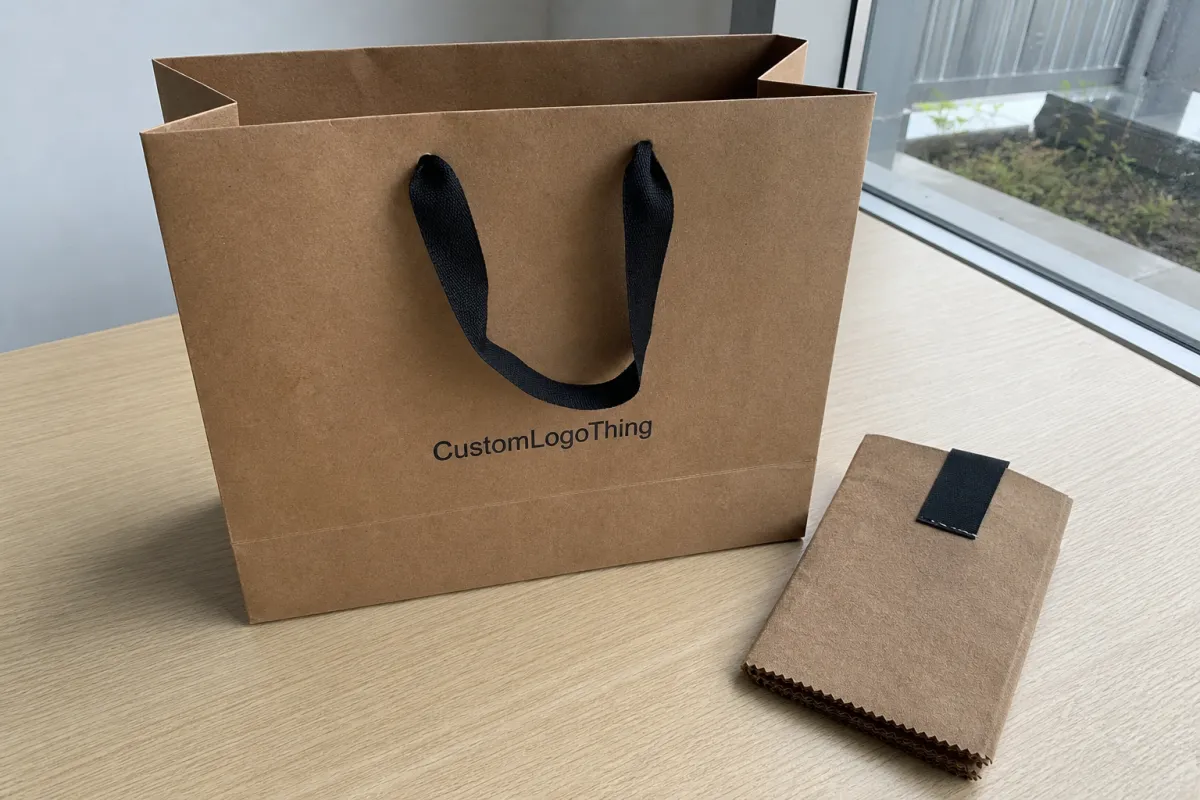
Many buyers start with artwork, which makes sense because the logo and color palette are the first things visible in a mockup. The problem is that the bag does not fail in a mockup. It fails in use, usually at the handle fold, the bottom glue line, or the side gusset where the load shifts. A useful supplement brand Paper Shopping Bags material guide starts with performance, then moves to appearance.
Supplement packaging behaves differently from apparel or gift packaging. Bottles are dense. Tubs shift. Bundled sets create odd pressure points. Even a small kit can weigh more than it looks, which means a bag that feels fine with one unit may feel risky with three. Buyers should think about load distribution, not only the number printed on a spec sheet.
The paper itself also affects the quality cue. A clean white coated stock can make fine lines and small typography read sharply. A natural kraft option signals a quieter, earthier position and often fits wellness brands that talk about transparency or recycled materials. Neither is automatically better; each one sends a different message.
If the brand story includes sustainability, the paper choice should support it in a grounded way. FSC certified paper, post-consumer waste content, and recyclable construction are familiar signals for buyers who want responsible packaging. Keep the claim honest, though. Biodegradable packaging depends on the exact material, the finish, and the local disposal system. A laminated bag or one with heavy plastic reinforcement should never be marketed as if it disappears in every environment.
"If the handle feels unsure, the bag feels cheap. If the bag feels cheap, the whole purchase gets downgraded in the customer’s mind."
That is the real challenge with a supplement brand Paper Shopping Bags material guide. It is never only about the bag. It is about whether the packaging supports the product value at the moment the shopper picks it up, carries it out, and reuses it later.
How the bag structure carries weight and protects the product
Every paper shopping bag has four stress zones: the handle attachment, the top fold, the side gussets, and the bottom panel. Those are the points where weight, motion, and friction all meet. If the bag is underspecified, those areas show it first through elongation, wrinkling, or a seam that opens under repeated use.
The body of the bag is only part of the answer. A strong bag usually needs the right combination of paper base, handle construction, and reinforcement. A fold-over top adds stiffness. A bottom insert helps the bag sit flat and improves stack stability. Handle patches or rope-style anchoring spread load more evenly, which matters a lot when the pack-out includes glass or heavy supplement bottles.
For most supplement buyers, the common paper bases are kraft paper, coated paper, and premium board stocks. Kraft paper has a natural look and decent tear behavior, especially in brown or white formats with enough fiber strength. Coated paper gives a smoother print surface and cleaner color reproduction. Premium board stocks feel more rigid, which helps the bag stand up and look polished at the counter.
Do not overtrust vague claims like "thick" or "strong." Basis weight, caliper, fiber blend, and conversion quality matter. A 157gsm coated sheet may feel less rugged than a heavier kraft build, but stiffness and tear resistance do not always track one-to-one with a single number. That is why a supplier should discuss the intended load, not only paper weight.
Storage and transit also matter. A flat-packed paper bag with weak memory can warp if it is packed too tightly. A bag built with proper board inserts handles storage better, especially when stacked alongside corrugated cardboard shippers or promotional cartons. High humidity can soften the top fold and reduce crispness long before the bag reaches a shopper.
Where supplement kits are heavier, a few structural upgrades usually pay off:
- Fold-over top for better stiffness and a cleaner opening line.
- Bottom insert to keep the base square under load.
- Reinforced handle patches for repeated carrying.
- Side gusset sizing that matches the actual product footprint, not just bottle height.
The best way to judge structure is with a physical sample loaded with the real product set. Flat proofs do not reveal handle feel, fold memory, or how the bag behaves after a few lifts. The sample should be checked with the exact pack-out, not a lighter substitute. That is where weak seam placement, poor gusset balance, or handle pull-out usually show themselves.
Paper grades, finishes, and brand presentation choices
When a supplement brand wants the bag to feel natural and wellness-led, uncoated kraft is often the first option to review. It has a tactile, honest feel that fits herbal blends, protein powders, and lines built around ingredient transparency. The tradeoff is that kraft can show scuffing and ink shift more readily than a smooth coated sheet, especially on darker artwork or dense graphics.
White coated paper does the opposite. It gives brighter color, tighter typography, and sharper linework, which helps brands that carry a lot of regulatory copy, ingredient callouts, or small promo text. If the bag is part of a retail launch, that smoother surface can make the brand look more controlled and more premium.
Finishes matter too. A matte aqueous coating usually gives a softer appearance and decent rub resistance. Gloss adds visual punch and can make photos and bold color fields feel more active. Varnish is often cost-efficient for basic protection. Lamination adds a very different feel, with better scuff resistance and a more finished surface, but it also adds cost and can change the recyclability story depending on construction.
Surface texture is not just about looks. It changes the way small text reads. On a coarse or highly absorbent stock, tiny type can soften at the edges. That matters for brands that place ingredient highlights, compliance notes, or QR codes on the bag face. If the layout is crowded, a smoother stock will usually produce a cleaner result.
For brands that want a responsible sourcing message, recycled content can be a smart fit, especially if the product line already talks about manufacturing standards or plant-based formulas. Public guidance from the EPA recycling guidance and forest certification information from FSC are useful references. They do not replace a bag spec, but they help brands keep claims aligned with the material.
Keep expectations realistic. A bag made with post-consumer waste content can support a strong sustainability message, but it still has to pass a carry test. Brands sometimes lean too hard into eco language and under-spec the structure. That is how a beautiful bag turns into a weak one, and weak bags rarely help the brand image.
| Material option | Typical use | Strength profile | Print feel | Indicative cost at 5,000 pcs |
|---|---|---|---|---|
| Brown kraft paper | Natural, wellness-led brands | Good tear resistance, moderate stiffness | Softer, earthy, less saturated | $0.18-$0.28 per unit |
| White coated paper | Retail-ready supplement launches | Moderate to strong with proper reinforcement | Sharp, bright, color-accurate | $0.24-$0.38 per unit |
| Premium board stock | Heavy kits and premium presentation | High stiffness, strong shelf shape | Excellent for detailed graphics | $0.32-$0.55 per unit |
That table is a starting point, not a final quote. Handle type, print coverage, paper availability, and finishing all change the price. It still helps buyers avoid comparing bags only by unit price without asking what the bag is actually built to carry.
Cost, pricing, and MOQ: what actually drives the quote
The price of a custom paper shopping bag is usually driven by six things: size, paper grade, print coverage, color count, handle type, and finishing. If the bag has a large footprint, high ink coverage, or multiple production steps, the quote climbs quickly. A simple one-color kraft bag is a very different job from a laminated, full-color, rope-handled premium carrier.
MOQ, or minimum order quantity, changes the economics in a way that matters to smaller supplement brands. A higher MOQ often lowers the unit price because setup and press costs are spread over more units. That sounds attractive until a team realizes it needs storage space, cash flow, and a reorder plan. Lower unit cost is not always the best buying decision if the brand cannot comfortably move the inventory.
Custom sizing also adds cost. If the product line includes a single bottle, a duo kit, and a larger bundle, each one may need a different die line. Multiple SKUs can be smart from a merchandising standpoint, but they create more tooling, more proofing, and more risk of variation between runs. Even a small change in gusset width or handle placement can affect the artwork layout and the bag’s carrying behavior.
Here is a practical way to evaluate quotes:
- Ask for at least two quantity tiers, such as 3,000 and 10,000 units.
- Request the freight estimate separately so you can see landed cost.
- Check whether the quote includes structural reinforcement or only the shell.
- Compare the storage cost of higher MOQ against the unit savings.
- Confirm whether any special finish requires extra curing or longer scheduling.
A brand can also save money by keeping the artwork disciplined. Heavy coverage, multiple spot colors, foil, and specialty coatings can all add cost fast. Sometimes a cleaner layout with more white space gives the bag a more premium feel than a fully flooded design, and it is usually easier on the budget too.
Process and timeline: from brief to delivered bags
A good bag project moves in a predictable sequence: spec sheet, artwork setup, structural review, proof approval, sampling, production, and shipment. The order sounds simple, but each step protects the next one. If the spec is weak, artwork gets adjusted later. If the artwork is rushed, proofing takes longer. If proofing is rushed, the sample becomes the first real chance to catch errors, and by then the schedule is already under pressure.
Lead time depends heavily on the build. A standard bag with known materials and straightforward print might move through production in around 12 to 15 business days after proof approval. Custom sizing, specialty paper sourcing, multiple print passes, or a finish that needs curing can push that farther out. Transit time then adds another layer, especially if the bags are crossing regions or need final delivery to multiple locations.
Sampling is where the smartest buyers slow down. A flat proof tells you little about handle feel, fold memory, or how the bag behaves with the real product set inside. A physical sample lets you check whether the base stays square, whether the load tips, and whether the handle sits comfortably in the hand after the bag is lifted several times.
For supplement brands planning a launch or trade show, buffer time matters. Revisions happen. Artwork legal checks happen. A die line gets adjusted. A freight booking slips. None of that is unusual. The problem is only when the schedule has no room for the ordinary delays that happen in packaging production. If a bag needs to align with a retail reset or a seasonal campaign, the buffer should be built before the job starts, not after the proof is already approved.
Many teams also use transit testing standards to get a better sense of risk. ISTA procedures are commonly referenced for package distribution testing, and the organization’s guidance is available at ISTA. That is not the same thing as a final bag spec, but it helps buyers think about vibration, compression, and handling in a more disciplined way.
From a buyer’s point of view, the job is finished only when the bag can be picked up, carried, stacked, and displayed without drama. That is the real test of a well-chosen paper structure.
Common mistakes that cause weak bags or wasted spend
The most common mistake is sizing the bag around one product instead of the full purchase mix. A bag that fits a single tub perfectly can become a bad choice when a bundled kit or a bottle pair goes in. Loose space lets contents shift. Too-tight space stresses the gussets and corners. Either way, the bag loses the polished feel that a retail handoff should have.
Another mistake is choosing paper that looks premium but does not match the load. This happens often with brands that want a refined shelf look and forget to test the actual carry weight. A lighter stock may print beautifully, but the handle attachment can still fail under repeated use. What looks elegant in an artwork presentation can look fragile in a real checkout line.
Humidity is another quiet problem. Paper is sensitive to moisture, and that matters if bags are stored in back rooms, near loading docks, or in regions with seasonal humidity swings. Corner wear, softening at the top fold, and rub damage from cartons can make a brand-new bag look aged before it ever reaches the customer.
Skipping sample testing is the fastest route to regret. A sample run should be checked with the exact pack-out: bottles, sachets, inserts, promotional cards, and any additional literature. Put the bag through actual handling, not just a desk inspection. If the sample fails, the correction is far cheaper before mass production than after 10,000 units are already printed.
Two other issues show up often:
- Ignoring the handoff point - a pharmacy counter, boutique shelf, event booth, and DTC insert bag all need different presentation cues.
- Forcing one spec across everything - a one-size-fits-all bag usually means some product sets are under-supported and others look cramped.
A thoughtful supplement brand paper shopping bags material guide is really a risk-reduction tool. It keeps the order from being judged only by appearance and forces the team to think about how the bag will live on the floor, in transit, and in the customer’s hand.
Expert tips for better shelf appeal and daily carry use
Design for hand feel and visual structure together. A bag that stands upright and keeps its shape tends to look more expensive, even if the graphics are simple. That is one of the quieter truths of retail packaging: stiffness, balance, and proportion often matter more than adding another decorative element.
Use restraint where the paper already does part of the talking. On kraft paper, too much ink can fight the texture and flatten the message. Strategic white space can make the brand feel more deliberate and less crowded. On coated paper, the reverse can be true: the smooth surface can support more vivid color, but the layout still needs breathing room so the supplement label language does not feel jammed.
Match the bag spec to the actual handoff point. A boutique wellness store may want a refined matte finish and soft handles. A high-traffic pharmacy counter may need better abrasion resistance and a more durable base. An event booth may prioritize speed, easy stacking, and strong visual branding from a few feet away. The same brand can need three different bag behaviors depending on where the bag is handed out.
It also helps to think about the life after the purchase. Some shoppers reuse good paper bags for gym items, receipts, or small storage. When that happens, the bag becomes a moving billboard for the brand. Clean print, a stable base, and a handle that stays comfortable all extend that value. That is part of the quiet return on a well-built bag.
Brands that plan reorder thresholds early usually end up in a better place. They do not have to rush a second run with a thinner paper or weaker finish just to avoid stockouts. That discipline protects both quality and cost, especially when demand is seasonal or tied to a launch cycle.
Spec checks before ordering
Start with the heaviest intended kit, not the lightest one. Measure the product set, include inserts or promo pieces, and define the carry load before asking for quotes. That gives the supplier a real basis for recommending the right paper construction, handle reinforcement, and bottom structure.
Then decide what cannot change. Maybe recycled content is non-negotiable. Maybe the brand needs a matte finish. Maybe the handles have to be reinforced because the supplement bottles are glass. Make those calls early so the rest of the spec can be built around them instead of fighting them later.
Ask for at least two quote levels. A lean version and a more durable version make comparison easier, and they usually reveal where the value really sits. Sometimes the upgraded version costs only a little more per unit but saves a lot of risk. Other times the simpler spec is the better business choice because the product mix is lighter than expected.
Follow a clean approval path: spec sheet, sample test, final signoff, and reorder schedule. That workflow keeps the bag decisions consistent on future runs and prevents the drift where each reorder quietly changes bag quality. For a retail package that is carried, stacked, and reused, consistency matters as much as the first shipment.
What paper weight works best for supplement brand paper shopping bags?
Choose the weight based on the heaviest kit you expect the bag to carry, not just the lightest retail purchase. Heavier bottles and bundled sets usually need a stiffer stock, stronger handle reinforcement, and a more durable bottom structure.
Are coated or uncoated bags better for supplement brands?
Coated bags usually give sharper graphics and better scuff resistance, which helps with premium shelf presentation. Uncoated kraft can feel more natural and health-focused, but it may show wear faster and print with a softer visual finish.
How does MOQ affect custom paper shopping bag pricing?
A higher MOQ often lowers the unit cost because setup and production are spread across more bags. The tradeoff is higher inventory commitment, so brands should compare cash flow, storage space, and reorder timing before choosing a quantity.
What slows down the timeline for custom supplement paper bags?
Custom dimensions, special finishes, and multiple artwork revisions can add time before production even starts. Sampling, proof approval, and shipping transit time should also be built into the schedule so the launch date is not at risk.
How do I know if my bag can handle multi-bottle supplement kits?
Test the bag with the actual product set, including inserts and any promo material, to see how the load sits and shifts. Check the handle area, bottom seam, and side gussets for strain so the bag can carry the kit without sagging or tearing.


