Soap Brand Paper Shopping Bags Unit Cost: Request a Quote
For a soap brand, the bag is not an afterthought. It is part of the product story, part of the shelf block, and part of the margin calculation. Soap Brand Paper Shopping Bags unit cost matters because a well-chosen bag can raise perceived value, protect wrapped bars or gift sets, and keep the brand visible from checkout to gifting without pushing packaging spend beyond what the SKU can carry.
That balance is harder than it sounds. A bag that looks premium but tears at the handle is a liability. A bag that is cheap on paper but oversized, overprinted, or shipped inefficiently can end up more expensive than the cleaner option. The right answer usually sits between those extremes: enough structure to survive retail use, enough print discipline to stay on budget, and enough consistency to make reorders predictable.
Why Shelf-Ready Soap Bags Matter at the Counter
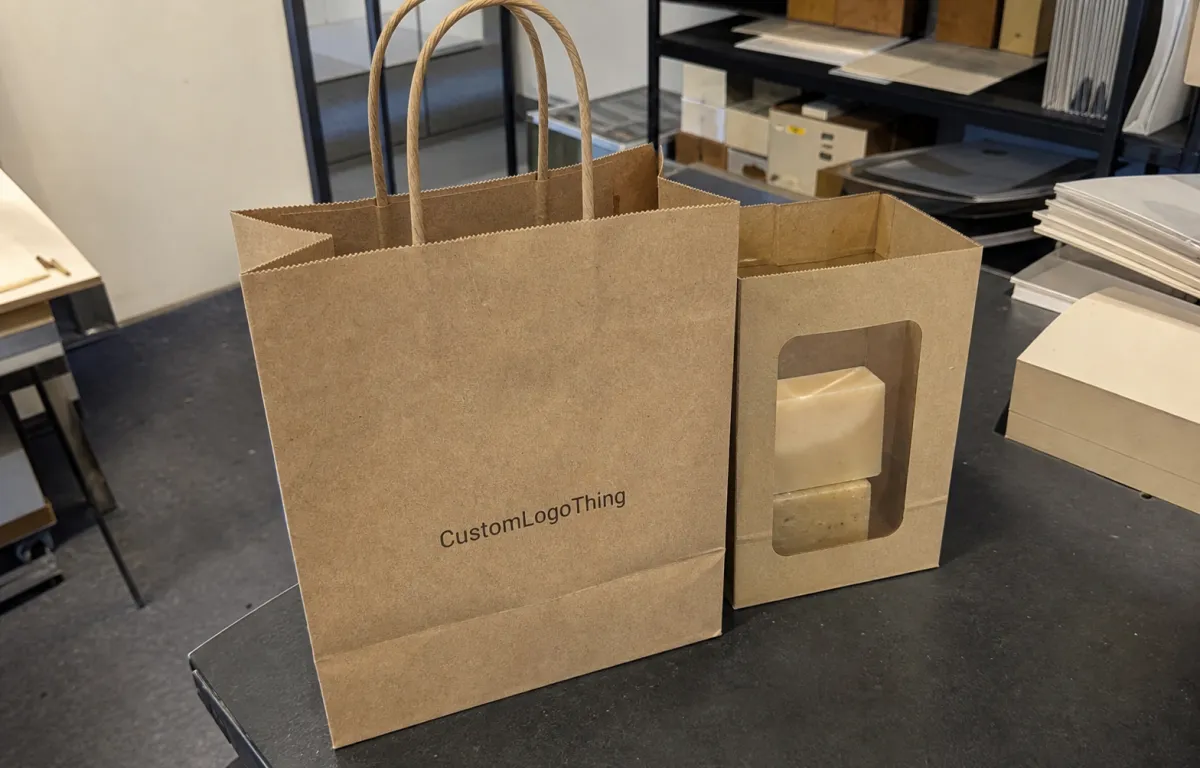
Shoppers rarely evaluate a soap bag the way a packaging team does. They see shape, color, handle, and whether the bag feels intentional. That first read can matter more than technical specs. A clean paper shopping bag can make a handmade bar look considered and giftable; a thin or awkward one can make even a good product feel underdeveloped.
That is why this category should be treated as a retail tool, not just a carrier. A soap bag does three jobs at once: it presents the brand at the point of sale, protects the product during the walk home, and keeps the logo moving through the shopper’s day. If the bag is reused, the brand gets a second and third impression without paying for more advertising space.
Paper Shopping Bags also fit soap better than many buyers expect because the format is simple and visible. Bars, bundle sets, tissue-wrapped kits, and seasonal assortments can all sit neatly in a bag without the extra bulk of a rigid carton. That openness helps the package feel accessible, especially for handcrafted or natural lines where the buyer wants to see some of the product story at a glance.
Small structural decisions change how the bag is perceived. A slightly wider gusset, a thicker stock, or a reinforced handle can move the package from “basic” to “retail-ready” quickly. The point is not to build the strongest bag possible. The point is to build the smallest bag that still holds up to the intended use.
A soap bag should carry safely, look deliberate, and stay recognizable after it leaves the shelf.
For brands comparing structures across SKUs, a quick look at Case Studies can help clarify how different packaging choices affect shelf presence and reorder consistency.
Paper, Print, and Finish Options That Fit Soap Retail
Material choice starts with the brand position and the load the bag has to carry. Kraft paper works well for artisan, natural, and low-gloss retail programs because it signals texture and restraint. Coated art paper gives a smoother face, sharper detail, and stronger color contrast, which can matter for a gift set or a launch that depends on visual impact. Recycled stock sits between those choices when sustainability messaging needs to be visible without making the bag feel weak.
Handle construction matters just as much as the paper. Paper twist handles are economical and suit lighter soap packs. Flat paper handles can work at higher volumes when the load is modest and the brand wants to keep the look simple. Rope or cotton handles add comfort in hand and usually signal a more premium package. When the soap set is heavy, reinforced attachment points are not optional; they are part of the product spec.
Finishing should be chosen with restraint. Spot color printing can deliver strong brand recognition with minimal complexity. Full-bleed artwork helps when the bag itself is part of the campaign. Foil, embossing, lamination, and UV all add texture or shine, but each one adds cost, tooling, and the chance of production variation. For most soap lines, one premium touch is enough. Two or three usually push the bag from “elevated” into “expensive for no clear reason.”
Inside the bag, small reinforcements can be more valuable than a decorative upgrade. A bottom board helps the bag stand square and protects softer packaging from pressure. Side support helps when the fill is irregular or the bag needs to sit upright in a display. If the soap wrap is textured or scuff-prone, a simple insert can prevent rubbing during transit.
For buyers who need a quick planning view, the table below gives realistic range-based comparisons. These are directional, not final quotes.
| Bag Style | Best For | Typical MOQ | Typical Unit Cost Range | Notes |
|---|---|---|---|---|
| Kraft with paper twist handle | Handmade bars, simple retail packs | 1,000-3,000 pcs | $0.24-$0.48 | Good value, natural look, limited finish options |
| Coated paper with rope handle | Gift sets, premium shelf displays | 1,000-5,000 pcs | $0.38-$0.78 | Stronger color, cleaner print detail, better hand feel |
| Recycled paper with reinforced base | Eco-led soap brands, heavier bundles | 2,000-5,000 pcs | $0.29-$0.62 | Balanced sustainability story and carry strength |
| Premium laminated bag with foil detail | Seasonal kits, launch programs | 3,000+ pcs | $0.55-$1.10 | Highest visual impact, most sensitive to setup and finishing cost |
Those figures move with paper source, size, print count, and shipment method. Even so, the pattern is consistent: paper selection and finishing have a bigger effect than many buyers expect, and a well-built structure with modest decoration often gives the best return. For sustainability claims, brands frequently look for FSC-certified paper and packaging guidance aligned with recycling information from the EPA and certification details from the FSC.
Size, Strength, and Artwork Specs to Lock In
A useful quote starts with the actual fill. Length, width, and height define the usable volume. Gusset width affects whether the bag stands properly and whether a wrapped bar or gift set sits flat without bulging. If the bag is too tight, the product looks cramped. If it is too loose, the package can sag and lose shape in a display.
Paper weight should match the contents, not just the visual goal. A single wrapped bar has different needs from a two-bar set with tissue, a card, and a ribbon tie. Too much paper adds cost and stiffness that may be unnecessary; too little creates wrinkles, handle stress, or base deformation. For many soap packs, the correct spec is not the heaviest stock available. It is the one that gives enough rigidity for the product weight and retail handling.
Artwork needs equally careful definition. Confirm bleed, safe zone, PMS or CMYK setup, and exact logo placement around handles and folds. Centered marks and repeated patterns can be interrupted by handle holes or glued areas if the dieline is not checked early. It is far easier to adjust the art before plates or digital runs are approved than to fix a batch after production.
Color handling deserves attention on its own. Paper texture can mute ink. Coating can deepen color. Lamination can shift the tone under store lighting. A logo that looks clean on a screen can read softer on kraft, glossier under laminate, or slightly darker once printed in bulk. A sample or mockup is often the fastest way to catch that difference.
Shipping spec matters too. Bags should arrive flat, square, and protected from edge crush. Carton size, packing count, and pallet stack height affect both damage risk and freight cost. A bag that is technically correct but deformed in transit still hurts the retail presentation. That is not a cosmetic issue; it is a quality issue.
What Changes Soap Brand Paper Shopping Bag Unit Cost
There is no single unit price that fits every soap line. Soap Brand Paper Shopping Bags unit cost is shaped by a familiar set of variables: paper stock, size, print coverage, handle type, special finishes, order quantity, and packing method. The more steps required to make the bag, the higher the cost tends to climb.
MOQ is one of the strongest levers. Higher quantities usually lower the per-unit cost because setup, testing, and handling are spread across more bags. That said, the lowest possible unit price is not always the smartest buy. If the soap line changes seasonally or the artwork is likely to update, a large run can create inventory risk that outweighs the savings.
Print complexity also matters. A single-color logo on kraft stock is easier to produce than a multi-color, full-bleed design with foil accents. Each additional process can add labor, inspection, and rejection risk. Buyers sometimes ask for “just a little” more decoration, but that small addition can push the order into a different production path entirely.
Handle style and reinforcement move the number too. Paper twist handles are generally more economical than rope or cotton handles. Reinforced bottoms, board inserts, and strengthened attachment points add material and assembly time. If the bag is carrying a heavier soap set or will be reused, those extras may be justified. If not, they can inflate cost without adding much practical value.
Three quote tiers usually reveal the tradeoffs more clearly than one number alone:
- Value option: standard paper, simple print, conventional handle, and minimal finishing for high-volume everyday soap lines.
- Balanced option: upgraded paper, better handle feel, and one premium detail for brands that need stronger shelf presence without overspending.
- Presentation option: heavier stock, refined print coverage, and premium finishing for launches, holiday sets, or gift-oriented retail.
That structure helps a buyer see where the real cost jump comes from. A slight increase in paper weight may improve performance more than a decorative finish. A simpler design may protect margin better than a bag full of effects that do not change the shopper’s decision. Good packaging work usually trims the parts that do not help the sale.
For transport and handling, packaging testing guidance from the ISTA can be useful when a soap bag is part of a broader kit or boxed program. Paper bags are not corrugated shippers, but they still benefit from realistic distribution checks.
How to Compare Quotes Without Missing the Landed Cost
The first number on a quote is rarely the full story. Some suppliers include tooling, proofing, standard cartons, and basic packing. Others show a lower headline price and add those items later. Freight can change the outcome just as much, especially if the bags are shipping across long distances or require stronger pallet protection.
That is why the landed cost matters more than the unit line alone. A bag that looks cheaper by a few cents may become the more expensive choice once freight, inspection, and rework risk are included. For soap brands, where packaging often appears in tight retail margins, those small differences add up quickly.
Comparing like with like takes discipline. Ask whether the quote includes printing on one side or both, whether it assumes a specific paper grade, whether the handle is standard or reinforced, and whether packing count matches the final store use. If one quote uses a lighter paper and another uses a sturdier stock, they are not really equivalent, even if the bag dimensions match.
Watch for specification gaps. “Custom bag” is not a useful description. The quote should identify paper weight, print method, finish, handle type, glue points, carton count, and expected lead time. If one of those is missing, the quote may be incomplete. A few missing lines can be the difference between a stable reorder and a surprise overage.
For many buyers, the best path is to request three options built around the same bag size: one economy version, one mid-tier version, and one presentation version. That reveals the price curve fast and keeps the discussion focused on tradeoffs rather than abstract savings. It also makes the question of soap brand Paper Shopping Bags unit cost easier to answer in a way that matches the brand’s actual sales channel.
Production Steps, Timeline, and Lead Time Checks
The production sequence is simple, but each step needs a clear decision. It usually moves from brief to quote, then dieline review, artwork upload, proofing, sample or mockup approval, mass production, inspection, packing, and shipment. If any step is vague, the schedule slips. Artwork approval and final spec confirmation are the two most common delay points.
For a standard custom run, buyers often plan on roughly 12-15 business days after final proof approval. That timeline changes with paper availability, print complexity, finishing, and whether a sample is required first. A plain kraft bag with straightforward print can move faster. A laminated bag with foil or embossing generally needs more time.
Rush orders can work in some cases, but not every setup compresses cleanly. Custom handles, multiple proof rounds, and elaborate finishing are harder to speed up. The easiest way to protect the timeline is to send final dimensions, print files, and shipping details in one complete package. Missing data is what slows the process, not the bag itself.
Before production starts, the buyer should have five points ready:
- Final bag dimensions and target quantity
- Paper stock preference and handle style
- Artwork files with bleed and safe zone confirmed
- Shipping destination and carton preferences
- Sample, proof, or pre-production approval requirements
For premium retail or a launch that cannot tolerate a reprint, pre-shipment photo review is a practical safeguard. It gives the buyer one last chance to check print registration, color balance, handle attachment, and packing count before the goods leave the facility. That extra step can prevent costly corrections later, especially when the bag carries a seasonal or gift-oriented assortment.
If the bags will move through distribution instead of directly to store, the packing spec should be treated as part of quality control. Even paper shopping bags need a stable carton and reasonable stack strength to avoid edge crush or corner distortion. Good packaging is not only about appearance; it is about how the order survives the trip.
What to Send Next for an Accurate Quote
Accurate pricing starts with complete information. Send the dimensions, soap weight, target quantity, print colors, finish preference, handle style, and shipping destination. If the bags are meant for a gift set, include the exact contents or at least the combined packed weight. That detail helps determine whether a standard handle is enough or whether reinforcement is needed.
Competitor photos and packaging references help too. They do not need to be perfect examples; they just need to show the visual direction. A matte kraft bag with a small logo tells a supplier something very different from a high-gloss bag with full coverage artwork. The more the reference reflects the intended shelf position, the less guesswork enters the quote.
A practical decision path works best. Choose the quantity tier first. Choose the paper stock second. Choose the handle style third. Only then decide whether the design needs a premium finish. That order keeps the conversation grounded and makes comparisons easier across suppliers and timeframes. It also prevents the project from drifting into expensive details before the structural needs are clear.
If the order is tied to a launch, a holiday window, or a premium retail program, ask for a sample or proof before mass production. Samples take time, but they catch the problems that cost more to fix later: color drift, size mismatch, handle placement issues, or artwork that collides with the fold lines. In packaging, a small delay before production usually costs less than a correction after printing.
The strongest buying decisions are grounded in product use. Natural soap often looks right in kraft with restrained print. A spa gift set may justify coated paper and a cleaner finish. A seasonal bundle may need a more expressive bag even if the per-unit cost rises. The goal is to match the bag to the commercial purpose, not to chase the lowest quote line by line.
Send the specs, request two or three price options, and compare them against the retail goal. That is the fastest way to turn soap brand paper shopping bags unit cost into a useful planning metric instead of a vague number. Done well, the bag supports presentation, handling, and reorder stability from the first shipment onward.
FAQ
What affects soap brand paper shopping bags unit cost the most?
Paper weight, bag size, print coverage, handle type, and special finishes usually have the biggest impact on the final per-unit price. MOQ matters too because larger runs spread setup and tooling costs across more bags. Freight, packing style, and whether samples or plates are included can also move the quote.
What MOQ should I expect for custom soap paper shopping bags?
MOQs vary by structure and print complexity, but custom paper bags are often quoted in several hundred to several thousand units. Simpler specs can sometimes run at lower quantities, while premium finishes usually need a higher minimum. A lower MOQ generally raises unit cost, so it is worth comparing two quantity tiers before deciding.
Which paper stock works best for handmade soap gift bags?
Kraft paper is a strong choice for a natural, handmade look, while coated paper gives a smoother surface for tighter print detail. If the soap set is heavier, add reinforcement at the handle and bottom board for better carry strength. Choose the stock that matches both the brand story and the weight of the finished set.
How long does production take after artwork approval?
Timing depends on whether a sample or proof is needed first, but production usually starts right after final approval. Complex finishes, custom handles, or extra approval rounds can extend the schedule. If the artwork and specs are final, rush orders are easier to plan and less likely to slip.
How can I lower soap brand paper shopping bags unit cost without making the bag look cheap?
Simplify print coverage, keep the handle style standard, and avoid unnecessary premium finishes on the first run. Ordering a higher quantity often lowers unit cost more effectively than trimming quality in the wrong place. Right-sizing the bag to the product prevents wasted material and keeps the design looking intentional.


