Custom Logo Things
Soap Frosted Zipper Bags Packaging Insert Checklist
Plan a soap Frosted Zipper Bags packaging insert with less back-and-forth: size, stock, print method, pricing, timing, and the mistakes that turn a clean layout into a costly reprint.
Soap packaging usually gets judged in two places: the shelf and the bag interior. A frosted zipper bag can make a soap bar look clean and premium, but the insert is what carries the details that help a buyer decide whether the pack feels finished or improvised.
That is why a soap Frosted Zipper Bags Packaging Insert checklist matters. Buyers often spend more time on the outer look than the piece inside the bag, then discover that the insert is too crowded, too small, or too vague to support the sale. The result is slower quoting, more proof rounds, and avoidable reprints.
A good insert does three jobs at once: it identifies the product, supports the brand story, and stays printable inside a translucent package. If it cannot do those three things cleanly, the layout is probably asking the wrong thing from the format.
Why the Insert Matters
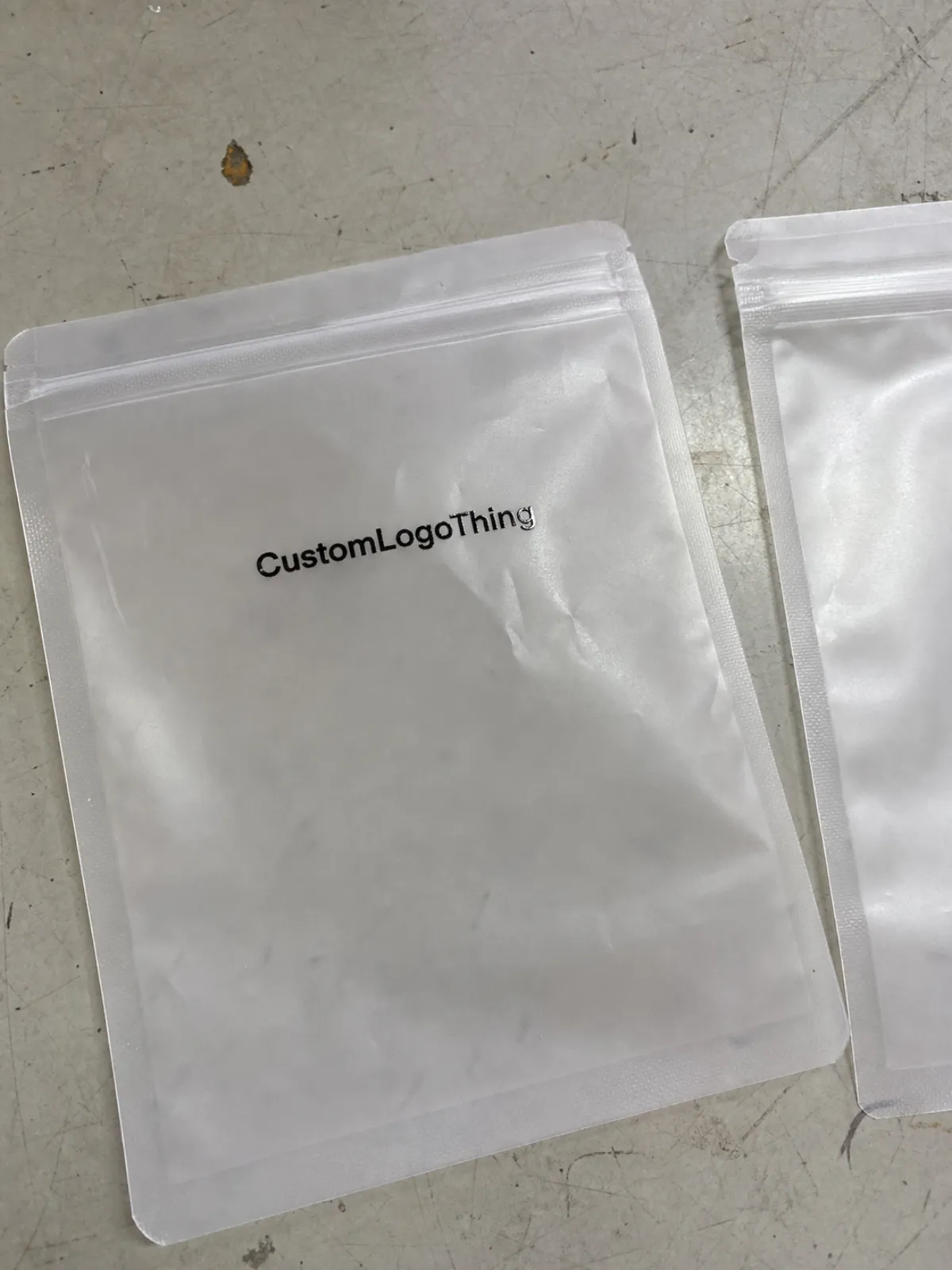
The insert is not just decorative. It is the part of the package that explains the product when the bag itself is only partially visible. That matters for soap because the category sits between personal care, gift item, and everyday use. Buyers may want ingredient detail, care guidance, and a simple brand cue without having to hunt for them.
Frosted Zipper Bags complicate the job because the translucent film lowers contrast. A layout that looks balanced on a white monitor can read weak once it sits behind soap color, texture, and the bag's cloudy surface. Dark ink can disappear, light ink can wash out, and fine type can become harder to read than expected.
Most Frosted Zipper Bags use some type of translucent plastic film, often PE-based, though suppliers vary. The insert should be designed for that filter effect, not just for a flat proof. That means choosing type, spacing, and ink coverage with the real pack in mind.
A practical soap insert usually needs:
- Product name and scent or variant.
- Short positioning line that fits the brand tone.
- Ingredients or materials, depending on the product and channel.
- Use or care guidance that answers the common question quickly.
- Brand contact or QR code for reorder, support, or longer details.
The useful rule is simple: if the insert can be understood in a few seconds while the bag is still sealed, it is doing its job. If it needs explanation, the layout is already too late.
What the Insert Has to Say
Most insert problems come from hierarchy. The buyer should know what the product is before reading brand philosophy or decorative copy. That sounds obvious, but small-format packaging often gives the headline too little space and the filler text too much.
The insert should answer five questions quickly: What is it? Which version is it? How should it be used or stored? What should the buyer expect from it? Who made it? That final point matters because specificity helps a package feel credible instead of generic.
Reading conditions also matter. A pale card behind a pale soap bar can disappear. A dark card behind a dark bar can feel heavy. White space helps, but only if the font weight, contrast, and copy length are controlled. A small insert works more like a museum label than a poster: short, direct, and easy to scan.
Keep the copy factual. Claims like “plant-based oils,” “cold-processed in small batches,” or “fragrance-free” can be useful if they are true and consistent with the formula. Overwritten copy is expensive because it often leads to corrections after proofing or, worse, after production starts.
A good insert feels like a well-edited label: short, legible, and hard to misunderstand. A bad one feels like a pitch that ran out of room.
If the soap line includes retail packs, gift sets, and direct-to-customer shipments, the insert may need separate versions for each channel. Retail often needs clearer compliance and stronger shelf readability. Gift sets can carry a warmer tone. E-commerce packs usually benefit from care instructions and a reorder path. One layout rarely serves all three well.
Groups such as ISTA and FSC are useful reference points when the insert includes shipping durability language or paper sourcing claims. Use them only when the claims are real and supportable.
Cost, MOQ, and Quote Drivers
Pricing for soap inserts usually follows a predictable pattern. Setup drives the first jump, stock and finish drive the second, and quantity smooths the rest. A 300-piece run rarely behaves like a smaller version of a 3,000-piece run. It behaves more like a setup fee with paper attached.
For planning, a basic single-card insert on 14pt C1S or similar cover stock might land around $0.08-$0.14 per unit at roughly 5,000 pieces. A folded leaflet with more copy and standard paper usually sits closer to $0.16-$0.28 per unit. Add premium stock, full-coverage printing, specialty coating, foil, or custom die-cuts and the price can move into $0.35-$0.75 per unit. Under 1,000 pieces, unit cost usually rises because setup is spread across fewer finished items.
These are planning ranges, not fixed list prices. The real quote depends on print method, ink coverage, finishing, and how much handwork the job needs. A plain card is one thing. A card with a fold, soft-touch coating, and variable QR code is another. The second job may still be small physically, but the press only sees the extra steps.
| Insert Format | Typical Stock | Best For | Approx. Unit Price at 5,000 |
|---|---|---|---|
| Single card | 14pt C1S or 16pt cover | Short care note, scent name, brand cue | $0.08-$0.14 |
| Folded leaflet | 100lb text or light cover stock | Ingredients, story, usage, QR code | $0.16-$0.28 |
| Premium multi-panel insert | 16pt+ with coating or specialty finish | Gift sets, luxury soap, retail presentation | $0.35-$0.75 |
Several quote drivers are easy to predict: rounded corners add tooling, foil adds setup and waste, heavy ink coverage can require more drying or curing time, variable data adds file handling, and rush schedules add risk. MOQ matters for the same reason. The printer still has to check the file, set the press, confirm color, and finish the job, even when the quantity is low.
Production Steps and Lead Time
The production sequence is straightforward on paper: brief, size confirmation, artwork setup, proof, approval, production, finishing, packing, shipping. The problem is usually the input. A missing dimension can delay layout. A late ingredient edit can reset proofing. An insert that was “almost final” often needs the kind of cleanup that takes a day nobody planned for.
For straightforward digital work, lead time often lands around 5-10 business days after proof approval. Offset printing or jobs with specialty finishing more often move toward 10-15 business days. Folding, coating, custom cutting, and stricter QC add time. Shipping and peak season add more.
Proofing is where problems are still cheap. Check the actual bag and soap thickness, not just the sketch. Check ink contrast on a translucent background. Read the copy at full size, because text that looks manageable on screen can feel crowded on a 3-inch card.
Three controls keep the schedule sane:
- Lock the size first, because layout depends on it.
- Finalize ingredient and care copy early, because those lines trigger the most revisions.
- Leave room for one correction round, especially for seasonal or retail launches.
Printing is rarely the slowest part of the job. Cleaning up the file is. Buyers who approve dimensions and copy early usually get better pricing and fewer delays because the printer can move from proof to production without reworking the basics.
If the insert is part of a broader packaging program, test it against the soap, the bag, and any label copy together. The bag is translucent, the soap has color, and the insert carries text. That is already enough visual competition without adding a busy background or a crowded layout.
Build the Insert Step by Step
Start with the purpose. Does the insert explain, persuade, comply, or support all three? The answer determines the format. A single card works when the message is short. A folded leaflet works when ingredients, care, and a scent story all need space. A multi-panel piece makes sense for gift packaging or premium retail packs where detail adds value.
Next, measure the packed product, not the sketch. Soap bars often look smaller in a mockup than they do inside a gusseted bag. Zipper height, fold line, and bar thickness all affect the visible area. If the insert is too large, it bends or blocks the product. If it is too small, it looks accidental.
Then set hierarchy. A clean insert usually follows a simple order: headline, support line, practical details. Put the product name where the eye lands first. Keep care notes direct. Move secondary information lower or onto a QR page if the card gets crowded. Customers scan soap inserts; they do not read them like packaging lawyers.
A short checklist helps before files go out:
- Bag dimensions and soap thickness.
- Insert size and whether it folds.
- Quantity and expected reorder volume.
- Paper stock, print method, and finish.
- Final copy for ingredients, care, and contact details.
- Proof target matched to the actual soap and bag colors.
If the budget allows, request two versions of the same insert: one value-driven and one premium. The difference is usually clearer than expected. A value version might use a single card, one or two inks, and standard stock. A premium version might use heavier paper, a fold, and a finish that helps the insert feel intentional instead of merely present.
Run a physical proof if possible, or at least a highly accurate digital one. A frosted bag changes tone, contrast, and perceived density. Paper that looks bright on a white screen can feel dull once it sits behind a colored soap bar.
Mistakes That Make Inserts Look Cheap
The fastest way to make an insert feel inexpensive is to overload it. Tiny type, narrow margins, and too many messages create clutter fast. Buyers may think they are saving money by avoiding a second card, but the real cost often shows up as poor readability and a layout that looks rushed.
Visual mismatch is the next problem. If the brand position is calm, soft, and handmade, the insert should not arrive dressed like a nightclub flyer. Random fonts, clip art, and loud colors fight the bag and the soap. Consistency matters more than ornament in both luxury and budget packaging.
Compliance errors are harder to forgive. Ingredient statements, usage notes, allergen language, and claim language need to be accurate before print. The phrase “all natural” is not a design flourish. It is a claim. If the formula cannot support the language, the insert should not print it. The same logic applies to fragrance, exfoliants, and skin-sensitive messaging.
There are also basic production mistakes: ignoring bleed can trim off borders, ignoring safe area can push copy too close to the edge, and ignoring fold allowance can bury important lines inside the crease. The smaller the format, the less room there is to hide those errors.
The last mistake is budget planning. Treating the insert as the last purchase instead of part of the package system leads to poor fit with bags, labels, or cartons. The cheapest-looking packaging is often not the lowest-priced one. It is the one that was planned in pieces.
Cheap-looking inserts usually come from poor fit, weak hierarchy, or late approvals. Paper is rarely the real problem.
What to Send Before You Request a Quote
For a clean quote and fewer revisions, send a complete spec sheet the first time. Include bag dimensions, insert size, quantity, stock preference, fold style, print colors, finish, and final copy. The more the supplier has to guess, the more the estimate turns into a placeholder.
Send one artwork file and one reference image. The artwork file proves the layout. The reference image shows the tone. Together, they answer questions about readability, finish, and fit before anyone starts building a proof. If the goal is light and natural, say that. If the goal is premium and retail-ready, say that too.
Ask for two pricing paths if possible. One can use a simpler stock or print method. The other can include upgrades that matter most, such as heavier paper, a fold, or a coating that helps the piece hold its shape inside the frosted bag. Side-by-side quotes make it easier to see where the money changes the result.
Before approval, confirm these points in writing:
- Proof format and approval window.
- Production start date after approval.
- Shipping method and destination.
- Final copy ownership for ingredients and claims.
- Exact insert spec matched to the bag and soap size.
For launch schedules, seasonal packaging, or retail rollout, add slack. A schedule without slack is a schedule waiting to fail. The jobs that move cleanly are usually the ones where the brief, proof, and approval arrived before the printer had to start asking questions.
The core checklist is simpler than the jargon around it suggests. Match the insert to the soap, the bag, and the message. Keep the copy short enough to read in a few seconds. Make the contrast survive the frosted film. Approve the proof before the production clock starts.
FAQ
What should a soap frosted zipper bags packaging insert include?
It should include the soap name, scent or variant, key ingredients or materials, care or usage guidance, and a brand contact point. If the insert needs more space, a QR code can hold longer copy without crowding the layout. The goal is clarity through a translucent bag, not a miniature brochure.
How do I size a packaging insert for frosted zipper bags?
Measure the actual packed unit, not just the bag's flat outer size. Soap thickness, zipper clearance, and fold space all affect the usable area. A proof against the real bag and soap is more reliable than a guessed dimension because the translucency changes what the eye perceives.
What affects pricing and MOQ for soap insert printing?
Paper stock, print method, color count, coatings, folds, and custom shapes all move the price. MOQ lowers unit cost as quantity rises, but setup and finishing still need to be covered. Low quantities with premium finishes tend to cost more per piece than buyers expect.
How long does production usually take?
Simple runs can move in 5-10 business days after proof approval. Specialty finishing, folding, or custom cutting can extend that to 10-15 business days or more. Shipping and seasonal demand add their own delays, so the schedule should include a buffer.
What are the biggest mistakes on soap packaging inserts?
The most common problems are crowded layouts, weak contrast, inaccurate claims, and ignoring bleed or fold allowance. A card can also look cheap if the insert fights the soap color inside the frosted bag. Most of the damage comes from preventable choices, not from the paper itself.


