Subscription Embroidered Beanies Unit Cost: Buy Smarter
For a subscription program, subscription embroidered beanies unit cost is not a side detail. It shapes the margin on the box, the quality of the item subscribers remember, and the amount of cleanup work your team inherits after the shipment lands. A beanie is small, but it is rarely invisible. People wear it, compare it, and notice whether the fit, stitch quality, and presentation hold steady from one drop to the next.
Recurring merch buyers think in a different rhythm than one-off promo buyers. They are not chasing novelty for its own sake. They want repeatable specs, predictable decoration, and a reorder path that does not require fresh approvals every month. Once a program gets into that cycle, small changes in yarn weight, stitch count, or packaging can affect the real cost more than the quote suggests.
That is why the smartest purchasing decisions in this category are usually the least dramatic ones. A clean spec, a stable material, and a decoration method that stays consistent tend to beat a bargain quote with hidden rework risk. The goal is not merely to buy a beanie. The goal is to keep the same beanie available at the same quality level across several drops without letting labor, freight, or packaging eat the margin.
Why subscription beanie orders protect margin
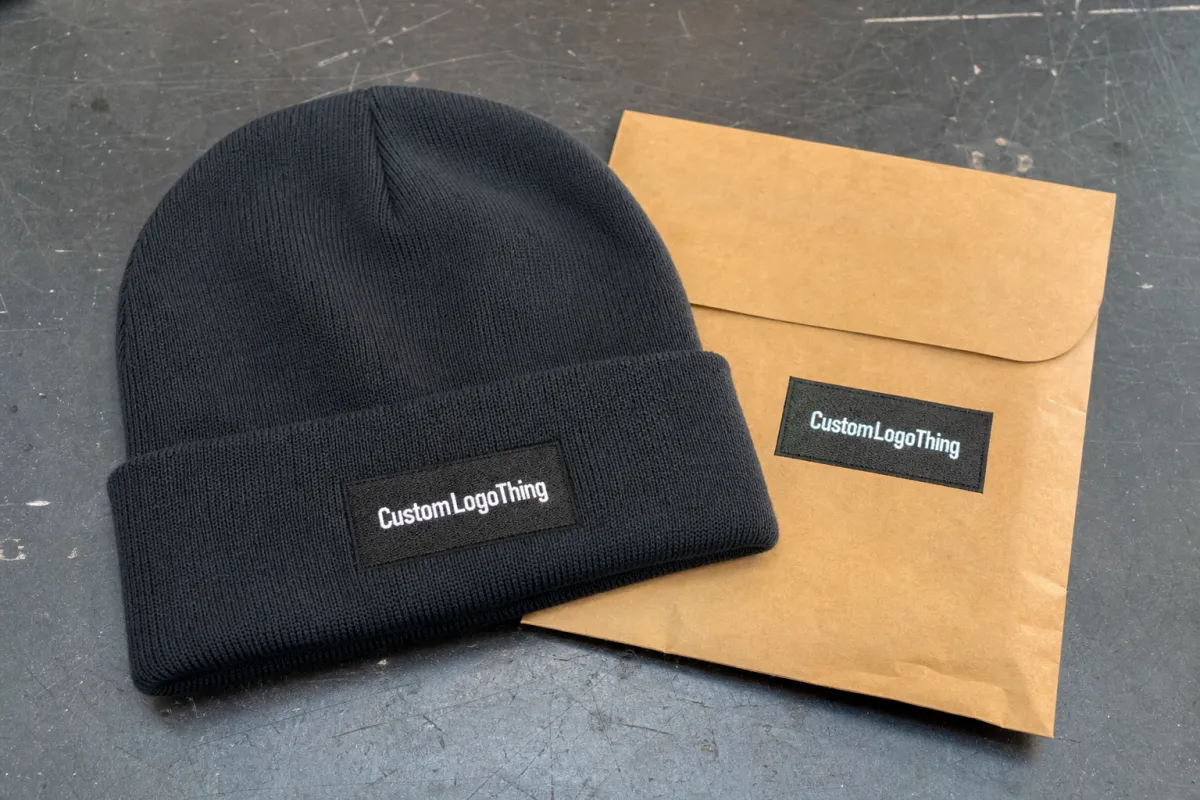
A beanie in a subscription box does more than fill space. It carries a large share of the perceived value. If the hat feels soft, fits well, and arrives with a crisp logo, the rest of the package gets more goodwill. If it arrives stretched, scratchy, or visibly inconsistent, the entire drop can feel cheaper than the spreadsheet said it would.
Recurring orders protect margin because the program can be standardized. The same body color, the same logo placement, the same label format, and the same carton count reduce the number of moving parts. That matters. A one-time promotional order can survive some variation. A monthly or quarterly program usually cannot, because the fulfillment team needs the same approved inputs to keep inventory and shipping on schedule.
There is also a less obvious margin effect: the cheaper option often costs more once the cycle repeats. A low quote that depends on oversized artwork, an unstable knit, or fragile packaging can trigger rework, replacement units, or reshipment. That is when subscription embroidered Beanies Unit Cost stops meaning the factory price and starts meaning the cost of correcting the order after the fact.
The lowest line item is not always the lowest program cost. A repeatable spec with fewer surprises usually wins once the order repeats.
Buyers usually evaluate value from three angles. Merch teams care about visual impact and subscriber reaction. Fulfillment teams care about packout speed, carton behavior, and backorder risk. Brand teams care about how closely the piece matches the rest of the box. A beanie has to satisfy all three, which is why the unit price should be judged alongside the full production path, not on its own.
For broader shipping and packaging guidance, resources like packaging.org help buyers think about material selection and shipment protection. For transit testing, ISTA standards are useful when packout quality matters as much as the product itself.
Embroidered beanie styles that fit recurring programs
Cuffed beanies are usually the easiest fit for subscription programs. The cuff gives you a clear decoration zone, a predictable front panel, and less drama when the next reorder rolls around. Slouch styles can look more fashion-forward, but they give up some consistency because the drape changes from batch to batch. Fisherman styles sit closer to the head and can feel more premium, though the tighter knit can limit logo size. Pom beanies create instant shelf appeal, but the extra trim adds packing complexity and can be awkward in storage if the program runs for several months.
| Style | Typical cost per piece at 500 units | Strengths | Watch-outs |
|---|---|---|---|
| Cuffed acrylic | $4.10-$6.20 | Easy to embroider, predictable fit, stable reorder | Can feel ordinary if the yarn quality is poor |
| Slouch knit | $4.80-$7.10 | Fashion appeal, relaxed silhouette | Logo placement can shift more than buyers expect |
| Fisherman fit | $5.20-$7.80 | Compact shape, premium feel, strong winter appeal | Tighter knit can restrict decoration size |
| Pom style | $5.00-$7.90 | High shelf appeal, giftable presentation | Extra trim increases handling and packing time |
The knit structure matters as much as the silhouette. A denser knit usually holds its shape better and gives the embroidery a flatter base. A loose knit can feel softer at first touch, but it may stretch faster and make the logo sit unevenly after repeated handling. In a subscription environment, subscribers compare the current drop with the last one, not with a retail hanger in a store.
Color choice also affects consistency. Black, navy, charcoal, heather gray, and oatmeal are easier to reorder because they are less likely to become stranded inventory if the schedule changes. Seasonal colors can work, but they are safer when the release is already approved and the run is limited. The same is true for logo placement: a front cuff mark is easier to review and reproduce than a side or back placement that depends on tighter registration and smaller stitch fields.
Embroidery size affects both cost and finish. A compact logo with fewer stitch passes is quicker to run and less likely to distort the knit. A large, dense design can look better from a distance, but it also adds thread time and makes the fabric work harder. That shows up in the quote, and it shows up again if the beanie needs a second pass because the knit pulled during stitching.
Construction specs that change warmth, fit, and wear
Material choice changes how the beanie feels in hand, how it wears over time, and how predictable the production run will be. Acrylic is the usual starting point because it is economical, easy to source, and generally holds embroidery well. Polyester can offer a cleaner synthetic feel and tighter color control. Wool blends bring more warmth and a more natural hand, but the cost rises and washability becomes a bigger consideration. Recycled yarns may support sustainability goals, though the sourcing window can be less flexible depending on the blend and finish.
Once the program is recurring, lock the spec before production begins. Gauge, cuff height, crown depth, stretch recovery, and tolerance all need to be written down. Without that, the second drop can drift just enough to create complaints even if the logo itself is correct. Buyers notice the problem in practical ways: the crown sits higher, the cuff feels shorter, or the hat stretches out after a few hours in a warehouse box.
Thread choice is another place where cost and quality meet. Standard polyester embroidery thread is usually dependable and color stable. Metallic thread can add shine, but it also raises the chance of snagging and may slow the machine down. A higher stitch density can improve coverage on dark knitwear, though it also increases labor time and makes the design heavier on the fabric. Those differences are often where setup charges and run time begin to show up in the final price.
Good approvals save money later. A sample, a digital proof, and a written spec sheet are not extras; they are the baseline for a repeated order. Retaining one approved sample gives the team a physical reference when the next run comes up. A screenshot is not enough. Neither is memory. If the supplier can point to yarn blend, stitch count, logo dimensions, and acceptable color tolerance, the buyer can forecast the next order with less guesswork.
Quality control on beanies should be specific. Check embroidery density, thread trim, logo alignment, label placement, measurement tolerance, and stretch recovery. On a recurring program, even a small change in cuff height or crown depth can be enough to make the product look like a different item, especially if the packaging and artwork stay the same.
For branded cartons, hang tags, or inserts tied to sustainability claims, buyers often ask for FSC documentation through fsc.org. That is not necessary for every order, but it matters when the packaging itself is part of the perceived value.
Pricing, MOQ, and subscription embroidered beanies unit cost
A proper quote for subscription embroidered Beanies Unit Cost should include the blank beanie, embroidery, digitizing or art setup, thread, packaging, freight, and any custom labeling or inserts. Some vendors bundle those lines. Others separate them. The breakdown matters because a low headline price can hide expensive packaging, an added run charge for decoration, or a reorder fee that only appears after the first shipment.
Typical pricing bands are useful for planning, even if they are not exact. At 100 units, a fully decorated beanie may land around $6.50-$9.25 per piece depending on the blank, stitch count, and packaging. At 250 units, the range often drops to roughly $5.10-$7.20. At 500 units, many recurring programs can reach $4.10-$6.20. At 1,000 units, a simple spec with stable artwork may settle into the $3.25-$5.10 range. The direction is predictable: more units usually lower the per-piece cost, but only if the specification stays disciplined.
MOQ changes for practical reasons. A standard cuffed beanie with front embroidery can run at lower quantities because the factory can reuse materials and machine settings. Custom body colors, special knit structures, or branded tags tend to raise the minimum because they take more planning and consume more setup time. If the order includes custom boxes, belly bands, or inserts, the minimum can climb again. That is not a penalty; it is the price of extra handling.
The cleanest way to compare suppliers is to request tiered pricing at 100, 250, 500, and 1,000 units using the same spec. That shows the pricing curve instead of forcing a guess. It also exposes which part of the quote is fixed and which part actually improves with volume.
- Blank beanie cost - base style, material, and color choice.
- Embroidery setup - digitizing, thread mapping, and sample approval.
- Stitch count - more stitches usually mean more labor and machine time.
- Packaging - polybag, belly band, custom carton, or premium presentation.
- Freight - domestic shipping, international freight, and split delivery fees.
- Branding extras - woven labels, inserts, hang tags, or care cards.
One mistake shows up often: teams compare quotes without normalizing the spec. A 3-inch front mark is not the same as a 4-inch multi-color design with a custom woven label. If decoration placement, stitch count, packaging, and MOQ are different, the unit cost comparison is not clean. It only looks clean on paper.
On repeated runs, small efficiencies accumulate. Saving the art file avoids repeat digitizing. Locking the thread chart avoids color substitution. Keeping the carton spec stable avoids repacking. Those savings may look modest on a single order, but over a subscription cycle they make a real difference in both cost and schedule.
Production steps, lead time, and reorder timing
The production sequence should be predictable: quote, artwork proof, sample or decoration approval, production, quality check, packing, shipment. That is the structure that protects a recurring order. Each skipped step introduces risk. For a subscription schedule, boring is not a flaw. It is the business model.
Lead time expands quickly when buyers request Pantone matching, stitch-count revisions, custom labels, or split shipping to multiple fulfillment centers. Those are reasonable requests, but they need time. A straightforward embroidered beanie order may run 12-15 business days after approval. Add custom packaging or more complex art, and the schedule stretches. Peak season and customs can stretch it again.
Subscription teams should work backward from the ship date, not forward from the quote date. If the next box needs to be in a fulfillment center by the first week of the month, the reorder needs to be placed before inventory gets thin. That buffer protects the subscriber experience and avoids the expensive option of a late shipment with emergency freight.
Warehouse complexity matters too. A single ship-to location is easier to manage than a program split across several fulfillment centers. Multiple destinations can raise handling time, label complexity, and freight cost. The unit cost may still look acceptable, but the schedule becomes less forgiving.
Quality checks should happen before cartons leave the factory. Review embroidery placement against the approved sample, confirm carton counts, inspect label accuracy, and verify that any inserts match the current version. If the product is headed into a subscription box, the margin for error is thinner than it is for a standalone retail run because the same mistake gets multiplied across the whole drop.
Transit risk is another reason to plan conservatively. ISTA guidance helps buyers think about vibration, compression, and handling stress before the carton spec is approved. That matters if the beanies ship with paper wrap, inserts, or a premium mailer that can crush or wrinkle during distribution. A clean product that arrives damaged still becomes a costly product.
How we keep recurring orders consistent across drops
Consistency is where recurring programs either protect margin or quietly lose it. The first move is to lock the specification. Body color, thread colors, logo size, placement, label details, and carton count should stay fixed unless there is a deliberate refresh. Version drift is expensive because it creates confusion in fulfillment and comparison problems for subscribers.
The second move is to save the working files. The digitized embroidery file, the approved mockup, the thread reference, and the carton label format should all be stored in a way that supports the next reorder. A fresh brief can accidentally change an old order, especially if someone relies on a screenshot instead of the approved source file.
The third move is to keep a retained sample and reference photos. That gives the team something concrete to check against when a later drop arrives. It also speeds up inspection because differences become obvious faster than they do when everyone is working from memory.
Packaging should stay stable even if quantities change. If an order grows from 250 to 500 units, the label format, inner bag, and carton count often do not need to change. Keeping those details stable helps the subscription team forecast labor and gives subscribers a familiar presentation from one shipment to the next.
That is the practical advantage of a recurring program: fewer surprises, fewer corrections, and a cleaner path to the next purchase order. The savings are not only in the quoted price. They show up in fewer admin hours, fewer replacement shipments, and less time spent untangling version changes.
When buyers ask for better bulk pricing, they are often asking for that stability as much as for a lower number. They want a repeatable system that keeps the price logic intact across drops, not a one-time discount that disappears the moment the reorder starts.
What to send for a fast quote and next order
If you want a quote that is close on the first pass, send the basic inputs together: quantity tiers, beanie style, logo file, decoration placement, target delivery date, and packaging requirements. If the program is recurring, say so immediately. A supplier can price a subscription order differently from a one-time drop because the reorder assumptions, packaging needs, and lead-time plan are not the same.
Include the details that change cost quietly. Artwork size, thread colors, label copy, inserts, polybag needs, belly bands, and split ship-to locations all matter. If those details appear later, the quote changes later. That is not a problem with the vendor; it is simply how embroidered accessory production works.
A stronger comparison request includes pricing at multiple quantities plus a line-item breakdown of setup charges, packaging, freight, and any one-time tooling fees. That makes it easier to see whether the higher unit cost comes from decoration, presentation, or shipping. It also reduces the chance of choosing a quote that looks low until the additional charges are added back in.
For a rolling merch program, the order usually stays healthier if the spec is approved once, then reused with discipline. The practical sequence is simple:
- Request tiered pricing with matching specs.
- Approve one sample or proof before release.
- Lock the spec sheet and retain the reference sample.
- Place the next production run before stock gets thin.
That approach keeps subscription embroidered Beanies Unit Cost easier to manage across the full program, not just the first order. More important, it keeps the item consistent enough that subscribers see the same quality story each time the box arrives.
What drives subscription embroidered beanies unit cost most?
The biggest variables are stitch count, blank beanie choice, order quantity, and any custom packaging or labeling. Higher stitch density and more complex logos usually raise labor time, which increases the cost per piece. Freight and split shipments can matter too, especially for recurring programs shipping to multiple fulfillment locations.
How low can MOQ go for recurring beanie orders?
MOQ depends on whether the order uses a standard blank, a custom colorway, or a special knit construction. Plain body colors and standard embroidery usually allow lower minimums than fully custom builds. If you need branded tags, inserts, or premium packaging, expect the MOQ to rise.
Which beanie style keeps pricing most predictable?
Cuffed acrylic or polyester beanies with front embroidery are usually the easiest to price and reorder consistently. Simple styles reduce setup changes, decoration complexity, and spec drift across monthly drops. Highly custom knit patterns or unusual trims usually add more cost variability than buyers expect.
How should I plan lead time for a monthly subscription drop?
Work backward from the ship date and include time for proofing, approval, production, packing, and transit. Build in extra buffer before peak season and before the first drop of a new style or colorway. For recurring orders, place the reorder before stock runs low so the next shipment does not interrupt fulfillment.
What details do you need to quote accurately?
Provide quantity, beanie style, logo file, thread colors, decoration placement, packaging needs, and the target delivery date. Add ship-to locations if orders will be split across warehouses or subscription centers. If you want a better cost comparison, request tiered pricing at multiple quantities from the start.
Once the spec is locked, the price gets easier to trust, the schedule gets easier to hold, and the next reorder gets simpler to approve. That is the practical advantage of managing subscription embroidered beanies unit cost as a program, not as a one-off purchase.


