The phrase supplement Brand Kraft Paper Bags material guide sounds specific, but the buying decision behind it is broader than the keywords suggest. A pouch can look premium on a mockup, photograph well in a listing, and still fail the job that matters most: protecting the formula from moisture, oxygen, odor transfer, and rough handling long enough for the customer to use it as intended.
That gap between appearance and performance is where packaging budgets usually leak. The heaviest paper is not automatically the best choice, and the most natural-looking surface is not always the safest one for powders or blends that absorb moisture quickly. Good packaging work starts with the product, then works backward through the barrier, closure, print method, and the cost target that has to hold up once freight and sampling are added in.
For supplement brands, Kraft Paper Bags sit in an interesting middle ground. They can support a clean, earthy shelf presence without looking like generic plastic, and they can be built in ways that suit refill packs, retail-ready pouches, and some secondary packaging formats. The structure still has to be chosen with care, because paper on its own has limited resistance to water vapor, oxygen, and odor migration. Once the seal opens, the wrong build can show its weakness fast.
Supplement Brand Kraft Paper Bags Material Guide Basics
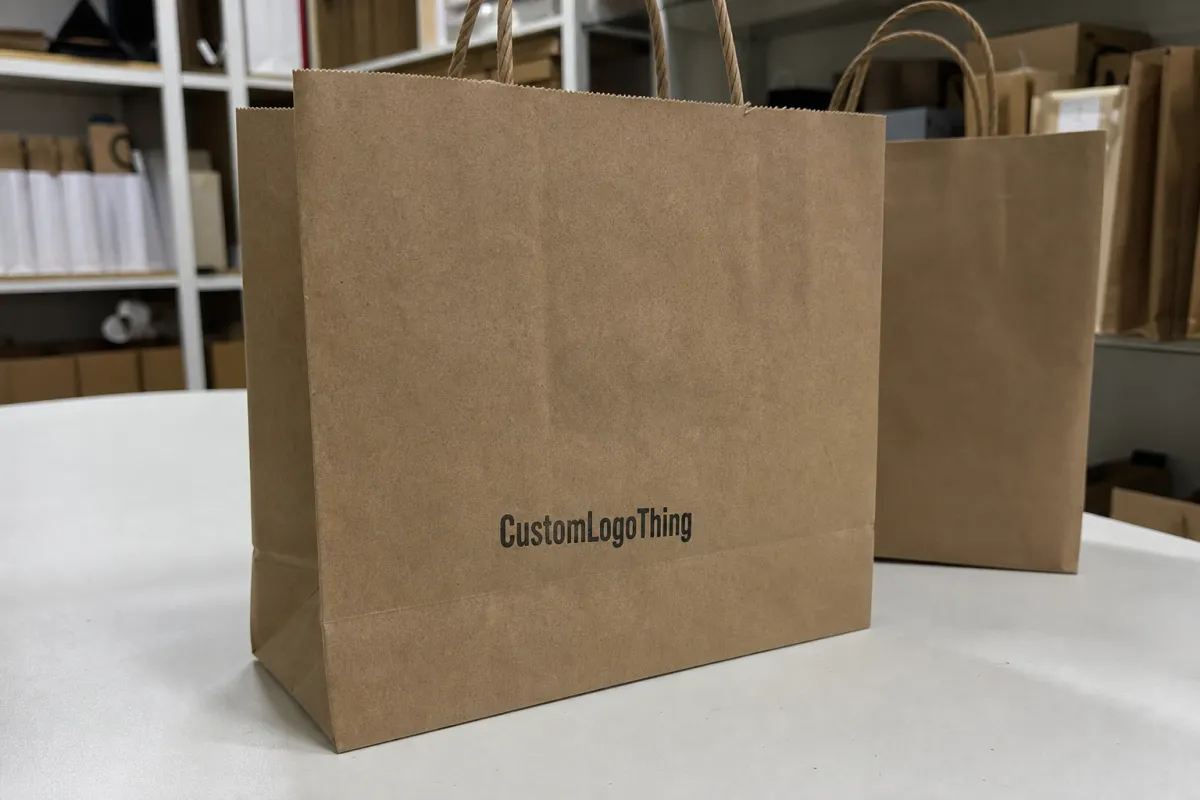
Kraft Paper Bags are more than a paper face with a logo on it. The outer sheet, the liner, the seal area, and the bag geometry all influence how the finished pack performs. Two pouches can look nearly identical on a sample table and behave very differently once they are filled, stacked, dropped, or stored in a warm warehouse.
Kraft paper works well for brands that want a natural, less clinical presentation. It is often chosen for vitamin powders, dry blends, capsule packs, sample sachets, and refillable formats where shelf appeal matters but the formula still needs some real protection. It can also pair well with FSC-certified paper when a brand wants to support a sourcing claim that is easy to explain and document.
The limitation is simple: paper is not a barrier by itself. For supplement packaging, the question is rarely whether kraft looks right. The question is whether the full structure can hold up against the product inside. A dry herbal blend, a hygroscopic powder, and an odor-sensitive capsule formula do not ask for the same thing. If the material spec treats them as identical, the order is already underspecified.
In practice, buyers usually land in one of a few common use cases:
- Vitamin powders that need moisture control and a dependable reseal after opening.
- Capsules where odor protection and shelf presentation matter more than extreme barrier.
- Gummies in secondary packs where transit protection and clean graphics carry more weight.
- Refill pouches where the brand story depends on balancing lower material use with practical shelf life.
Some brands ask for recycled fiber content or post-consumer waste because that fits their positioning. That can be a sensible request, but recycled content does not guarantee better performance. It can affect stiffness, print uniformity, and conversion yield, and it may still need a stronger inner layer to protect the formula. The useful question is not whether the bag sounds sustainable. It is whether the sustainability claim still holds after the product requirements are met.
That tradeoff becomes sharper with supplements because the product often needs more than a paper-only pack can give. A biodegradable story reads well in marketing, but shelf life, storage conditions, and shipping stress still set the limits. The best packaging choice is usually the one that is honest about those limits instead of pretending they do not exist.
How Barrier Layers Change Supplement Protection
Moisture is the main risk for many supplements, especially powders with hygroscopic ingredients that pull water out of the air. Once that happens, clumping starts, scooping gets messy, and the first impression of the product changes. Oxygen creates a different failure mode. It can dull aroma, flatten flavor, and shorten the useful life of ingredients that do not like air exposure.
That is why the barrier layer matters more than the outer kraft face. A plain paper build can look warm and natural while doing very little to protect the contents. A coated, laminated, or lined construction changes that picture, but each option carries a different cost and a different recycling profile. There is no universal best choice; there is only the right tradeoff for the formula and the launch plan.
The most common structures are straightforward. A coated bag adds a functional layer to the paper surface. A laminated build bonds layers for stronger barrier and better print control. A lined structure adds an inner film, usually paired with a zipper or a heat seal. For powders, that inner layer and the closure are doing more work than the paper face ever will.
Closures deserve more attention than they usually get. A zipper that does not close evenly, or a heat seal that looks fine but loses integrity after a few temperature swings, can undo the value of a decent barrier film. Gusset design matters too, because poor stand-up behavior can expose the contents every time someone opens the pouch. If the bag is meant for e-commerce, compression and vibration should be part of the review, not an afterthought.
Many supplement teams use distribution testing, often based on ISTA methods or comparable checks, to see how the pack behaves under drop, vibration, and stacking loads. That is not extra caution for its own sake. It is a way to catch damage that does not show up in a clean sample room but does show up after a long shipping lane.
The best bag is not the one that looks the most premium in a hand photo. It is the one that still protects the formula after opening, shipping, and a few weeks on the shelf.
As a practical rule, dry and stable formulas can often live with a lighter barrier. Strong-smelling products, moisture-sensitive powders, and ingredients that lose potency in air usually need a stronger build. If you are trying to make that call, ask for actual WVTR and OTR data instead of accepting a vague promise about “good protection.” Numbers are easier to compare than adjectives, and they expose weak specs quickly.
Material Specs That Decide Shelf Life and Feel
Buyers often start with thickness, but thickness alone does not explain how a bag will behave. A better spec sheet includes basis weight, caliper, tensile strength, tear resistance, burst performance, and seal compatibility. Those figures are more useful than a generic “heavy-duty” description because they tell you how the material will act in production and during use.
Basis weight, usually given in gsm or lb, is a starting point. Caliper tells you how thick the material feels and how much body it has. Two materials can share the same weight and still feel different because fiber quality, recycled content, coatings, and lamination all influence the result. That is why a bag can look acceptable in a flat sample but still seal poorly or scuff too easily once production starts.
Finish changes the customer experience more than many teams expect. A matte natural kraft surface feels restrained and earthy. A smoother printable face supports smaller type, tighter registration, and cleaner barcodes. If the design relies on detailed ingredient information, batch coding, or fine linework, the printable layer matters almost as much as the barrier.
For supplements, safety questions belong in the spec from the start. Ask whether the full assembly is suitable for food contact, whether the inks and adhesives are low-odor, and whether the chosen build has migration considerations that have already been reviewed. Saying the paper is “food safe” is not enough if the liner, adhesive, or print system introduces a different issue.
A useful comparison checklist looks like this:
- Moisture risk: powders and gummy products usually need more barrier than capsule packs.
- Print demand: fine branding needs a smoother surface and stable color control.
- Handling stress: retail shelves and shipping cartons both punish weak tear resistance.
- Odor sensitivity: some formulas need low-odor liners and adhesives, not just paper.
If you are considering recycled materials, ask how much post-consumer content is actually in the blend and what that changes in printability, stiffness, and sealing. More recycled content can be a good choice, but it may also reduce uniformity or make conversion more difficult. The better spec acknowledges those tradeoffs instead of hiding them.
Cost, MOQ, and Unit Pricing Drivers
Pricing for custom supplement Kraft Paper Bags usually moves on five levers: paper grade, barrier construction, closure type, print coverage, and finishing. MOQ sits underneath all of that. Lower quantities almost always cost more per unit because setup, proofing, and tooling are spread across fewer pieces.
That is why the cheapest quote on paper is often not the cheapest finished order. Two suppliers may both say “kraft pouch,” but one may be quoting a basic paper face with light print and a simple seal, while another includes a laminated barrier, a zipper, and tighter color control. Those are not equivalent products, even if the outer dimension is the same.
The better way to compare offers is to match the structure line by line. Check the film gauge, paper grade, seal strength, zipper type, print method, and finishing. If one quote includes a matte varnish and another does not, the visual result and the cost base are different. If shipping is included in one quote but not the other, the unit price alone does not tell the full story.
| Build Type | Typical Protection | Print Feel | Common MOQ | Indicative Unit Price |
|---|---|---|---|---|
| Natural kraft with basic inner coating | Light to moderate moisture resistance | Natural, slightly textured | 3,000-5,000 pieces | $0.18-$0.28 |
| Kraft plus laminated barrier and zipper | Stronger moisture and odor control | Sharper graphics, smoother face | 5,000-10,000 pieces | $0.24-$0.42 |
| Recycled-content kraft with premium finish | Moderate protection with brand focus | Cleaner print, softer tactile feel | 5,000 pieces+ | $0.22-$0.36 |
| High-barrier kraft laminate with specialty finish | Best option for sensitive formulas | Most polished shelf appearance | 10,000 pieces+ | $0.30-$0.55 |
Those ranges are directional. Size, fill weight, print coverage, freight lane, and order timing can move them quickly. A 5,000-piece run with a custom zipper and dense artwork will not price like a simple unprinted pouch. Sampling, freight, and artwork revisions can add another 10% to 20% to the landed cost before inventory even reaches your warehouse.
Budgeting becomes clearer when you split the order into base material, printing, conversion, packaging, sampling, freight, and revision risk. That makes it easier to compare with secondary cartons or shipper packs and to explain why the lowest quote is sometimes the least useful one.
Production Process and Lead Time From Sample to Shipment
A clean order usually moves through a sequence that looks simple on paper: brief, dieline, artwork proof, material selection, sampling, approval, production, inspection, and shipping. Skipping one of those steps tends to create expensive surprises later. The smoothest projects are not rushed; they are clarified early.
The slowest part is often proofing and sampling. If the artwork has to match across a kraft face and a barrier layer, the factory may need more than one proof round. If the brand team changes the barrier spec after seeing a sample, the schedule can reset. Regulatory review can slow things too, especially if the formula team wants documentation for odor, migration, or food-contact suitability before sign-off.
Timing depends on the complexity of the build. Sampling often takes 5 to 10 business days once the dieline and core specs are approved. Production commonly runs 12 to 20 business days after approval for standard orders. Shipping adds another variable. Air freight can save time but adds cost quickly, while ocean freight is often the better fit for larger replenishment orders if the launch calendar allows it.
Rush work usually costs more and tolerates fewer changes. If a factory has to prioritize a small run, source a nonstandard material, or compress a print schedule, the price rises and the room for revisions shrinks. That becomes especially obvious for supplement brands that need packaging, sell sheets, and online assets to match the same launch window.
One detail that gets missed often: a pouch that works in the sample room can behave differently once it is filled, boxed, and palletized. Compression, humidity, and vibration all influence the final result. A basic transit check before volume production is usually cheaper than replacing damaged stock after the first delivery cycle.
Common Material Mistakes That Trigger Returns
The most common mistake is choosing the look before the protection. A bag can feel artisanal and still swell, scuff, or let in odor if the barrier is weak. That problem shows up fast in returns, because the customer sees a premium product and receives something that does not hold up.
Another frequent issue is the wrong print system for the surface. Heavy coverage on textured kraft can make brand colors look muddy and can reduce the readability of ingredient panels, barcode zones, or batch-code areas. If the artwork is dense and the face stock is coarse, the printer may need a different method or a smoother printable layer to keep the design legible.
Seal quality is another quiet failure mode. Many brands assume the zipper or heat seal is fine because it looks correct in photos. Then the product moves through temperature swings, the seal weakens, and fine powder leaks into the carton. Once that happens, the outer shipper, usually corrugated cardboard, becomes part of the failure chain rather than the protection layer.
Vague specs create trouble before production even starts. If thickness, coating, closure type, and finish are left open, a supplier can deliver something close enough to pass a loose description but still wrong for the product risk, shelf target, or brand standard. “Kraft pouch” is not a complete brief.
Sustainability claims can create a different kind of problem when they outpace the material reality. A pack may use recycled content and still need a laminate for protection. It may be partly biodegradable packaging and still not fit local disposal systems. That is not a reason to avoid sustainability claims. It is a reason to describe them carefully and avoid overselling what the structure actually does.
Most of these errors are preventable with a simple test plan, a clear color target, and closure specifications that leave less room for interpretation. A few concrete requirements usually do more than a pile of subjective notes about whether the sample “feels premium.”
Expert Tips for Better Specs, Quotes, and Branding
Build a one-page spec sheet before requesting quotes. Include product type, fill weight, barrier target, MOQ, print count, finish, closure style, shipping destination, and whether the bag must be FSC certified or use a specific recycled content level. The more precise the brief, the more useful the quote.
Ask for samples that reflect the real fill weight and storage condition, not just empty mockups. A pouch can look stable when empty and behave differently once it holds 250 grams of powder, especially if the product settles unevenly or presses on the zipper gusset. If possible, review a filled sample inside the same shipper format you plan to use for launch.
Keep the branding disciplined. A limited ink palette, a clear panel hierarchy, and a reserved label zone often do more for shelf impact than a crowded design that tries to fill every surface. More ink coverage can increase cost without improving clarity, and too much visual noise can make the regulatory information harder to read.
It also helps to ask failure-mode questions before signing off. What happens if the pouch sits in warm storage for two weeks? What happens if the zipper is opened and closed repeatedly? What happens if the outer carton picks up moisture in transit? Those questions reveal weak specs faster than general approval language ever will.
For brands selling through retail and e-commerce at the same time, the bag has to do two jobs. It has to sell the product, and it has to survive the trip.
Internal references can help too, but only if they are practical. Reviewing a few real material builds side by side, with structure, finish, lead time, and cost separated cleanly, usually teaches more than a polished render ever does. The goal is not to chase the fanciest material. It is to match the pack to the actual risk profile.
Next Steps: Build a Spec Sheet Before You Request Quotes
Start with the basics: product type, fill weight, required barrier level, target MOQ, print count, finish, and shipping destination. Then decide whether the pack needs a stronger moisture barrier, a more reliable zipper, or a cleaner printable surface. If those decisions are made early, the rest of the sourcing process becomes much easier to manage.
Compare at least two or three structures before choosing a vendor. Side-by-side review usually makes the tradeoff obvious. One option may cost less but create a higher risk of returns or reprints. Another may cost a little more but protect the formula better and reduce launch headaches. In most supplement programs, that is the better commercial outcome.
From there, request samples, confirm lead time, verify pricing assumptions, and lock the structure before final artwork. Finalizing design against a bag that has not been tested with product inside is one of the fastest ways to create extra revisions and miss a shipment window. The spec should come first, the art second.
For most brands, the best supplement Brand Kraft Paper Bags material guide is not the one that sounds most sustainable or most premium. It is the one that aligns protection, print quality, MOQ, and landed cost with the actual shelf life target. Kraft can be a smart choice, but only when the structure is chosen for the formula instead of the mood board.
What kraft paper bag material works best for supplement powders?
Choose a structure with a moisture barrier and reliable seals, not plain kraft alone, because powders are sensitive to humidity and clumping. A smoother printable outer layer plus an inner liner or coating matched to the storage environment usually performs better than paper by itself.
How thick should supplement kraft paper bags be for capsules or gummies?
Thickness should match fill weight, handling, and shipping stress rather than a generic paper standard. Ask suppliers for caliper, burst strength, and tear resistance so you can compare actual performance instead of guessing from appearance.
Do supplement kraft paper bags protect against moisture?
Only if the bag includes a barrier layer, coating, or laminate designed for the product’s sensitivity. Plain kraft can look premium but still allow enough humidity to affect freshness, texture, or taste.
What affects supplement kraft paper bag pricing the most?
Paper grade, barrier construction, print coverage, finishing, and MOQ usually move the price more than small design changes. Freight and sampling can also change the total landed cost, so compare full quotes, not just unit pricing.
How long does a custom supplement kraft paper bag order usually take?
Timing depends on proofing, sample approval, production complexity, and shipping method. The fastest way to stay on schedule is to finalize specs early and keep artwork revisions limited.


