Supplement soft touch poly mailers Unit Cost Review sounds like spreadsheet language. It is really a buyer discipline problem. Pay for the wrong thing and you get a bag that looks premium in a quote but feels flimsy in the hand, ships badly, or costs more than expected once freight and rework show up. Pay for the right thing and the mailer does its job without becoming a margin leak.
For supplement brands, packaging is not just a wrapper. It is the first physical proof that the product line is organized, cared for, and ready to ship at scale. That matters for subscriptions, retail refill packs, launch bundles, and influencer sends. Customers may not describe the finish in packaging terms, but they notice if the bag arrives scuffed, weak at the flap, or visually cheap. They also notice when it feels clean and deliberate.
That is why a useful supplement soft touch poly mailers Unit Cost Review has to go beyond unit price. It needs to include gauge, finish, adhesive performance, print coverage, lead time, overrun tolerance, and landed cost. Packaging industry standards from Packaging School / industry resources and transit testing references from ISTA are useful background, but the real answer still lives in the spec sheet and the sample run.
Supplement soft touch poly mailers unit cost review: where value actually shows up
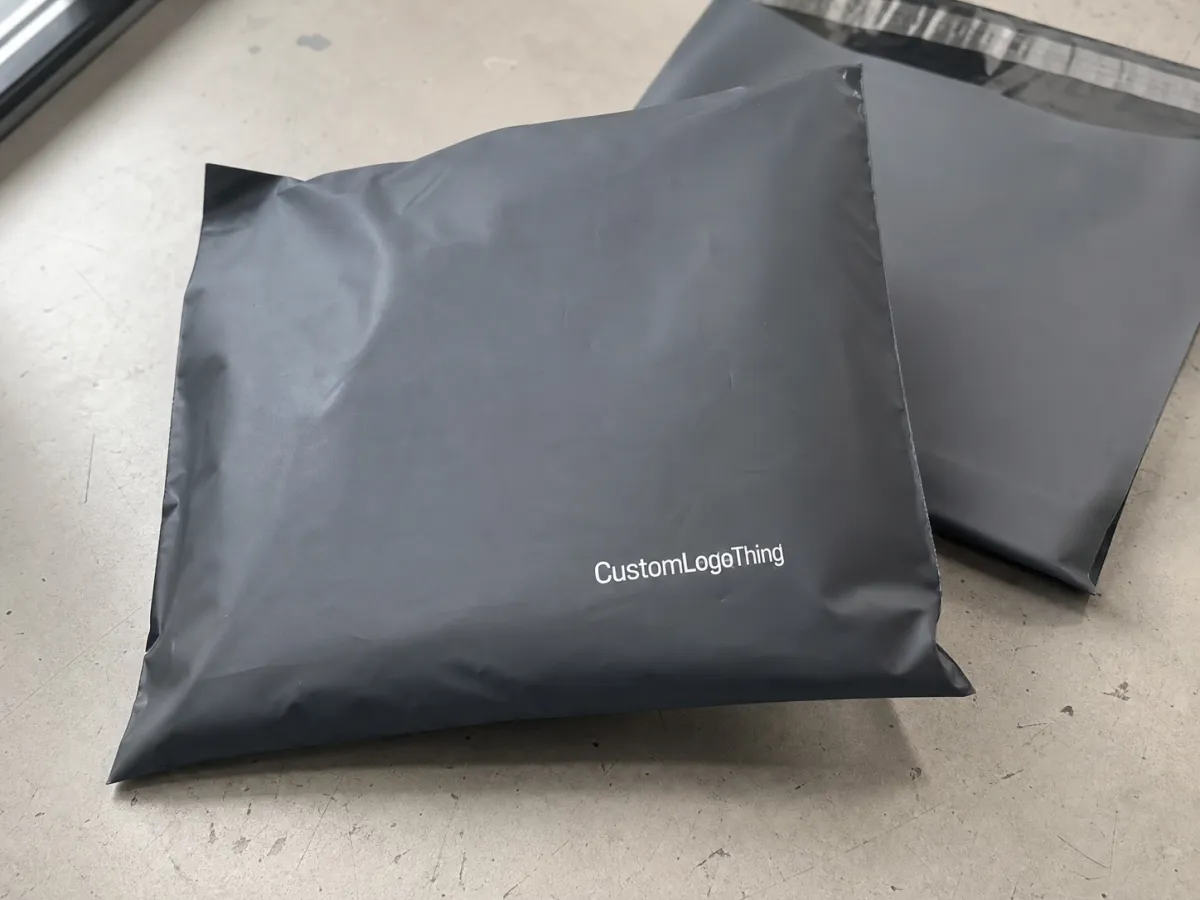
The soft-touch finish is usually what changes the perceived value first. Not the film gauge. Not the adhesive. Not the quantity on the pallet. The hand-feel and matte surface create a premium cue before the customer sees the product inside. That is the point, and it is why this finish commands a higher price than a plain poly mailer.
That premium is easiest to justify in a few situations. Subscription supplements need repeatable presentation every month. Launch kits need a strong first impression. Retail replenishment packaging has to hold up on a shelf or in a pickup stack. Influencer mailers need to photograph well because that packaging may be doing half the marketing work before the bottle is even opened.
The unit cost stack is bigger than most quotes show at first glance. You are paying for the base film, the soft-touch treatment, print setup, adhesive flap construction, packing, freight, and usually some allowance for overrun or waste. Then there is the hidden side: fewer scuffs, fewer complaints, fewer replacements. If a better finish reduces damage and re-ship costs, the true cost per shipped unit can be lower than the cheaper bag that creates problems later.
The lowest quote is rarely the lowest cost. It is often just the most optimistic one.
Soft-touch is not a substitute for a sound package build. A nice finish on a weak bag still leaves you with a weak bag. If the seam opens, the flap fails, or the film punctures in transit, the customer does not care that the surface felt premium for two seconds. The bag has to survive normal shipping abuse first. The finish is a bonus, not a rescue plan.
For brands already comparing packaging options, it helps to look at Custom Packaging Products early so the mailer choice fits the rest of the program. Sometimes a soft-touch mailer is the right middle ground between a plain shipping bag and a full box build. Sometimes it is not. The quote should tell you that, not the sales pitch.
What buyers are actually ordering in a soft-touch mailer
Most buyers are ordering a polyethylene mailer with a matte soft-touch surface, a pressure-sensitive adhesive flap, and one or two utility features such as a tear strip, tamper evidence, or an expanded flap. In plain terms, it is still a poly mailer. The finish changes the feel and visual tone. The rest of the structure still has to do the heavy lifting.
That distinction matters because soft-touch is a finish choice, not a new material category. It can improve scuff resistance and make print look more refined, but it does not fix a bad base film. It does not compensate for poor sealing or a weak adhesive either. Buyers sometimes get distracted by the tactile part and forget the boring parts. That is usually where packaging failures begin.
For supplement brands, print layout can be just as important as the material. Common requests include one-color branding, full-bleed graphics, barcode space, batch-label zones, compliance copy, and inside print for a cleaner unboxing moment. If the product ships with inserts, samples, or compliance cards, the bag also needs enough usable interior space so everything fits without bulging or distorting the seal.
There is a simple reason soft-touch mailers keep showing up in supplement programs. They do two jobs at once: shipping protection and brand presentation. A plain gray poly bag may save a few cents, but it also erases most of the brand signal. For a product category where trust matters, that is not a free savings. It is a tradeoff.
If you are narrowing options, a dedicated Custom Poly Mailers page is usually the fastest way to compare finish styles, size ranges, and print coverage before sending artwork. That cuts down on back-and-forth that should never have been needed in the first place.
Specs that change durability, feel, and print results
The real buying decisions sit in the specs. Start with bag dimensions and usable interior space, not the nominal outside size. A mailer that looks fine on paper can become a tight fit once the product, inserts, and flap closure are all inside the equation.
Then check film gauge, seal width, and adhesive strength. Thicker film can improve puncture resistance, but a bag still fails if the seal is weak. A wide flap looks reassuring, but if the adhesive does not hold in changing temperatures, the bag will open at the worst possible moment. These parts have to work as a system, not as separate selling points.
Size changes unit cost in obvious and less obvious ways. Larger formats use more material, so the price goes up. The hidden cost is freight and storage. Oversized mailers increase carton volume, take up shelf room, and can create unnecessary waste if the bag is much larger than the product. Nobody wants to pay to ship air.
Print specs matter too. More ink coverage adds cost. Fine lines and small type can lose sharpness on a matte surface if the artwork is too delicate. If the design uses gradients, thin rules, or tight text, ask for a proof that shows how the finish handles those details. White underprint, bleed allowance, and the number of print colors all change the final look.
These are the numbers worth requesting on every quote:
- Film gauge in mils or microns.
- Seal width and flap style.
- Print coverage by side and color count.
- Finish type and whether it is coated or laminated.
- Overrun tolerance so landed cost is not distorted later.
That list is the difference between a real supplement soft touch poly mailers Unit Cost Review and a quote comparison that misses the parts that matter.
Pricing, MOQ, and unit-cost breakpoints
Unit cost rarely moves in a straight line. It steps down by tiers. A low MOQ carries the burden of setup, proofing, and freight across fewer bags. A larger run spreads those costs out, which is why the per-piece price can fall faster than expected once a certain volume threshold is crossed.
For custom runs, a realistic starting point is often 5,000 to 10,000 units, though the floor depends on bag size, print complexity, and the supplier’s production setup. If someone offers a very low MOQ with a polished soft-touch finish and a suspiciously cheap price, ask what got removed. Usually something did. Sometimes several things did.
Ask for pricing line by line: film, finish, printing, tooling or plate charges, sample approval, packing, export cartons, freight, and duties if they apply. Some vendors package these into one number. That is fine as long as they can break the number apart when asked. If they cannot, comparison shopping becomes guesswork.
| Option | Typical unit cost at 5,000 pcs | What you get | Best for |
|---|---|---|---|
| Standard printed poly mailer | $0.12-$0.20 | Basic film, simple branding, lower setup charges | Simple shipping programs |
| Soft-touch poly mailer | $0.18-$0.32 | Matte soft-touch finish, better shelf feel, stronger brand impression | Supplements, launches, DTC orders |
| Soft-touch with extra print or tamper features | $0.24-$0.42 | Higher print coverage, tear strip, inside print, tighter QC | Premium kits and repeat orders |
Those ranges are not promises. They are the kind of working numbers a buyer can use to sanity-check a quote. Freight lane, artwork complexity, supplier location, and timing can move the final price in a meaningful way. A domestic run may cost more per unit but save time and simplify communication. An overseas run may win on unit cost if the order size and schedule fit the plan. Either option can make sense. Both can go wrong if the hidden costs are ignored.
That is why landed cost matters more than factory price. If one supplier quotes a lower price but adds extra freight, higher setup fees, or an unfavorable overrun, the total can flip fast. In a supplement soft touch poly mailers Unit Cost Review, the bag is not cheap just because the first number looks small.
Production steps and lead time from proof to delivery
The cleanest orders follow the same path every time: brief, dieline confirmation, artwork proof, sample or digital approval, production, inspection, packing, and freight booking. Skip one step and the order usually pays for it later. Packaging mistakes are almost always cheaper to catch before production starts than after a full run has been packed.
A practical timeline looks like this. Proofing can take a few business days if the artwork is clean and the size is settled. Production often runs 10 to 20 business days after approval. Freight adds its own schedule, and that depends on lane, carrier, customs, and whether the shipment moves by air or ocean.
What slows an order down? Artwork revisions after approval. Missing barcode or compliance details. Unclear dimensions. Late color signoff. Special finishes added after the quote. None of that is mysterious. It is just the usual way a simple packaging order turns into a delayed one.
There is also a cost-speed tradeoff. Rush jobs cost more. So do heavier gauges, special finishes, and last-minute reproofs. If the packaging needs to support a product launch, the packaging schedule should be built first, not patched in at the end. Launch dates have a habit of becoming expensive when packaging is late.
A useful process includes a sample signoff and a written approval trail. Digital proofs help, but they are not always enough for soft-touch work if finish, color, and print contrast are all important. A physical sample shows more than a PDF can. It also exposes the small defects that only appear once the film is actually in hand.
At this stage, a supplement soft touch poly mailers Unit Cost Review should be checking more than price. It should include how long the order takes to reach the dock, whether the approval path is clear, and whether the supplier can actually hold the date they promised.
How to judge a supplier before you pay for premium packaging
Ask for proof, not promises. A credible supplier should be able to show a film spec sheet, a finish sample, a seal test, and a print proof before mass production starts. If they cannot explain how the run will be checked, you are not buying packaging. You are buying optimism in a carton.
Quality control should be easy to describe in plain language. What is the overrun policy? How many defects are allowed? What happens if color drifts, the finish scratches too easily, or the flap seal falls short? What is the replacement term if the run misses spec? Those details matter more than a polished sales deck.
It also helps to think about sourcing in practical terms. Domestic production can shorten transit and cut some surprise costs. Overseas sourcing can lower unit cost if the minimums, artwork, and lead times fit the plan. Neither route is automatically better. The right answer depends on inventory space, cash flow, and how fast you need the next order.
For supplement brands, three things deserve special attention: scuff resistance, shelf presentation, and reorder consistency. A supplier who understands those issues is better than one who only knows how to quote the cheapest bag. If they have no opinion on finish quality or shipping wear, they probably are not the right fit for premium mailers.
Standards help keep the conversation honest. ISTA test methods are useful for thinking about shipping abuse, and packaging buyers should understand the difference between visual appeal and transit performance. If the program includes paper cartons or inserts, FSC is a useful reference point for the paper side. A soft-touch poly mailer is not paper, obviously. But supplement shipments often involve more than one material, and the supplier should understand the full package instead of only the outer shell.
A vendor who can explain these tradeoffs is usually worth more than the lowest line item. The cheap quote that ignores tooling, setup, or reprint risk is not a deal. It is a trap with a nice font.
Next steps for a quote, sample, and reorder plan
Lock five things before asking for a revised quote: bag size, quantity, print coverage, finish style, and target ship date. Add the delivery ZIP if the supplier is calculating landed cost. If any of those fields are vague, the quote will be vague too. That is not a mystery. It is just math refusing to guess.
Every quote should show two figures: price per unit and landed cost. If a supplier cannot provide both, the comparison is weak. You need to know what the bag costs and what it costs to get the bag to your dock. Otherwise the cheap quote may look good right up until the freight bill arrives.
Order samples and test them like real shipments. Fill the bag. Seal it. Shake it. Stack it. Slide it across a surface. Check whether the finish scuffs, whether the flap holds, and whether the print still looks sharp under normal handling. That is the fastest way to judge whether the premium finish is earning its keep.
Then set the reorder trigger before inventory gets tight. Waiting until the last pallet is nearly gone reduces leverage on price and lead time. A supplement soft touch poly mailers unit cost review only helps if it informs when to reorder, how much to buy, and whether the premium finish still makes sense at scale.
If the program includes other packaging pieces, compare them against Custom Packaging Products so the mailer choice lines up with the rest of the kit. The best packaging programs look planned. The weak ones look like they were assembled under pressure, which is usually exactly what happened.
Bottom line: soft-touch mailers are worth the premium when the finish supports the brand, the bag survives shipping, and the full landed cost stays inside margin. That is the real decision. Everything else is decoration.
FAQ
What is included in supplement soft-touch poly mailers unit cost?
Usually the base film, soft-touch finish, printing, adhesive flap, packing, and basic production setup. Freight, duties, and special packaging are often extra, so ask for landed cost before comparing suppliers.
What MOQ should I expect for soft-touch supplement mailers?
Common custom starting points are 5,000 to 10,000 units, but the exact floor depends on size, print complexity, and supplier setup. Lower MOQs usually cost more per bag because setup and freight are spread across fewer units.
Does a soft-touch finish make the mailer stronger?
No. The finish improves feel and appearance, and it can help with scuff resistance, but it does not replace proper film gauge or seal quality. For puncture resistance, focus on thickness, seal width, and adhesive performance.
How long does production usually take?
Proofing and sample approval can take several business days, and production commonly runs 10 to 20 days after approval. Shipping time depends on lane, customs, and carrier choice, so build that into the schedule.
How do I compare quotes for supplement soft-touch poly mailers?
Compare the same size, gauge, finish, print coverage, and overrun tolerance on every quote. Always compare landed cost per unit, not just the factory number, or the cheap quote will not stay cheap for long.


