If you are comparing Tamper Evident Bags for breweries bulk pricing, the real question is not just cost. It is whether the bag protects the product, keeps the handoff clean, and survives the pace of a taproom, pickup counter, or event table. A bag that saves a few cents but fails at the seal is not cheaper. It is just delayed trouble.
Breweries buy packaging differently from general retail. They need visibility, basic chain-of-custody control, and a format that holds up under repeated handling. The better purchase usually balances security, durability, printability, and volume pricing without paying for features that never get used.
That sounds obvious. It is also where a lot of bad packaging decisions start.
Why brewery packaging fails when security is treated as an afterthought
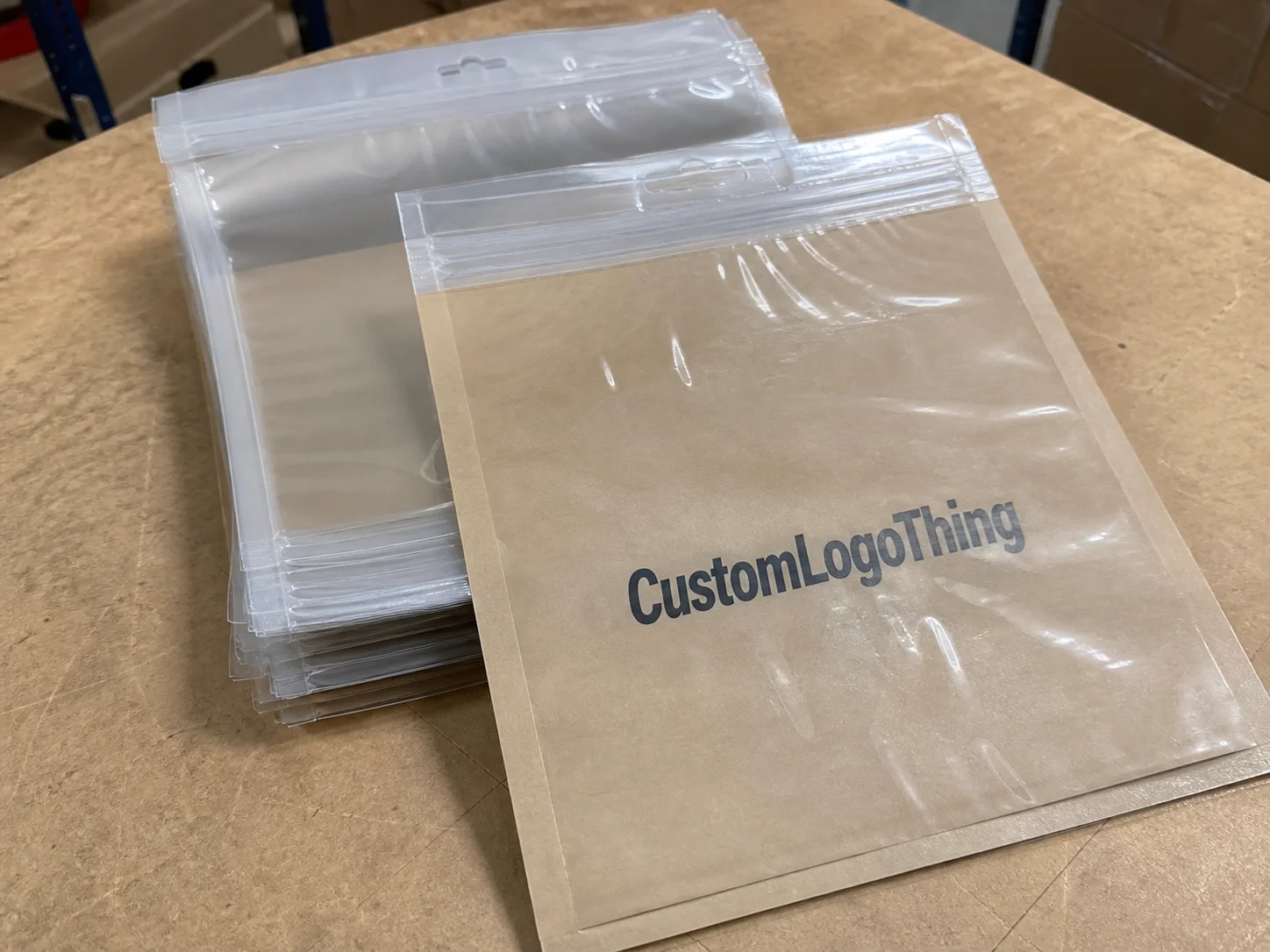
Picture a sealed sample pack sitting at a pickup counter, or a take-home bundle with branded glassware, coasters, and merch. If the bag opens too easily, the customer’s first thought is simple: someone handled it. Maybe they did. Maybe they did not. Either way, the package now has a trust problem.
For breweries, that hesitation matters. A plain poly bag may be fine for dust control or short-term storage, but it does very little to show whether the contents have been accessed. A tamper-evident closure gives the recipient a visual cue. The bag is either intact or it is not. That is a small detail with real operational value.
The cost difference is usually modest. In many programs, the jump from a basic poly bag to a security bag can be measured in cents, not dollars. That premium is easier to justify when it reduces disputes, avoids repacking, and improves presentation at the counter. Packaging failures are usually cheap to prevent and annoying to explain.
From a buyer’s point of view, the checklist is short:
- Security - does the closure show clear evidence of opening?
- Durability - does the film resist tearing, puncture, and rough handling?
- Printability - can the bag carry branding, labels, or order marks clearly?
- Volume pricing - does the order scale enough to lower cost per piece?
That is the real frame for tamper evident bags for breweries bulk pricing. The lowest sticker price is not the objective. The useful bag is the one that keeps the order protected, recognizable, and easy to process.
What makes tamper-evident brewery bags different from standard poly bags
Standard poly bags are mostly containers. Tamper-evident bags are a control point. They use a closure design that signals whether the bag has been opened, disturbed, or resealed. That signal can be visual, structural, or both.
Common formats include adhesive seal closures, tear strips, security flaps, and sequential numbering. Some bags also include a write-on panel so staff can identify the order number, pickup name, or contents without adding extra labels. In a busy service window, that saves time and reduces the chance of mixing up two nearly identical orders.
Breweries use these bags for practical jobs: merchandise packs, event kits, growler accessories, tasting room takeout, staff transfers, distributor samples, and small accessories like bottle openers or branded glass inserts. The goal is not only protection. It is traceability.
Custom print options matter here too. A logo on the bag does more than advertise the brewery. It helps the customer recognize the order at a glance. Clear film can show contents; opaque film can hide them. Both have a place. Clear works well for visible kits. Opaque is Better for Retail bundles where presentation and privacy matter more.
When comparing tamper evident Bags for Breweries Bulk Pricing, ask what is actually built into the bag. A true security bag should make re-entry obvious. A decorative seal that peels off cleanly without evidence is not the same thing. That distinction matters more than most buyers think, and it is easy to miss if you only look at the mockup.
Material, seal, and size specifications buyers should verify
Spec sheets are where a lot of purchases are won or lost. If the supplier cannot clearly state thickness, dimensions, seal width, adhesive type, and print limitations, the quote is not ready for a real decision.
Start with film thickness. For light retail or accessory packs, 2 mil to 3 mil may be enough. For heavier mixed kits, 4 mil to 6 mil is usually safer, especially if the bag will be handled repeatedly or packed with sharper edges. Thickness does not solve everything, but it is a good indicator of puncture resistance and overall feel.
Then check bag dimensions. The right size depends on the contents:
- Flat apparel or folded cloth items - often need a wider format rather than more height.
- Boxed items - need depth and headroom so the seal area remains usable.
- Accessories and sample kits - benefit from a compact bag that reduces movement inside the package.
- Mixed promotional bundles - usually need the most allowance because irregular shapes create stress points.
Seal design matters just as much as thickness. A stronger adhesive is not automatically better if the line staff struggles to close it consistently. The useful seal is one that closes under normal pressure, stays shut during handling, and shows disturbance if reopened. Ask for a sample and test it under actual counter conditions, not in a clean office where nobody is rushing.
Buyers should also request checks for print alignment, clarity or opacity consistency, and seal integrity. A bag that looks fine in a proof can shift artwork too close to the seal zone once production starts. That is a common, avoidable problem. So is assuming a write-on panel will accept ink or labels the same way across every run. It will not, unless you confirm it.
For brewery operations that track inventory closely, write-on panels, barcode zones, and sequential numbering can help internal documentation. They are not mandatory, but they reduce confusion when orders move from packout to pickup. If you are using printed labels, make sure the surface accepts adhesion well and does not smudge under handling.
Compliance requirements vary by use case and location, so do not assume one format covers everything. If the bag is part of a documented transfer process, labeling area and document visibility matter. For broader packaging standards and sustainability resources, the Institute of Packaging Professionals is a useful reference point, and the EPA recycling guidance helps when you are weighing material choices and end-of-life expectations.
One more practical point: ask how the bag is sealed during production. Some security bags use heat, others use pressure-sensitive adhesive, and some combine both with a tear strip. Each has trade-offs. Heat-sealed formats tend to be sturdier for transport. Adhesive closures are often faster for counter use. Pick the one that fits the operation instead of forcing the operation to fit the packaging.
Bulk pricing, MOQ, and unit cost: what drives the quote
Bulk pricing is not one number. It is a stack of variables. The quote changes based on material grade, closure type, bag size, print coverage, tooling fees, setup charges, and total quantity. Two bags that look similar can price very differently if one uses a standard stock format and the other needs custom artwork and a special seal.
As volume rises, unit cost generally falls. That is normal manufacturing math. Setup charges get spread across more units, and the run becomes more efficient. A bag that lands at $0.26 per piece at 2,500 units may drop closer to $0.18-$0.21 at 10,000 units, depending on print complexity and bag style. Exact numbers vary, but the direction is consistent.
Here is a practical comparison buyers can use as a starting point:
| Option | Typical MOQ | Common price pattern | Best fit |
|---|---|---|---|
| Stock tamper-evident bag, unprinted | 500-1,000 units | Lowest cost per piece | Quick replenishment, internal transfers, basic pickup use |
| Stock size with one-color logo | 1,000-2,500 units | Moderate setup charges | Taproom retail, branded take-home kits |
| Custom size with multi-color print | 3,000-5,000 units | Higher tooling fees and prepress cost | Seasonal campaigns, premium merch bundles |
| Heavy-duty security bag with numbering | 2,500-10,000 units | Higher material cost, better traceability | Distributor samples, controlled transfers |
MOQ matters because it determines the entry point. Standard items often carry lower minimums than fully custom builds. If you need a small test run, ask whether the supplier can quote a stock size first and then move to a branded version later. That cuts risk while you confirm fit and actual usage rate.
Compare quotes carefully. Apples-to-apples means the same dimensions, same thickness, same print colors, same adhesive zone, and same freight terms. A lower headline price can be misleading if one vendor excludes shipping or charges extra for artwork revisions. Ask for the landed cost, not just the product cost.
For breweries that buy repeatedly, ask about tiered pricing and reorder pricing. The first run usually carries more setup charges; later runs should be cleaner if the artwork and specs stay unchanged. That is where a consistent purchasing program pays off. If the supplier keeps re-quoting the same item from scratch, something is off.
There is also a storage cost hiding in the background. A very large buy can look efficient on paper and still be awkward if the bags sit in a damp back room, get crushed on a pallet, or become obsolete after a branding refresh. The cheapest order is not always the smartest order. That sentence should not be revolutionary, but here we are.
Order process and lead time: from spec sheet to warehouse delivery
Most orders move through the same basic workflow: quote request, specification confirmation, artwork review, proof sign-off, production, and shipping. The bottleneck is rarely manufacturing alone. It is usually approval time.
If your team has dimensions, quantity, branding files, and target delivery date ready at the start, the process moves faster. If the supplier has to chase missing measurements or wait on logo files, lead time stretches. That delay can be expensive if the packaging is tied to an event calendar or a seasonal release.
Typical timing depends on the format. Standard stock items may ship in roughly 7-10 business days after order confirmation, while custom printed runs often take 12-15 business days after proof approval. Add more time if the order needs special finishes, a more complex security closure, or longer freight transit. Rush orders may be possible, but they usually cost more and reduce flexibility in proofing.
For planning, think in three buckets:
- Pre-production - quote review, proofing, and approval.
- Production - printing, converting, sealing, and quality checks.
- Transit - freight, receiving, and internal put-away.
If your receiving team is small, ask for shipping estimates early. A cheaper freight option that arrives too late is not cheap. Also ask whether the supplier can hold inventory for scheduled releases if you plan to reorder seasonally. That can help smooth inventory swings without overcommitting cash.
"The fastest orders are the ones with complete specs. Missing one dimension can add days, not hours."
When you are working through Tamper Evident Bags for breweries bulk pricing, lead time should be reviewed alongside quantity. A larger order may improve cost per piece, but it also adds exposure if the approval cycle drags. Clean specs shorten the path. So does having one person own final approval instead of three departments editing the same proof.
Quality checks should happen before the shipment leaves the supplier and again when it lands. That means verifying print placement, seal performance, bag thickness, and count accuracy. For printed runs, pull a few bags from the top, middle, and bottom of the carton. Problems do not always show up on the first few units. Convenient, right?
Why breweries buy from a packaging supplier instead of a commodity reseller
Commodity resellers can be fine for generic stock items. But once the bag needs the right seal, the right print zone, and the right reorder consistency, supplier expertise starts to matter. A packaging supplier should help match the spec to the use case instead of simply quoting the nearest item in a catalog.
That matters because brewery programs rarely stay static. A taproom may need one bag for everyday pickup and another for event kits. Seasonal releases can change artwork and quantity. A supplier who understands those shifts can keep the spec consistent across reorders, which reduces surprises when the next shipment arrives.
Support should include sample review, artwork checks, updates during production, and help with fulfillment coordination. Not glamorous. Very useful. The difference shows up when a bag is reordered six months later and still fits the same closure and packing process.
Quality control and traceability are also part of the value. If there is a problem, a supplier should be able to trace the run, check the production notes, and explain what changed. That is better than generic promotional language and a long apology that solves nothing.
For breweries building repeat purchasing systems, the best suppliers behave like part of procurement, not just a quote source. If you are already running other branded packaging or merchandise through a structured buying process, it is worth reviewing your broader procurement options through Wholesale Programs so your ordering process stays consistent.
Breweries that buy this way tend to see fewer rush orders, better stock control, and more predictable cost per piece. That is not hype. It is the result of a cleaner spec, fewer surprises, and less dependence on whoever happened to answer the phone first.
Next steps to place a bulk order without slowing your operation
Before you request a quote, gather the basics: bag dimensions, quantity range, closure preference, print requirements, and any internal labeling needs. If you already know the item weight or shape, include that too. It helps narrow the spec faster and avoids back-and-forth that adds nothing except delay.
Then ask for a sample or a spec-sheet review. A sample is ideal if you are testing closure strength and handling speed. A spec-sheet review works if you already know the format but need confirmation on size, thickness, or branding placement.
Next, ask for tiered pricing. You want to see where the better value point starts. Sometimes the jump from 2,500 units to 5,000 units is small enough to justify the larger buy. Sometimes it is not. That depends on usage rate, storage space, and how often the artwork changes.
Also request shipping estimates and reorder terms. Procurement should compare total landed cost, not just the product quote. If freight is expensive, a lower unit price may disappear immediately. If the bag is for seasonal use, ask about reorder lead time so you do not run out before the next release.
The cleanest path is simple: submit specs, review the proof, approve the run, receive the shipment, and schedule replenishment before stock gets tight. That workflow keeps the operation moving and reduces the odds of emergency buying.
For breweries trying to control spend without lowering standards, Tamper Evident Bags for breweries bulk pricing works best when the buyer treats the bag as a protective tool, not a generic supply item. Get the spec right, compare unit cost honestly, and the rest gets easier.
What should breweries check before buying tamper evident bags in bulk?
Confirm that bag dimensions, seal type, and material thickness match the product being packed. Request samples to test closure strength, clarity, and how easily staff can use the bag during busy service periods. Verify MOQ, lead time, and shipping terms so the total landed cost is accurate.
How does bulk pricing for brewery security bags usually work?
Unit cost typically drops as quantity increases because setup and material costs are spread across more bags. Custom printing, special sizes, and stronger closures can increase the quote. Ask for tiered pricing so you can see where the best value point begins.
Can tamper evident bags be printed with brewery branding?
Yes, many can be custom printed with logos, order labels, or handling instructions. Confirm the print area, color limits, and whether the closure zone remains fully functional after printing. Ask for an artwork proof before production starts.
What is a reasonable MOQ for brewery tamper-evident packaging?
MOQ varies by bag size, print complexity, and whether the item is stock or custom made. Standard sizes often have lower minimums than fully custom builds. A supplier should provide MOQ details alongside pricing so you can compare options clearly.
How long does production usually take for bulk brewery orders?
Lead time depends on proof approval, print requirements, and order volume. Custom orders generally take longer than stock items because artwork and setup add steps. Request a timeline that includes production plus freight so receiving can plan inventory.


