Trade Show Trucker Caps Material Guide for Smart Buyers
A trucker cap can look polished on a mood board and still fall apart visually under trade show lights. The mesh may sit too soft, the front panel may wrinkle around the logo, or the bill may curve in a way that makes the whole piece read cheaper than the quote suggested. That gap between sample-room appeal and real-world use is exactly why a Trade Show Trucker Caps material guide has to go beyond color, artwork placement, and price.
Buyers tend to start with the logo because the logo is the easiest thing to see. That makes sense, but the cap body determines whether the decoration holds up. Front-panel stiffness changes embroidery quality. Mesh openness changes airflow and the overall impression of quality. The sweatband affects comfort during long event days, which matters more than most approval sheets admit. If the cap is meant for staff uniforms, premium handouts, or volume giveaways, the material choice should follow the job first and the artwork second.
Two caps can share the same logo and still send different signals. One feels like a retail accessory; the other feels like a quick promo item. The difference usually comes down to construction details buyers do not notice until after production: crown height, seam placement, mesh density, closure style, and how the bill was shaped before packing. Those are not minor choices. They decide whether the cap gets worn, photographed, or left in a hotel room after the event.
Trade Show Trucker Caps Material Guide: What Buyers Miss
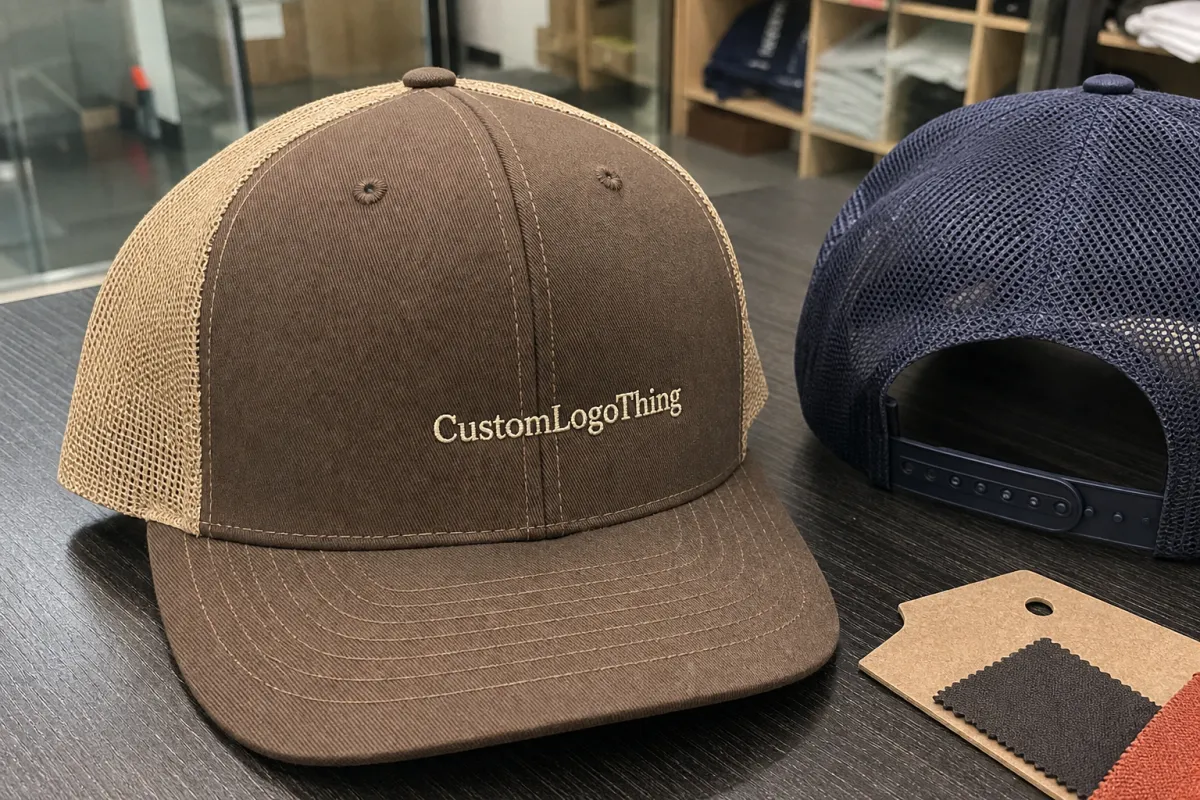
Here is the part many buyers miss: a trucker cap is not just a decoration surface. It is a small piece of wearable engineering. Every material choice affects how the cap fits, breathes, ships, and presents in person. A cap that looks solid on a spec sheet can disappoint once the crown loses shape or the mesh collapses after a few hours in a tote bag.
The most useful way to read a trade show Trucker Caps Material guide is through four lenses at once: structure, airflow, decoration quality, and how the cap photographs under expo lighting. A buyer who focuses only on the front color and logo width usually ends up surprised. Soft fronts can pucker around embroidery. Open mesh can make the cap feel casual even if the logo is premium. A shallow crown can fit one head shape well and look awkward on the next ten people who try it on.
Use case should drive the build. Staff uniforms need reliable fit adjustment, decent sweat management, and a front panel that keeps the logo crisp through repeated wear. Premium giveaways need cleaner handfeel and a more controlled silhouette. High-volume handouts can use a lighter build, but even a budget cap has to survive shipping, stacking, and a long day of handling. Cheap and durable are not the same thing, and buyers usually find that out the hard way.
The most practical questions are simple. Who will wear the cap? How long does it need to hold shape? Is the brand chasing a classic promotional look or something closer to retail merch? How much of the budget belongs to the cap body, and how much to decoration and packing? Once those answers are clear, the material decision gets much easier.
A trucker cap is judged twice: once on the sample table, and again after six hours under booth lights.
How the Cap Build Affects Decoration, Breathability, and Shape
A trucker cap only looks simple from a distance. The front panel carries the logo, the mesh back handles airflow, the bill controls the profile, the sweatband affects comfort, and the closure decides how widely the cap can fit. Stitch lines and crown seams do a lot of quiet work, too. If any one of those parts is out of balance, the cap can feel off even if the decoration is technically correct.
Foam-front trucker caps create a classic promo look. They are lightweight, easy to spot across a crowded booth, and a good match for bold screen print or a simple patch. The downside is obvious to anyone who handles samples for a living: foam is less stable than a structured fabric front, and that can show in the finish. Embroidery may sit less cleanly, and a highly detailed mark can lose sharpness on a soft crown.
Structured cotton twill and poly-cotton fronts give a more grounded, durable feel. They hold embroidery better because the fabric and backing resist distortion. Polyester fronts add color consistency and tend to hold up well in bulk production, especially when the buyer wants a cleaner visual line and less sensitivity to wrinkles. The handfeel is different from cotton, though, and that difference matters if the cap is supposed to feel premium rather than merely functional.
Mesh selection is not just a comfort issue. Open mesh improves ventilation, which helps on busy show floors and in warm venues, but it also makes the cap feel more casual. Tighter mesh looks more substantial and usually photographs better, particularly when the cap is part of a staff uniform or a higher-end giveaway. A buyer choosing mesh should think about the event environment, the climate, and whether the cap needs to look polished at arm's length or only from across the aisle.
Decoration method should follow the body, not the reverse. Screen print works best on smoother, flatter areas. Embroidery needs enough structure to avoid puckering. Woven labels and patches can cover more fabric texture, but they still rely on the cap body staying stable underneath. The same artwork can look strong on foam and strangely oversized on a shallow structured crown. That is why art approval should happen after the cap body is selected, not before.
Material Choices That Change Comfort, Branding, and Durability
The front panel usually drives the biggest material decision. Cotton twill gives a familiar feel, decent breathability, and a steady base for embroidery. It is a sensible choice for brands that want the cap to feel grounded rather than glossy. Poly-cotton blends improve wrinkle resistance and can make color matching more predictable across a bulk run. Polyester fronts hold color well and often look slightly cleaner in production, especially when the order needs visual consistency across thousands of units.
Foam deserves its own category because it changes the whole personality of the cap. It makes the crown lighter, brings back that retro promotional look, and works well for simple graphics that need distance impact. Foam is less forgiving with dense embroidery, tiny text, or layered details. If the artwork is minimal and the goal is a bold giveaway, foam can be the right answer. If the cap needs cleaner edges and longer wear, a structured fabric front usually performs better.
Closure style matters more than most buyers expect. A plastic snap offers the broadest fit range and is still the default for many trade show giveaways. Strapback closures, especially self-fabric versions, can look more retail-like and sit cleaner at the back of the head. Hook-and-loop closures are fast and easy to adjust, though they rarely feel as refined and can lose life faster if the cap will be used often. For mixed audiences, a snap usually wins. For staff apparel, a cleaner strap can justify the extra cost.
Comfort details can make or break retention. A sweatband that feels scratchy after three hours can turn an otherwise good cap into something people stop wearing. Crown height changes how the cap reads on different head shapes. Bill curve changes the silhouette more than many buyers predict. None of these choices are dramatic in isolation, but together they decide whether the cap looks intentional or rushed.
| Cap Body Style | Feel and Look | Best Decoration | Typical Unit Range |
|---|---|---|---|
| Foam-front trucker | Light, retro, high-visibility | Screen print, simple patch | $2.10-$3.40 at 5,000 units |
| Cotton twill front | Cleaner handfeel, more structured | Embroidery, woven label, patch | $3.80-$6.20 at 5,000 units |
| Polyester front with mesh back | Color-stable, polished, durable | Embroidery, heat-applied patch | $4.20-$6.80 at 5,000 units |
| Retail-style structured cap | Sharper silhouette, better shape retention | Embroidery, stitched patch, woven label | $6.50-$10.50 at 5,000 units |
Comparisons work better than abstract preference. Ask for the same artwork on two different bodies. A logo that feels balanced on foam may look too heavy on a structured cap. A patch that reads premium on twill may look oversized on a shallow crown. Side-by-side samples expose those problems quickly, before production locks them in.
That same logic applies to finish quality. A matte fabric front usually feels quieter and more premium in person, while a slightly slick polyester front can look sharper under bright lights. Neither is universally better. The right choice depends on whether the cap is supposed to disappear into a uniform kit or stand out as a branded object people will keep after the event.
Cost and Pricing: Where Unit Cost Actually Moves
Cap pricing moves in predictable steps. Base cap cost comes first. Decoration method comes next. Then come logo complexity, number of decoration locations, special sewing, patch construction, and color matching across multiple components. Once those factors stack up, the unit price can shift quickly, sometimes more than buyers expect from a quick comparison sheet.
The real number to watch is landed cost, not just factory price. Freight, packing, tags, polybagging, carton labeling, and rush handling all belong in the comparison. A cap that looks cheaper on paper can become more expensive by the time it reaches the booth floor. That is especially true when the event date is fixed and the shipment has little room for delay.
Volume changes the math. A 500-piece order often carries a higher per-unit price because setup costs are spread over fewer items. At 5,000 units, the same body and decoration can land much lower per piece, assuming the artwork is finalized cleanly and the order does not trigger extra sampling. Reproofing, revisions, and late-stage changes are where budgets quietly get stretched.
Packaging can add a surprising amount of cost. Caps packed flat in bulk inside corrugated cardboard cartons are generally more economical than caps individually bagged, tagged, and prepared for retail-style presentation. If the brand wants a more considered presentation, kraft paper inserts, recycled packaging, or FSC certified cartons can support the look. Some buyers also ask for post-consumer waste content or biodegradable packaging, but those choices need to be weighed against crush protection, humidity, and the actual shipping route.
There is a tradeoff that does not always show up in a quote. A low-cost promo cap may save money if the only goal is broad distribution. If the cap will be worn by staff, photographed repeatedly, or handed to VIP visitors, the better move is often a sturdier body with cleaner decoration. That difference can be small in total budget and large in brand perception.
Process and Timeline: From Spec Sheet to Packed Cartons
A clean cap order usually follows a familiar sequence: brief, material selection, artwork review, sample or mockup approval, production, quality check, and shipment. The sequence sounds straightforward, but each stage becomes slower if the spec is vague. A precise sheet saves time because it reduces guessing. Guessing is where delays begin.
Lead time depends on the decoration method as much as the cap body. Embroidery often requires digitizing and stitch approval. Patches may need a separate sample. Screen print can move faster if the artwork is simple and the color count is low. Material availability matters too. A specific mesh color, unusual closure, or matching thread can extend timing if those items are not already in stock. A standard run might land around 12-15 business days after proof approval, but custom builds often need longer, especially if a preproduction sample is required.
Most delays are preventable. Unclear art files create revision loops. Late color decisions trigger reproofing. Missing closure preferences leave the factory to interpret the brief. Stitch placement gets debated after the first mockup. Each of those moments can add days, and in some cases weeks, to the calendar. The cost of one unclear line in a spec sheet can be much higher than the cost of a few minutes spent clarifying it up front.
Quality control is easier when the checks are specific. Confirm the front panel shape, mesh tension, stitch density, thread color, bill curve, and closure function before production moves too far. Ask how many caps fit per master carton, whether the crown is protected from crushing, and whether the packed units will keep their shape through transit. The ISTA test standards are a useful reference for understanding vibration, drop, and compression behavior in shipping. If the packaging story includes recycled content claims or chain-of-custody language, the FSC certification framework is worth reviewing before cartons are ordered.
Build a buffer into the schedule. Events are unforgiving. A late carton, a rejected sample, or a missing backup box can become expensive very quickly once the team is already on site. Small timing cushions are easier to absorb than rushed corrections during load-in.
Common Mistakes That Lead to Weak Samples or Reorders
The biggest mistake is choosing on price alone. The cheapest cap often fails where the buyer feels it most: shape, comfort, or decoration quality. It may look fine in a flat photo, then disappoint once someone wears it. A shallow crown can look awkward. Soft mesh can collapse. A front panel can buckle around the logo. Those are not cosmetic flaws; they affect whether the cap gets used at all.
Skipping a physical sample is another fast path to disappointment. Mesh texture reads differently in hand than it does on a screen. Crown depth changes fit. Logo scale can look right in a rendering and too large in real life. Even bill curvature changes the feel of the artwork. If the cap is part of a trade show kit, the sample should be judged under the same lighting the booth will use, not just under office lighting with a neutral ceiling panel overhead.
Fit and comfort deserve more attention than they usually get. A cap that seems fine for ten minutes may feel tight after three hours. A closure with a narrow adjustment range can cause problems if the cap is being handed to a mixed audience. Sweatband construction matters here, too. If it is thin, scratchy, or poorly stitched, people notice. They may not say it out loud, but they stop wearing the cap as soon as they can.
The cap that survives the whole show gets worn, photographed, and remembered. The one that stays in the box does not.
Packaging mistakes are common, especially in rushed orders. Not confirming carton counts can cause shortages. Not reserving extras leaves no cushion for damage or last-minute needs. Assuming every cap will arrive presentation-ready can create problems if the factory ships bulk-packed cartons and the event team expects individual bagging. Small assumptions become large issues once freight has already moved.
Material claims should be confirmed early. If the order includes recycled materials, FSC certified cartons, or biodegradable packaging, those details need to be written into the spec before production starts. A vague sustainability request is not enough. The material has to match the route, the weather, and the practical reality of storage and transit.
Expert Tips for Better Approvals and Smarter Next Steps
The fastest way to get cleaner quotes is to send a simple, complete spec sheet. List the cap body, primary color, mesh color, decoration method, closure, target quantity, and delivery date. Add the event date if there is one. That gives suppliers one set of assumptions instead of several interpretations that later turn into change orders.
Ask for more than one body style. A value option, a balanced mid-tier option, and a premium option make comparisons easier. Decision makers can judge structure, comfort, and price without relying on a single sample to do all the work. In many cases, the middle option ends up winning because it offers the best blend of look and cost.
Check the cap in context. Put it next to the booth colors. Hold it under the same lighting that will be used on the floor. Compare it to the staff shirt or jacket. A material that looks good in isolation can read too shiny, too flat, or too casual once it is part of the full presentation. That visual harmony matters, especially for a product that will be seen in motion and in photographs.
Use the decoration method as part of the material decision. Embroidery benefits from a stable front panel and enough backing. Patches can hide some texture, but they still need a body that holds shape. Screen print may be the economical answer for a bold promo cap, yet it will not rescue a weak build. Good decoration on a poor cap still looks weak.
For packaging, think about what the cap needs to survive, not just what looks clean in a mockup. Corrugated cardboard protects well. Kraft paper keeps presentation tidy. Recycled materials can support the sustainability story without making the pack-out fragile. If the carton spec includes FSC certified board or post-consumer waste content, write it clearly so there is no confusion during production. Small wording mistakes can create bigger compliance problems later.
The most reliable path is also the least dramatic: approve the body first, lock the decoration method, confirm the production window, and build the shipment around the event date with room for a delay. That sequence turns a trade show Trucker Caps Material guide into a working buying tool instead of a guessing exercise. It also reduces the odds of a cap that looks fine in approval and weak on the floor.
What material is best for a trade show trucker cap?
A structured front with a polyester mesh back usually gives the best balance of shape, breathability, and decoration space. Foam fronts work well for a retro promo look, while cotton twill and poly-cotton fronts are better when the cap needs a cleaner, sturdier presentation.
Are foam-front trucker caps better than structured caps?
Foam fronts are lighter and can look very classic, but they are usually less rigid and may not hold embroidery or patches as sharply as a structured front. Structured caps are often the better choice if the logo needs a cleaner edge, more durability, or a retail-style finish.
How does mesh quality affect comfort and appearance?
Open mesh improves airflow and keeps the cap cooler during long event days, but it can look more casual and may show shape changes more easily. Tighter mesh often feels more substantial and polished, which helps when the cap is part of a premium giveaway or staff uniform.
Which closure works best for a trade show giveaway cap?
Plastic snap closures are the most flexible for broad distribution because they fit a wide range of head sizes. If the cap is meant to feel more retail-like, a strapback or adjustable fabric closure can present more cleanly.
How many trucker caps should I order for a show?
Base the quantity on staff count, expected handouts, and a small overage for replacements or last-minute additions. If the cap is tied to a booth activation or premium giveaway, include a buffer so you do not run short before the event ends.


