For bakery teams ordering promotional caps, the unstructured dad hats Print Method Comparison for bakery buyers is really a comparison of tradeoffs: readability, hand feel, production risk, and the number of problems you can tolerate on a soft crown. A logo that looks sharp on a structured cap can blur, sink, or distort on a washed cotton dad hat. The blank changes the artwork more than many buyers expect.
That matters because bakery merch tends to serve several jobs at once. Staff uniforms need to look clean on day one and still look presentable after weeks of handling. Counter merch has to feel casual enough for impulse purchase. Opening giveaways need to hold the brand mark without pushing the budget over a sensible line. Retail caps sit somewhere else again, where presentation, packaging, and consistency start to matter as much as the logo itself.
The best order usually starts with the blank, not the art file. Soft front panels, seam placement, bill curvature, and closure type all influence how the decoration lands. Buyers who look at the full production picture early tend to get better results, fewer revision cycles, and fewer surprises when the hats arrive.
Soft-front hats are forgiving in style and unforgiving in production. Small text, tight spacing, and thin outlines need more support than the cap naturally gives.
Unstructured Dad Hats Print Methods for Bakery Buyers
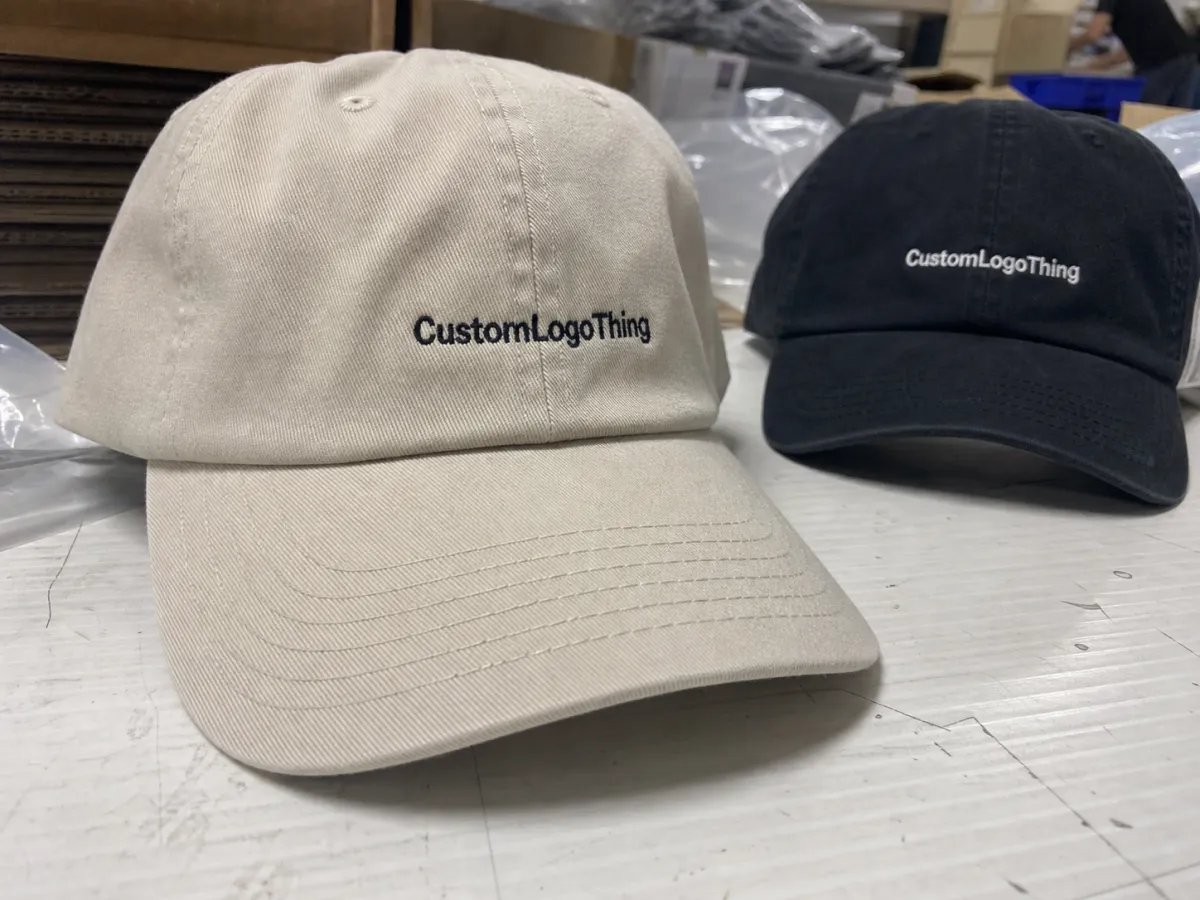
Unstructured Dad Hats have a low-profile crown that does not hold shape the way a structured cap does. That relaxed construction is part of the appeal. It makes the hat feel approachable instead of corporate. It also means the front panel shifts more during decoration, shipping, and wear.
For bakery buyers, the practical question is not which decoration method sounds best in a catalog. It is which one preserves the logo once the cap is sewn, pressed, packed, and handled by staff who are busy doing everything except tending to the hat. A method that works on a sample can still miss the mark if the blank is too soft for the art.
- Staff uniforms: prioritize durability, clean branding, and repeatable sizing.
- Counter merch: needs a soft hand feel and a look people will wear casually.
- Opening giveaways: usually favor lower cost and acceptable logo clarity.
- Retail shelf items: benefit from neater finishing and tighter presentation control.
The most common mistake is starting with budget instead of logo behavior. A cap that saves a few cents can become expensive if the first run has to be redone, if the logo collapses on the crown, or if the brand color reads wrong once it is stitched or transferred.
A softer blank also changes expectations around shelf appeal. These hats are less rigid, so they ship and display with more natural variation. That can look good for a bakery brand. It can also make weak decoration look even weaker. Buyers should judge the whole piece: blank, decoration, attachment method, and how the logo reads from three feet away.
How Fabric, Crown Shape, and Closure Change Print Results
Fabric choice drives more of the final result than many first-time buyers realize. Cotton twill gives a stable surface and usually accepts embroidery or transfers cleanly. Washed cotton and pigment-dyed cotton soften the look, but they also introduce more color variation and a looser surface. That can make fine detail less predictable. Blended fabrics sometimes add a little more dimensional stability, though they do not always carry the same natural feel as a fully cotton cap.
The crown shape is just as important. A soft front panel can flatter a simple logo by making the cap look relaxed and worn-in. It can also compress narrow lettering or make thin borders look hesitant. If the artwork depends on crisp edges, the blank has to do more work than the average dad hat can provide.
Closure choice affects price, fit, and perceived value. Strapbacks and self-fabric closures usually feel more retail-friendly on bakery merch. Buckle closures add a more finished touch. Snapbacks shift the look toward sporty and casual. None of those decisions is cosmetic only. They change who will wear the cap, how it fits staff heads, and how the product reads on a shelf.
Before quoting, check front panel width, seam placement, and bill shape. A logo that measures 2.5 inches wide on one hat may need to shrink to 2.1 inches on another. That small change affects stitch density, transfer alignment, and balance on the crown. It also affects whether the logo feels centered or crowded.
Best Decoration Methods for Logo Detail and Hand Feel
Embroidery is usually the first method buyers ask about. It is durable, familiar, and reads as premium without much explanation. On unstructured caps, though, embroidery works best when the logo has strong line weight, enough open space, and limited small text. Thin script, stacked copy, and tiny details can close up as the stitching follows the soft front panel.
Screen print suits flatter artwork and simple logos with broad shapes. It leaves a lighter hand feel than heavy stitching, which can help if the cap is meant to feel easy and casual. The catch is placement. On a soft crown, the print has to sit cleanly across the panel or it can wrinkle, skew, or look slightly tired before the buyer even tries the cap on.
Heat transfer is useful when the art includes gradients, fine text, or layered color work that would be awkward to stitch. That said, transfer quality varies a lot by film and application. On a dad hat, the transfer has to be cut and positioned carefully so it does not bridge over seams or reveal edges the buyer did not expect.
Woven patches, leather patches, and woven labels sit in another lane. They are useful when the logo has detail that embroidery would simplify too much, or when the bakery wants a retail-style cap with more intentional finish. Patches also separate the decoration from the cap body, which can help with consistency on a soft crown.
For paper inserts, hangtags, or merch cards bundled with the hats, the same production logic applies. Digital printing usually works best for short runs. Offset printing is better for larger CMYK quantities with tight type. Flexographic printing stays efficient for simpler label work. Spot color can hold a brand red more consistently than process color in some cases, while print finishing choices like matte lamination, soft-touch coating, or die-cut edges change the feel of the whole order. If paper components matter, FSC guidance is worth checking at fsc.org.
| Method | Best For | Hand Feel | Durability | Typical Added Cost at 100-300 pcs | Buyer Note |
|---|---|---|---|---|---|
| Embroidery | Simple bakery logos, strong icons, staff caps | Raised, classic, slightly structured | High | $0.90-$2.50 per cap | Best when letters are large enough to stay open. |
| Screen Print | Flat graphics, bold marks, giveaway caps | Light to medium | Medium | $0.60-$1.80 per cap | Needs careful placement on soft fronts. |
| Heat Transfer | Small text, gradients, detailed art | Very light | Medium to high, depending on film | $1.25-$3.00 per cap | Good for detail, but proofing matters. |
| Woven Patch | Tight detail, retail merch, premium presentation | Clean and controlled | High | $1.50-$4.00 per cap | Useful when embroidery would lose detail. |
| Leather Patch | Bold branding, rustic bakery look | Tactile and distinct | High | $1.75-$4.50 per cap | Works best with simple artwork and strong contrast. |
A useful rule: choose the method after you study the logo structure, not before. In the unstructured dad hats Print Method Comparison for bakery buyers, a cheaper decoration can cost more if it forces a second round of sampling or creates a weak retail item that does not move. The right method is the one that keeps the mark readable and the cap wearable.
Cost, Pricing, MOQ, and Unit Cost Drivers
The main cost drivers are straightforward once they are laid out. Decoration method, number of colors, stitch count or print complexity, placement count, digitizing or prepress work, and any special finishing step all move the price. A single-location embroidery job is usually the most efficient. A woven patch with sewn attachment, backing, and custom labeling pushes cost upward quickly.
MOQ behavior is practical, not mysterious. Smaller orders carry more setup cost per unit because digitizing, proofing, and machine preparation are spread across fewer caps. As quantity rises, unit cost usually drops into a more workable range. Many bakery programs start around 24 to 48 pieces for decorated dad hats. More customized patch or label programs often make better sense at 100 pieces or more.
Buyers should compare landed unit cost, not just the blank price. Samples, freight, revisions, and replacement risk belong in the real budget. A hat that looks cheap on paper can become expensive if the first proof misses the mark or if the decoration method is wrong and the run has to be remade.
As a working range, many bakery merch orders land between $4.50 and $12.00 per finished cap before domestic shipping. That range shifts with quantity, blank quality, and decoration complexity. Staff caps on a standard cotton dad hat usually sit at the lower end. Retail-ready pieces with patches, special labels, or careful packaging sit higher. That spread is normal. It reflects how much work the cap asks of production.
For launch kits or shipped merch, it helps to think like a packaging buyer as well as a cap buyer. ista.org is useful if you need a sense of carton handling, ship testing, and protection standards for orders that will move through multiple hands before they reach stores or staff.
Process, Lead Time, and Production Steps to Expect
A clean order process saves time more reliably than a rush fee does. The usual sequence is artwork intake, digital proof, sampling or pre-production approval if the logo is complex, production, finishing, inspection, and packing. Each step can slow the job if the artwork is incomplete or if the brand changes after approval.
Lead time depends on artwork readiness, revision count, decoration method, material availability, and the current production queue. Simple repeat orders can move in about 7 to 10 business days after approval. First-time jobs usually take 12 to 15 business days. Patch-heavy or sample-driven programs can run longer. That is why early approval matters more than most buyers expect.
The common delays are predictable. Late logo edits, changing cap color after the proof is signed off, and moving the decoration placement after digitizing all create extra time. If the bakery launch date is fixed, lock the quantity, colors, and artwork before the order is released. Repeat orders move faster when the specs are already on file.
The proof should show exact placement, approximate finished size, and decoration type. If the logo has a thin border or minimum clear space, ask for that to be called out. A good proof is not a mood board. It is a production instruction. It should tell the line what to make, not invite guesswork.
For sampling, one detail matters more than most buyers realize: the first approved sample should be checked under normal store lighting, not only on a monitor. Some thread colors, transfer films, and patch materials shift under warm LEDs and daylight. That small check can prevent an order from arriving with a color that looked right in proof but wrong on the counter.
Specification Checklist for Bakery Staff and Merch Orders
Before asking for a quote, confirm the specs that shape the result. Front panel width, cap color, closure type, intended use, logo width, and thread or ink colors should all be clear before pricing starts. If the cap will be worn daily by staff, say so. If it is intended for retail, say that too. Those are different jobs and they deserve different finishes.
Vector artwork is still the safest starting point. It gives cleaner edges and reduces the chance that small text will fall apart in production. If the brand relies on a precise red, blue, or black, provide Pantone or spot color references early. A logo that looks correct on screen can print differently once it is translated into thread, patch material, or transfer film.
A physical sample or pre-production piece is worth requesting when the logo has thin strokes, script text, tight letter spacing, or layered details that may collapse on a soft crown. The sample is not a luxury in those cases. It is the cheapest place to catch a failure.
- Cap style: unstructured dad hat, washed cotton, pigment-dyed cotton, or blend.
- Decoration: embroidery, screen print, heat transfer, patch, or label.
- Artwork: vector file, Pantone references, minimum text size, and placement notes.
- Order purpose: staff uniform, giveaway, loyalty gift, or retail item.
- Quantity: quote at two levels so the unit-cost break point is visible.
One more check is worth adding: ask how the decoration will behave after handling and light wear. Bakery staff move fast, touch dough, wipe counters, and pack boxes. Hats that look good fresh off the press can show stress sooner than buyers expect if the decoration is too dense or the attachment is weak.
Why Bakery Buyers Reorder Through a Packaging Partner
Bakery teams often order more than one branded item at a time. Hats, cartons, labels, ribbon, stickers, and event materials usually sit inside the same visual system. A packaging-focused partner helps keep those pieces aligned so the cap does not drift away from the rest of the brand. That matters even more on repeat orders than on the first sample, because inconsistency becomes obvious once customers see the second run.
The real value is repeatability. A partner that understands proof review, color matching, and production consistency can handle decorated caps with the same discipline used for cartons and labels. That usually means cleaner placement, fewer surprises, and fewer rework conversations. It also means the buyer does not have to re-explain the logo standards each time the order comes back around.
Quality control is mostly about simple checks: placement accuracy, secure attachment, clean finishing, and packing that arrives ready to distribute without extra sorting. If the merch kit includes paper cards or shipping cartons, recycled-stock options and source documentation should be reviewed with the same care used for the hat decoration itself.
For the buyer, the benefit is operational as much as visual. One partner can support staff uniforms, opening-day giveaways, and retail merch while keeping the look consistent. That makes reorders easier to forecast and reduces the chance of ending up with a mix of cap styles that never quite match.
Next Steps: Request a Quote, Proof, and Sample
To get an accurate quote, send the logo file, target quantity, cap color, preferred decoration method, and any date tied to a launch, seasonal promotion, or opening event. If there is a hard deadline, say so clearly. Production teams can plan around it only when the timeline is visible before the order starts moving.
Ask for two quote paths if possible: one value-focused and one premium. That makes the unstructured dad hats print method Comparison for Bakery Buyers easier to judge because the landed cost, hand feel, and readability can be compared side by side instead of guessed from one number. If the artwork is detailed, approve the proof first and then request a sample or pre-production piece.
The smartest order is usually the one that balances legibility, feel, and reorder consistency without pretending every decoration method behaves the same on a soft crown. Share the artwork early, confirm the cap specs, and let the production method follow the logo rather than forcing the logo to fit the cheapest option.
Which print method is best for unstructured dad hats with bakery logos?
Embroidery is usually the safest choice for simple logos because it is durable and reads as premium on a soft crown. Use patches or transfers when the art has small text, gradients, or details that may not stitch cleanly. The blank matters as much as the method, because soft fronts change how the logo reads.
Is embroidery or a patch better for bakery staff hats?
Embroidery works well when the logo is simple and the buyer wants a clean, long-wearing finish. Patches are better when the design is more detailed or when the bakery wants a retail-style look with a softer cap feel. If the hat will be worn daily, ask how each option handles abrasion, handling, and repeated use.
What MOQ should I expect for decorated dad hats?
MOQ depends on the decoration method, cap style, and whether the artwork needs setup work like digitizing or prepress. Smaller orders can be done, but the unit cost is usually better when the run is large enough to spread setup charges. Ask for pricing at two quantities so you can see the break point.
How long does a custom unstructured dad hat order take?
Timing depends on artwork readiness, proof approval, decoration method, and current production load. Simple repeat orders usually move faster than first-time jobs that need sampling or revisions. Build in extra time if the cap is tied to an opening date, holiday sale, or launch event.
What artwork file do you need for bakery hat decoration?
Vector files are best because they keep edges clean and make sizing easier for embroidery, print, or patch work. Include any brand color references, placement notes, and minimum text size concerns so the factory can check feasibility early. If the logo is complex, ask for a proof or sample before approving full production; that final check is often the difference between a cap that looks right and one that needs correction, which is why the Unstructured Dad Hats print method comparison for bakery buyers should always end with a proof-based decision.


