Vitamin trucker caps Bulk Order Planning is where a clean launch either protects margin or quietly eats it. A trucker cap looks simple on the surface, but it carries more freight than a lot of buyers expect: staff uniforms, retail promos, event giveaways, influencer kits, and reserve stock can all come out of the same run. That makes the cap less like an accessory and more like a reusable branded asset. The smartest buyers start with usage and quantity, then work backward to decoration and packaging.
From a procurement point of view, the order should already know what it needs to do. If the caps must cover a store launch, a trade-show table, and a reorder buffer, those needs belong in the plan before anyone requests samples. That is one reason broad wholesale sourcing programs often make more sense than treating every cap order as a one-off purchase. The wider the distribution plan, the more the cap behaves like a program item instead of a novelty.
If the front panel, mesh color, and logo method are not aligned early, the first sample is usually a revision wearing a sample tag.
Why Vitamin-Branded Trucker Caps Move Fast in Bulk
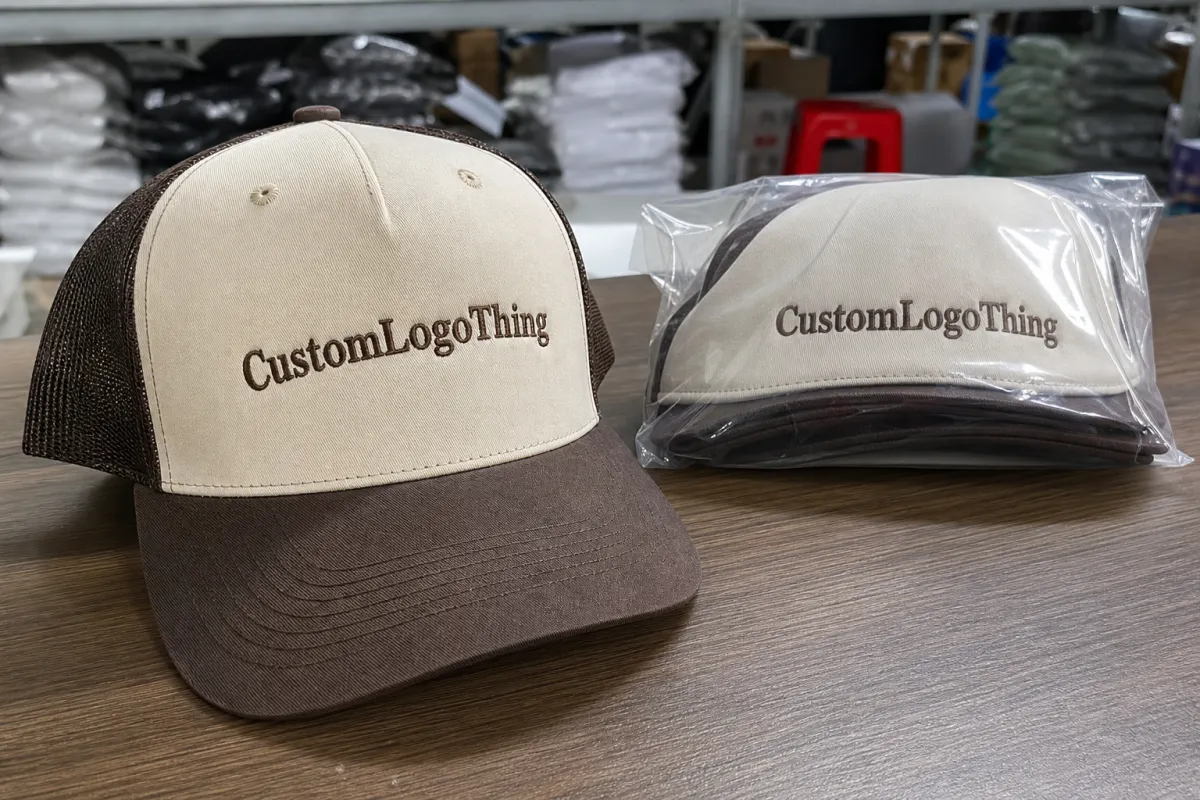
Bulk orders move quickly because trucker caps sit in a useful middle ground. They feel more deliberate than a disposable promo item, but they are easier to size and distribute than apparel. That combination matters for vitamin brands. A cap can be worn repeatedly, which gives the logo more public exposure than a carton insert or a short-lived mailer. One run can support several channels instead of serving only one event, which changes the economics in a real way.
The best order size is usually the one that matches launch volume, audience mix, and location count. If ten retail stores each need 20 caps for staff and counter display, the real requirement is already 200 units before seeding or reserves enter the picture. If influencer kits need the cap inside a supplement bundle, the cap should be sized to the kit, not the other way around. Under-ordering happens most often when buyers think only about the first shipment. Reorder pressure shows up fast, usually right after the campaign starts to work.
There is also a color risk that procurement should take seriously. If the body shade, mesh tone, and embroidery thread are approved separately, the first sample can drift off brand even when the blank cap is correct. A cap does not have many visible surfaces, so each one matters more. That is why vitamin trucker caps Bulk Order Planning should treat the cap like any other branded component: every visible element needs the same palette check and the same sign-off trail.
Budget expectations should follow use case, not guesswork. A field team kit wants durability and repeat wear. A retail promo wants shelf presence and a clean silhouette. An event handout may care more about cost and delivery speed than premium finishing. The right quantity is the one that supports the actual campaign logic. That sounds obvious, but in practice people still price the wrong thing: a cap for the concept deck, not a cap for the operational plan.
The other reason these orders move is that trucker caps are easy to merchandize in groups. They can be stacked, bagged, boxed, and shipped without much special handling, which keeps carton efficiency high. That does not make them low risk. It just means the risk shifts from fit and sizing to color consistency, decoration quality, and the accuracy of the pack-out.
Vitamin Trucker Caps Bulk Order Planning for Retail Buyers
The fastest approvals happen when the buying team can answer a narrow set of questions in one pass. What is the cap body? What is the mesh color? How deep is the crown? Which decoration method will hold up under wear? Once those are locked, the rest of the order becomes easier to compare. Without that discipline, people start debating the sample itself instead of the spec behind it, and the calendar pays for it.
For vitamin-branded programs, the front panel usually carries the load. Structured panels give a cleaner billboard effect and hold embroidery shape better. Unstructured panels feel softer and less rigid, which some wellness brands prefer. Mesh density affects both look and breathability. A 6-panel cap with a standard snapback closure behaves differently from a lower-profile strapback or a foam-front style, and buyers should expect those differences to show up in cost, fit, and shelf appearance.
Decoration choice matters just as much. Embroidery reads established and durable, but large stitch fills can pucker on thin front panels. Patches add texture and can hide small fabric irregularities. Woven labels hold fine detail better than heavy stitching when the logo is small. Heat transfer can work for intricate art, though it usually feels lighter and less tactile. If the cap sits beside a supplement box, an insert card, or a kit bag, the finish should match the rest of the program so the package feels intentional rather than assembled from leftovers.
The approval package should include the logo file, Pantone references, closure style, and exact placement on the front panel. Add carton expectations too. If the order is going into retail, individual polybags, barcode labels, or shelf-ready carton counts may matter as much as the cap itself. The buyer who locks those details early avoids the common trap of approving a nice-looking sample that fails the fulfillment plan. A good sample can still be the wrong order if the receiving team cannot work with it.
One more practical point: if the caps are bundled with paper inserts or hangtags, ask for paper stock with FSC support where appropriate. Sustainability claims only hold up when the paperwork survives internal review. The same is true for any recycled-content claim on the cap body or packaging. Ask for the document, not the promise.
For buyers handling several departments, one approval sheet should travel through design, procurement, and production. That sheet should define the cap once and keep every reviewer on the same page. If someone later asks for a different mesh tone or logo scale, the request should be treated as a revision. Small changes are where budgets start to move.
Specifications to Lock Before You Request Samples
The cleanest vitamin trucker Caps Bulk Order Planning process starts with a spec sheet, not a sample photo. A photo hides too much. A spec sheet forces the team to agree on the things that actually control repeatability: cap body color, mesh color, panel count, closure type, sweatband preference, and logo placement. If those six items are not frozen, sample feedback turns into guesswork.
Fit and wear deserve attention too. A cap with the wrong crown depth can sit too high or feel too shallow. Brim shape changes the silhouette more than most buyers expect. Sweatband material affects comfort on repeat wear, especially for trade shows, summer events, and warehouse staff. Breathability sounds minor until a buyer realizes the cap may be worn for six hours at a time. Then a breathable mesh-back starts to look like a real buying decision instead of a style detail.
Material choice changes the feel of the entire order. Polyester mesh is common because it keeps cost down and handles heat better in transit. Cotton twill on the front panel can feel softer and accept embroidery well, but it may show wrinkles more easily than a firmer synthetic blend. Foam-front caps create a more retro look and give decorators a flatter surface, though the foam can be less forgiving if the art needs dense stitching. There is no perfect material. There is only the one that matches the campaign.
Artwork rules should be explicit. Vector files reduce conversion risk. Minimum line thickness prevents thread fill problems on embroidery. Safe zones keep logos away from seams and stitch breaks. Pantone references matter because a cap ordered from a sample image can drift visually even when the file is technically correct. If the brand uses multiple shades of the same color family, note the approved one in writing and attach it to the order. Guessing on color is how uniform-looking programs start to look mismatched.
It helps to think about transit, not just decoration. If the caps are packed with retail cartons or event kits, compare the carton plan with the kind of handling the shipment will face. Resources from ISTA are useful when buyers want to pressure-test how packaged goods move through distribution. The cap may be soft, but the shipment around it is not. A crushed carton can ruin a presentation faster than a bad logo placement.
- Body color: lock the exact shade, not a close match.
- Mesh color: treat it as a separate approval item.
- Decoration: embroidery, patch, woven label, or transfer each changes cost and feel.
- Packaging: bulk carton, polybag, label, or retail-ready pack.
- Artwork: vector file, safe zone, and Pantone callouts.
If the order will repeat, ask for a retained sample and reference notes. That matters more than most buyers realize. The second run is where inconsistencies tend to surface, especially if a different production line handles it later. A retained sample gives the supplier a physical benchmark instead of a memory of what was approved.
Cost, Pricing, MOQ, and Unit Cost Trade-Offs
Price only makes sense when it is tied to the same spec. If one quote uses a stock-body embroidered cap and another uses a custom patch with individual polybags, the numbers are not comparable. Unit cost usually drops as quantity rises, but only when the body style and decoration method stay stable. That is why vitamin Trucker Caps Bulk Order planning works best when the quote request is already structured by use case.
MOQ pressure usually comes from custom colors, patch tooling, embroidery digitizing, and special packaging. A simple stock-body order may start at 100 to 300 units depending on the supplier. A more customized order can push the minimum higher, especially if the front panel requires a new patch mold or an exact color match. Buyers should ask what drives the floor before they ask for a discount. The answer usually changes the budget more than the negotiation does.
Hidden cost is the part that gets people. Setup charges. Sample freight. Carton labeling. Duty. Split shipping. Repack fees. Kitting labor. If the order is going into multiple stores or a direct-to-consumer bundle, the landed cost should include all of it. A quote that ignores freight can look cheap and still be the most expensive option once the cartons are counted. Freight is often the place where a good-looking budget goes sideways.
For planning purposes, the cost spread usually follows decoration complexity more than the cap body itself. Stock blank plus simple embroidery is often the lowest-cost path. A woven label, stitched patch, or multi-location decoration pushes the unit upward. Individual polybags or printed inserts add a little more. None of those numbers are dramatic on their own, but on a 1,000-unit run the gap becomes visible. A difference of seventy cents a cap is not small when the program sits on a tight retail margin.
| Option | Typical Unit Cost at 500 Pieces | MOQ Pressure | Best Fit |
|---|---|---|---|
| Stock-body embroidery | $2.10-$3.25 | Low | Retail promos, staff kits, general seeding |
| Patch decoration | $2.80-$4.20 | Medium | Premium wellness sets, better texture, stronger shelf presence |
| Woven label | $3.00-$4.60 | Medium | Small logos, fine detail, cleaner edge control |
| Heat transfer | $2.40-$3.70 | Low to medium | Complex art, compact decoration areas, lighter feel |
Ask suppliers to quote the same artwork at 100, 300, 500, and 1,000 units. That makes the pricing curve visible. It also shows whether a larger run actually improves value or just adds inventory risk. The cheapest line item can still become the worst order if it produces rework, late approvals, or caps that never leave the carton.
One detail often missed: shipping terms can change the apparent winner. A lower unit price from a supplier with weak carton counts or slower packing may cost more overall than a slightly higher quote with better packing discipline. The quote should be read as an operating plan, not just a number. Buyers who compare landed cost usually make better decisions than buyers who compare headline price only.
Process, Timeline, and Lead Time From Proof to Delivery
The order path is usually simple on paper and messy in practice. Quote. Mockup. Art correction. Sample approval. Production. Quality check. Packing. Shipping. Each step can sit in someone’s inbox, and each delay pushes the delivery date farther out. That is why vitamin trucker Caps Bulk Order Planning should start from the launch date and move backward, not from the quote date and hope the calendar cooperates.
For stock-body orders with clean artwork, 12-15 business days from proof approval is a realistic starting point. Add more time if the order uses custom patches, special packaging, or split shipping. A more complex run can reach 18-25 business days before freight. Air shipping may shorten transit but will not fix a slow approval cycle. If marketing, procurement, and operations are not reviewing the same proof at the same time, the order can stall before production even starts.
Build a buffer. Not a fantasy buffer, a real one. Leave time for one round of revisions. Leave time for a re-sample if the first proof misses the spec sheet. Leave time for holiday freight congestion, carton relabeling, or a last-minute change in the receiving location. The buyer who adds a small margin into the schedule usually looks more competent than the buyer who promises an exact date and then has to explain why it slipped.
A delivery date is only useful if the receiving team can unload, count, and place the cartons the same day.
One simple habit prevents a lot of stress: confirm the launch date backward. If caps must be in the warehouse two weeks before a retail event, write that down. Then allow for inspection and internal handling before the arrival date. That is the difference between a planned rollout and a scramble. It also keeps the receiving team from inheriting a problem they did not create.
Sample timing deserves its own check. A physical sample often reveals issues that a flat mockup hides, such as crown depth, visor curve, or embroidery density. If the sample is meant to approve production, the feedback should be specific and final. Vague comments like "make it nicer" only create another round of back-and-forth. The best approvals say what changed, what stayed, and what cannot move.
How to Vet a Supplier Before You Place the Order
Mockups are easy to make. Repeatable output is harder. A supplier should be able to show previous runs using the same body style, decoration method, and closure. Photos help, but the real question is consistency. Can they hold the same front-panel shape on reorder? Can they match the thread or patch color closely enough that the second batch does not look like a different program? That is the test that matters.
Communication quality is just as telling. Strong suppliers flag missing vector art, unusual logo proportions, or unrealistic deadlines before production starts. Weak suppliers wait until after the deposit. For large runs, that difference affects more than patience. It affects inventory risk. Ask for a clear proof format, a named contact, and a simple change log so every revision is visible. If a supplier cannot explain the current version, they probably cannot protect the next one.
Quality control should be specific. Carton counts. Random-piece inspection. Replacement policy. Case pack consistency. If the caps are going into stores or kits, ask whether the supplier can mark master cartons cleanly and maintain the same pack count on every box. For embroidered or patched caps, ask how they inspect stitching on curved surfaces. Loose threads, uneven patch placement, and crooked logo angles are small defects until they sit on a retail shelf and catch the eye of a buyer.
Packaging discipline matters more than many teams expect. Caps are light, so bad packing can be overlooked until boxes arrive crushed or overfilled. Ask whether the supplier uses separators, inserts, or compression limits when packing. If the shipment includes retail cartons, inserts, or support materials, ask how the supplier handles transit checks. Some buyers use distribution logic modeled on ISTA guidelines to reduce avoidable damage. That is not overengineering. It is a cheap way to avoid crushed cartons and messy receiving notes later.
Finally, review the paperwork. Invoice accuracy, carton labels, item descriptions, and destination addresses sound boring until a warehouse refuses a pallet because the labels are wrong. A supplier that handles those details well is usually easier to reorder from. That matters more than a polished sales deck. A good quote is nice. A correct shipment is better.
Before deposit, ask one last question: what would cause the supplier to pause production? The answer often reveals the hidden risk. If they mention missing approvals, artwork changes, color confirmation, or packaging sign-off, you know where the schedule can break. If they cannot name the failure points, they may not be tracking them.
Next Steps for a Clean Bulk Order Approval
Start with an approval packet that leaves little room for interpretation. Final artwork. Pantone references. Quantity by location. Delivery addresses. The date inventory must arrive. If those items are missing, the order is not ready, no matter how good the sample looks. The cleanest vitamin trucker caps bulk order planning process is one where design, procurement, and operations all approve the same file set.
Then request a quote matrix that shows price breaks at multiple quantities and separates setup from recurring unit cost. That makes budget conversations faster because the landed cost is already visible. If there are multiple colorways, ask for each color as a separate line. Color splits can change MOQ, pricing tiers, and production efficiency, so hiding them inside one blended number only creates confusion later.
Approve the sample against the actual spec sheet, not memory. Confirm logo placement, crown shape, closure type, and overall fit. If the caps will ship to retail, confirm carton counts and unpacking instructions at the same time. A sample that looks right but ships wrong is still a failed approval. If the pack-out is off, the product becomes a warehouse problem rather than a branding asset.
Set a reorder trigger before stock gets tight. That keeps the program tied to inventory reality instead of last-minute panic. For some buyers, that trigger might be 30 percent remaining stock. For others, it might be a fixed date before seasonal demand starts. The right number depends on sell-through speed and distribution span. What matters is that it is written down before the first run ships.
The strongest bulk order plans leave nothing vague: no unclear artwork, no assumed packaging, no unspoken deadlines. That is what keeps the order from turning into a round of preventable corrections.
What details do I need for vitamin trucker caps bulk order planning?
Have the final logo file, quantity split, preferred cap body color, decoration method, and delivery deadline ready before asking for quotes. Include ship-to locations and any packaging requirements so the supplier can price a realistic timeline instead of a placeholder.
How do MOQ and pricing usually work for custom vitamin trucker caps?
MOQ depends on whether you are using a stock blank, a special color, or a custom patch or embroidery setup. Pricing usually improves at higher quantities, but setup fees and freight can offset the savings if the order is too small. Ask for pricing at several volume levels so the curve is visible.
What is a realistic turnaround for branded trucker caps in bulk?
If blanks are in stock and artwork is clean, 12-15 business days after proof approval is a useful benchmark. More complex decoration, extra packaging, or split shipping can push that into the 18-25 business day range before freight. Revisions add time fast, so lock the file set early.
Can I order vitamin trucker caps in different colors within one bulk run?
Yes, but color splits can affect MOQ, pricing tiers, and production efficiency. Ask for each color as a separate line so you can see the cost impact clearly before you approve the run. Mixed colorways are often possible, but they need to be priced as separate work streams.
What should I check before approving the final production sample?
Verify logo placement, thread or print color, crown shape, closure type, and overall fit against the approved spec sheet. Also confirm carton labeling and packaging count so the delivery is usable the moment it arrives. If the sample is close but not exact, write the correction in production language.

