Wine Club Embroidered Beanies: Thickness Guide for Buyers
If you are ordering branded headwear for members, the wine club embroidered Beanies Material Thickness guide matters more than most buyers expect. Two beanies can look similar in a product photo and still behave very differently once the embroidery hits the knit. Gauge, yarn loft, cuff depth, and stretch recovery all change the feel. So does how the hat sits on a head after a few wears, which is usually the part people care about and rarely mention in the spec sheet.
Wine clubs do not buy beanies the same way they buy a one-off promo item. These hats end up in member gifts, retail shelves, tasting-room staff kits, and seasonal shipping boxes. A thin knit can work for mild weather or budget bundles, but it needs to earn its keep. A thicker knit can feel more premium, yet it also raises cost, bulk, and the risk of embroidery distortion if the design is too busy. That tradeoff is the whole game.
What Thickness Really Means
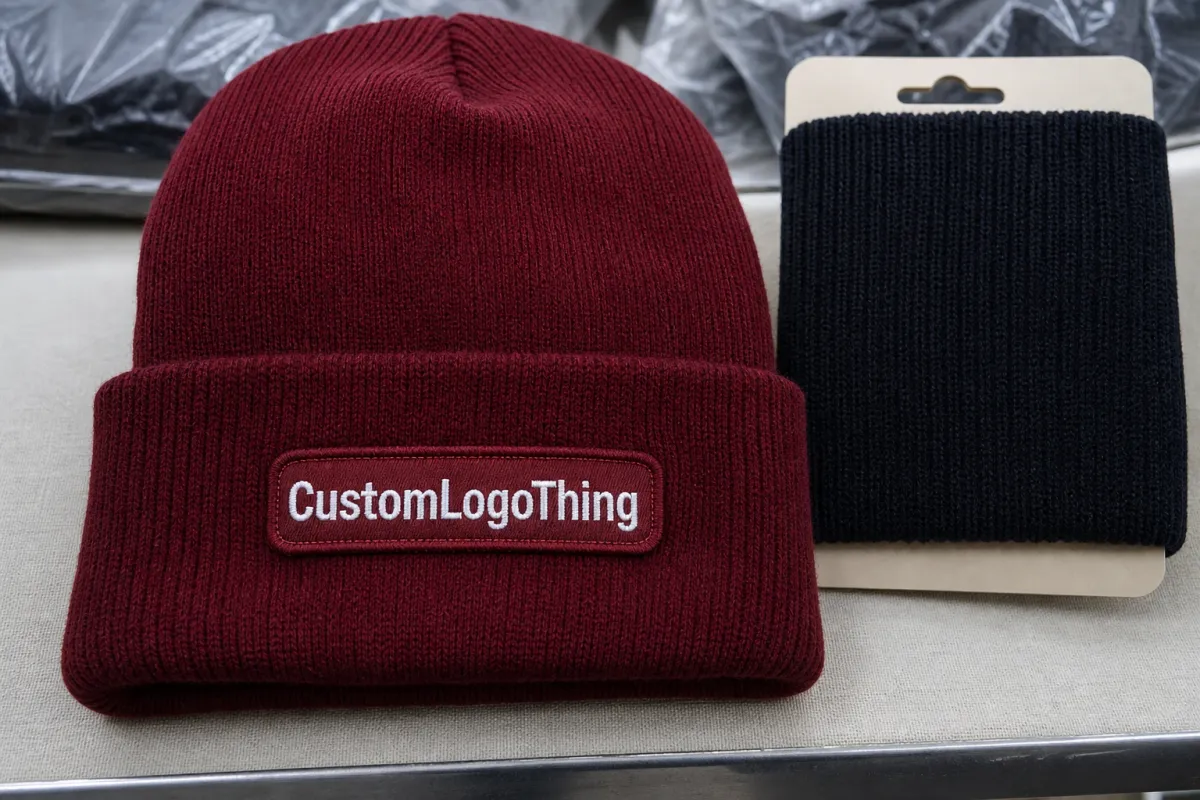
Thickness is not just weight. Buyers often start with a grams-per-piece number and call it a day, but that misses the parts the wearer actually feels. A beanie can be light on paper and still feel substantial if the yarn has enough loft and the knit is tight. Another can weigh more and still feel flimsy because the fabric collapses after a bit of wear. That is why the sample matters more than the catalog description.
For club headwear, thickness affects four things at once: warmth, structure, stitch clarity, and handfeel. Warmth is obvious. Structure is the part that makes a beanie look intentional instead of droopy. Stitch clarity matters because embroidery needs a stable surface. Handfeel is what makes a member pull the hat on and keep it, or toss it into a closet and forget it exists.
Midweight styles usually land in the sweet spot. They give enough body for clean embroidery and enough flexibility for a wide range of head shapes. Lightweight options are better for indoor teams, warmer regions, or lower-cost drops. Heavyweight beanies make sense for winter shipments, outdoor event kits, and gift programs where the hat needs to feel substantial straight out of the bag.
Practical rule: if the knit is so soft that it loses shape when you hold it by the cuff, the embroidery will need extra testing before approval.
The wine club embroidered Beanies Material Thickness guide should be treated like a production tool, not a marketing phrase. It affects how the logo lands, how the hat ships, and how expensive the final piece feels in the customer’s hand.
How Knit Density Affects Embroidery
Knit density decides whether embroidery looks crisp or slightly muddy. A tighter knit gives the needle a more stable surface, so letters hold their shape and small marks stay readable. On looser or chunkier knits, the fabric shifts under tension. The embroidery can sink in, pull the knit open, or create a puckered zone around the logo. None of that is fatal, but it changes what you should ask the supplier to do.
This matters even more for wine clubs because the artwork is often detail-heavy. Script text, vineyard icons, anniversary dates, and small secondary marks all look nice in artwork software. On a beanie, they can become a mess. If the knit is thick and open, simplify the logo early. Reduce line weight. Increase letter spacing. Remove tiny interior details that do not survive thread. You cannot force a delicate mark onto a bulky fabric and expect the fabric to cooperate.
Wear performance follows the same pattern. Thinner beanies breathe better and fit under hoods or helmets more easily. That helps tasting-room staff and members in warmer climates. Thicker knit styles feel warmer and usually look more premium, but they can feel bulky indoors. If the beanie will be worn during long shifts or in a shipping box as part of a smaller seasonal bundle, a midweight knit tends to age better in use.
Here is the part buyers often miss: a hat that looks good flat on a table may behave very differently on a human head. Stretch the sample. Then stretch it a little more. A beanie that keeps its shape after that test is far more likely to hold up in real use. If the logo warps or the cuff rolls unevenly, the knit is telling you what production will look like. Listen to it.
- Tasting-room wear: midweight or lighter styles usually feel better through a full shift.
- Cold-weather gifting: heavier knits earn their place if warmth is the main job.
- Retail display: structure matters so the hat keeps a clean profile on shelf.
- Mail-order drops: flatter packs and moderate bulk ship more cleanly.
Material Options That Show Up in Real Orders
Material choice changes more than price. It changes how the beanie behaves under embroidery, how it wears after washing, and how much people trust it at first touch. Acrylic is still the default for a reason: it is affordable, color stable, and easy to spec at scale. It can feel soft enough for a member gift without pushing the budget into stupid territory. Acrylic also takes embroidery well if the knit gauge is decent.
Wool blends feel richer and warmer. They also tend to cost more, and some buyers underestimate the care implications. A wool-heavy hat can look excellent, but it needs better attention on shrinkage, pilling, and wash instructions. If the brand story leans premium and the audience is in colder regions, that tradeoff may be worth it. If the hat is going into a broad membership base with mixed climates, wool can be more expensive than necessary.
Cotton blends breathe well and feel familiar, but they often lack the plush look that makes a beanie feel giftable. Recycled polyester can be useful if the club wants a sustainability angle and needs consistent color control. It is not a magic badge. It still needs a good knit and clean decoration. But it can fit a brand that is already using recycled fibers or post-consumer waste in other packaging pieces.
The listed fabric weight only tells part of the story. Gauge, ply, rib structure, and cuff design matter just as much. A 1x1 rib with a tighter gauge will hold embroidery better than a loose knit at the same nominal weight. Double-layer cuffs add structure and a cleaner front panel for logos. That makes a big difference on club beanies, because the cuff is usually the visual anchor. If the cuff wobbles, the logo does too.
Finish quality matters more than buyers admit. Pilling, color fade, and loose yarn ends all cut into the perceived value of the piece. A hat that pills after a couple of wears feels cheap, no matter how good the logo looks on day one. Ask for wash behavior and colorfastness notes. If the supplier cannot explain the post-wash handfeel, the conversation is not advanced enough to place a clean order.
For the broader kit, the hat should not fight the packaging. A simple presentation using corrugated cardboard, kraft paper, and a clean insert goes a long way. If the program uses FSC certified paper, recycled materials, or selected post-consumer waste content, that can support the club story without sounding theatrical. Biodegradable packaging can help too, but only if the rest of the pack is not bloated with wasteful extras. Cheap filler wrapped in eco language still looks cheap.
For material and packaging claims, the FSC and EPA recycling guidance pages are useful sanity checks before artwork approval.
Price, MOQ, and Decision Points
Thickness pushes pricing up, but not in a neat linear way. Lightweight beanies usually sit at the lower end of the cost curve. Midweight styles are often the best value for wine clubs because they balance warmth, structure, and embroidery performance. Heavyweight or double-layer options cost more because they use more yarn, take more machine time, and can require tighter quality control on the decorated area.
For order volumes around 500 to 1,000 units, these are realistic rough ranges for a basic embroidered beanie before special packaging or complex decoration:
| Thickness tier | Typical feel | Approx. unit range | Best use |
|---|---|---|---|
| Lightweight | Soft, flexible, lower bulk | $4.50-$6.50 | Indoor wear, mild climates, budget promos |
| Midweight | Balanced warmth and structure | $5.50-$8.50 | Most club gifts, retail add-ons, staff gear |
| Heavyweight | Dense, warm, more body | $7.50-$11.50 | Cold-weather drops, premium gifts, outdoor events |
Embroidery costs sit on top of that. Larger logos, extra stitch density, and multiple placements add time and raise the chance of distortion on a thicker knit. A simple front mark usually stays manageable. Small text, layered fills, and detailed line art make the price climb faster than buyers expect. The embroidery machine is not impressed by nice intentions.
MOQ is another reality check. Stock styles can start in the low hundreds, but custom knit colors, special yarn blends, and branded packaging usually raise the practical minimum. A smaller run often carries a higher per-unit price because setup takes nearly the same effort whether the order is 150 pieces or 1,500. Buyers who want a premium look in a small run should plan for that. It is not a surprise, just the math.
A useful way to budget is to match thickness to the job. If the beanie is a hero gift, spend more for a cleaner knit and better feel. If it is a mailer insert, stay disciplined and do not burn money on a hat that will spend most of its life folded inside a carton.
Sampling Timeline and QC
The cleanest order starts with a written spec. Style, yarn type, knit gauge, cuff height, logo size, thread colors, placement, and packaging all need to be locked before production. If the supplier is guessing on any of those, the sample becomes a negotiation instead of a test. That slows everything down and makes the final run harder to control.
Sampling usually takes 1 to 2 weeks for a straightforward embroidered beanie, assuming the base style is available and the artwork is not doing anything difficult. Bulk production typically runs 2 to 4 weeks after sample approval. That can stretch during peak season, especially in the fall when everyone suddenly remembers winter exists. Rush orders are possible, but they tend to cost more and leave less room for fixing avoidable mistakes.
Quality control should focus on the things that fail in the real world, not just on a flat table. A thick knit may look perfect before the hat is stretched, then shift slightly once it is worn. A good QC plan checks the finished piece under realistic tension and lighting.
- Embroidery placement after the fabric is stretched
- Thread tension and clean edge finishing
- Cuff height and consistency across the run
- Color match between sample and bulk production
- Packaging condition before shipment
Shipping also deserves attention. If these beanies are going straight to members, use packaging that protects shape instead of flattening the product. Corrugated cardboard mailers with kraft paper inserts work well for most programs. If the shipment needs extra transit testing, packaging standards from organizations like ISTA are worth reviewing, especially for individual mail drops that will get handled more than a pallet load.
The production timeline matters because thickness changes the entire chain. A heavier knit can take longer to source, take longer to embroider cleanly, and need a second QC pass if the surface reacts differently to the thread. That is exactly why the wine club embroidered Beanies Material Thickness guide belongs in the planning stage, not after approvals have already gone out.
How to Choose the Right Thickness
Start with the use case, not the wish list. A winter member gift needs warmth and a more substantial handfeel. Tasting-room staff usually need comfort and enough shape to look polished during a shift. Retail beanies have to sell themselves from a shelf, which means the hat needs structure and a clean logo. If the order is tied to an outdoor event, thicker knit options become easier to justify because people will actually use them in cold air.
Then decide what the buyer should notice first. Lightweight beanies feel easy and casual. Midweight styles feel balanced and dependable. Heavyweight styles feel premium and warm, but they can be too much for mild climates or indoor settings. For most wine clubs, midweight is the safest starting point. It covers a broad audience without forcing the logo to fight a bulky fabric.
Ask for samples, not just renders. Compare at least two options if the budget allows it. Put them on real heads or at minimum on a proper form, stretch them, and check the logo from a normal viewing distance. A beanie that photographs well but looks awkward in hand is not a good buy. Buyers know this, then still get seduced by mockups. It happens every time.
Once the sample arrives, lock the practical measurements:
- Cuff height so the logo stays centered and visible
- Body length so the fit is not too shallow
- Logo width so the embroidery fits the knit
- Stitch tolerance so minor variation does not trigger rework
If packaging is part of the gift, make it match the product. A premium knit wrapped in flimsy plastic looks cheap the moment it is opened. A clean carton with recycled inserts, FSC certified paper, or a simple branded card usually works better than trying to dress up a low-effort pack. The packaging should support the value of the hat, not expose how little care went into the rest of the box.
Mistakes That Cost Buyers Money
Heavier means better. Not always. Sometimes heavier just means warmer, bulkier, and more annoying indoors. If the audience spends time in tasting rooms or mild weather, a heavyweight knit may get used once and shelved.
Thick knit plus tiny detail. This is a classic problem. Buyers approve a chunky style and then try to cram a delicate logo onto it. The result is usually puckering, broken letterforms, or a mark that disappears into the fabric. If the knit is open or bulky, the artwork needs to be simplified early.
Softness over recovery. A lofty beanie can feel wonderful in hand and still lose shape after a few wears. Better recovery often matters more than first-touch softness, especially for club gifts that should look good all season.
Skipping wash behavior. Shrinkage, pilling, and fade all change the perceived quality after the first month. That is not a small detail. It is the part members remember after the novelty wears off.
Ignoring packaging. A strong beanie in a bad mailer still feels cheap. Use packaging that fits the product and the brand. If sustainability is part of the story, use recycled materials and biodegradable packaging where they make sense instead of layering on empty claims.
Approving from photos only. Screens hide the stuff that causes problems: stretch, recovery, backing feel, and stitch pull. Photos help, but they are not a substitute for a physical sample. They never were.
FAQ
What thickness is best for wine club embroidered beanies?
Midweight is usually the safest choice. It gives enough structure for embroidery, enough warmth for most climates, and enough flexibility that members will actually wear it. Go lighter for indoor or warmer markets, and heavier only when the hat needs to function as true cold-weather gear.
Do thicker wine club embroidered beanies cost more?
Usually yes. Heavier knits use more material, and they can take more machine time to embroider cleanly. Double-layer cuffs, extra lining, and dense stitch zones can raise the unit price further. The jump is not absurd, but it is real.
Which materials hold embroidery best?
Tighter acrylic and wool-blend knits usually give the cleanest results. They offer a more stable surface and better shape recovery. Loose, fuzzy, or highly textured fabrics are harder to embroider cleanly and often need design simplification.
How long does production usually take?
Sampling often takes 1 to 2 weeks. Bulk production usually takes 2 to 4 weeks after sample approval. Holiday season, revision rounds, and special yarn sourcing can stretch that timeline, so it helps to lock the spec early.
Can a chunky knit still work with embroidery?
Yes, but only with a simplified design and a test sample. Chunky knits can look great, but they need careful placement and backing support so the logo does not sink into the fabric. If the artwork is small or detailed, midweight is usually safer.
Thickness is not a side note in club headwear. It changes how the beanie feels, how the logo reads, how the order ships, and how much value the member thinks they received before the box is even fully open. That is why the wine club embroidered Beanies Material Thickness guide should sit at the center of the spec conversation, not buried under color choices and packaging extras. Get the knit right, and the rest of the order gets easier.


