Retail parcels usually fail in small ways: a damp loading dock, a pinched seam, a bag packed too tightly, or a closure that gives up after compression. That is why a Waterproof Apparel Mailers Material and Sizing guide belongs early in packaging planning, before artwork and price approval.
The right spec has to do three jobs at once. It needs to keep moisture out, fit the folded garment without damaging it, and survive the real handling conditions of fulfillment and transit. A low unit price matters, but a weak spec usually costs more in reprints, replacements, and labor.
Why some apparel mailers stay dry when others fail
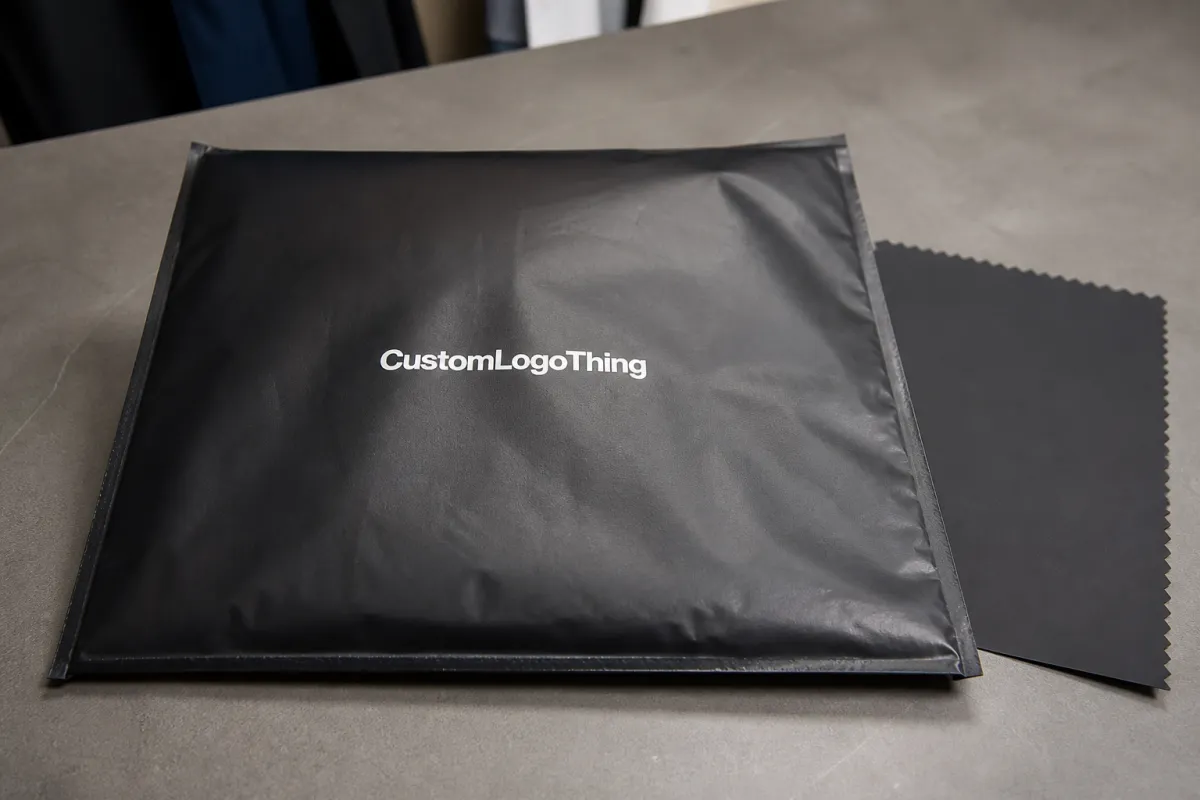
A mailer is only as waterproof as its weakest point. A glossy surface can look protective and still fail if the seal is thin or the closure is unreliable. In practice, the important variables are film density, edge sealing, and how consistently the opening stays closed.
This matters most with apparel. A dry T-shirt can handle a little mist, but a folded hoodie with inserts, tissue, or labels can be damaged by a small leak. If your parcels travel through humid warehouses or wet delivery routes, the spec has to be built around risk, not appearance. That is where a Waterproof Apparel Mailers material and sizing guide becomes useful: it turns a vague packaging choice into a shipping decision.
Presentation matters too. A dry package looks deliberate; a damp one looks like a fulfillment mistake, even when the product is still usable. Better protection usually means fewer complaints, cleaner returns handling, and less customer service noise.
"The cheapest bag is expensive the moment it fails in transit."
If your packaging program includes other formats, compare the mailer against Custom Poly Mailers and other Custom Packaging Products. The right mailer should fit within the broader packaging plan, not sit outside it.
How film layers, seals, and closures keep garments protected
Multilayer film usually performs better than a simple single-layer bag because each layer adds resistance to puncture and moisture transfer. Heat seals protect the edges, which are often the first point of failure in lower-cost bags.
Closure style changes both protection and workflow. Peel-and-seal bags are fast on high-volume pack lines. Zip closures are easier to reuse and make more sense for returns or subscription programs. Tamper-evident closures create a clearer first-open signal, but they add cost and can slow packout. The right choice depends on how the parcel is handled, not on trend.
- Peel-and-seal: best for speed and standard outbound shipping.
- Zip closure: useful for returns, reuse, and premium kits.
- Tamper-evident seal: adds security and a sharper unboxing cue.
Testing matters more than a tidy spec sheet. Mailers get compressed in bins, scraped on rails, and folded again by handlers trying to move quickly. A closure that looks solid in a sample room can loosen after abrasion or a sharp bend at the seal line. Ask for handling data, not just material descriptions.
For validation, ASTM methods and ISTA protocols help identify weak spots before they reach customers. ISTA publishes useful guidance on packaged-product testing here: ISTA. If paper components are part of the package, FSC certification is worth checking as well: FSC.
Material choices that balance durability, appearance, and sustainability
Most Waterproof Apparel Mailers use polyethylene-based films, often in coextruded layers. That structure gives a practical mix of puncture resistance, flexibility, and printability. Clear film lets the garment color show through. Opaque film hides contents and usually looks cleaner in fulfillment and retail settings. Recycled-content versions can work well too, but the grade matters more than the claim on the label.
Thickness affects both feel and failure rate. A lighter gauge may be fine for a single tee on a short, low-abuse route. Heavier garments, folded denim, and multipacks need a stronger structure because fold stress rises quickly. Once the bag begins to stretch near the seal, split lines show up. That pattern is often predictable from product weight and bundle shape before production starts.
| Material option | Typical strengths | Watch-outs | Best fit |
|---|---|---|---|
| Standard polyethylene | Good moisture barrier, low cost, easy handling | Can feel basic; recycled versions vary by source | Core apparel programs with steady volume |
| Coextruded blend | Better puncture resistance, stronger seal behavior, good print surface | Higher unit price, more spec detail needed | Branded programs and heavier garments |
| Recycled-content film | Supports recycled-material targets and waste reduction goals | Must verify tear strength, seal quality, and consistency | Brands balancing performance and sustainability |
Finish also changes the result. Matte film hides scuffs better and often feels more premium. Glossy film prints sharply and can stand out under retail lighting. Recycled-content bags may show slight visual variation, which is normal. The real question is whether the bag performs in transit, not whether every roll looks identical under inspection.
It is also worth separating sustainability from performance. A paper-based mailer can be a better choice on some routes, but it will not match a waterproof film bag in wet transit. Material choice should solve the shipping problem in front of you, not the one in a presentation deck.
Pricing, MOQ, and unit cost realities for custom mailers
Price is driven by material gauge, bag dimensions, print coverage, closure style, and recycled content. Order size matters too. A 5,000-piece run carries setup and waste across fewer units than a 50,000-piece run, so low-MOQ orders almost always cost more per bag.
The useful quote is not the headline unit price. Ask for sample cost, setup charges, freight, and landed cost per thousand. A slightly higher factory price can still win if it includes more stable freight or less press waste. Packaging budgets get distorted when teams compare only the printed line item and ignore the rest of the chain.
For planning purposes, simpler custom apparel mailers often fall around $0.18 to $0.28 per unit at 5,000 pieces, with heavier gauges, larger sizes, and full-coverage print pushing higher. Recycled-content film and specialty closures can add a modest premium. That is normal. Extra material and more demanding production steps cost more.
Standardizing sizes is one of the most reliable ways to control cost. If one bag can handle multiple garment families without looking sloppy, that usually beats creating a custom width for every SKU. It also simplifies storage, picking, and replenishment. Fewer styles mean less fragmentation and fewer chances for the wrong bag to end up in the wrong bin.
The same logic applies across a broader packaging system. Combining apparel mailers, inserts, labels, and outer packaging into one procurement plan is often where the real savings appear, because the work gets easier for operations as well as purchasing.
Production steps, lead time, and approval flow
The cleanest workflow is simple: spec sheet, proof, sample, production. Most mistakes start earlier, at the spec stage. One missing folded dimension or one unclear closure note can send the sample back for revision and push the project off schedule.
Lead time depends on whether the factory stocks the base film, how complex the print is, and whether the closure is standard or custom. A run using existing material can move faster than a new construction that needs a fresh film order. For many custom mailer projects, 12 to 15 business days after proof approval is a realistic planning window, though more complex specs need longer.
Color matching deserves its own step. Black and white are usually straightforward. Brand colors with tight tolerances are not. If the design depends on a precise tone, ask for a printed strike-off or physical sample before the full run starts. One extra day at approval is cheaper than one pallet of rejects.
Shipment method should be confirmed before production, not after. Freight class, carton count, and destination affect the final landed cost. A bag that looks efficient on paper can become expensive if it ships poorly. The best schedule locks dimensions, approves the sample, and confirms packing method before the order enters the press queue.
A useful Waterproof Apparel Mailers material and sizing guide also names the sign-off owners. Procurement watches price, fulfillment watches pack speed, and brand watches appearance. If those teams are not reviewing the same final spec, the order can still go wrong even when everyone thinks it is approved.
How to size mailers for tees, hoodies, denim, and multipacks
Size the mailer from the folded bundle, not the flat garment. Measure the longest, widest, and thickest points of the finished pack, then add room for insertion, seal overlap, and any insert card or return paperwork. That extra space is not wasted. It keeps the opening from tearing when the packer closes the bag.
Single tees usually fit in a slim mailer if the fold is consistent. Hoodies need more depth because volume builds quickly around the hood and rib trim. Denim and bundled apparel are harder because seams create hard edges that press against the film. If product size varies, choose the bag for the bulkiest SKU, not the easiest one.
- Slim tees: smaller mailers with minimal extra width and a clean seal.
- Hoodies and fleece: medium mailers with more depth for compression recovery.
- Denim and multipacks: larger or gusseted options that reduce seam stress.
Oversized bags create their own problems. They cost more, shift in transit, and often arrive looking loose. Undersized bags are worse. They crease fabric, slow packers, and increase the chance of split seams or popped seals. If a garment feels forced into the bag during packing, the size is wrong.
It also helps to test the real packing flow, not a hand-folded sample made in isolation. Use the same insert cards, return labels, and barcode placement that the team will use every day. Size is not just a garment dimension. It is a process dimension.
Common material and sizing mistakes that trigger reorders
The most expensive mistake is choosing a film that looks durable but fails at the fold line. Another common miss is ordering a width that fits the garment but leaves no room for the closure zone. The bag only closes if the item is packed too tightly, and that usually leads to damaged fabric or a split seam.
Fulfillment reality exposes weak specs fast. Machine compatibility matters. So does hand-packing speed. If a mailer catches static, jams on the line, or takes a second attempt to seal, the labor cost can wipe out the material savings. A spec that works in theory but slows the line is still the wrong spec.
- Pack the actual garment, not a substitute.
- Press the sealed bag under light compression.
- Inspect edges, corners, and the closure after the test.
- Run a short drop test from normal cart or conveyor height.
- Confirm the bag still scans, stacks, and ships cleanly.
Another trap is mixing sustainability claims without checking the build. Recycled content does not guarantee seal strength. FSC-certified paper inserts do not make a weak film stronger. Biodegradable packaging is not a fix for wet-transit exposure. Each component needs its own performance check.
Many reorder cycles begin quietly. The first shipment ships in mild weather and passes. The second goes out in rain or under heavier compression and reveals the weak point. A solid Waterproof Apparel Mailers material and sizing guide assumes the harder case, not the lucky one.
Next steps: sample, test, and lock the final spec
The best pilot plan is practical: request two or three material options, pack real garments into each one, and compare how they behave under rain, compression, and drop testing. Keep the test conditions close to normal fulfillment. The goal is not perfect lab numbers. The goal is confidence that the bag survives the route your parcels actually take.
Before production, capture the final approved details in one spec document: size, film type, closure style, print notes, finish, MOQ, and target lead time. That keeps procurement, design, and operations aligned. It also prevents the common problem where each department remembers a slightly different version of the bag.
For many brands, the final decision is not about finding a perfect mailer. It is about choosing the least risky one that fits the product and the budget. That is normal. It is also smart. A good waterproof apparel mailers material and sizing guide should leave you with a bag that protects the garment, fits the line, and keeps costs predictable.
If the next order needs to ship without surprises, start with the sample, test the packed fit, and confirm the final spec before the press run begins. That is the point where the guide stops being a planning note and becomes an operating standard.
How do I choose the right waterproof apparel mailers material for my product mix?
Match the film strength to the heaviest SKU you ship, not the lightest one. Prioritize puncture resistance and seal quality if your parcels move through wet or high-abuse carrier networks.
What size waterproof apparel mailers should I order for folded shirts and hoodies?
Measure the finished folded bundle, then add room for insertion, closure, and any insert cards or return paperwork. Use separate sizes for slim tees and bulkier hoodies if the difference affects postage, pack speed, or seal reliability.
Is recycled film strong enough for waterproof apparel mailers?
Yes, if the recycled-content blend is engineered for the right gauge and seal performance. Ask for puncture resistance, tear strength, and moisture protection data instead of judging by recycled content alone.
How much should custom waterproof apparel mailers cost at lower MOQ?
Expect a higher unit price at lower volumes because setup, material waste, and print prep are spread across fewer bags. Compare landed cost, not only unit cost, because freight and sampling can change the total quickly.
How long does production usually take after artwork approval?
Lead time depends on film sourcing, print complexity, and whether the factory already stocks the base size and material. Build in extra time for sample review if the project has a new size, special closure, or color-critical branding.


