A mailer can look fine in a sample photo and still fail in transit. Rain at delivery, condensation in a cold trailer, damp warehouse handling, or compression in a pallet stack can expose weak seams and poor closures. That is why a Waterproof Apparel Mailers Quality Control Checklist matters: it catches defects that only show up after real handling and weather exposure.
For buyers, the question is not whether the package looks sealed. It is whether folded apparel stays dry after pressure, temperature swings, and repeated touches from pickup to delivery. A glossy finish means little if the corner weld opens, the adhesive lifts, or the film pinholes under stress.
The cost of failure is usually larger than the cost of the mailer itself. A wet garment can trigger reshipment, credits, labor rework, and customer service issues. A few cents saved on unit price can disappear quickly if the pack fails in the field.
Why a Sealed Mailer Can Still Fail in Wet Transit
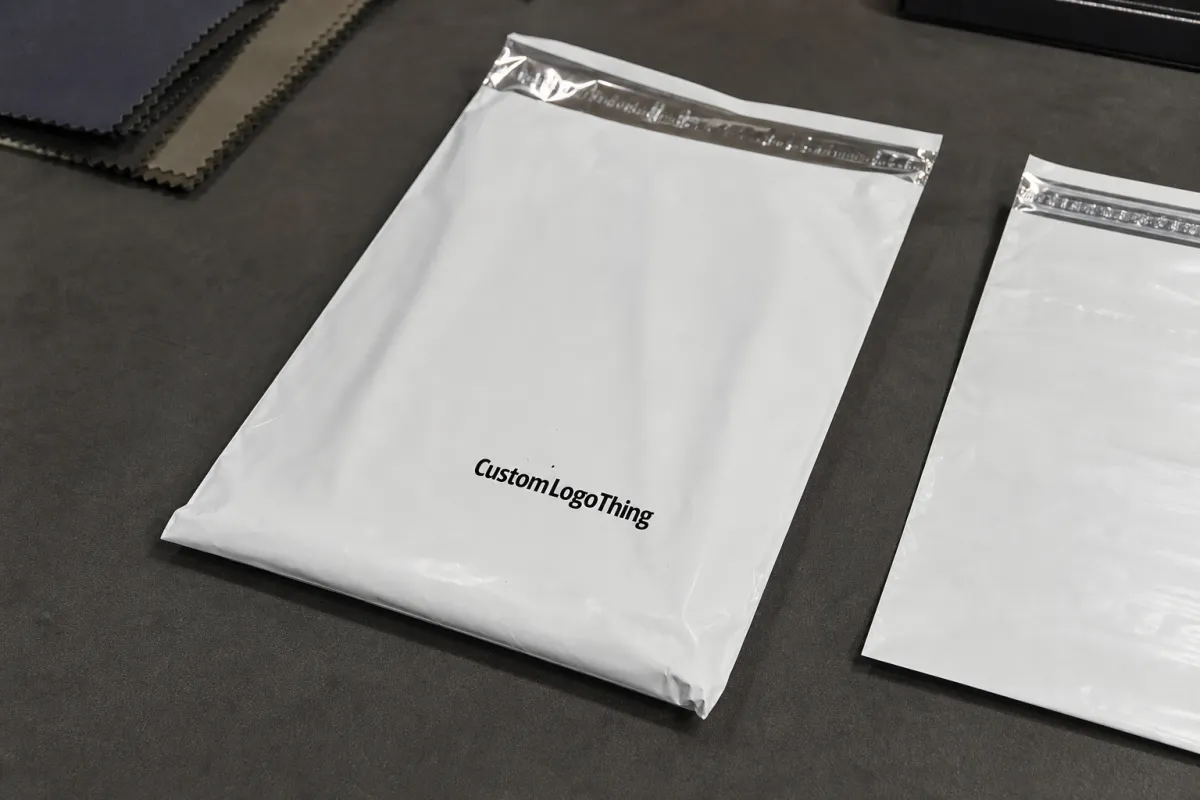
Waterproof mailers usually fail for ordinary reasons. A corner weld can open after compression. A flap seal can lose tack if dust or oil reaches the adhesive. Pinholes can form where the film was stretched too hard during production. None of those issues is obvious from a quick visual check.
The common mistake is assuming a clean sample means the whole run is safe. A bag may arrive flat, printed correctly, and aligned within spec, then fail once it sees a delivery van, a humid sorting center, or a stacked pallet. “Looks sealed” and “holds up in transit” are not the same thing.
Buyers should treat the mailer as a system: film, seam, fold, and closure all have to work together. If one element is weak, the package loses protection. That is why a Waterproof Apparel Mailers Quality Control Checklist should focus on structure before branding details.
Start with seam integrity, film consistency, puncture resistance, and closure behavior. Those are the features most likely to decide whether a bulk order is usable or risky. Print quality still matters, but it should never outrank the seal.
How Film, Seams, and Closures Keep Apparel Dry
Most waterproof apparel mailers use polyethylene film or a similar multilayer structure. The blend matters more than many buyers expect. A heavier gauge does not automatically mean a better bag. A 2.5 mil film with clean, even welds can outperform a thicker piece with inconsistent sealing pressure. Material choice should match garment weight, shipping distance, and expected handling.
The failure points usually show up in the same places. Side seams can split under stress. Corner welds can peel if the seal bar is misaligned. Adhesive closures can fail if the strip is uneven or contaminated during packing. Small creases can become moisture paths once the carton is compressed.
That is why buyers should ask for mechanical details, not just marketing language. What sealing method is used? How consistent is the closure width? What tear resistance does the finished bag actually deliver? If those answers are vague, the risk rises fast.
Compression changes the picture even more. Apparel mailers often travel in cartons or on pallets, so pressure can flatten the seal zone in ways a bench sample never experiences. Temperature matters too. Adhesives and films behave differently in cold air than in a warm packing room. A closure that feels solid at 72 degrees may act differently after a night on a loading dock.
Testing guidance can help structure approval. Organizations such as ISTA provide a useful framework for transit simulation, and broader packaging guidance from packaging.org can help buyers compare materials and design choices. The goal is not to make every order a lab project. It is to make approval measurable.
Cost, Pricing, and MOQ: What Changes Unit Cost Most
Unit price moves for reasons buyers can track. Material grade, thickness, recycled content, custom printing, closure type, and inspection level all affect cost. A plain white poly mailer with a standard adhesive strip is a different product from a custom-printed waterproof bag with a reinforced seal and tight color registration.
MOQ changes the math as well. Smaller runs usually cost more per unit because setup time, line adjustment, and waste are spread over fewer pieces. That does not make a small order wrong. It can be the better choice when the spec is still being validated or when a new size needs proof before a larger purchase.
Hidden costs can erase a clean quote. Freight, warehousing, sample rounds, and remake risk all matter. If the order needs a rerun, the landed cost climbs faster than the unit price suggests.
| Spec Choice | Typical Unit Cost Impact | Buyer Tradeoff |
|---|---|---|
| Standard film, no print | Lowest | Best for fit checks and early seal testing |
| Heavier gauge with one-color print | Moderate | Better durability, higher setup and ink cost |
| Custom print, reinforced closure, tight QC | Highest | More control, but only pays off once the spec is proven |
A real quote comparison has to match size, gauge, print coverage, closure type, and inspection standard. If one supplier quotes 2.0 mil film and another quotes 3.0 mil, those numbers are not interchangeable. The same applies to cartons, pallet patterns, and final inspection. Apples-to-apples is the only comparison that protects the budget.
For teams building a broader packaging program, it helps to benchmark the mailer against other formats in the Custom Packaging Products catalog or compare economics with Custom Poly Mailers. A small spec change can move price more than expected, especially in the 5,000 to 25,000 unit range.
Process and Timeline: Sample Checks Through Final Shipment
The schedule should start with the sample, not the production order. If the pre-production piece misses the approved size, seal width, or print position, the rest of the timeline is already under pressure. The fastest way to lose time is to treat sample approval as a formality.
A practical flow is simple: request a sample, review dimensions and closure behavior, approve the first article, run the production lot, inspect in-line, and then sign off the final shipment. Each step catches a different kind of problem. The first sample shows whether the design works. The in-line check shows whether the run is drifting. Final lot approval shows whether the order can leave without avoidable surprises.
Lead time often stretches in small increments. Print setup may take a day or two. Tooling changes can add time if the supplier needs to adjust seal bars or cutting dies. Material sourcing can move slower than the press schedule. Adhesives or print layers may also need resting time before packing, depending on the process.
That is why a ship date should never be locked without a buffer. If the sample fails, room is needed for retest or remake. If freight is tight, there should be time to rebook. A schedule that looks efficient on paper can become fragile once the first sample reveals a mismatch.
Buyers who keep records of sample approvals, test methods, and defect limits usually make better reorder decisions. The supplier does not need to hand over a textbook, but they should be able to explain how the bag was checked and what counted as a pass. If that explanation is missing, the purchase spec is too loose.
Waterproof Apparel Mailers Quality Control Checklist
Use this waterproof apparel mailers quality control checklist before bulk approval. It is built for buyers who need a practical pass or fail routine, not a vague sign-off. If a supplier cannot support these checks with samples or records, that is a warning sign.
- Check dimensions: Confirm width, length, and usable closure area against the spec sheet, not just the catalog description.
- Measure film thickness: Verify gauge at multiple points, since edge variation can reveal more than a single average.
- Inspect seal width: Look for consistent weld width on corners, side seams, and the closure zone.
- Test closure alignment: Adhesive strips should meet cleanly, without skew, lift, or contamination.
- Run a squeeze check: Compress the filled mailer to see whether the seal opens or the film stress-whitens.
- Check moisture resistance: Use spray, wipe, or soak testing as agreed in the purchase spec.
- Perform a drop test: Test a packed mailer from a realistic handling height to expose seam weakness.
- Inspect puncture resistance: Watch for sharp garment hardware, zippers, or folded corners that can pierce the film.
- Verify print quality: Confirm barcode readability, registration, color consistency, and legibility after handling.
- Review count accuracy: Make sure carton counts, case labels, and pallet totals match the order plan.
- Check carton strength: A strong mailer can still be damaged by weak outer packaging.
- Document accept/reject limits: Save photos of defects and approved samples so the standard is repeatable.
The last item matters more than it first appears. A written threshold removes argument later. If a tiny pinhole, slight seal bubble, or minor print shift is acceptable, write that down. If it is not acceptable, write that down too. A waterproof apparel mailers Quality Control Checklist works best when the supplier sees the same standard the buyer sees.
Some buyers borrow the discipline of ASTM-style testing even if they do not run a full lab program on every order. The point is simple: define what failure looks like before the order ships. A mailer that leaks under the agreed method should be rejected, even if the rest of the shipment looks clean.
If the order includes paper inserts, hangtags, or cartons with sustainability claims, ask for documentation early. FSC certification applies to paper-based components, not polyethylene film, so one claim does not cover the whole package. For sourcing context, the FSC site is a useful reference point when paper-based materials are part of the pack-out.
Common Mistakes That Lead to Leaks, Returns, and Reorders
Buying by thickness alone is the classic mistake. A thicker film with weak seams can still fail in transit. Skipping real-world testing is another. A sample that sits neatly on a table often behaves better than a carton bouncing through a truck or sitting in a humid warehouse for hours.
Mismatch between the bag and the garment causes trouble too. Oversized folded hoodies, heavy denim, and items with hard trim can strain the closure zone in ways a lightweight tee never would. Strong adhesive can also create problems if the closure pulls on the film instead of sealing cleanly. Fit testing belongs in the buying process, not after the first complaint.
Poor communication creates reorders. If the supplier never receives a written defect threshold, both sides may call the same result acceptable. One team sees a slight seal variation. The other sees a rejected lot. Clear approval language removes that ambiguity.
Another common error is assuming the outer carton will solve everything. It will not. Carton strength matters, but a weak mailer remains a weak mailer. If water gets into the package during handoff, the outer box is just carrying the problem farther.
Rush replacements are expensive in ways that are easy to underestimate. Expedited freight, short-run setup, and emergency rework can cost more than the savings from a cheaper spec. That is why the waterproof apparel mailers Quality Control Checklist belongs before the first large purchase order, not after the first complaint.
Expert Tips: Turn Testing Into a Repeatable Purchase Plan
Ask suppliers for QC records, test methods, and defect history before approving a run. A 30-page report is not necessary, but enough detail should be available to show whether the process is stable. If they can explain how seal failures are measured, how defects are counted, and how lot rejection is handled, that is useful information.
A one-page spec sheet can save real money. Lock in size, gauge, closure type, print limits, carton count, and inspection standard. Then save the approved sample or clear photos with notes. The next reorder should reference that exact accepted version, not a memory of what seemed right months ago.
A simple purchasing routine works well:
- Approve a sample against a written spec.
- Record the pass or fail limit for seal, size, and print.
- Keep a photo set of the approved mailer and carton.
- Require the supplier to match that version on every reorder.
- Re-test whenever the film, closure, or print changes.
That process sounds basic because it is. Basic is often what keeps an order from becoming expensive. Buyers tend to focus on the quote and the ship date while the real risk sits in sample history. Repeatable output starts with repeatable paperwork.
For teams buying more than one format, it can help to connect this process to a wider packaging program across Custom Packaging Products. Once the spec sheet, sample log, and rejection rules are in place, future orders become easier to compare and easier to defend internally.
The practical takeaway is straightforward: use the waterproof apparel mailers quality control checklist before volume, not after damage. That one habit reduces leaks, lowers returns, and keeps reorder decisions grounded in evidence instead of hope.
How do I use a waterproof apparel mailers quality control checklist before bulk buying?
Run the checklist on pre-production samples, not catalog images, so you can inspect the seal, film, and print quality directly. Set pass or fail limits for water resistance, seam strength, and size tolerance before production starts. Keep a signed sample or photo record so the approved standard is easy to repeat on future orders.
What should I test first on waterproof apparel mailers?
Start with the closure and seam area, since that is where most moisture failures begin. Then test puncture resistance and compression performance to see whether the mailer survives transit handling. Finish with print and barcode checks so the package still works as a shipping or retail-ready unit.
How does MOQ affect pricing on waterproof apparel mailers?
Lower MOQ usually raises unit cost because setup time and material waste are spread over fewer pieces. Higher MOQ can lower the per-unit price, but only if the spec has already been proven through sampling. Ask whether sample charges, remake fees, and freight are included, because they can change the real landed cost.
Which defects should fail a waterproof apparel mailer order?
Pinholes, weak corner seals, and flap closures that do not hold consistently should fail the lot. Misaligned print, unreadable barcodes, or damaged cartons should also count as rejection-worthy issues. Any mailer that leaks under the agreed test method should be rejected, even if the rest of the shipment looks fine.
How long should process and lead time planning take for custom mailers?
Plan for sample review, approval changes, and production setup before you lock the ship date. Add time for retest if the first sample misses spec, since that is where many schedules slip. Build in freight and receiving time so the order arrives before inventory gets tight.

