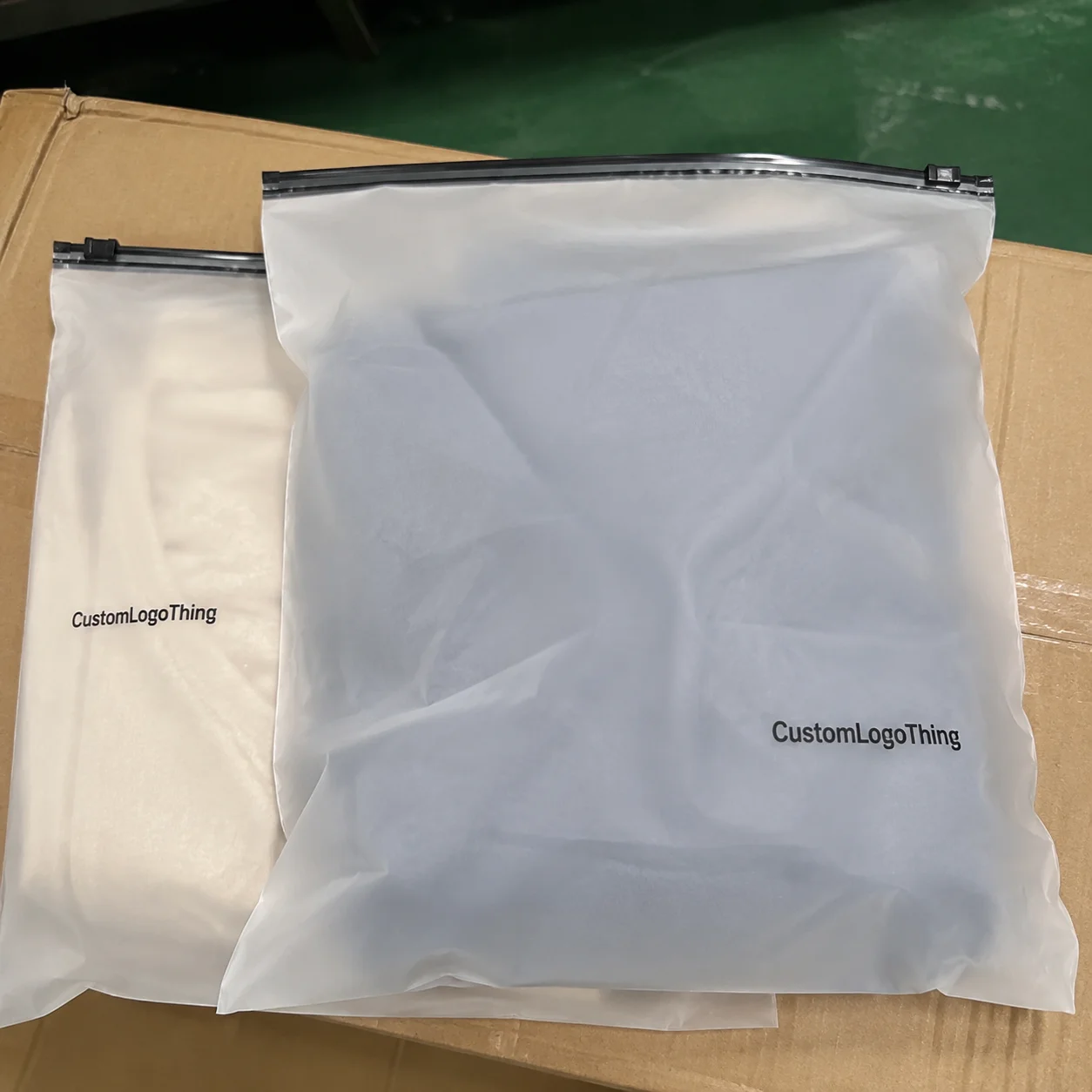
Garment Poly Bags for Event Teams: MOQ Planning Tips
For event teams, Garment Poly Bags are rarely about the bag alone. They are about speed, sorting, and avoiding the backstage pile-up that starts with good intentions and ends with someone relabeling 300 pieces by hand. The right packaging spec keeps wardrobe organized, protects apparel, and makes the whole operation less fragile.
That matters most when the order has to work under pressure: multiple departments, tight load-in windows, changing venue schedules, and a crew that does not have time to guess what is inside each bag. A clear label and the right bag size can save real labor. A bad spec creates extra labor. Funny how that works.
If you need to compare packaging formats while you build the order, our Custom Packaging Products page is the easiest place to review options, and the FAQ covers the basic spec questions before you request pricing. If the same program also needs outbound kits after the event, Custom Poly Mailers are often used alongside garment bags.
The cheapest quote is often the one that creates the most work. If the crew spends time fixing labels, re-sorting sizes, or repacking at load-in, the savings were fake.
Garment poly bags for event teams: MOQ planning that works
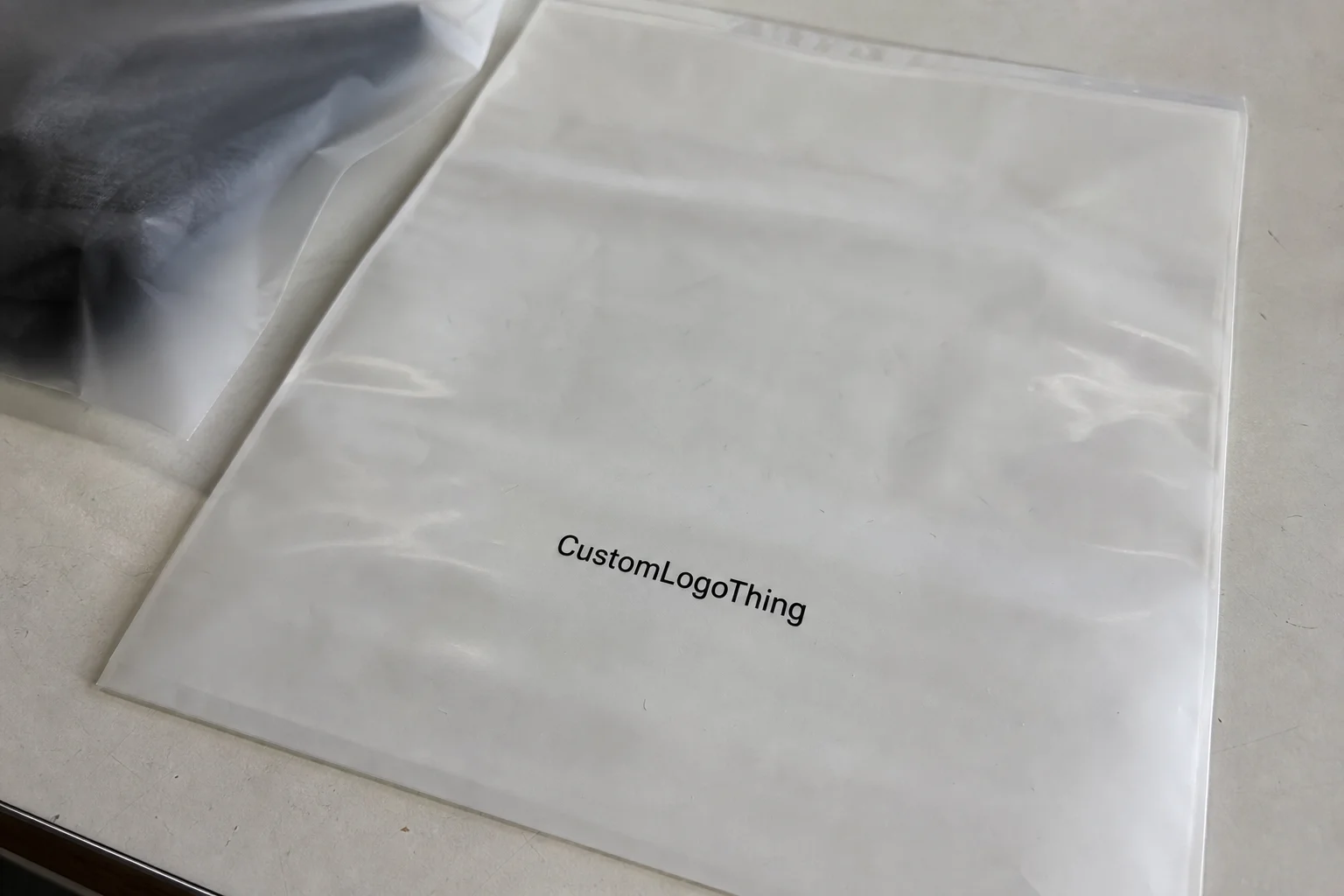
Good Garment Poly Bags for Event teams moq planning starts with the actual workflow. Not the artwork. Not the mockup. The workflow. Ask where the bags will be packed, who will open them, how often they will be handled, and whether they stay in one place or move between venues. Those details affect bag format, closure type, thickness, and the minimum order quantity far more than most buyers expect.
In practice, the best use of garment poly bags is not just protection. It is control. A clear bag with a clean size mark helps a dresser grab the right item in seconds. A grouped bag system lets a loader separate wardrobe by talent, role, show day, or department without opening every piece. That is why event teams buy these bags for sorting as much as for storage.
MOQ planning matters early because every spec choice can change the math. One size is straightforward. Three sizes, two print colors, and separate department labels can turn one clean run into several production setups. That raises cost and usually slows the schedule. If the team waits until the last minute to lock the layout, the quote gets worse and the lead time gets tighter. Great combination.
Here is the practical buyer lens:
- Buy for operational speed, not only the lowest unit cost.
- Group garments by how they will be handled backstage, not by how they look on a product sheet.
- Plan the bag SKU count before requesting quotes, because each SKU can affect MOQ.
- Use simple print that does one job well: size, department, show code, or role.
That approach keeps the order honest. A low price per piece means very little if the crew has to re-sort everything before doors open.
Bag formats, materials, and closure options that fit live events
The right bag format depends on how many hands will touch it. For a one-time handout, a basic clear layflat bag is often enough. For repeated handling, a gusseted bag gives more room around folded garments and reduces stress on the seams. If the contents need to stay closed between venue transfers, resealable options make more sense than open-top bags.
Material choice is simpler than some suppliers make it sound. Lower-gauge film works for light apparel and short handling cycles. Higher-clarity film helps when staff need to read labels fast. Thicker film makes sense when the same bag will be opened, closed, and moved several times. For event work, the decision usually falls into three buckets:
- Flexible LDPE-style film for soft folding and low-friction packing.
- High-clarity film for fast visual checks and cleaner presentation.
- Heavier gauge film for jackets, uniforms, or kit packs that get handled repeatedly.
Closure choice is just as practical. Open-top bags pack quickly and are fine for one-way distribution. Flap seal bags help when wardrobe needs repeat access. Zip or adhesive closures work better for travel between venues or any process that requires reopening without swapping bags. Hanger-friendly styles or hang-hole options are useful if inventory is stored on racks and needs to move directly from packing to hanging.
Transparency matters most during crew distribution, wardrobe verification, and set changes. If the team cannot see the size mark or item type, they lose time. That sounds obvious, but packaging specs are full of obvious mistakes.
For event teams, the best format is usually the least dramatic one. Clear, easy to stack, easy to label, and easy to count. Nobody backstage is asking for fancy. They are asking for the right shirt in the right bag at the right time.
Size specs, thickness, and print details that stop rework
Size the bag from the folded garment stack, not from the flat shirt width. That is the mistake that causes bags that are too short, oddly bunched, or oversized packs that slide around in transport. Measure the folded height, width, and depth of the packed item, then add a little allowance for easy insertion. For a standard tee, that might mean a compact layflat bag. For a jacket or layered uniform set, the gusset matters more than the flat width.
Thickness should match garment weight and handling frequency. Lightweight promo shirts can often use thinner film. Reusable wardrobe packs, uniforms, and jackets should move up to a thicker gauge. If the same bag will be opened on arrival, checked again at call time, and repacked after the show, do not spec the thinnest option just to save a few cents. That is not savings. That is future labor.
Print is where a lot of event buyers make the wrong tradeoff. They ask for brand art, gradients, tiny copy, and too many colors on a packaging piece that only needs to identify contents quickly. Keep the label system simple. High-contrast size marks, department names, show codes, and role labels do more for the crew than a full-color design ever will.
Useful print details include:
- Size marks in large type for fast sorting.
- Department names such as wardrobe, staging, talent, or crew.
- Event codes for multi-day or multi-location programs.
- Barcode zones if your team scans inventory on load-in.
Overdesign causes trouble. Too many colors can raise setup charges and tooling fees. Tiny type becomes unreadable under warehouse lighting. Full-bleed art may look nice on a proof, but it can add cost and reduce flexibility. If the job is sorting, label first and decorate second.
Pricing, MOQ, and quote math for event team orders
Price depends on more than the bag itself. Film thickness, bag size, print colors, number of SKUs, and whether the run is stock or custom all affect the final number. So does order structure. One clean SKU usually gets better MOQ treatment than four small variations that all need separate setup. If you need Garment Poly Bags for Event teams moq planning to work in your favor, reduce complexity before you ask for quotes.
Here is the part buyers often miss: the headline price rarely includes the full story. A low unit cost can hide setup charges, plate costs, sample fees, freight, and rush premiums. Some suppliers call them tooling fees, some call them prepress charges, and some bury them in the margin. Ask for the full landed cost before you compare options. Otherwise you are comparing incomplete quotes, which is a polite way to waste time.
| Option | Typical MOQ | Typical unit cost | Best use | Cost drivers |
|---|---|---|---|---|
| Plain clear stock bag | 1,000-2,500 pcs | $0.04-$0.10 | Fast sorting, no branding, simple apparel packs | Size, gauge, freight |
| Single-color custom print | 3,000-5,000 pcs | $0.12-$0.22 | Department labels, size marks, show codes | Setup charges, plate count, number of SKUs |
| Heavier gauge or multi-color print | 5,000-10,000 pcs | $0.20-$0.40 | Uniforms, jackets, travel between venues | Film thickness, artwork complexity, larger bag size |
| Special size, special finish | 10,000 pcs and up | $0.30-$0.55 | Custom kit packaging, repeated event programs | Tooling fees, special dimensions, print registration |
Those ranges are normal starting points, not a promise. A small order with many SKUs can cost more per piece than a larger single-SKU order, even if the material looks identical. That is why bulk pricing usually rewards consolidation. One size, one print layout, one production run. Simple wins.
If your event has separate day teams, night teams, and talent wardrobe, ask whether the supplier can keep the artwork structure the same while changing only the label text. That can keep the MOQ manageable without forcing three separate orders. Sometimes one small simplification drops the unit cost enough to justify a larger run instead of three rushed ones.
For buyers comparing options, the cheapest quote is the one that matches the actual operation. Not the one with the prettiest line item.
Production steps, turnaround, and lead time expectations
A normal order follows a predictable path: spec confirmation, artwork proof, sample approval, production, quality check, and freight booking. If any of those steps stall, the delivery date moves. In event work, the slowest part is usually not production. It is approval, because three people each want one more change to the label.
Stock bags move faster. Custom print needs more room for proofing and scheduling. Special sizes or multi-SKU orders need even more lead time because the factory has to plan the line around separate materials, print plates, and packing instructions. A clean standard order might ship in 5-10 business days. Custom printed runs often need 12-20 business days after proof approval. Bigger or more complex orders can run longer, especially if freight is moving across regions.
That lead time slips for a few predictable reasons:
- Late artwork or missing logo files.
- Unclear size specs, especially for folded items.
- Approval delays from multiple stakeholders.
- Changes after the proof is already approved.
A practical timeline example helps. If your event is on a Friday, the bag spec should be locked weeks ahead, not days ahead. For a custom printed order, artwork and sizing should be finalized early enough to leave room for proofing, one revision round, production, and freight. If the ship date is close and the bags must arrive sorted by department, there is no time for design wandering.
For transport-sensitive kits, it also helps to ask whether the supplier uses package testing logic aligned with ISTA methods. That matters more when the bags are part of a larger shipment, but it tells you the supplier thinks about movement, not just print. For broader packaging standards and terminology, Packaging and Processing Professionals is a useful reference point.
What a dependable supplier should prove before you order
A dependable supplier does not sell confidence with vague promises. They prove it with samples, specs, and response time. You want clear answers on film thickness, print registration, sample availability, and quality checks. If they cannot explain what gauge they recommend for a jacket pack versus a tee pack, they are guessing. Guessing is not a production method.
For event work, the useful supplier behaviors are specific:
- Fast revision handling when artwork changes.
- Honest MOQ guidance instead of fake flexibility.
- Clear communication on freight, packing, and delivery windows.
- Repeat-order support so the next show does not require a full spec reset.
- Documented checks for print clarity, seal strength, and consistent bag dimensions.
Ask whether they can support reorders without re-quoting every detail from scratch. That matters more than most buyers admit. Event programs repeat, and the best supplier relationship is the one that saves time on the second and third order.
If your team is still sorting out packaging format choices, compare the garment bag spec against the rest of your kit packaging. Sometimes a clear bag is enough. Sometimes you need a branded mailer, insert card, and garment sleeve as one system. The point is to match the packaging to the workflow, not to chase the flashiest sample on the table.
What to send first so event team orders move faster
If you want a quote that actually helps, send the operational details first. Not a loose idea. Not “we need something for shirts.” Send garment counts by size, folded dimensions, event date, ship-to locations, and whether the bags need to be grouped by department, talent set, or venue. That gives the supplier a real starting point and cuts the back-and-forth that usually burns a week.
Artwork details should come next. Include logo files, one-color or multi-color intent, exact label wording, and any barcode or compliance data. If the bags need size marks, say so early. If they need a hang-hole, say that too. Every extra decision after proof approval adds time, and time is the one thing event teams never have enough of.
A good order sequence is simple:
- Confirm bag size from the folded garment stack.
- Choose the film thickness for the handling load.
- Set the print layout and label system.
- Decide the MOQ target and whether SKUs can be consolidated.
- Request the quote with the delivery deadline and ship-to details.
That order keeps expensive backtracking out of the process. It also helps you compare suppliers on the same basis instead of guessing which one actually understands event logistics.
If you want the shortest path to a usable quote, send the spec once, ask for the landed cost, and tell the supplier whether this is a one-time run or a repeat program. That is the cleanest way to handle Garment Poly Bags for Event teams moq planning without wasting another round of calls.
What MOQ should I expect for garment poly bags for event teams?
MOQ usually depends on size, thickness, and whether the bags are stock or custom printed. Plain clear bags can start lower; custom print, special sizing, or multiple label versions usually push the minimum higher. If you need several SKUs, ask whether the supplier can combine artwork or sizes to improve the quote.
How do I choose the right thickness for event-team garment poly bags?
Light promo shirts can use thinner film, while uniforms, jackets, and repeated handling need thicker material. If the bag will be reopened, repacked, or shipped between venues, do not spec the thinnest option just to save pennies. Ask for a thickness recommendation tied to the actual garment stack, not a generic apparel assumption.
Can garment poly bags be printed with size or department labels?
Yes, and that is often the most useful print choice for event operations. High-contrast size marks, department names, show codes, or barcode zones help crews sort faster. Keep the print simple if speed and cost matter more than brand decoration.
How long does a custom event order usually take?
Stock bags move the fastest; custom printed bags need time for proofing, setup, and production. Most delays come from late artwork or approval changes, not the factory itself. Build extra buffer if the order needs multiple sizes, special print, or freight across regions.
What information speeds up a quote for garment poly bags for event teams?
Send garment dimensions, quantities by size, bag style, thickness target, print needs, and delivery deadline. Include ship-to locations and whether the order is one-time or repeat, because that affects Pricing and MOQ options. The clearer the spec, the fewer quote revisions you will need.