If you are buying Garment Poly Bags for boutique retailers moq planning, the packaging decision is not a side task. It shapes cash flow, storage, presentation, and how fast a collection can move from receiving to the sales floor. Boutiques do not get the luxury of massive replenishment cycles. They need Packaging That Fits the actual pace of the business, not a theoretical volume that looks tidy in a spreadsheet.
The mistake is usually simple: order the bag before the SKU mix is clear. That leads to the wrong sizes, too many print variations, and cartons that sit around long after the season changed. A bag order should follow sell-through data, fold size, and reorder timing. Otherwise, packaging becomes another line item that quietly drains margin.
For Garment Poly Bags for Boutique retailers moq planning, the useful questions are practical ones. How many units does each style really move? How much backstock space is available? Which items will be reordered, and which ones are one-season products? Once those answers are on the table, MOQ stops being a guess and starts being a buying plan.
Why boutique packaging fails when MOQ is guessed
The most common failure is ordering the same quantity for every SKU. A boutique may launch 10 or 12 styles, but a few items usually carry most of the volume. If the bag quantity is spread evenly across all products, slow movers get the same packaging commitment as proven sellers. That is not efficient. It is just expensive storage.
For small retailers, the real challenge is inventory turns. Orders usually happen in waves, not once a year. If MOQ is too high, cash gets locked into unused bags. If it is too low, a restock can miss a launch window or holiday refresh. Either way, the packaging order starts working against the buying calendar instead of supporting it.
The failure points are easy to spot once you know where to look:
- Excess cartons taking over limited stockroom space.
- Bag sizes that do not match folded garments, so product looks cramped or sloppy.
- Late reorders that arrive after a seasonal drop has already peaked.
- Higher unit cost because the order was too small to reach an efficient production run.
The smarter approach is to split packaging by style group and reorder cycle. A core knit that sells every week should not be treated the same as a trend item with a short shelf life. If one style needs 300 bags a month and another only needs 80, the MOQ should reflect that. Otherwise, the buyer ends up paying for inventory that has little chance of moving before the next collection lands.
“A bag that looks premium but misses the size, timing, or quantity target is still a bad buy. Branding does not rescue bad planning.”
For practical Garment Poly Bags for boutique retailers moq planning, start with monthly sell-through, reorder cadence, and whether the bag needs printing or warning text. Those three inputs give a much better starting point than a mood board ever will.
Poly bag formats that fit boutique apparel
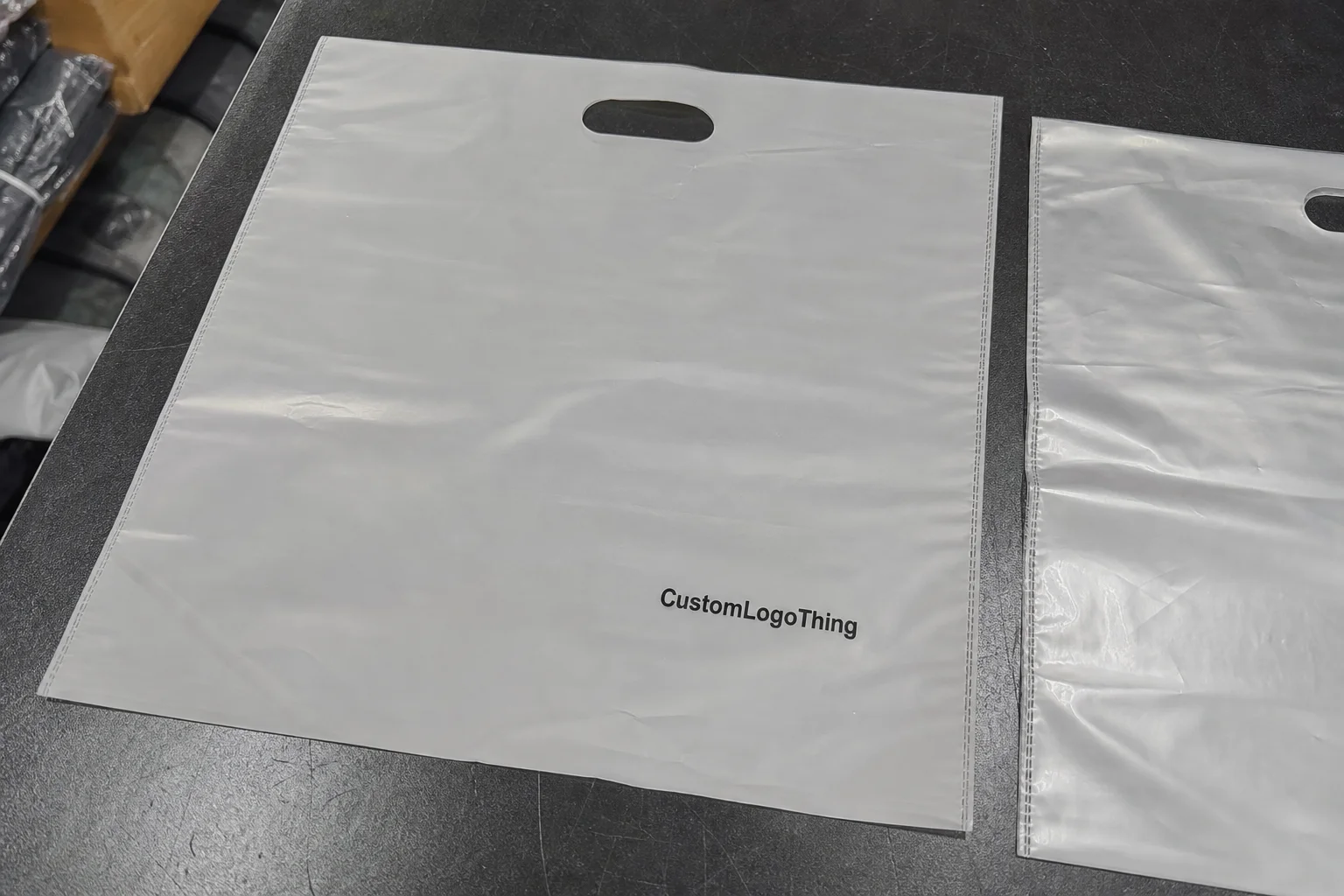
Different garments need different packaging formats. A flat poly bag works well for tees, lightweight knits, and other items that fold tightly. Resealable bags are better when presentation matters and the customer may open and close the package more than once. Gusseted bags give room for thicker folds, which helps with sweatshirts, sets, and kidswear that bulks up fast. Header or hang-hole options make sense for pegboard or hanging display systems.
That sounds basic because it is. The hard part is matching the format to actual use. A flat bag is usually the lowest-cost option. A resealable version adds convenience and a more retail-ready feel, but the closure increases price. Gusseted bags use more material and more storage volume, which can matter if cartons are already tight in the stockroom. Header styles are useful on the floor, though they are rarely the cheapest route.
Visual finish matters too. Clear film keeps the product visible, which helps when the garment itself carries the selling point. Frosted film softens the look and can feel more premium without hiding the item. Printed film adds branding control, but every extra color and every additional print area affects setup time and cost. Nice-looking proofs are cheap. Production is where the bill shows up.
| Format | Best for | Typical cost impact | Tradeoff |
|---|---|---|---|
| Flat poly bag | Tees, leggings, scarves | Lowest | Simple look, limited premium feel |
| Resealable bag | Retail-ready apparel, returns handling | Moderate | Higher unit cost, better presentation |
| Gusseted bag | Sweatshirts, sets, thicker folds | Moderate to higher | More material, more storage volume |
| Die-cut header style | Hanging display | Higher | Best for merchandising, not the cheapest option |
Compliance is part of the format decision, not an afterthought. Many apparel bags need suffocation warnings, and some retailers want tear notches, vent holes, or specific label placement. Larger accounts often have their own packaging rules, and those rules tend to be more exact than buyers expect. If the bag will be used in a retail channel with formal requirements, check that list before final approval. Rework is always more annoying than reading the spec sheet once.
For broader packaging references, our Custom Packaging Products page is a useful starting point. But for boutique apparel, the real test is simple: choose the format that helps packing speed, shelf presentation, and reorder consistency without piling on unnecessary features.
Specifications that keep orders clean and sellable
Before pricing is requested, the bag specs need to be written down clearly. Width, length, gusset depth, film thickness, seal style, and print coverage should all be defined. If those details stay vague, the quote will be vague too. Then the sample arrives and someone notices the folded sweater does not fit, or the print sits too close to the edge. Predictable? Very.
For boutique apparel, sizing starts with the folded garment, not the flat garment. Measure the item the way it will actually be packed or displayed. A soft tee may fit a slim flat bag. A knit sweater usually needs more thickness allowance so the bag does not distort or split at the seal. Oversizing creates slack and a messy look. Undersizing makes insertion difficult and can wrinkle the product.
Film selection matters as much as size. LDPE is common for flexible, softer bags and is often used where a little give is helpful. HDPE feels crisper and can work well for simpler applications where structure matters more than softness. Recycled-content film is available in some formats, but not every specification or print method works equally well with recycled resin. If sustainability claims matter to the brand, ask for documentation. Do not assume the material story is handled just because a supplier says it is “eco-friendly.” That word covers a lot of sins.
Print setup affects both cost and schedule. One-color logo printing is usually the simplest route. Multi-color branding, barcode labels, SKU identifiers, and warning text all add setup work. Depending on the production method, there may be plate costs, tooling charges, or additional proof steps. More print zones also mean more opportunities for alignment problems, so the proof stage should be treated seriously.
A clean QC checklist should cover the basics:
- Seal integrity and consistent closure strength.
- Film clarity or finish matching the intended presentation.
- Dimensions fitting real folded garments, not just the spec sheet.
- Fold behavior keeping the pack neat on shelf.
- Warning text placement being readable and correctly positioned.
Sample approval is where many mistakes can still be caught. A two-minute fit check can prevent a thousand-bag headache later. Use the actual folded garment, not a generic mockup. If transit testing is part of your process, standards such as ISTA are a sensible reference point for handling and shipping resilience.
Good specifications are not paperwork for the sake of paperwork. They are the reason the order lands ready to use instead of ready for a second round of corrections.
Cost, pricing, and MOQ planning for smaller runs
Pricing for Garment Poly Bags for boutique retailers moq planning usually moves with four variables: size, film thickness, print complexity, and total quantity. Larger bags consume more material. Thicker film uses more resin. Multiple print colors add setup time. Smaller runs almost always carry a higher unit price because the production prep does not shrink in proportion to the order volume.
That is the tradeoff boutique buyers live with. A lower MOQ reduces inventory risk, but the per-piece price rises. A higher MOQ improves unit economics, but only if the bags will actually be used before the next line change. There is no magic number that works for every brand. A core style with steady weekly sales can justify a larger run. A seasonal piece usually cannot.
For smaller quantities, the pricing spread can be a few cents per bag between a tight run and a more efficient production volume. That sounds small until it is multiplied across several SKUs and several reorders. Then the packaging line starts to look less like a minor purchase and more like a real margin decision.
Most boutique buyers can reduce cost without making the packaging worse:
- Use standard sizes wherever possible.
- Keep print to one or two colors.
- Share artwork across multiple SKUs.
- Skip decorative extras that do not improve packing speed or shelf impact.
- Choose only the film thickness needed to protect the garment.
Any quote worth keeping should show unit price, carton count, freight terms, setup or plate fees, and the reorder minimum. If those items are missing, the quote is incomplete. Ask directly about MOQ, bulk pricing, and whether repeat orders can reuse the same setup. That matters just as much as the first purchase.
It also helps to compare landed cost, not just unit cost. A cheaper bag that ships in larger cartons or requires more storage space can end up costing more by the time it reaches the shelf. Packaging math is annoyingly unglamorous, but it beats guessing.
If your brand is balancing presentation with material responsibility, EPA recycling guidance is useful background reading. It will not Choose the Right bag for you, which is a relief, but it gives context for material and waste decisions.
Process and timeline from artwork to delivery
The production path is usually straightforward: specification review, quote, artwork setup, proof approval, production, packing, and shipping. Straightforward does not mean quick. Print complexity, material availability, and compliance details all affect the schedule.
The proof stage is where a lot of problems should be caught. Bad spacing, soft artwork, wrong bag size labels, and misplaced warning text are much easier to fix there than after production starts. If a logo has to be moved or a font changed, that is normal. If it is discovered after the order is underway, the timeline and cost both get uglier.
For a simple order, lead time after proof approval is often around 12 to 15 business days, though that depends on factory workload and material stock. More complex bags can take longer. Add time for sampling, revision rounds, or specialty film. Rush jobs can sometimes be done, but rush pricing tends to reflect the fact that the schedule has been compressed. Production is not sentimental about deadlines.
These are the timeline checkpoints buyers should plan around:
- Artwork review: 1–3 business days if files are clean.
- Proofing: usually 1–2 rounds for straightforward work.
- Sampling: useful when fit is uncertain or the style is new.
- Production: the longest part once specs are locked.
- Shipping: dependent on freight mode and destination.
Sample timing deserves more attention than it usually gets. If the style is new, ask for 1–2 sample sizes before approving the full MOQ. Check the bag with the real folded garment, not a flat mockup. That one step can reveal whether the product slides in cleanly, whether the package closes properly, and whether the final presentation looks polished or cramped.
Build this timing into the launch schedule. Packaging should be ready before photoshoots, inventory transfers, and store arrival dates. If the bag is late, the collection is late. That is not a dramatic statement. It is just how retail operations work.
Why our packaging setup works for boutique buyers
Boutique buyers usually need flexibility, clear specs, and a minimum order that does not wreck cash flow. They do not need a lecture about “premium solutions” or oversized industrial packaging advice. They need size guidance that matches real folded apparel, simple reordering later, and enough structure in the process to keep errors out.
That is the practical approach for Garment Poly Bags for boutique retailers moq planning. Standard and custom formats are chosen based on how the product will actually be packed and sold. If one bag size covers the whole launch, there is no reason to break it into three versions. If the line will be reordered, keeping the specs organized from the start makes future runs much easier.
Communication also matters. Fast quote turnaround saves time. Clear revision handling prevents mistakes. Written confirmation of dimensions, print, and carton count keeps everyone on the same page. The point is fewer surprises, not bigger promises.
Operational consistency is where the value shows up. When a reorder matches the original spec, the packing team does not have to recheck every detail. Cartons are easier to store. Shelf replenishment is easier to manage. The retail presentation stays stable from one shipment to the next, which matters more than people like to admit.
If your business also ships direct to consumers, it can help to compare adjacent packaging choices like Custom Poly Mailers. Apparel brands often use both formats depending on whether the product is being merchandised in-store or shipped out of a warehouse.
The useful part of packaging support is not the pitch. It is correct sizing, clear quoting, and a process that behaves predictably when the order gets bigger or smaller. Boutique retailers need that more than they need fluff.
Next steps to order the right bag quantity
Start with three things: garment dimensions, monthly sales by SKU, and whether printing or warning text is required. Those numbers do more to shape the order than any branding deck ever will. If you already know which products are core items and which ones are seasonal, use that split to guide MOQ planning.
Ask for 1–2 sample sizes before approving the final quantity. Test the bag with real folded garments. Check insertion speed, shelf appearance, and closure reliability. Then compare a launch order and a reorder scenario. That shows whether the MOQ is helping the business or just making the quote look good on paper.
Also consider carton count and storage space. A lower unit price is not useful if the stockroom cannot hold the order. Packaging that blocks inventory movement is not a bargain. It is a future problem with a discount attached.
If you need a broader packaging quote across apparel and retail materials, our FAQ and product pages can help with the basics before you send specs. If you already have garment measurements and a target quantity, send them in one clean note. That speeds up the quote and cuts down on back-and-forth.
For boutique buyers, garment poly bags for boutique retailers moq planning works best when it is treated as a purchasing decision, not a design exercise. Clear specs, realistic volume, and a usable reorder plan will do more for margin than fancy packaging with no production logic behind it.
FAQs
What is the best MOQ strategy for boutique retailers buying garment poly bags?
Base MOQ on current sell-through, not best-case demand. Start with one core size per garment group, then expand only after reorder data shows a repeat need. Standard film and simple print usually keep the minimum order manageable.
How do I size garment poly bags for folded boutique apparel?
Measure the folded garment width, height, and thickness before choosing the bag. Leave enough room for easy insertion without so much slack that the package looks loose. Test one sample size with the real product before approving production.
What affects the price most on custom garment poly bags?
Bag size, film thickness, print colors, and total quantity are the main cost drivers. Extras like resealable strips, gussets, and warning text can raise the unit cost. Higher MOQ usually lowers the per-piece price, but only if the extra stock can move.
How long does production usually take after artwork approval?
Timeline depends on film availability, print complexity, and order volume. A simple order moves faster than a custom multi-color run with specialty sizing. Build in extra time for proof changes, sample review, and shipping.
Can I reorder the same garment poly bags later without starting over?
Yes, if the previous specs and artwork are saved clearly. Reorders are faster when size, print, and carton count stay unchanged. Confirm whether the reorder MOQ matches the first run before planning inventory.


