Get Printed Matte Zipper Bags Material Comparison Guide
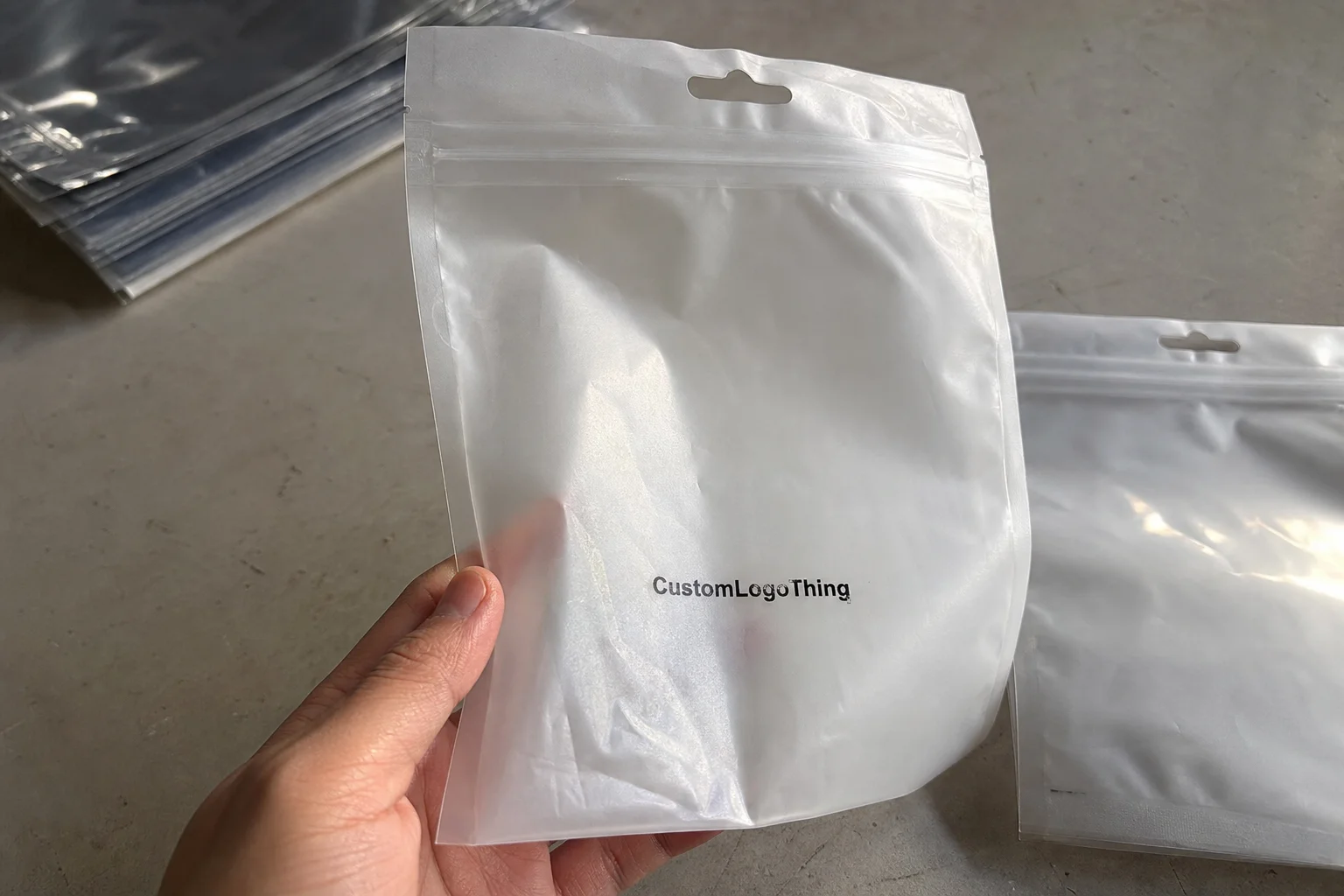
Two Matte Zipper Bags can look almost identical on a supplier page. Then one arrives stiff, clean, and retail-ready, while the other creases at the gusset, scuffs in transit, or lets roasted coffee go flat before the reorder date. That is not a design problem. It is usually a material problem.
Printed Matte Zipper Bags are resealable flexible pouches with custom graphics, a low-gloss surface, and a zipper closure built for repeated opening. They can be stand-up pouches for granola, flat zipper Bags for Apparel, three-side-seal bags for supplements, or bottom-gusset Bags for Coffee. The finish may look similar. The structures underneath are not.
Material choice affects oxygen barrier, moisture resistance, stiffness, puncture strength, print clarity, seal reliability, aroma retention, scuff resistance, and recyclability. A 3.5 oz snack pouch does not carry the same risk as a 12 oz coffee bag. Bath salts need different moisture protection than socks. Supplements add label panels, lot coding, tamper evidence, and enough white space for compliance-friendly copy. Glamorous stuff? No. Necessary? Very.
Flexible packaging often uses less material by weight than rigid jars, tins, or corrugated retail boxes. That advantage disappears fast if a weak film choice creates stale product, oily leaks, crushed corners, zipper failures, or repacking labor. Saving $0.03 per pouch looks tidy in a spreadsheet. It looks less tidy when a retailer sends back 4% of the order because the zipper will not stay closed.
Packaging buyer rule: choose the pouch around the product first, the finish second, and the artwork third. Matte can sell the product only if the structure protects it.
This guide compares common materials, finishes, cost drivers, production timing, and failure points so buyers can request better samples and cleaner quotes.
How Printed Matte Zipper Bags Are Built Layer by Layer
Most premium Matte Zipper Bags are not one sheet of plastic. They are laminated structures, usually two to four layers, bonded so each layer performs a job. A spec might read PET/MPET/PE, matte BOPP/PE, kraft/AL/PE, or PET/EVOH/PE. Those abbreviations tell a supplier more than “nice black matte bag” ever will.
The outer layer carries the print and gives the pouch its first tactile impression. PET is common because it is dimensionally stable, strong, and good for crisp graphics. BOPP is lighter and often more cost-conscious. Kraft paper laminates create a natural retail look, although they usually still need plastic, metallized film, or foil inside to seal properly and protect the product.
The barrier layer is the defensive line. Metallized PET helps block light, moisture, oxygen, and aroma transfer better than plain film. EVOH can improve oxygen control in some recyclable-leaning structures. Nylon adds puncture resistance. Aluminum foil provides very high barrier, which is why coffee, spices, powders, jerky, and aroma-sensitive products often move toward foil or metallized laminates.
The inner sealant layer is usually PE, CPP, or a specialty sealant film. It has to heat seal cleanly, tolerate filling, and safely contact the product when food-contact use applies. Seal strength is not the part anyone shows off in a product rendering. Fine. It is still where many pouch failures begin. A beautiful matte pouch with weak top seals is not premium packaging. It is a complaint with a zipper.
The matte effect can come from a matte film, matte varnish, matte coating, or soft-touch laminate. Soft-touch feels richer in hand, but it can show fingerprints and rub marks unless anti-scuff protection or careful carton packing is planned. Standard matte is often more practical for e-commerce fulfillment, where bags rub against dividers, inserts, and each other.
Zippers are sealed into the pouch during converting. Film thickness, heat tolerance, pouch format, and zipper profile all affect closure performance. Powders can clog tracks. Heavy granules can stress side seals. Child-resistant zipper options add cost, opening instructions, and testing considerations, especially for categories that require validated resistance.
Printing method changes the decision too. Digital printing suits lower quantities, frequent artwork changes, and multi-SKU launches. Flexographic or rotogravure printing often improves unit economics at higher volumes, but plates or cylinders add setup cost and approval time. Ten flavors at 1,000 bags each often point toward digital. One hero SKU at 50,000 units may justify conventional print.
Material Comparison: PET, PE, BOPP, Kraft, Foil, and Compostable Films
“Matte zipper bag” is too broad to specify a package. The real decision is structure. PET, PE, BOPP, kraft paper laminates, foil, nylon, EVOH, and compostable films all solve different problems. Some are right for dry snacks. Others belong closer to coffee, supplements, pet treats, cosmetics, or premium apparel.
| Material Structure | Best Fit | Typical Strength | Trade-Off to Check |
|---|---|---|---|
| PET/PE matte laminate | Snacks, powders, supplements, retail goods | Crisp print, good stiffness, reliable sealing | Usually not curbside recyclable as a mixed laminate |
| BOPP/PE or matte BOPP | Dry goods, candy, tea, lightweight retail items | Economical, light, good printability | Moderate barrier unless upgraded |
| PE-heavy or mono-PE | Recyclability-focused programs | Better fit for flexible film recycling streams where available | Softer feel and different print behavior |
| Kraft paper laminate | Natural, artisan, organic-positioned products | Warm shelf look and strong brand signal | Often still includes PE, foil, or metallized layers |
| Metallized film or foil laminate | Coffee, spices, jerky, oily treats, aroma-sensitive goods | High barrier against oxygen, moisture, aroma, and light | Higher cost and limited recyclability |
| Compostable films | Sustainability-led launches with clear disposal messaging | Supports biodegradable packaging positioning when certified | Higher cost, disposal limits, and often shorter barrier performance |
PET is a strong outer print layer. It holds dimensions well during printing and laminating, which helps small text, QR codes, and fine logo edges stay sharp. In a matte laminated pouch, PET is often the presentation layer doing the quiet technical work.
PE is flexible and sealable. It is common as the inner layer, and PE-heavy structures can support recyclability goals where collection systems exist. The caution: PE can feel softer and may not give the same crisp hand-feel as PET-based laminate. That is not always a flaw. For refill pouches or larger lightweight goods, softer can be perfectly acceptable.
BOPP is light, printable, and cost-conscious. It fits dry snacks, candy, tea sachets, accessories, and retail items where extreme barrier is not needed. If the product is oily, sharp, highly aromatic, or moisture-sensitive, ask whether BOPP alone is enough. Often it is not.
Kraft paper sells a specific story: handmade, natural, organic, low-intervention. Buyers still need to read the structure. A kraft-look matte zipper bag may include PE for sealing and foil for barrier. If FSC certified paper matters to the claim strategy, ask for documentation and review guidance from the Forest Stewardship Council.
Metallized film and foil matter when product protection outranks basic presentation. Coffee needs aroma and oxygen control. Protein powders can clump if moisture gets in. Pet treats may be oily and odor-heavy. Foil structures cost more, but they may protect shelf life better than a cheaper pouch that lets product quality drift. Cheap packaging is not cheap if it shortens the sellable window.
Nylon is used for puncture resistance. Dense granules, frozen products, sharp product edges, and heavier fills can justify nylon-containing structures. It adds performance, not magic. Seal design, pouch size, and carton packing still matter.
Compostable films need careful comparison. They can support biodegradable packaging claims when properly certified, but they may cost more, offer lower barrier performance, and require industrial composting conditions. Recycled-content claims and post-consumer recycled material claims also need documentation. Do not treat “compostable,” “recyclable,” and “kraft” as interchangeable sustainability labels. They are different claims with different proof requirements.
For quick screening, dry snacks often start with BOPP or PET/PE. Premium coffee usually points toward foil or metallized high-barrier laminates. Apparel can use matte PE or PET/PE with scuff control. Supplements often need durable PET/PE or high-barrier structures with clean label panels. Sustainability-focused launches may compare FSC certified kraft laminate, PE-heavy recyclable structures, or certified compostable films.
The main lesson is simple: do not choose by front-facing label alone. A bag called matte, recyclable, or kraft can perform very differently depending on the full film structure.
Cost, MOQ, and Unit Cost Trade-Offs Buyers Should Expect
Printed Matte Zipper bag pricing is driven by material structure, size, thickness, print method, color coverage, finish, zipper type, order quantity, freight, and inspection requirements. A small matte BOPP zipper bag for 5,000 pieces sits in a different cost band than a foil-lined, soft-touch, child-resistant stand-up pouch at the same quantity. Same quantity. Different planet.
For broad planning, basic matte PE or BOPP-based pouches are usually the economical tier. PET/PE laminated pouches sit in the middle for many retail products. Foil, metallized, nylon, high-barrier EVOH, specialty recyclable, and compostable structures usually move higher. Soft-touch matte and anti-scuff coatings add process steps, so quote them separately from standard matte.
MOQ dynamics matter. Digital printing may support lower minimums, often from a few hundred to a few thousand bags depending on size and supplier setup. Plate-based flexographic printing and cylinder-based rotogravure usually require higher volumes, but they can reduce per-bag cost once the order is large enough to absorb setup. A buyer with six SKUs at 1,000 bags each may be better served by digital. A buyer with one SKU at 25,000 bags may see better economics from conventional print.
Realistic custom pouch pricing varies widely, but small to mid-size custom matte zipper bags are often quoted from roughly $0.18 to $0.75 per unit at moderate quantities, depending on size, barrier, print coverage, finish, and freight. Specialty structures can exceed that. Very high volumes can fall below that. Treat any price range as directional until the supplier knows the pouch dimensions, material callout, print method, quantity, and shipping address.
The hidden cost is under-specifying barrier. A cheaper pouch becomes expensive if granola loses crunch, coffee loses aroma, bath salts cake, gummies sweat, fragrance leaks, or oily pet treats stain shipping cartons. If a product has a shelf-life target beyond a few months, ask about oxygen transmission rate, moisture vapor transmission rate, and whether the proposed structure has been used for similar products.
Size optimization is one of the least dramatic and most useful cost levers. Reducing excess headspace, choosing the right gusset, and matching fill weight can cut film use and carton volume. A pouch that is 15 mm too wide across 20,000 units is not a tiny mistake. It is paid-for material, larger cartons, more freight air, and weaker shelf blocking.
Artwork economics also matter. Using the same bag structure across multiple SKUs can reduce setup friction, especially if only flavor panels change. Frequent design changes, seasonal graphics, and short promotional runs may favor digital printing even if the per-unit price looks higher on paper.
Ask for two quotes when possible: one target-cost structure and one performance-first structure. That makes the trade-off visible. The cheapest pouch is not always wrong. It just needs to be cheap for the right reason.
Process and Timeline From Sample Bag to Finished Order
A clean pouch order starts before artwork. The process usually runs through product requirements, bag format, material structure, dieline preparation, artwork proofing, sample review, printing, lamination or coating, curing when required, converting, inspection, packing, and shipping. Skip one step and the next one gets noisy.
A capable supplier should ask practical questions. What is the fill weight? Is the product powdery, oily, sharp, fragrant, or moisture-sensitive? What shelf life is expected? Will bags sit in a warehouse, ship through e-commerce, hang on a peg, or stand on a retail shelf? How will the pouch be filled: by hand, scale, auger, funnel, or automated line?
Sampling comes in levels. Stock samples help buyers feel film stiffness, zipper strength, gusset shape, and matte texture. Printed prototypes help check color, logo size, panel balance, and barcode placement. Production samples, when budget and timing allow, confirm the final structure before the full run. For food, supplements, cosmetics, or regulated categories, documentation can matter as much as appearance.
Timelines vary because every variable adds friction. Digital orders may move faster because they avoid plates or cylinders. Custom laminations, specialty zippers, foil structures, high SKU counts, extra testing, and ocean freight add time. Many custom printed pouch projects take several business weeks from final proof approval to delivery. Complex imported structures can take longer. Rushed packaging is where errors hide.
Curing is often misunderstood. Some laminated films need time for adhesives and inks to stabilize before converting or before food-contact use. This is not supplier procrastination. It is chemistry. If the pouch is converted too early, odor, bond strength, or seal performance can suffer.
Approval bottlenecks are painfully predictable: missing nutrition panels, low-resolution logos, unclear barcode placement, unconfirmed dimensions, late regulatory copy changes, and flavor names that change after the dieline is built. Barcode readability can suffer on matte surfaces if contrast is weak, so small black bars on muted dark backgrounds deserve extra scrutiny.
Build timeline buffer before launches, trade shows, seasonal promotions, influencer drops, or retailer deadlines. Packaging delays can freeze finished product inventory. Product sitting in bins because pouches missed the ship date is one of the most expensive “small” packaging problems.
- Send final dimensions: width, height, bottom gusset, and usable fill height.
- Confirm fill data: net weight, product density, oil content, and moisture sensitivity.
- Prepare artwork: vector logos, dieline-ready files, barcodes, and regulatory copy.
- Name the target material: budget matte, high-barrier matte, recyclable-leaning, or kraft laminate.
- Share logistics: quantity range, delivery address, deadline, and required certifications.
That checklist turns a vague quote request into a faster material recommendation.
Common Material Mistakes That Make Matte Zipper Bags Fail
The most common mistake is choosing the pouch because the surface looks premium, not because the film structure matches the product. Matte hides complexity. A smooth black pouch for apparel and a smooth black pouch for beef jerky may need completely different barrier, sealant, and puncture logic.
Barrier mismatch is the next failure point. Dry candy, roasted coffee, protein powder, bath salts, and jerky do not need the same oxygen, moisture, grease, or odor protection. Coffee punishes weak oxygen control. Bath salts punish weak moisture control. Jerky punishes weak grease and oxygen protection. Apparel mostly punishes poor presentation, wrinkles, and scuffing.
Scuffing deserves more attention than it gets. Some matte and soft-touch surfaces show fingerprints, rub marks, or shipping abrasion. If pouches will be packed tightly in corrugated master cartons, sent through parcel networks, or handled repeatedly at retail, ask about anti-scuff coatings and protective packing. A premium feel on the conference table may not survive a rough freight lane.
Overfilling causes avoidable zipper complaints. Zipper bags need headspace above the fill line so the zipper can close cleanly and the top seal can hold. Powder caught in the track creates messy closures. Granules pressing against the zipper can stress the seals. A pouch that looks efficient because it is filled to the top may perform badly after three customer openings.
Thickness confusion is another trap. Thicker is not always better. A well-engineered 100-micron laminated structure can outperform a thicker but poorly matched film. Stiffness, barrier, puncture resistance, and seal behavior come from structure, not gauge alone.
Zipper choice matters. Heavy products may need stronger profiles. Powders may need wider seals or a zipper design that tolerates contamination better. Child-resistant closures add opening instructions, testing considerations, and user-experience trade-offs. If the product is used daily, a frustrating zipper can quietly damage repeat purchase intent.
Sustainability claims also get oversimplified. Recyclable, compostable, kraft-look, reduced-plastic, recycled materials, and post-Consumer Recycled Content each involve different infrastructure and evidence. The U.S. Environmental Protection Agency offers background on sustainable materials management at epa.gov/smm, but local access still determines whether a claim works for your customer.
Matte can also mute colors. Deep reds, dark greens, and navy tones may look flatter than expected. Proof brand colors, contrast, QR codes, and barcode readability before production. Small white text on a soft-touch matte pouch may look elegant in a rendering and weak under store lighting.
Build a Spec Sheet Before You Request Samples
Before asking for samples or pricing, build a one-page spec sheet. It does not need to be fancy. It needs to be specific enough that a supplier can recommend materials instead of guessing from a product photo.
- Product type: coffee, snacks, candy, supplements, apparel, pet treats, cosmetics, or another category.
- Net weight: grams, ounces, count, or volume per bag.
- Bag dimensions: width, height, gusset, and target fill height.
- Bag style: stand-up pouch, flat zipper bag, three-side-seal, bottom-gusset, or child-resistant pouch.
- Zipper type: standard, heavy-duty, powder-friendly, or child-resistant.
- Matte preference: standard matte, soft-touch matte, kraft matte, or anti-scuff matte.
- Barrier needs: oxygen, moisture, grease, aroma, UV light, puncture, or moderate retail protection.
- Order quantity: test run, launch quantity, reorder volume, and number of SKUs.
- Filling method: hand fill, semi-automatic, automated, hot fill, or cold fill.
- Storage and channel: warehouse, freezer, retail shelf, e-commerce, outdoor events, or subscription boxes.
- Deadline: artwork approval target, delivery date, and any retailer or event cutoff.
Shortlist two or three materials. One should be budget-friendly. One should be performance-first. If sustainability is part of the brand promise, add one option such as FSC certified kraft laminate, PE-heavy recyclable structure, or certified compostable film. Then compare them side by side against shelf life, feel, claims, MOQ, and unit cost.
Review physical samples before final artwork approval. Screens cannot tell you enough about stiffness, seal feel, zipper snap, scuff resistance, or shelf presence. Fill the sample. Close the zipper ten times. Rub the printed surface with your thumb. Pack it in a shipping carton with other units. Leave it under expected storage conditions for several days. These checks are basic, slightly boring, and useful. Good combination.
Formal testing is worth discussing if product risk is high. Oxygen transmission, moisture vapor transmission, drop testing, seal strength, child resistance, and food-contact documentation may be needed depending on the category. ISTA transit procedures can also be relevant for brands shipping finished units through parcel or retail distribution networks; the International Safe Transit Association publishes testing resources at ista.org.
The best packaging quote is not just a number. It is a comparison of risks. A matte zipper bag has to carry the logo, protect the product, survive handling, and make sense at reorder volume. Get the material right before the artwork goes to press. Fixing structure after production is expensive. Shocking, I know.
FAQs
What is the best material for printed matte zipper bags used for food?
For dry snacks, PET/PE or BOPP-based laminates may be enough when moisture protection needs are moderate. For coffee, jerky, powders, spices, and oily products, high-barrier metallized film, foil, or EVOH structures are usually safer choices. The best material depends on shelf life, oxygen sensitivity, grease content, product weight, and food-contact documentation requirements.
Does a matte finish make custom zipper bags more expensive?
Matte can increase cost when it requires a specialty matte film, soft-touch laminate, varnish, or anti-scuff coating. The price impact is usually smaller than the impact of barrier layers, bag size, order quantity, and printing method. Ask suppliers to quote standard matte and premium soft-touch matte separately so the finish upgrade is visible.
How do I compare recyclable vs compostable matte zipper bag materials?
Recyclable options often use PE-heavy or mono-material structures, but they may need store-drop-off access or specific local recycling conditions. Compostable films may support brand positioning but can cost more and may not match high-barrier laminated performance. Compare disposal claims, shelf-life performance, certifications, MOQ, and customer access to proper waste systems before choosing.
What information is needed for a printed matte zipper bag quote?
Provide bag dimensions, style, quantity, material preference, product weight, barrier needs, zipper type, artwork status, and delivery location. Share the product category and storage conditions so the supplier can recommend a suitable film structure. If possible, include a filled sample or competitor bag to help estimate thickness, stiffness, gusset size, and zipper strength.
How long does it take to produce printed matte zipper bags?
Timeline depends on printing method, material availability, sample approvals, curing requirements, order quantity, and shipping method. Digital printing is often faster for lower quantities, while custom laminated or high-volume orders may require longer setup and production time. Artwork delays, late copy changes, specialty zippers, and custom barrier films are common causes of extended lead time.


