Hotel Frosted Zipper Bags Packaging Insert Checklist
A frosted zipper bag can look simple on a screen and still create problems in production if one detail is off. The finish changes how artwork reads, the zipper affects how the bag closes with contents inside, and the size that sounds right in a meeting can be wrong once cards, amenity items, or folded inserts are added. A good hotel Frosted Zipper Bags Packaging Insert checklist keeps those decisions in one place before anyone approves artwork, pricing, or lead time.
That matters for hotel amenity kits, spa sets, retail packaging, welcome gifts, and seasonal programs. These orders tend to move quickly, and the pressure to “just get a quote” often leads to vague specs. Vague specs invite guesswork. Guesswork is expensive once a supplier has already built a proof or started production.
What the Checklist Is For
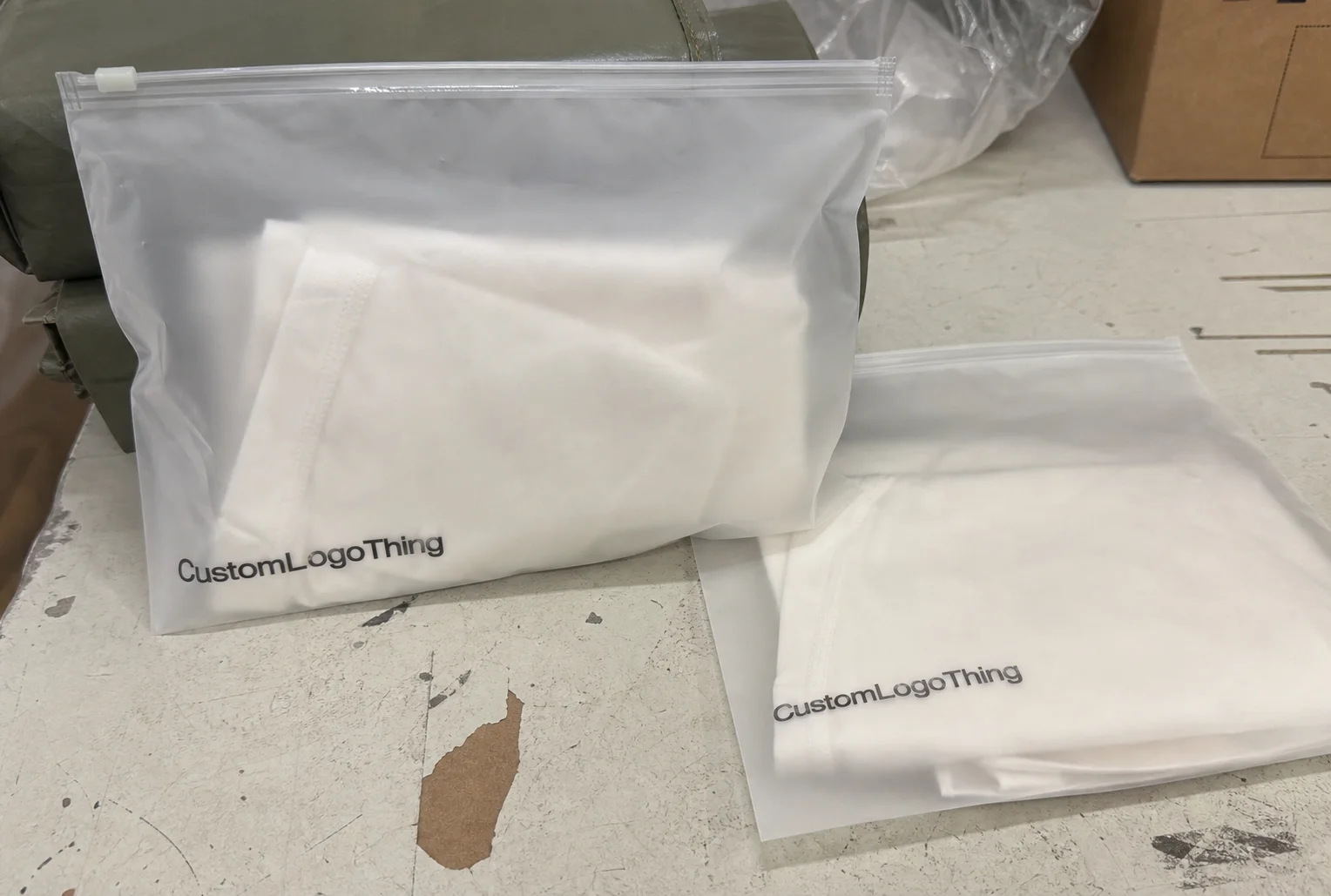
Most hotel packaging problems start with a missing assumption. One person thinks the bag is meant for folded apparel, another thinks it is for toiletry items, and a third assumes the artwork will sit on the front panel only. By the time everyone notices the mismatch, the proof is already on the table. The checklist exists to stop that chain of events.
Used well, it is not a sales document. It is a working brief that tells production teams what the bag must do, what the artwork should look like, how much quantity is needed, and where the order needs to land. It also gives buyers a clean way to compare suppliers. Two quotes can look similar until you notice one is based on a lighter film, a smaller printable area, or a different zipper style.
That distinction matters in branded packaging. A frosted bag can look clean and modern, but the print still has to read clearly against the surface, and the closure still has to function with the intended contents inside. A glossy mockup rarely shows those problems. A specific checklist usually does.
If your team already manages other packaging categories through Custom Packaging Products, the same discipline applies here: define the package first, then ask for pricing. The order becomes easier to quote, easier to proof, and easier to receive without surprises.
How Bag Specs Drive the Order
A frosted zipper bag may look like a single item, but several technical choices sit underneath it. Bag width, height, film thickness, zipper type, print coverage, and any hanging feature all change the result. A few millimeters can alter the fit of the contents or shift the logo closer to the closure than expected.
That is why the brief should say more than “frosted zipper Bag with Logo.” It should explain the intended use. A bag for a lobby gift program does not carry the same stress as one used in back-of-house amenity distribution. A bag that sits on a shelf for display may need a different print balance than one packed into cartons for guest-room delivery.
The finish itself deserves attention. “Frosted” is not one fixed look. Some films are lightly translucent, others are more opaque, and the choice changes how white ink, dark logos, thin lines, or small text appear. A design that reads clearly on one surface can look soft or muddy on another. If the artwork relies on fine detail, ask for a print check against the actual film, not just a digital proof.
For buyers comparing Frosted Zipper Bags with custom printed boxes, the main difference is movement. Flexible packaging shifts when filled, and that means the internal fit matters as much as the outer dimension. If the insert checklist does not account for the real contents, the bag can be a few millimeters short, or the artwork can land in the wrong place once the zipper is closed.
Material and Print Decisions
The material spec is where a lot of hidden cost lives. Film gauge affects feel, durability, and price. Thicker film usually costs more, but it can hold up better in handling and shipping. Lighter film may save money, yet it can feel less substantial in guest-facing use. That tradeoff should be explicit, not discovered after samples arrive.
Print method matters just as much. One-color branding can be clean and efficient, especially for a restrained hotel mark. Multi-color art, gradients, or dense coverage can raise cost and may need a different print approach depending on the supplier’s equipment. If the logo depends on exact brand color matching, include the reference standard rather than asking for a “close” match. Close is not a production spec.
Useful details to lock down before quoting:
- Finished width, height, and any depth or gusset requirement
- Film thickness or target gauge
- Frost level and desired opacity
- Print placement, front only or front and back
- Ink count and whether white ink is needed
- Zipper style and closure preference
- Any clear area that must remain unprinted
Practical performance should also be part of the spec. If the bags will sit in humid storage, ask about moisture resistance and how the film behaves over time. If the contents are fragrance-sensitive, check odor transfer. If the bag must show tamper status, say so directly; a standard zipper does not automatically solve that requirement. Suppliers should be able to speak in material terms, not just general quality language.
For reference, some technical conversations around thin-film performance use standards such as ASTM D882 to discuss tensile behavior. That does not replace a real sample, but it gives the buyer a more concrete way to discuss material strength than words like “durable” or “premium,” which are too loose to be useful.
Pricing, MOQ, and Quote Drivers
Price usually tracks a small set of variables: size, film gauge, print colors, ink coverage, zipper type, packing method, and freight. Those inputs can shift the unit cost more than many buyers expect. Two quotes that look close at first glance may diverge once the supplier adds setup, sample, and delivery charges.
MOQ matters because setup costs have to be spread across the run. A small pilot order often carries a noticeably higher unit cost, especially if the artwork is custom and the bag spec is not a standard one. Larger quantities usually lower the per-unit cost, but only if the design is already final and the approval cycle stays tight.
Typical pricing ranges vary by supplier, country of origin, freight mode, and artwork complexity, but a practical frame for planning looks like this:
| Order Profile | Typical Unit Price | Main Cost Driver | Planning Note |
|---|---|---|---|
| 3,000 units, one-color front print | $0.24-$0.40 | Setup spread over a smaller run | Useful for pilot programs and property tests |
| 5,000 units, one- or two-color print | $0.18-$0.28 | Better balance of setup and volume | Often the middle ground for hotel launches |
| 10,000 units, front and back branding | $0.15-$0.24 | Lower setup burden per unit | Works best when artwork is final and inventory can absorb volume |
Those numbers are directional, not universal. A heavier film, tighter color target, or special carton pack can push the quote up fast. Freight can also change the result more than expected, especially if the order has to be split across properties or shipped on a short schedule.
The cleanest comparison is a line-by-line one. Ask every supplier to quote the same dimensions, same film spec, same print count, same sample basis, and same delivery terms. Otherwise one price might include the true cost of production while another quietly leaves out items that show up later on the invoice.
Timeline From Brief to Approval
The production path is familiar: brief, quote, proof, sample if required, production, packing, and delivery. The delay usually appears between those steps. Files arrive incomplete. A color is not confirmed. Someone changes the bag size after the first proof. Then the schedule starts slipping one day at a time.
For a standard custom order, a useful planning window is often about 12-15 business days after proof approval, though that changes with print complexity, factory workload, and shipping method. Faster schedules are possible, but only if the buyer has already closed internal approvals. Rush orders with unresolved artwork usually create more friction than speed.
A more reliable way to work is to move backward from the delivery date. Leave room for one revision cycle, production time, and freight buffer. If the bags are tied to a guest campaign, property opening, or seasonal rollout, do not schedule proof approval at the edge of the deadline. That is the point where teams start paying for air freight or accepting a version that was never fully reviewed.
The hotel Frosted Zipper Bags Packaging Insert checklist is useful because it gives everyone the same record of what has already been confirmed. It reduces the chance that size, art placement, or packaging quantity gets reopened after sign-off. In production, that kind of drift is costly.
If transit risk matters, ask whether the supplier can reference an appropriate ISTA method or at least explain how the cartons will be packed for handling. The standards at ISTA are useful when packaging has to survive more than a simple shelf delivery. For hotel programs that rely on multiple receiving points, packing discipline matters as much as the bag itself.
Files to Send Before Quoting
The best quote requests are short, specific, and complete. One clean brief is easier to work from than a chain of emails that keeps shifting. Before sending files, gather the following information in one place.
- Intended use: amenity kit, retail packaging, spa set, or gift program
- Target quantity and whether a pilot run is needed
- Finished size, not just a rough estimate
- Zipper preference and any hanging or display requirement
- Artwork files, logo placement, and whether print wraps to the back panel
- Brand color references and any spacing rules for the logo
- Ship-to address, receiving hours, and pallet or carton instructions
Artwork should be sent in the cleanest usable format. Vector files are best for line work, logos, and type because they hold edges better at production scale. If the artwork uses photography or gradients, send the highest-resolution version available and say exactly what needs to remain unchanged. File names should make the final version obvious. That sounds basic, but a surprising number of delays start with someone opening the wrong file.
Operational details matter too. If the order is going to multiple hotel properties, split warehouses, or different departments, say that early. Freight and carton labeling can change the total cost more than buyers expect. It also helps to name one approver and one backup. More reviewers do not necessarily create better packaging; they usually create slower packaging.
Mistakes to Catch Early
The recurring mistakes are predictable. Low-resolution logos, unclear units of measure, missing quantity, wrong dielines, and unspoken assumptions about finish or color matching cause most of the trouble. These errors are cheap to catch at proof stage and expensive to fix after production begins.
Frosted film creates one specific trap: buyers assume the surface will hide weak artwork. It does not. Thin strokes can disappear. Small type can soften. Pale logos can lose contrast. The art has to be tested against the actual substrate, not just a monitor, because the frosted finish changes how the eye reads the mark.
Useful checks before release:
- Request a blank sample if the bag is customer-facing
- Verify zipper function with the intended contents inside
- Compare the proof to the actual product, not a placeholder insert
- Ask for a physical mockup if the schedule allows it
- Confirm that the quoted film gauge matches the approved sample
There is also a production-side check that buyers should ask about: tolerance. Good suppliers can tell you where variation may occur and where it should not. That is more useful than generic quality claims. It shows the difference between cosmetic variation, which may be acceptable, and functional variation, which can break the job.
Teams that already handle packaging through Custom Packaging Products usually recognize this pattern. A short preproduction review often saves more money than a discount because it reduces scrap, rework, and shipping delays. The goal is not to overcomplicate the order. The goal is to remove the avoidable errors before they reach the press line.
Final Review Before Release
Before approving the order, reduce everything to one shared packet: final spec sheet, approved artwork, quantity, ship-to details, and delivery date. Keep the record tight. The more places a decision lives, the more likely an old file will resurface and create confusion.
Ask for an itemized quote so you can separate setup charges, unit cost, sample fees, and freight. A lump sum is harder to challenge and easier to misunderstand. Itemization gives the buyer something concrete to compare, which is exactly what you want before issuing a purchase order.
One final pass through the hotel Frosted Zipper Bags Packaging Insert checklist should confirm three things: the bag fits the intended contents, the artwork reads correctly on frosted film, and the lead time still works against the launch date. If any of those items is uncertain, hold the release until the uncertainty is resolved. A late correction in production is usually more expensive than a small delay at approval stage.
For hotel programs, that last review also protects the receiving team. If cartons arrive in the wrong configuration, or if the bag spec differs from what was expected, distribution slows down and the issue spreads across more than one department. Clear packaging instructions do more than help the factory. They help operations move the order cleanly once it lands.
What should a hotel frosted zipper bags packaging insert include?
Include finished size, film thickness, zipper style, print method, artwork files, quantity, ship-to details, and intended use. If the bag is for guest amenities or retail presentation, add any handling or durability requirements, plus brand color references and approval contacts. The goal is to give the supplier enough information to quote accurately without filling in missing details.
How do I compare quotes for frosted zipper bag packaging inserts?
Compare the same specification across every quote: dimensions, film gauge, print count, quantity, sample cost, freight basis, and turnaround. Watch for charges that are not shown up front, such as setup, rush, carton special packing, or split shipments. A lower unit price does not help if the total landed cost is higher.
What slows down approval and lead time the most?
Incomplete artwork, unclear dimensions, and too many reviewers cause the biggest delays. Lead time also slips when the buyer changes the bag size after the first proof or waits too long to confirm color and finish. A single approver and a complete brief usually shorten the schedule more than pressing the factory harder.
Do I need a sample before production?
A sample is worth requesting when the bag is customer-facing, color-sensitive, or tied to a launch date. It helps verify zipper function, print visibility on frosted film, and the fit of the real contents. If time is tight, a digital proof may be enough, but it carries more risk than a physical sample.
What artwork file format is best for frosted zipper bags?
Vector files are usually the safest choice because they preserve edges and scale cleanly. If the design includes photos, gradients, or special effects, send the highest-resolution version available and spell out the color target. Label the final file clearly so production does not work from the wrong version.
Used properly, the hotel frosted zipper bags packaging insert checklist is not just paperwork. It keeps material specs, artwork, quote drivers, and lead times from drifting apart. That is the difference between a tidy approval and a production problem that could have been avoided.


