Private Label Buyer matte zipper Bags Wholesale Order planning gets easier when finish is treated as a production decision, not a styling choice. Matte film hides scuffs better than glossy film, softens print, and usually handles warehouse movement, cartoning, and retail restocking with fewer visible marks.
For private label programs, the right starting point is finish, structure, and zipper function. Artwork comes after that. If the bag spec is loose, the order becomes expensive to fix later. If the spec is clear, the supplier can quote with fewer assumptions, proofs move faster, and reorders stay consistent.
Matte is not the right answer for every category. High-clarity cosmetics, color-critical display packs, and products that depend on a reflective premium look may need another surface. But for many retail pouches, especially those moving through e-commerce and warehouse distribution, matte gives the buyer a more forgiving finish and a calmer shelf read.
Private Label Buyer Matte Zipper Bags Wholesale Order Planning Starts with Finish
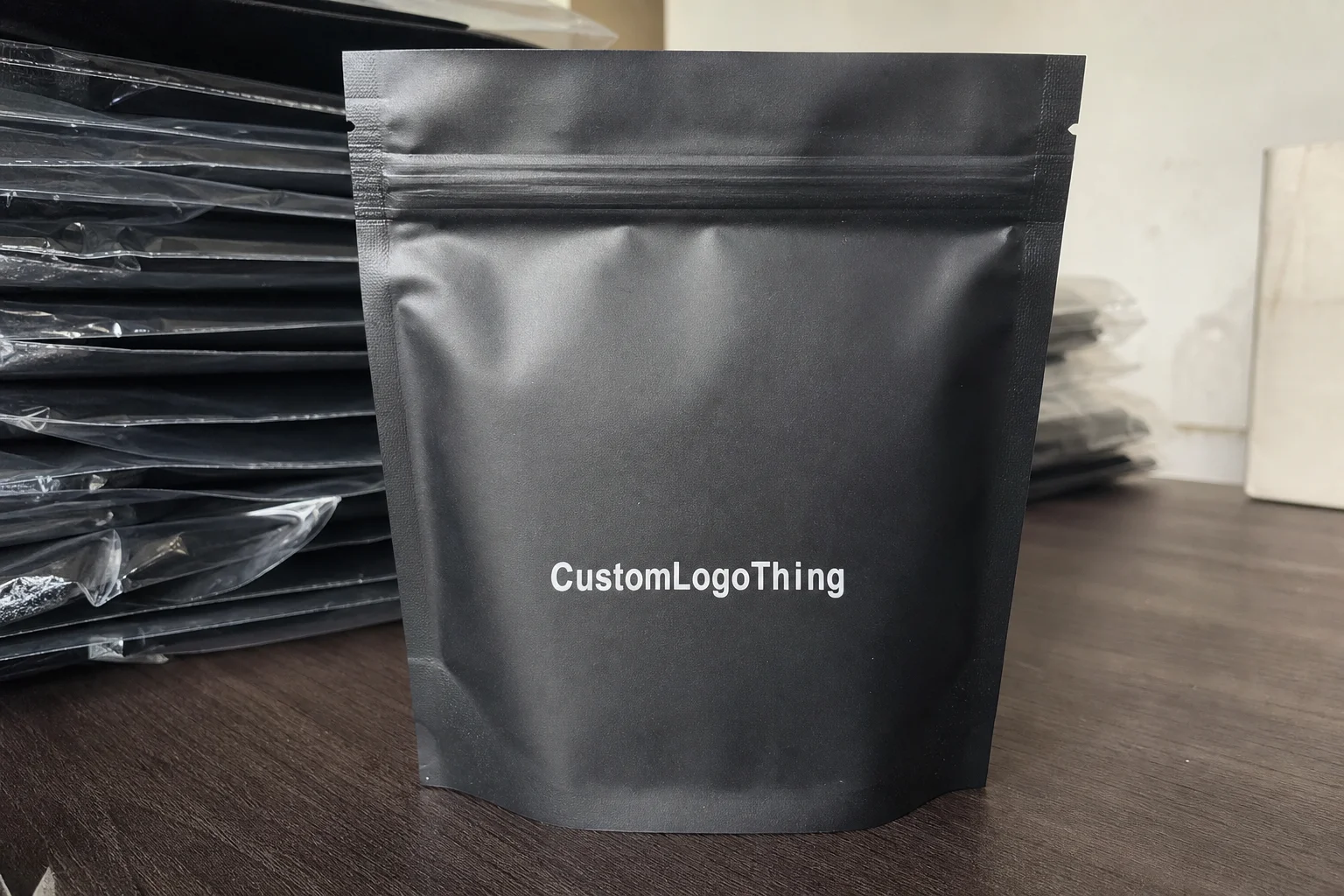
Glossy packaging shows fingerprints, rub marks, dust, and small transit dents. Matte film is more forgiving. It diffuses reflection, keeps typography readable, and lets the graphic do the work instead of relying on shine.
That is why private label buyer matte zipper Bags Wholesale Order Planning should start with finish selection before artwork. A matte reclosable pouch can support snack food, supplements, apparel accessories, sample kits, pet treats, and many non-food retail items. The zipper adds repeat-use value, which changes how the consumer handles the product after opening.
From a buyer's perspective, the main benefit is consistency. Matte surfaces hide minor handling variation, so the final product tends to look closer to the approved proof after shipping and stock rotation. That matters when the same item may sit on a shelf, appear in a marketplace photo, and move through a warehouse before it reaches the customer.
If the package looks perfect in a proof but tired in transit, the spec was incomplete.
A good matte pouch spec also reduces disputes later. The supplier is not trying to match a mirror finish, and the buyer is not trying to defend every tiny reflection change. The result is usually a more stable approval process and fewer surprises at receiving.
The tradeoff is real. Matte can mute contrast if the artwork is too dark, too busy, or too dependent on metallic effects. It can also show oily marks differently depending on the coating or lamination used. Buyers should review finish under the same lighting the product will face: store shelves, warehouse fluorescents, and camera flash if the item will be sold online.
Material, closure, and print options buyers actually compare
Most buyers compare three film families first: PE, PET/PE, and multilayer laminated structures. PE is flexible and usually lower cost, but it is not always the best choice if the pouch needs stiffness or stronger shelf presence. PET/PE gives a cleaner print face and more structure for many retail applications. Multilayer laminated film adds more control for moisture barrier, odor resistance, and seal performance.
Thickness matters almost as much as film family. Many Custom Zipper Bags land somewhere around 100 to 180 microns total structure, but the right number depends on product weight, puncture risk, and how much stand-up rigidity the brand expects. Thin can work for lightweight goods and samples. Too thin is where savings turn into returns, damaged packs, or zipper failures after the first few uses.
The zipper deserves the same attention. A single-track zipper is usually fine for standard reseal use. A double-track zipper gives a firmer closure and better tactile feedback, which matters in categories where repeat opening is common. If the bag needs a tear notch, hang hole, euro slot, or child-resistant detail, those choices need to be locked before the quote because tooling, layout, and seal geometry all change.
Matte finish also has more than one form. Some buyers use matte lamination over a printed film. Others want a matte film structure or a soft-touch coating on top of the print. Soft-touch can feel more refined, but it often changes how oils show on the surface and may add cost without improving function. Spot gloss is often the smarter compromise: keep the overall finish matte, then highlight a logo, icon, or product name with a controlled glossy area.
Print method affects both appearance and economics:
- Digital print works well for shorter runs, artwork tests, and SKU-heavy programs with frequent changes.
- Flexo is often the practical middle ground for simpler graphics and moderate volumes where unit cost matters.
- Gravure usually makes sense for large runs, heavy coverage, and repeat orders where the upfront cylinder cost can be absorbed across volume.
There is no reward for choosing the most complex build. The right structure is the one that matches the product, route to market, and shelf life target. Overbuilding a lightweight item creates cost. Underbuilding a moisture-sensitive product creates claims, waste, and reorder friction.
One detail many buyers miss: matte black and other dark tones often need more proofing than lighter colors because the finish reduces perceived contrast. A logo that reads clearly on a monitor can disappear on a pouch if ink density, film tint, and finish are not checked together.
Specs to lock before you request quotes
Quotes get messy fast if bag dimensions are vague. Width, gusset, usable height, and headspace all need to be stated clearly. A supplier cannot price intelligently if they are guessing whether the fill weight is 50 grams or 500 grams.
Before you request numbers, lock these details:
- Finished size in millimeters or inches, including gusset width if present.
- Thickness target in mils or microns, plus the priority: stiffness, flexibility, puncture resistance, or barrier.
- Zipper style and whether the bag needs a tear notch, hang hole, or bottom-seal upgrade.
- Print area and dieline, with seams, zipper zone, barcode space, and legal copy reserved.
- Fill weight and product type, since that drives structure and sealing requirements.
- Pack-out detail, including units per carton, carton dimensions target, and pallet preference.
If the item is regulated, define the copy that must appear on the pack. Food-contact declarations, ingredient panels, recycling claims, and regional labeling language should be clarified early. If the bag is headed for retail, barcode placement should be checked against scanner orientation and shelf orientation.
The dieline also needs a careful read. Print should not drift into the zipper zone, side seals, or bottom seal area unless the supplier has explicitly confirmed that layout. Artwork that sits too close to structural edges can distort after sealing.
Fill method matters more than many teams expect. Manual filling, powder filling, auto-fill lines, and liquid or semi-liquid contents place different demands on seal width and top clearance. If the bag will be heat-sealed after filling, the supplier needs the seal method or the heat window.
Keep the approved spec, artwork file, Pantone references, and packaging notes in one place. A reorder should not require forensic work.
Pricing, MOQ, and quote structure
Unit cost on Matte Zipper Bags is driven by a short list: bag size, film gauge, print coverage, number of colors, zipper grade, and finish level. Add a soft-touch coat, a custom hang hole, or a more demanding barrier structure, and the price moves again.
For many private label programs, simple custom matte zipper bags often price best around 5,000 to 10,000 units. Smaller runs are possible, especially with digital print, but the per-bag price rises because setup is spread across fewer units. If the order needs heavy coverage, custom tooling, and special finishing, the economics shift fast.
| Order Type | Typical MOQ | Best Use | Cost Profile |
|---|---|---|---|
| Digital matte zipper bags | 500 to 3,000 units | Launches, SKU tests, seasonal pilots | Higher unit cost, low setup burden |
| Flexo printed bags | 5,000 to 20,000 units | Mid-volume private label programs | Balanced setup and unit price |
| Gravure printed bags | 20,000 units and up | Large retail runs and repeat orders | Lower unit cost, higher upfront tooling |
Demand an itemized quote. The line items should separate bag price, plates or screens, sample costs, carton charges, freight, and any customs or destination charges. If the supplier only gives one lump number, comparison becomes almost meaningless.
Compare landed cost per usable bag, not factory unit price. A cheaper bag with expensive freight, weak packing, or rework at receiving is not cheaper. Reprint risk matters too. If an artwork correction needs new cylinders or plates, the change can erase the savings from the first quote.
MOQ is also not just a quantity question. Some suppliers will accept a low order number but build the price as though the job were a prototype. That can be fine for market tests, but it is a poor comparison against a true production quote. The useful question is not only “What is the minimum?” but also “At what quantity does the unit cost become sensible?”
Production timeline and lead time control
A clean schedule starts with artwork cleanup and proofing. After that comes sample approval, mass production, quality control, packing, and shipment. If a supplier skips steps in the explanation, the buyer is the one who usually absorbs the risk later.
Typical timing is straightforward. A proof may take 1 to 3 days. A sample often needs 7 to 14 days. Production commonly takes 15 to 25 working days after approval, assuming the material is in stock and the order is not unusually complex. Transit sits on top of that.
Delays usually come from a predictable list: missing dielines, late proof approvals, color changes after sign-off, barcode mistakes, and special finishes that need extra setup. The fix is discipline, not optimism. Approve only final artwork, and do it before the supplier starts plates, cylinders, or line scheduling.
Warehouse appointments and retailer receiving windows need to be built into the schedule. Those dates are hard constraints, not preferences. A project can look healthy on paper and still fail if the cartons miss the appointment window by two days.
If transit testing is part of the program, the method should be named. The right standard depends on the package and the route, but common references include ISTA procedures and related distribution tests. For broader packaging and environmental documentation, the International Safe Transit Association and the Forest Stewardship Council are useful reference points when shipping performance or fiber claims need to be documented.
Late-stage revisions are expensive because they affect more than one output. A text change can trigger plate revisions, proof delays, color checks, and a carton or label change if the code block moves. The fastest order is usually the one that had all of those decisions settled before the first quote went out.
What a reliable private label supplier should document
Any supplier worth working with should document the material spec, zipper construction, and print tolerance before the purchase order is issued. If that information is missing, the buyer is exposed to drift between quote, proof, and final shipment.
Ask for a pre-production proof or sample reference and confirm the QC checkpoints. The supplier should be able to explain how they check seal strength, zipper function, color match, panel alignment, and visual defects. For a matte zipper pouch, a useful inspection list usually includes print registration, seal width consistency, edge trimming, zipper track alignment, and scuff resistance after packing.
Incoming inspection also matters. A buyer should know how many bags were sampled, what the defect threshold is, and what counts as a reject. If the supplier cannot define that, the receiving team ends up making the decision by instinct.
Archiving matters too. The supplier should keep the approved dieline, Pantone targets, construction notes, and pack-out details so the next reorder matches the approved version instead of a near miss.
If the bag uses sustainability claims, documentation becomes even more important. FSC-certified cartons or paper inserts are common enough, but the claim must match the actual supply chain. The paperwork should exist before shipment, not after a customer or retailer asks for proof.
For the pouch itself, a few checks are usually worth specifying in writing: seal integrity, zipper reclose cycles, color tolerance, ink rub resistance, and carton compression. Even a simple drop or vibration test can reveal whether the bag will survive normal handling.
Next steps for a clean wholesale order
Send one clean brief. The brief should include size, material, matte finish level, zipper style, quantity, print files, ship-to location, and target delivery date. If the supplier has to piece together the spec, the quote will be slow and the first proof will be wrong.
Get every vendor quoting the same spec sheet. That is the only way price comparisons mean anything. Otherwise one quote is for a heavier bag, another is for a different zipper, and a third quietly assumes a cheaper finish.
Approve one sample or digital proof, then issue the PO with tolerance limits, inspection rules, and packaging instructions already written down. If the order has a retail deadline, say so clearly. If the product is sensitive to scent, moisture, or puncture, say that too.
For brands that need secondary packaging alongside the pouch, keep the structure simple. Labels, carton marks, and insert cards should support the pouch, not force the pouch to carry extra information it was never designed to hold.
Private Label Buyer matte zipper bags wholesale order planning works best when the buyer starts with specs, then moves to pricing, then confirms production timing before anything is signed.
FAQ
What specs do I need for matte zipper bag planning?
Send the exact size, thickness, finish, zipper style, print colors, and fill weight target. Include the dieline, barcode placement, carton pack-out, and ship-to details so the quote is actually usable.
What MOQ should I expect for custom matte zipper bags?
Simple runs often start around 5,000 to 10,000 units for better pricing, but smaller quantities are possible with higher unit cost. The real MOQ depends on size, print complexity, and whether special finishing or custom tooling is required.
How long is the lead time after proof approval?
A typical sample stage runs 7 to 14 days, then production often takes 15 to 25 working days after approval. Shipping time is separate, and revisions or missing artwork will push the schedule back.
What drives the unit cost on matte zipper bag orders?
Material gauge, bag dimensions, print coverage, zipper type, and matte finish level have the biggest impact. Quantity matters too, because setup cost spreads out faster on larger runs.
Can I reorder the same private label bag spec without new tooling?
Yes, if the supplier has archived the approved dieline, Pantone targets, and construction details. Keep the old sample and PO reference so the reorder matches the original bag instead of drifting.


